

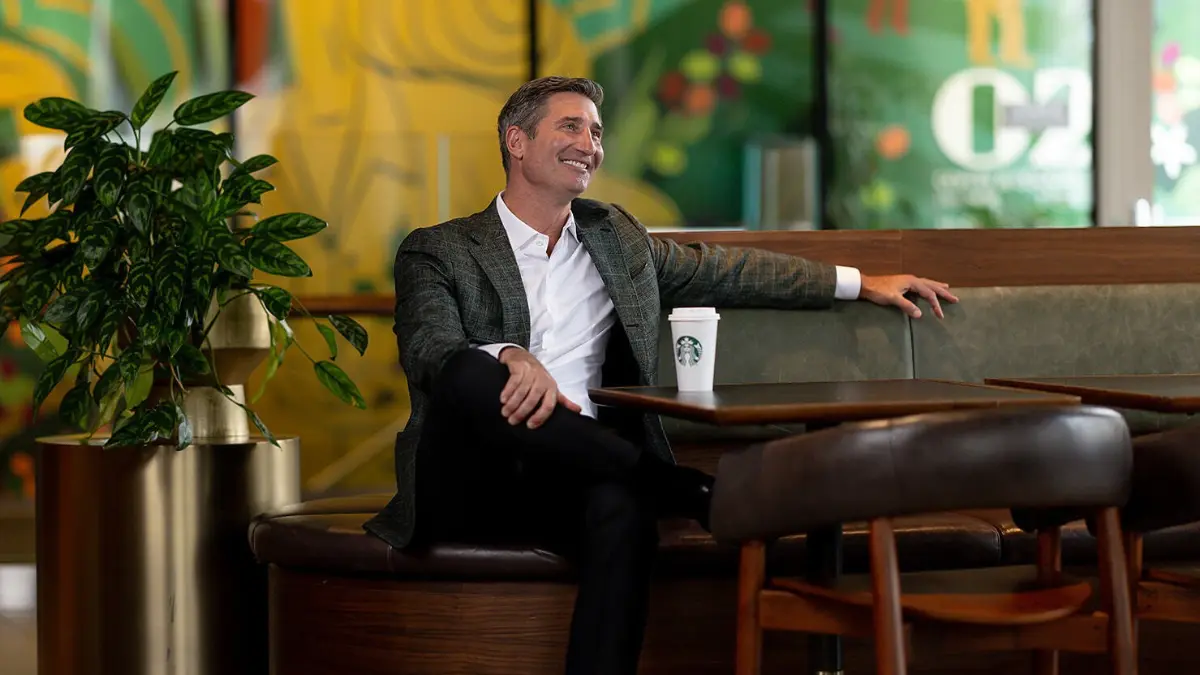
Executive Overview
The global quick-service restaurant (QSR) and coffeehouse landscape is undergoing a monumental shift, driven by changing consumer habits, economic pressures, and an increasingly competitive beverage market. At the epicentre of this evolution is Starbucks, a brand long synonymous with the morning commute, espresso culture, and the "third place" phenomenon. However, as leadership changes take root and market dynamics shift, the Seattle-based coffee giant is looking far beyond its traditional stronghold.
Recent industry disclosures and high-level interviews reveal that Starbucks is aggressively rethinking its operational playbook. While external market whispers have recently floated speculative ideas—ranging from ambitious structural plays to massive industry realignments—internal focus remains resolutely fixed on a core strategic imperative: fixing and elevating the afternoon food menu.
In a candid interview with leadership prior to wider corporate expansion rumors, incoming Chief Executive Officer Brian Niccol laid bare the brand’s vulnerabilities and its vast, untapped potential. While acknowledging that Starbucks commands the morning daypart with unmatched authority, Niccol underscored a glaring operational gap: the brand’s performance during the post-meridian hours.
This comprehensive report examines Starbucks’ strategic pivot under Niccol’s leadership. We analyze the chronology of recent corporate developments, dissect the metrics underpinning the afternoon sales dilemma, evaluate official statements from the executive suite, and forecast what this means for the future of the world’s largest coffeehouse chain as it attempts to build a lucrative, category-defining second sales peak after 2:00 PM.
Detailed Chronology
To understand Starbucks’ current strategic trajectory, one must examine the timeline of leadership shifts, strategic admissions, and market speculation that has defined the brand’s recent past.
Mid-September 2024: The ADWEEK Disclosure
On September 17, 2024, during an extensive interview for a prominent media cover story, newly minted Starbucks CEO Brian Niccol sat down to discuss the roadmap for the brand’s next era. Eschewing corporate platitudes, Niccol offered a frank assessment of the company’s current operational standing. He explicitly pointed out that while Starbucks had perfected the morning routine—capturing millions of caffeine-dependent commuters—its afternoon food and beverage program lagged behind consumer expectations. This interview served as the foundational public acknowledgement that Starbucks needed a radical menu overhaul to remain competitive across all dayparts.
Late 2024: The Rumor Mill and Strategic Speculation
Shortly after Niccol’s candid admissions regarding product limitations, the corporate grapevine began churning out aggressive speculation. Industry analysts and financial news outlets began reporting on broader, highly ambitious moves allegedly being explored by the coffee titan, including exploratory glances at other dominant QSR players, such as a hypothetical tie-up or takeover interest involving fast-casual pioneer Chipotle. While these external reports highlighted the aggressive, growth-oriented mindset of the newly installed leadership team, they also underscored a fundamental truth: Starbucks is actively evaluating how to scale its culinary and operational footprint far beyond traditional espresso-based offerings.
The Ongoing Implementation Phase: Redefining the Menu
Moving from high-level vision to ground-level execution, Starbucks has quietly initiated internal operational reviews aimed at streamlining service, cutting down ticket times, and reimagining food pairings. The historical challenge has been twofold: operational complexity (warming up food items slows down drive-thru and mobile-order queues) and lack of consumer appeal for afternoon-specific items. The timeline moving forward is dictated by Niccol’s mandate to transform the afternoon menu from an afterthought into a "category-defining" destination for consumers seeking sustenance, not just a caffeine fix.
Supporting Context & Metrics
The urgency behind Starbucks’ afternoon overhaul is not born of mere ambition; it is grounded in hard economic realities and shifting consumer behavior metrics within the broader retail food and beverage sector.
The Daypart Dilemma: Morning Dominance vs. Afternoon Lull
Historically, the QSR and coffee sectors rely heavily on the "AM peak." For decades, Starbucks optimized its supply chain, store layouts, and labor allocation to handle the relentless surge of morning traffic between 6:00 AM and 10:30 AM. During these hours, speed, consistency, and hot caffeinated beverages reign supreme.
However, industry data consistently shows a sharp drop-off in transaction volume once the morning rush subsides. While the midday hours see moderate traffic for lunch or light snacking, the post-2:00 PM window represents a distinct battleground. During the afternoon, consumers are less likely to purchase hot coffee and are increasingly seeking:
- Substantial snacks or light meals to bridge the gap between lunch and dinner.
- Cold, refreshing, or indulgent beverages (such as refreshers, teas, and blended drinks) rather than hot espresso.
- Value-driven offerings that compete directly with fast-food giants and quick-service bakeries.
Operational Bottlenecks: The Food Program Challenge
Starbucks’ food program has evolved significantly over the years—from pre-packaged pastries to warmed breakfast sandwiches like the Double Smoked Bacon & Cheddar. While these items perform exceptionally well in the morning, they present severe operational bottlenecks later in the day.
- Speed of Service: Warming food items requires dedicated oven time, which directly conflicts with Starbucks’ heavy reliance on drive-thru speed-of-service metrics and mobile order-ahead volume.
- Perception vs. Reality: For many consumers, Starbucks remains psychologically categorized as a beverage destination first and a food destination second. Convincing a consumer to choose Starbucks over a dedicated fast-casual restaurant for an afternoon bite requires a fundamental shift in brand perception.
- The Profit Margin Equation: Expanding the food menu carries inherent risks, including food waste, inventory management complexities, and kitchen footprint limitations in smaller urban stores. Yet, a successful afternoon food program yields higher average ticket sizes, making the logistical hurdle well worth conquering.
Official Statements & Executive Insights
The strategic vision for Starbucks’ next era is inextricably linked to the philosophy of Brian Niccol, whose track record of turning around major restaurant brands (including Chipotle and Taco Bell) brings immense credibility to his current mandate.
During his watershed interview with media leadership, Niccol did not mince words regarding the brand’s current strengths and deficiencies:
"We’re pretty darn good in the morning, but we have to be much better in the afternoon."
This simple yet profound statement encapsulates the core operational thesis of the new administration. Niccol elaborated on the strategic necessity of engineering a robust second sales peak after 2:00 PM, noting that sustainable long-term growth cannot rely solely on maximizing morning throughput.
Furthermore, when discussing the broader ambitions for the company’s culinary offerings, Niccol emphasized the need to move past incremental updates and focus on items that are truly "category-defining." In the context of the QSR industry, a category-defining product is one that fundamentally alters consumer habits—much like the introduction of the Pumpkin Spice Latte or the widespread adoption of customized cold-foam cold brews.
While corporate communications teams have navigated external acquisition rumors with standard non-committal responses, the underlying executive narrative remains clear: Starbucks is positioning itself not just as a morning coffee stop, but as an all-day lifestyle and culinary brand.
Future Outlook: What Lies Ahead for Starbucks
As Starbucks charts its course through the remainder of the decade, several key strategic pillars will define its success in conquering the afternoon market and evolving its business model.
1. Culinary Innovation Tailored for the Afternoon
Expect to see a concerted R&D push focused specifically on the post-2:00 PM consumer. This will likely involve:
- Protein-forward, lighter snack options that appeal to afternoon slumps without feeling as heavy as a breakfast sandwich.
- Expanded cold beverage platforms paired strategically with snack bundles to drive impulse purchases during mid-day lulls.
- Streamlined kitchen technology designed to bake, toast, or warm items rapidly without increasing drive-thru wait times.
2. Operational Refinement and Store Design
To successfully execute an afternoon food push, Starbucks must adapt its physical infrastructure. Urban walk-in stores, suburban drive-thrus, and digital-first pickup locations will require optimized workflows. By leveraging advanced forecasting algorithms and digital ordering data, store managers can better anticipate afternoon labor needs and inventory flows, reducing waste while maintaining exceptional speed of service.
3. Brand Positioning and Marketing Campaigns
Shifting consumer perception requires more than just new menu items; it demands targeted, aggressive marketing. Starbucks will likely deploy creative campaigns specifically designed to re-introduce the brand to consumers during non-traditional hours—repositioning the afternoon coffeehouse visit as an essential productivity break, a social afternoon recharge, or a convenient meal solution.
Conclusion
Starbucks stands at a fascinating crossroads in its corporate history. Armed with a seasoned executive team willing to confront uncomfortable truths about operational gaps, the company is actively dismantling the boundaries of its traditional business model. By addressing its afternoon vulnerabilities head-on and striving to make its food program category-defining, Starbucks is laying the groundwork for a resilient, all-day economic engine. For industry observers, competitors, and coffee lovers alike, the next era of Starbucks promises to be its most transformative yet.