

Executive Overview
Finding a flattering haircut can often feel like a high-stakes guessing game. With so many variables—hair density, texture, maintenance routines, and personal aesthetic—navigating the salon chair requires more than just bringing a picture of a favorite celebrity. Central to this styling journey is understanding your facial geometry. Among the primary face shapes—round, square, heart, diamond, and oval—the oval face shape is frequently cited by industry professionals as the gold standard of versatility.
Characterized by a length that is greater than its width, complemented by a gentle rounding at the jawline and forehead, the oval face possesses a natural symmetry and structural balance. Because of this inherent proportion, individuals with oval faces face fewer geometric restrictions than other face shapes. Yet, this abundance of choice can sometimes lead to decision fatigue.
To demystify the process, we consulted Los Angeles-based celebrity hairstylist TerraRose Puncerelli for an exclusive, masterclass-level breakdown. In this comprehensive guide, we explore the nuances of styling an oval face, the ideal hair lengths, celebrity inspirations, common misconceptions, and the definitive professional tools and products required to achieve salon-quality results at home.
Detailed Chronology & Evolution of Oval Face Styling
The understanding of facial proportions and their relationship to hair architecture has evolved significantly over the past century. Historically, hairstyling manuals focused heavily on "corrective geometry"—using cuts and colors to artificially alter or balance perceived flaws in a person’s bone structure. For decades, oval faces were treated as a blank canvas meant to be maintained strictly within conservative, symmetrical boundaries.
- The Mid-20th Century: Classic Hollywood icons with oval faces, such as Audrey Hepburn and Grace Kelly, popularized closely cropped pixies and structured mid-length waves. During this era, precision and heavy styling products dominated, emphasizing sculpted elegance over natural texture.
- The 1970s and 1980s: The paradigm shifted toward liberated, organic movement. Shags, feathered layers, and voluminous blowouts took precedence, proving that oval faces could effortlessly support high-volume styles without losing their underlying balance.
- The 1990s and 2000s: Minimalist, sleek cuts—such as razor-sharp bobs and pin-straight long layers—became the signature of red-carpet styling. Celebrities showcased the inherent adaptability of the oval structure, transitioning seamlessly between severe updos and casual, undone looks.
- The Contemporary Era: Today, modern celebrity hairstylists like TerraRose Puncerelli advocate for a philosophy centered on enhancement rather than correction. Modern styling for oval faces is less about adhering to rigid structural rules and more about celebrating individual hair texture, density, and personal lifestyle. As Puncerelli notes, "It’s a naturally balanced face shape, so I don’t think you need to use the haircut to ‘correct’ anything. Instead, I’d ask: What feature do I want to highlight, and what kind of hair do I have?"
Supporting Context & Metrics: Decoding the Oval Face
To properly tailor a haircut, one must first accurately identify facial proportions. Statisticians and dermatological aestheticians often categorize face shapes using precise dimensional metrics.
The Geometric Breakdown of an Oval Face
- Length-to-Width Ratio: An oval face is visibly longer than it is wide, typically maintaining a ratio of approximately 1.5 to 1.
- Forehead vs. Jaw: The forehead is slightly wider than the curved, gently rounded jawline, but the transition between the temples, cheekbones, and jaw is smooth and harmonious.
- Cheekbones: While prominent, the cheekbones do not project sharply outward as they do in diamond or square face shapes; instead, they blend softly into the overall contour of the face.
Hair Length Categories and Wearability Metrics
According to professional styling standards, hair lengths can be divided into three primary categories, each offering distinct advantages for oval facial structures:
- Short Hair (Pixies, Bixies, Textured Crops): Offers high impact and draws immediate attention to the eyes, cheekbones, or jawline. Roughly 20% of clients with oval faces opt for cropped styles to highlight their balanced bone structure.
- Medium Hair (Chin-Length Bobs, French Bobs, Lobs, Collarbone Cuts): Statistically the most universally wearable category across all hair textures. Medium-length cuts account for over 50% of salon requests for oval face shapes due to their endless styling versatility.
- Long Hair (Waist-Length or Chest-Length with Layers): Provides maximum femininity and drama, though it requires strategic face-framing layers to prevent visual heaviness from weighing down the natural proportions.
Expert Insights and Professional Recommendations
Translating theory into practice requires expert guidance. TerraRose Puncerelli shares her golden rule for clients: "Don’t overthink the face shape when you’re styling. Think about creating movement and balance."
The Best Haircuts for Oval Faces
Because oval faces can comfortably support nearly any structural silhouette, the decision-making process shifts away from facial geometry and toward hair texture, density, and personal preference.
- Short Lengths: Pixies, bixies, and textured crops allow individuals to showcase their bone structure with striking clarity. Puncerelli emphasizes deciding which specific feature—the eyes, the cheekbones, or the jawline—you want to anchor the look around.
- Medium Lengths: The classic chin-length bob, the Parisian French bob, the lob (long bob), and the collarbone cut offer maximum adaptability. These cuts excel across straight, wavy, and curly textures alike.
- Long Lengths: While long hair looks breathtaking on an oval face, Puncerelli strongly advises incorporating strategic face-framing layers. A completely one-length, waist-skimming mane can pull the eye downward, creating visual weight that detracts from the face’s natural symmetry.
The Power of Bangs
Few face shapes wear bangs as effortlessly as the oval. Whether you prefer a dramatic, full-volume statement or something softer and more casual, fringe options are virtually limitless.

- Curtain Bangs: A perennial favorite for Puncerelli, soft curtain bangs gracefully frame the cheekbones without feeling overly severe or restrictive.
- Wispy and Blunt Fringes: Both wispy, textured fringes and substantial blunt cuts can be successfully integrated, depending on the client’s hair density and forehead height.
Celebrity Inspirations for the Salon
Looking to the stars provides concrete visual benchmarks before your next salon appointment:
- Rihanna: The ultimate chameleon, demonstrating how seamlessly an oval face transitions from ultra-short pixies and crops to cascading long waves.
- Jessica Alba: The gold standard for long, softly layered hair paired with relaxed, beachy waves.
- Lucy Liu: A masterclass in polished, sophisticated collarbone-length cuts.
- Lily-Rose Depp: A contemporary reference showcasing how midi-length cuts and soft, undone waves achieve a chic, effortless aesthetic.
- Bella Hadid: A prime example of how to leverage the natural symmetry of an oval face through sleek, pulled-back styles and sharp center parts.
Mastering At-Home Styling: Techniques Over Tools
A common pitfall in modern beauty routines is the belief that achieving a high-end look requires an overwhelming arsenal of products. Puncerelli challenges this notion directly: "You don’t need a cabinet full of products. I’d rather have one good heat protectant/prep product, one styling tool that suits your hair texture, and one finishing product. The technique matters more than having 15 different bottles."
Signature Styling Techniques for Oval Faces
1. The Big, Brushed-Out Wave
This is Puncerelli’s top recommendation for an instantly elevated, expensive-looking finish.
- Technique: When curling with a long-barrel iron, avoid curling the very ends of the hair. Leave the final inch or two straight, then thoroughly brush the waves out using a specialized styling brush. This prevents the dreaded "prom curl" look, yielding a luxurious, effortless blowout instead.
- Essential Products & Tools:
- Prep: COLOR WOW Dream Coat Supernatural Anti-Humidity Spray to humidity-proof strands and create glassy smoothness.
- Tool: T3 SinglePass Curl X Ceramic Extra-Long Barrel Curling Iron or the Shark FlexStyle Multi-Styler.
- Finishing: OUAI Hair Oil to seal split ends, combined with the Tangle Teezer The Ultimate Styler Hair Styling Brush to break up the waves safely.
2. The Center-Part Sleek Look
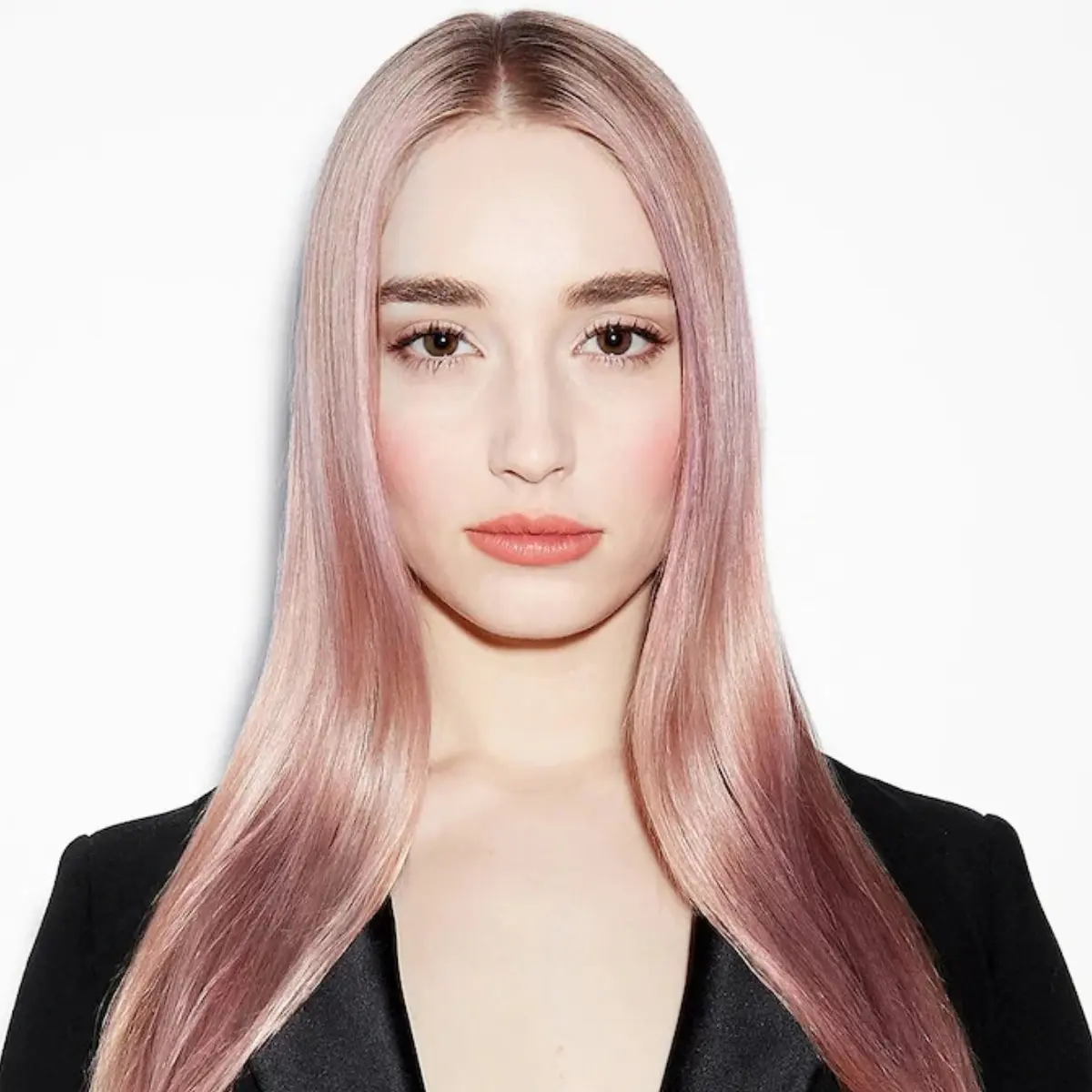
Oval faces naturally capitalize on symmetry, making a clean, sharp center part paired with ultra-sleek strands a stunning option.
- Technique: Straighten hair completely, adding a subtle, modern bend at the ends, or tuck sections neatly behind the ears to frame the face.
- Essential Products & Tools:
- Tool: ghd Platinum+ Styler – 1" Flat Iron for high-performance precision straightening.
- Finishing: OUAI Hair Oil for mirror-like shine and frizz reduction.
3. The Slick-Back Bun
By completely exposing the facial architecture, slicked-back styles highlight the balanced proportions of an oval face.
- Technique: Gather hair tightly into a high or low bun, utilizing a taming wand or styling stick to lock down flyaways and secure edges.
- Essential Products & Tools:
- Prep/Finish: Dae Cactus Fruit 3-in-1 Styling Cream & Taming Wand or the portable Emi Jay Angelstick Hair Smoothing Styling Stick for effortless on-the-go touch-ups.
4. Undone Texture
For an editorial, high-fashion finish, polished blowouts are intentionally roughed up to avoid looking overly stiff or manufactured.
- Technique: Apply a texturizing spray to dry hair and scrunch gently with your hands to build piecey, tousled movement.
- Essential Products & Tools:
- Finishing: Oribe Dry Texturizing Spray for instant volume, lift, and touchable texture.
Future Outlook: The Evolution of Hair Consultation
As the beauty industry moves further into a hyper-personalized, education-driven future, the conversation around face shapes is shifting away from restrictive "dos and don’ts." Stylists and consumers alike are embracing a philosophy of empowerment.
In the coming years, hair consultations are projected to rely increasingly on digital diagnostics, 3D facial mapping, and AI-assisted texture analysis to evaluate not just skeletal structure, but hair porosity, density, and daily maintenance capacity. For those blessed with an oval face shape, the future is unbound by archaic styling laws. Armed with expert insights from professionals like TerraRose Puncerelli and the right minimalist toolkit, individuals can experiment freely across lengths, textures, and fringes, secure in the knowledge that their natural balance will always serve as the ultimate foundation for chic, effortless style.