

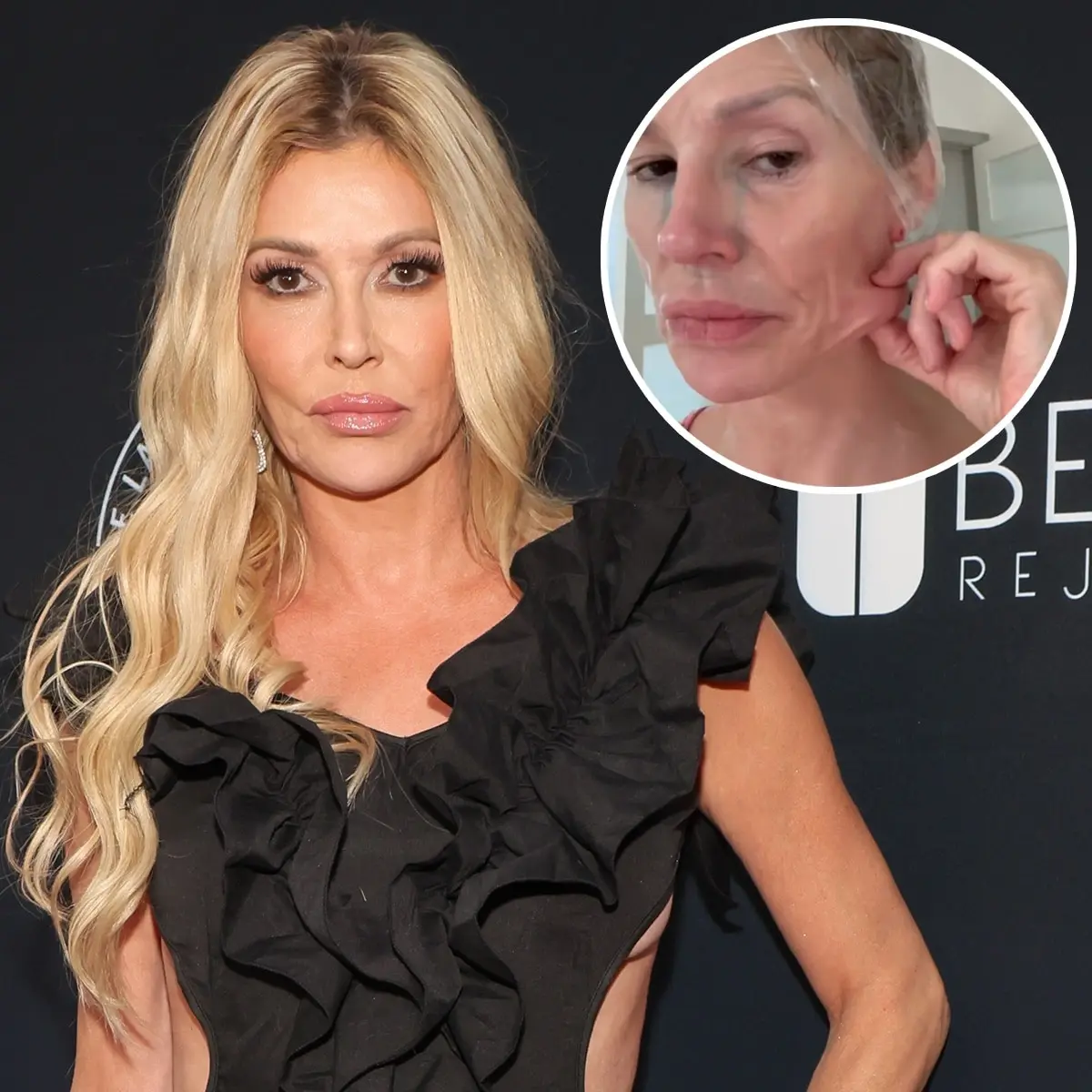
In the public eye, reality television is often synonymous with glamorous lifestyles, red carpet appearances, and curated interpersonal drama. However, beneath the polished veneer of celebrity culture lies the raw, unfiltered reality of human vulnerability. For Brandi Glanville, the outspoken Real Housewives of Beverly Hills alum, the past four years have been defined not by television ratings or social media engagements, but by a harrowing, multi-year medical crisis that has profoundly upended her daily existence.
What began as localized facial discomfort has cascaded into an all-consuming ordeal involving intense physical suffering, debilitating dietary restrictions, and complex diagnostic contradictions. Glanville, 53, has openly documented her journey through various media platforms, providing a stark look at the toll chronic, undiagnosed illness takes on an individual. From fearing the presence of parasitic organisms beneath her skin to navigating complex medical opinions involving benign tumors and fungal infections, Glanville’s story sheds light on the often-isolating journey of patients caught in diagnostic limbo.
Compounding her physical trauma are the severe financial and psychological burdens of protracted healthcare needs. With intensive, daily intravenous (IV) regimens costing thousands of dollars a month—all while her capacity to work remains severely diminished—Glanville’s narrative speaks to a broader conversation regarding chronic illness, the limits of modern medical insurance, and the resilience required to endure systemic health uncertainty.
Detailed Chronology: Unraveling a Four-Year Medical Nightmare
The Genesis of Symptoms and Early Misunderstandings
The roots of Brandi Glanville’s ongoing medical crisis trace back approximately four years, a period during which she admits she frequently doubted whether she would survive. Initially, the symptoms presented as subtle, localized changes in her facial structure and tactile sensations. As time progressed, however, the discomfort intensified significantly.
By late summer 2025, Glanville’s public disclosures grew increasingly urgent. On her Unfiltered podcast and through a series of stark social media posts, she articulated a terrifying hypothesis: that something was actively moving beneath her skin. In a candid September 6 Instagram video, Glanville documented herself preparing a grueling 18-hour daily IV infusion regimen. Visibly fatigued, she stated, "I can’t eat because the things I do decreases my food. I feel like death. I look like death."
The following day, in a follow-up video post, the former Bravo star detailed feedback from medical workers who purportedly observed "something alive" in her face that appeared to be moving. The psychological weight of these observations prompted visceral public reactions from Glanville, including statements expressing an agonizing desire to surgically intervene independently, though she recognized the impossibility and danger of doing so.
Diagnostic Shifts: From Parasites to Benign Tumors and Fungal Realities
As Glanville’s search for medical consensus continued into the autumn of 2025, professional medical evaluations began to diverge sharply from her personal hypotheses. While Glanville maintained a persistent belief in "facial parasites" or a "worm living in my face," attending physicians offered alternative, clinically grounded diagnoses.
According to medical professionals evaluating her case, Glanville is reportedly suffering from a systemic or localized fungus that has contributed to the development of a benign tumor near her jawline. On the October 8 episode of Unfiltered, Glanville elaborated on these medical findings, noting, "Funguses are alive as well, but it’s going down my body."
To address the obstruction and facilitate internal healing, surgeons formulated a plan to navigate through her eustachian tubes—the delicate canals of bone and cartilage connecting the middle ears to the posterior nasal cavity and upper throat—with the ultimate goal of clearing accumulated material to restore normal internal drainage. For Glanville, the prospect of this exploratory surgery represents a long-overdue step toward reclamation: "These last four years, I didn’t think I was gonna make it," she reflected. "But I’m excited to just get my life back."
Supporting Context & Metrics: The Financial and Physical Toll
The Economic Realities of Chronic Care
Beyond the physiological toll of managing an elusive medical condition, Glanville has been remarkably transparent about the crushing financial reality accompanying her treatment plan. Chronic illnesses that evade rapid diagnosis frequently require prolonged, specialized, and out-of-network interventions that quickly outpace standard insurance coverage provisions.
In a candid post shared on X (formerly Twitter) last month, Glanville detailed the unsustainable economics of her daily care:
- Monthly Treatment Costs: Ranging between $3,300 and $6,000 per month, even when factoring in insurance participation.
- Earning Capacity: Severely compromised, with Glanville noting she is "barely able to work" due to physical exhaustion, cognitive fatigue, and the time-intensive nature of her 18-hour daily IV regimens.
- Mental Health Impact: The intersection of mounting medical debt, physical deterioration, and professional stagnation has created an acute psychological crisis, prompting her to openly question how she can sustain the regimen mentally or financially.
The Broader Landscape of Celebrity Health Crises
Glanville’s public disclosure aligns with a growing wave of public figures opening up about complex, invisible, or unexpected medical trauma. In recent years, Hollywood and reality television personalities have increasingly utilized their platforms to demystify health struggles, fostering solidarity among patients facing similar diagnoses:
- Amy Schumer: Documented her unexpected diagnosis of Cushing syndrome, triggered by steroid injections used for surgical scars, after public commentary on her facial changes prompted medical professionals in online spaces to urge professional evaluation.
- Shailene Woodley: Addressed a decade-long battle involving multi-systemic physical symptoms—ranging from hearing loss and extreme fatigue to severe gastrointestinal distress—that required a hybrid approach of conventional medicine and holistic herbalism.
- Hailey Bieber: Detailed the terrifying experience of suffering a Transient Ischemic Attack (TIA) caused by a blood clot traveling through an undetected heart defect known as a patent foramen ovale (PFO).
- Emilia Clarke: Shared the harrowing survival story of enduring two life-threatening brain aneurysms during the height of her tenure on Game of Thrones, requiring invasive cranial surgery and intensive speech rehabilitation.
Official Statements and Public Discourse
The public response to Brandi Glanville’s medical journey has been characterized by a mixture of shock, empathy, and critical discourse common in the era of social media-driven health narratives.
When medical anomalies intersect with public profiles, public figures often navigate a delicate balance between privacy and transparency. Glanville’s decision to share the raw, unedited realities of her condition—including graphic descriptions of her physical appearance and the psychological despair of undergoing intensive IV therapies—has galvanized a supportive community of followers and fellow chronic illness advocates.
Medical commentators and patient advocacy groups have frequently highlighted cases like Glanville’s to illustrate the complexities of diagnostic odysseys. When symptoms mimic parasitic activity while clinical diagnostics reveal fungal involvement or benign neoplasms, the psychological strain on the patient often intensifies. Official commentary from Glanville’s medical team has remained largely private, adhering to patient confidentiality guidelines, but Glanville’s own narrative serves as the primary chronicle of her treatment trajectory. Her insistence on pursuing exploratory surgical interventions underscores an active, empowered stance in demanding definitive answers after years of uncertainty.
Future Outlook: Navigating Recovery and Rehabilitation
As Brandi Glanville prepares for her upcoming exploratory surgery, the immediate future centers on structural intervention and internal drainage. By targeting the fungal involvement and addressing the benign tumor near her jaw through specialized otolaryngological approaches—specifically utilizing the eustachian tubes to clear pathways—her medical team hopes to halt the downward progression of her symptoms.
However, medical experts note that recovery from prolonged, multi-year systemic issues is rarely instantaneous. Post-surgical rehabilitation will likely require:
- Continued Monitored Infusions: Weaning off or adjusting the intensive daily IV regimens once underlying systemic triggers are neutralized.
- Nutritional Rehabilitation: Overcoming the severe dietary limitations and weight fluctuations caused by years of chronic inflammation and treatment side effects.
- Psychological Support: Processing the profound trauma of a four-year diagnostic crisis, financial stress, and the public scrutiny accompanying physical changes.
For Glanville, the overarching goal remains simple yet profound: the recovery of her physical health, personal autonomy, and peace of mind. As she stands on the precipice of this critical medical milestone, her journey serves as a powerful testament to the endurance of the human spirit in the face of medical ambiguity.