The modern healthcare journey no longer begins inside the sterile, clinical confines of a physician’s office. Instead, it sparks in the digital periphery—triggered by the subtle vibration of a smartwatch alerting a user to an elevated resting heart rate, a late-night scroll through health-related content on TikTok, or a speculative query typed into a generative artificial intelligence chatbot. This fundamental decentralization of wellness has completely transformed how consumers interact with their own health, simultaneously offering marketers an unprecedented web of behavioral signals to interpret, validate, and act upon.
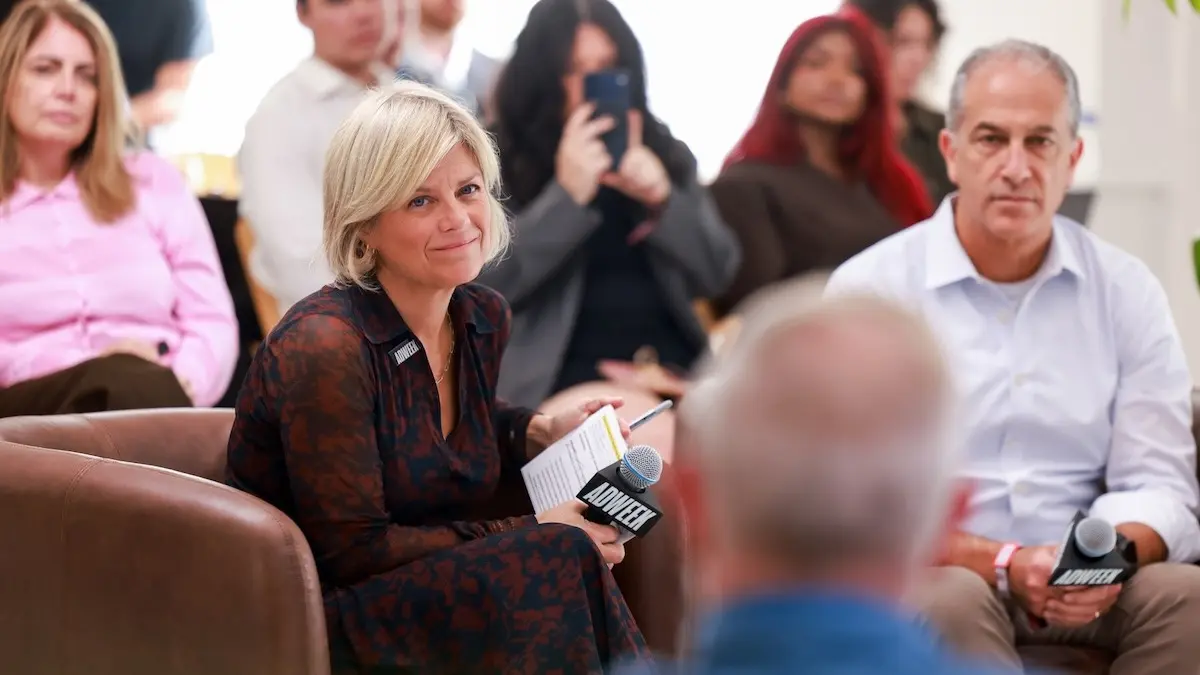
During a high-level industry dialogue at ADWEEK House Advertising HQ—co-hosted in strategic partnership with Publicis Health—leading executives from across the pharmaceutical, digital health, and agency ecosystems gathered to examine this paradigm shift. Moderated by ADWEEK’s Jenny Rooney, the panel featured prominent industry voices, including Matt McNally, Global CEO of Publicis Health; Fannie McWatt, PhD, Head of Data and AI Strategy at Publicis Health; Allison Ceraso, Chief Creative Officer at Digitas Health; Craig Romanok, Chief Commercial Officer at Digitas Health/Publicis Health; Katie Baldwin, Vice President of Consumer Marketing at AbbVie; and Peter Scherr, Chief Marketing Officer at Noom.
The consensus from the room was definitive: the healthcare marketing sector is navigating a monumental inflection point. As health seamlessly integrates into modern culture, brands can no longer rely on traditional, transactional models of engagement. Driven by the proliferation of wearable technology, consumer-grade AI, and vast data ecosystems, the future of health communications hinges on a delicate balance between rigorous clinical evidence, deep emotional intelligence, and predictive, friction-reducing support.
Detailed Chronology of the Modern Health Journey
To understand how healthcare marketing reached this juncture, industry leaders traced the evolution of the patient experience from a paternalistic, physician-centric model to today’s hyper-individualized, tech-enabled continuum.
The Era of the Empowered Patient to the Continuous Journey
For decades, the healthcare industry operated on a linear framework: a patient felt ill, scheduled an appointment, received a diagnosis from a doctor, and was prescribed a treatment plan. The patient’s role was largely reactive. Over the past fifteen years, that paradigm evolved into the "empowered patient" era, characterized by patients conducting their own research online, seeking second opinions, and taking a more active role in managing chronic conditions.
However, the panel noted that today’s journey has moved past mere empowerment; it has become continuous and omnipresent. Health is no longer an event—it is an ongoing state monitored, questioned, and managed across multiple digital touchpoints every single day.
Peter Scherr, CMO of Noom, illustrated this profound shift by sharing a deeply personal anecdote. His own father’s health crisis was detected not by a routine physical exam, but by an everyday consumer device.
"His Apple Watch detected a heart anomaly, prompting him to seek care that eventually led to a pacemaker," Scherr recounted. "He consulted the device before his doctor. It drove home the point that health is everywhere."
This shift means the initial "signal" of a health journey can originate virtually anywhere. A consumer might receive an automated notification from a fitness tracker, watch a viral testimonial from a creator managing a chronic illness on social media, or ask an AI model to decode complex blood work results. For marketers, this means the competitive landscape is no longer restricted to traditional media channels; brands must be present at the exact micro-moment a consumer first questions their well-being.
Supporting Context & Metrics: The Noise of Big Data
While the democratization of health data provides consumers with unprecedented visibility into their bodies, it has also introduced a heavy cognitive burden. The modern patient is perpetually tethered to an influx of quantitative metrics: step counts, sleep scores, continuous glucose monitoring graphs, VO2 max estimates, and raw genetic sequencing reports.
Data Masquerading as Answers
During the discussion, industry leaders addressed the unintended consequences of this data deluge. Rather than providing clarity, the sheer volume of unfiltered inputs often induces severe health anxiety and confusion.
"There’s a lot of data masquerading as answers," noted Noom CMO Peter Scherr, addressing the tension created by the endless proliferation of wearables, direct-to-consumer labs, and wellness apps. "It’s very overwhelming."
This environment creates a critical vulnerability—and a profound opportunity—for healthcare marketers. When consumers are drowning in raw data, brands that can successfully translate complexity into trusted, actionable guidance instantly establish deep brand equity. However, achieving this requires a sophisticated blend of human empathy and rigorous scientific backing.
The Dual Responsibility: Moving vs. Arming
Navigating this landscape requires brand architects to completely rethink their creative and strategic outputs. Katie Baldwin, Vice President of Consumer Marketing at AbbVie, framed this challenge as a dual responsibility that every pharmaceutical and health brand must shoulder.
"Do you move them or do you arm them?" Baldwin asked the audience. "Moving them emotionally is what we trust our advertising agencies to do, and arming them with information is now just as critical."
Baldwin emphasized that pharmaceutical and health brands must account for the holistic human experience—understanding the psychological highs and lows of living with a chronic condition, the physical barriers to adherence, and the emotional friction points that determine whether a patient successfully starts and stays on a therapeutic regimen.
Official Statements and Industry Insights
The intersection of artificial intelligence, creative storytelling, and cultural relevance dominated much of the dialogue, with executive leadership offering critical frameworks for navigating the technological revolution.
Beyond Optimization: Rethinking AI in Health
As artificial intelligence rapidly replaces traditional search engines as the primary discovery mechanism for consumers seeking health information, brands must evolve their digital strategies. Fannie McWatt, PhD, Head of Data and AI Strategy at Publicis Health, warned against falling into the trap of superficial optimization.
"Everybody’s talking about AEO [Answer Engine Optimization] and GEO [Generative Engine Optimization], but for us, it’s more than optimization," McWatt explained. "It’s actually looking at where AI is an influencer throughout the entire journey and what information in that particular situation needs to be retrieved at that moment."
McWatt also issued a vital cautionary note regarding the limitations of generative AI models in high-stakes environments like healthcare. Because large language models are structurally designed to generate fluent, confident text, they frequently present misinformation with the same authoritative tone as peer-reviewed clinical data.
"We have to be really careful when we’re building the AI algorithms and structuring evidence and providing the context around it," McWatt stressed, highlighting that confidence and empirical accuracy are not always synonymous.
Health as Culture
Perhaps the most striking evolution discussed during the ADWEEK House session is the wholesale cultural migration of health. No longer relegated to clinical journals or pharmaceutical commercials, health has permeated the very fabric of daily lifestyle, entertainment, and modern identity.
Allison Ceraso, Chief Creative Officer at Digitas Health, captured this metamorphosis succinctly:
"Health isn’t in culture. I think right now health is our culture. They are synonymous."
This cultural omnipresence demands that brands adopt a radically different tone of voice. Instead of relying on corporate jargon or detached medical disclaimers, successful health brands engage consumers through the lens of lived human experience. They acknowledge the private fears, the late-night anxieties, and the quiet moments of vulnerability that define how people make sense of their bodies.
Craig Romanok, Chief Commercial Officer at Digitas Health/Publicis Health, underscored the unprecedented nature of this transition. "There’s no doubt we are at a moment right now, an inflection point in this category, this industry, that we have never seen before," Romanok noted, urging peers to match the pace of consumer evolution with bold, imaginative marketing strategies.
Future Outlook: Moving from Personalization to Anticipation
Looking toward the horizon, the panel explored the next frontier of patient engagement: moving beyond reactive personalization into predictive anticipation.
The Evolution of Proactive Support
For years, digital marketing has chased the holy grail of "personalization"—delivering the right message to the right person at the right time. However, Publicis Health Global CEO Matt McNally argued that basic personalization is now merely table stakes in the modern healthcare ecosystem.
"It’s not enough just to know me. That’s table stakes," McNally asserted. "What do I need next? What am I going to need two weeks from now if I have a side effect that someone else on the product didn’t have?"
Anticipatory healthcare marketing requires connected data ecosystems that can map patient trajectories and predict friction points before they derail a treatment plan. If a patient is prescribed a complex biologic therapy, an anticipatory brand framework might proactively deliver educational resources regarding injection site management just days before the patient is scheduled to administer their second dose—effectively mitigating anxiety before it manifests.
The Fine Line Between Relevance and Intrusion
However, predictive capabilities come with a profound ethical responsibility. In the realm of personal health, the line between helpful anticipation and invasive surveillance is razor-thin. Consumers actively seek guidance and direction, but they fiercely reject intrusive corporate overreach.
To maintain trust, brands must ground every predictive interaction in strict data privacy compliance, absolute transparency, and genuine empathy. As Digitas Health CCO Allison Ceraso concluded:
"People don’t want your product all the time; they need it. So, you have to come into the conversation with empathy and understanding."
Conclusion
As the healthcare landscape continues its rapid evolution toward a predictive, proactive, and culturally integrated paradigm, technology alone will not suffice. The ultimate litmus test for health marketers will be their ability to harness advanced data architectures and artificial intelligence not merely to sell, but to humanize the journey—making critical healthcare moments feel clearer, better timed, and profoundly more supportive for every single consumer they serve.