

Executive Overview
In a surprising yet measured announcement delivered to thousands of the faithful gathered in St. Peter’s Square, Pope Leo XIV revealed on Sunday that he will soon undergo a surgical procedure to remove a small, localized nodule discovered in his lung. The pontiff’s disclosure, simultaneously broadcast across his official social media channels, struck a tone of calm transparency, emphasizing that the anomaly was identified during routine medical examinations at a remarkably early stage.
According to follow-up statements released by the Holy See, the surgery is scheduled to take place early next week. Medical teams anticipate an approximate one-week recovery period, to be spent under close observation at Rome’s historic Gemelli Hospital—an institution with a long-standing legacy of hosting and treating sovereign pontiffs. While the Vatican has assured the global Catholic community that ordinary administrative operations will proceed uninterrupted during the pope’s convalescence, key matters requiring the sovereign’s direct signature or immediate executive sign-off will experience a temporary hiatus.
Crucially, the announcement has also cast a shadow of uncertainty over the pope’s ambitious upcoming international itinerary. Pope Leo XIV is currently slated to embark on a demanding 11-day apostolic journey to South America on November 6, with scheduled stops in Uruguay, Argentina, and Peru. As medical specialists assess the post-operative recovery timeline, Vatican officials have yet to confirm whether this high-profile pastoral tour will proceed as planned or require rescheduling.
This comprehensive report examines the details of the announcement, the medical context surrounding pulmonary nodules, the administrative adjustments at the Vatican, and the broader implications for the pontificate’s upcoming geopolitical and pastoral engagements.
Detailed Chronology of the Announcement
The sequence of events leading up to the public revelation unfolded swiftly over the weekend, reflecting both the Vatican’s modern communication strategy and the personal desire of Pope Leo XIV to address the global community directly.
The Sunday Angelus Revelation
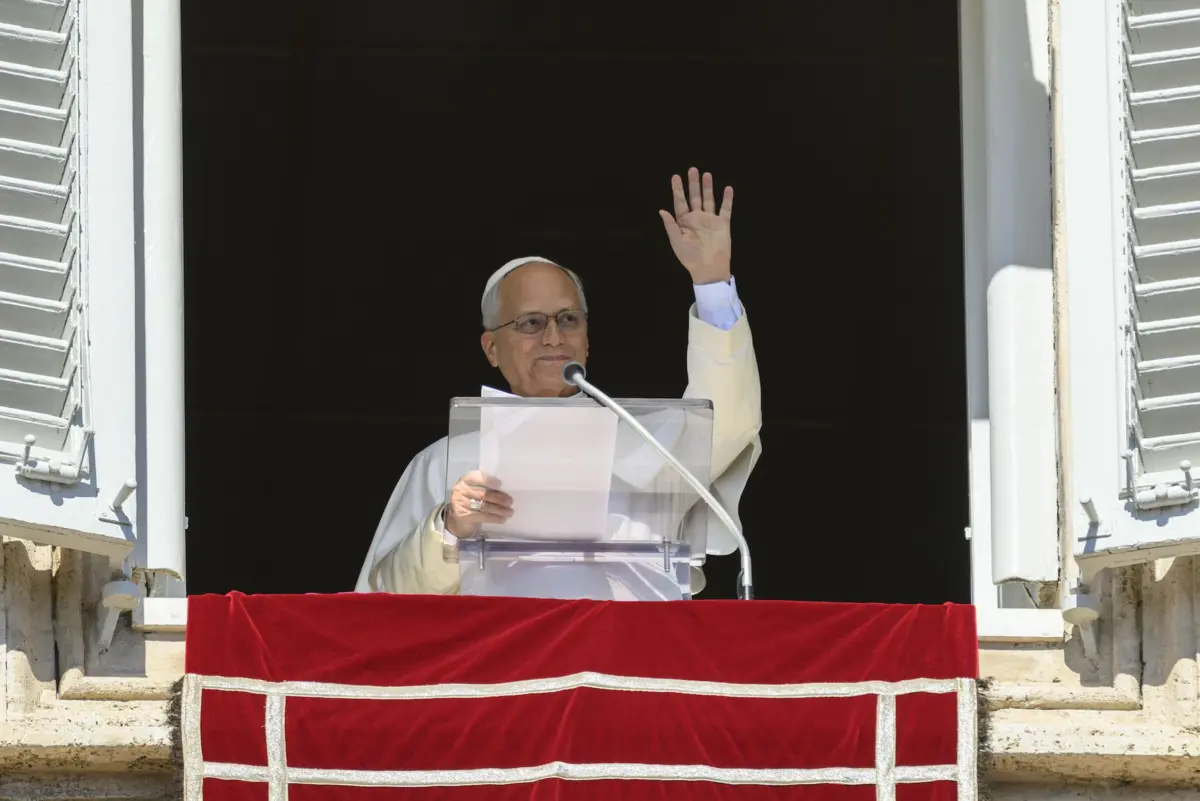
Gathered beneath a bright Roman autumn sky, pilgrims and tourists filled St. Peter’s Square on Sunday morning for the traditional Angelus prayer. Traditionally a moment for the pontiff to offer spiritual reflections on the Gospel and touch upon pressing global humanitarian concerns, the midday address took an unexpected turn when Pope Leo XIV shifted his remarks toward his personal health.
Speaking with a steady and clear voice, the pontiff shared the news of his recent medical evaluations with the assembled crowd. He noted that while the discovery of a pulmonary anomaly naturally brings concern, the circumstances surrounding its detection offer profound reassurance.
"Dear friends, during some recent medical examinations, the doctors found a small, localized nodule in my lung," Pope Leo XIV stated to the hushed square. "It was detected at a very early stage and is well-localized. The doctors believe that it is best to intervene, so, following their advice, I have decided to undergo surgery to remove it. The operation is already scheduled to take place in the coming days."
Simultaneous Digital Outreach
In alignment with contemporary Vatican communication protocols designed to ensure instantaneous global reach, the text of the pope’s statement was simultaneously published across his official social media platforms, most notably on X (formerly Twitter). The digital broadcast ensured that millions of Catholics and international observers worldwide received the news directly from the primary source, mitigating speculative reporting and panic.
Accompanying the announcement was a direct appeal for spiritual solidarity. Concluding his remarks both in person and online, the pontiff expressed gratitude to the global faithful, writing: "I thank you for your spiritual closeness and entrust myself to your prayers."
Vatican Press Office Clarification
Shortly following the public address, the Holy See Press Office issued a detailed logistical memorandum to accredited journalists. The supplementary briefing outlined the anticipated timeline for the medical intervention, confirming that the procedure will be executed early in the week at the Agostino Gemelli University Hospital. The statement outlined a projected hospital stay of approximately seven days to ensure proper post-surgical monitoring, breathing exercises, and recuperation before the pontiff returns to the Apostolic Palace.
Supporting Context & Medical Metrics
While the term "lung nodule" can evoke immediate anxiety among the public, medical professionals and specialized health reports emphasize that such findings are exceptionally common and frequently benign.
Understanding Pulmonary Nodules
Pulmonary nodules are small, discrete masses of tissue within the lung. Often referred to colloquially as "spots" on the lung, they measure less than three centimeters in diameter and are frequently discovered incidentally during diagnostic imaging, such as chest X-rays or computed tomography (CT) scans performed for unrelated health assessments.
- Benign vs. Malignant Rates: According to clinical data cited by major health networks like CNN, the vast majority of incidental lung nodules—roughly 90% to 95%—are non-cancerous (benign). They are frequently the residual trace of past localized infections, inflammation, or harmless scar tissue.
- The Significance of Early Detection: When nodules do present malignant characteristics or harbor pre-cancerous cells, early detection remains the single most critical factor in determining long-term prognosis. By identifying the mass while it is small and "well-localized"—meaning it has not invaded surrounding tissue or metastasized—surgeons can achieve high cure rates through minimally invasive or localized resections.
- The Decision to Intervene: In the case of Pope Leo XIV, the medical team’s decision to proactively remove the nodule rather than simply monitor it with serial imaging suggests a cautious, aggressive approach to safeguarding the pontiff’s health, eliminating potential future risks before complications can arise.
Historical Precedents at Gemelli Hospital
The Agostino Gemelli University Hospital in Rome has long served as the primary medical sanctuary for the papacy. Equipped with a dedicated, secure papal suite on its tenth floor—often humorously dubbed "Vatican III" by the Italian press—the facility has hosted numerous popes for surgeries, routine check-ups, and extended convalescences.
The choice of Gemelli ensures that Pope Leo XIV will receive world-class multidisciplinary care from a team of pulmonologists, thoracic surgeons, and critical care specialists who are intimately familiar with the unique security, logistical, and medical requirements of treating the Bishop of Rome.
Official Statements and Institutional Impact
The sudden announcement of a papal surgery inevitably raises questions regarding the continuity of governance within Vatican City State and the Roman Curia. The Holy See has moved quickly to reassure the faithful and institutional partners that governance structures remain robust and fully functional.
The Holy See’s Operational Stance
In its formal statements following the Sunday Angelus, the Vatican underscored that the daily administration of the universal Church will experience no disruption. Dicasteries, pontifical councils, and administrative offices will continue their routine duties unabated.
However, canon law and practical institutional realities dictate certain boundaries during a sovereign’s medical incapacitation or recovery:
- Decisions Awaiting Papal Sign-off: While departmental business will proceed, specific administrative acts, legal promulgations, episcopal appointments, and diplomatic documents requiring the direct review, input, or signature of Pope Leo XIV will be temporarily placed on hold.
- Contingency Protocols: The Vatican secretariat has established communication links between the pope’s medical team and senior Curial officials to handle urgent matters of state should absolute necessity dictate intervention during the recovery window. Nevertheless, the overarching directive is to provide the pontiff with a low-stress environment conducive to physical healing.
Global Ecumenical and Diplomatic Reactions
Within hours of the announcement, religious leaders, heads of state, and interfaith representatives from around the globe dispatched messages of support, solidarity, and prayers for a swift recovery.
- Episcopal Conferences: National bishops’ conferences across the Americas, Europe, Africa, and Asia issued statements urging local parishes to dedicate upcoming masses and prayer vigils to the health and well-being of the Holy Father.
- International Leaders: Political figures, crossing ideological and geographic divides, conveyed wishes for a successful operation, highlighting the pope’s vital moral voice on international peace, climate action, and social justice.
Future Outlook: The South American Itinerary and Beyond
Perhaps the most pressing logistical question arising from the medical announcement concerns the fate of Pope Leo XIV’s upcoming international travel schedule.
The South American Apostolic Journey
As currently scheduled, Pope Leo XIV is due to depart Rome on November 6 for an intensive 11-day pastoral tour of South America. The ambitious itinerary includes multi-city stops in Uruguay, Argentina, and Peru—a journey characterized by demanding travel days, large-scale public liturgies, high-altitude adjustments, and rigorous diplomatic engagements.
Assessing the Post-Operative Recovery Timeline
Medical experts note that while a one-week hospital stay is standard for recovering from a localized pulmonary nodule resection, full physical recuperation and the restoration of robust stamina required for international travel can take significantly longer, depending on whether the surgery is performed via minimally invasive thoracoscopic techniques or requires a more traditional approach.
- The Decision Window: Vatican logistics teams, alongside the papal medical board, are expected to evaluate the pontiff’s recovery progress toward the end of the first week post-surgery.
- Potential Scenarios:
- Full Confirmation: If healing proceeds without complication and respiratory capacity remains uncompromised, the tour could proceed as scheduled, though potentially with a streamlined daily agenda to prevent exhaustion.
- Postponement or Modification: Should healing require a more extended convalescence, the Holy See may decide to postpone the South American journey to a later date or reschedule specific legs of the trip to ensure the pontiff’s long-term health is not compromised.
Conclusion
As Pope Leo XIV prepares to enter Gemelli Hospital in the coming days, the global Catholic community remains united in prayer and watchful anticipation. The transparency with which the pontiff shared his medical diagnosis reflects a modern pastoral approach that values honesty and communal solidarity. While the coming days will bring necessary adjustments to the Vatican’s administrative rhythm and potential modifications to international travel plans, the primary focus remains fixed on a successful surgical intervention and a swift, complete recovery for the Bishop of Rome.