

Executive Overview
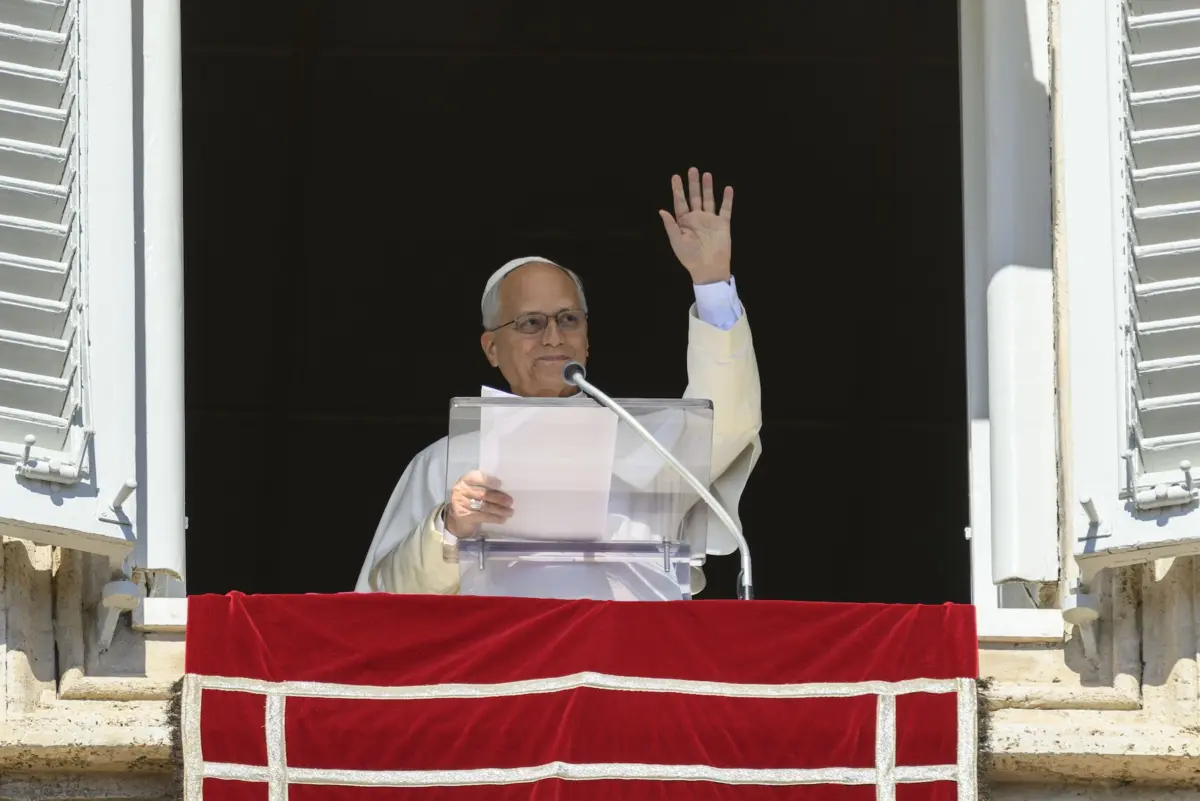
In a significant medical development that has immediately drawn global attention, Pope Leo XIV announced on Sunday that he will undergo thoracic surgery in the coming days to remove a localized nodule discovered in his lung. The pontiff made the personal disclosure to the faithful gathered in St. Peter’s Square during the traditional Sunday Angelus prayer, reinforcing the announcement almost simultaneously through his official social media channels.
According to medical advisories released by the Holy See and outlined directly by the pope, the anomaly was identified during routine, recent medical evaluations. Healthcare professionals caught the condition at a remarkably early stage, describing the mass as "well-localized." Acting on strict medical recommendations, Pope Leo XIV opted for immediate surgical intervention to excise the nodule before any potential complications can arise.
While the Vatican and attending physicians have not yet disclosed whether the biopsy or preliminary pathology of the nodule indicates malignancy, medical experts emphasize that the vast majority of incidentally discovered lung nodules are benign. Nevertheless, the decision to proceed with surgical removal highlights a proactive, cautious strategy by the pontiff’s medical team to safeguard his long-term health.
The impending procedure requires hospitalization—anticipated to take place at Rome’s historic Gemelli Hospital, which features a dedicated papal suite—and is expected to necessitate a recovery period of approximately one week. While standard governance of the Holy See will continue during his recuperation, critical decisions requiring direct papal sign-off or intervention will experience a brief hiatus. Furthermore, the surgery casts a temporary shadow of uncertainty over a major, 11-day apostolic journey to South America currently slated for early November, during which the pontiff is scheduled to visit Uruguay, Argentina, and Peru. As millions of Catholics worldwide respond with an outpouring of prayer and solidarity, the global community awaits further clinical updates from the Vatican Press Office.
Detailed Chronology of Events
The unfolding medical situation regarding Pope Leo XIV’s health developed rapidly over the course of a single weekend, transitioning from private diagnostic evaluations to a public global announcement.
The Diagnostic Phase
In the weeks leading up to the announcement, Pope Leo XIV underwent a series of routine physical and diagnostic examinations managed by his personal medical staff. These check-ups are standard protocol for the supreme pontiff, whose demanding schedule and high-stress responsibilities require continuous health monitoring. During these imaging sessions, physicians identified a small, abnormal density within the lung tissue.
Subsequent diagnostic tests—likely including high-resolution computed tomography (CT) scans and specialized pulmonary evaluations—confirmed the presence of a localized nodule. Because the mass was identified at a nascent stage, the medical team had a unique window of opportunity to recommend intervention before the condition could evolve or cause symptomatic interference with the pope’s daily duties.
The Public Disclosure in St. Peter’s Square
On Sunday morning, amid a robust gathering of pilgrims, tourists, and clergy members in St. Peter’s Square for the Angelus prayer, Pope Leo XIV addressed the crowd directly regarding his health. Departing from routine addresses, the pontiff spoke with a calm and reassuring demeanor, sharing the news personally to avoid sensationalism or misinformation.
"Dear friends, during some recent medical examinations, the doctors found a small, localized nodule in my lung," Pope Leo XIV stated to the assembled multitude. "It was detected at a very early stage and is well-localized. The doctors believe that it is best to intervene, so, following their advice, I have decided to undergo surgery to remove it. The operation is already scheduled to take place in the coming days."
In tandem with his oral remarks, the official papal X (formerly Twitter) account (@Pontifex) broadcasted the statement globally, ensuring that millions of followers across continents received the news directly from the source. The message concluded with a personal appeal to the global flock: "I thank you for your spiritual closeness and entrust myself to your prayers."
Supporting Context & Medical Metrics
The announcement has naturally sparked widespread public curiosity and concern regarding the nature of lung nodules, thoracic surgeries for elderly patients, and the implications for the papacy.
Understanding Pulmonary Nodules
Medical literature defines a pulmonary nodule—often colloquially referred to as a "spot on the lung"—as a small, focal shadow or density within the lung parenchyma that is less than three centimeters in diameter. According to data from pulmonary health organizations and institutions such as the American Thoracic Society, the vast majority of incidentally discovered lung nodules are benign (non-cancerous). Many are the result of prior, healed infections, benign scar tissue, or minor localized inflammation.
However, when medical professionals encounter even a benign-appearing nodule in a patient of advanced age, they must weigh the risks of observation versus resection. Early-stage, well-localized nodules that are surgically removed offer an exceptionally high rate of positive clinical outcomes. By opting to excise the nodule now, Pope Leo XIV’s medical team is pursuing an aggressive, preventive strategy to ensure the anomaly poses no future health threats.
Gemelli Hospital: The Vatican’s Medical Stronghold
The upcoming procedure is expected to be performed at the Agostino Gemelli University Hospital in Rome, an institution with a long, historic relationship with the papacy. Commonly referred to simply as Gemelli Hospital, this premier Italian medical center features a specialized, secure tenth-floor apartment explicitly designed and reserved for the medical care of reigning popes.
Historically, Gemelli has served as the primary medical facility for modern popes, including Pope John Paul II—who famously quipped from his hospital window that the hospital was affectionately nicknamed "Vatican II"—and Pope Francis, who has received treatment there for respiratory and abdominal conditions in recent years. The facility boasts state-of-the-art thoracic surgery units, advanced diagnostic laboratories, and dedicated security protocols capable of maintaining the absolute privacy and operational security of the head of the Catholic Church.
Official Statements and Institutional Impact
In the wake of the pontiff’s announcement, the Holy See Press Office released supplementary details outlining the operational timeline of the surgery and the anticipated protocol for the governance of Vatican City State and the global Church during the recovery phase.
The Vatican Press Office Briefing
A formal communique issued by the Vatican confirmed that the surgical procedure is scheduled for early in the week. Following the operation, Pope Leo XIV is expected to remain hospitalized at Gemelli Hospital for approximately seven days to allow for initial post-operative monitoring, pain management, and pulmonary rehabilitation.
"The Holy Father’s spirits are high, and he approaches this medical intervention with serenity and faith," a senior Vatican official noted off-the-record. "The medical staff is optimistic about a swift and uncomplicated recovery, given the early detection and the localized nature of the nodule."
Governance and Administrative Continuity
The operational machinery of the Roman Curia is designed to withstand temporary disruptions in the physical presence of the supreme pontiff. The Vatican confirmed that routine administrative functions will continue without interruption during Pope Leo XIV’s hospital stay.
However, under canon law and Vatican administrative procedures, certain high-level decisions, decree promulgations, and official document signatures require the personal authorization of the pope. During his week-long hospitalization and immediate post-operative rest period at the Vatican following discharge, these specific executive actions will be temporarily placed on hold. Department heads within the Secretariat of State and various Dicasteries have been instructed to manage ongoing affairs while deferring final approvals until the pontiff resumes his full schedule.
Future Outlook & International Itineraries
As the global Catholic community processes the news of the upcoming surgery, attention has naturally turned toward the immediate future of the pontificate, including high-profile international travel plans.
The South American Apostolic Journey
On November 6, Pope Leo XIV is currently scheduled to embark on an ambitious, 11-day apostolic journey to South America. The rigorous itinerary includes official state visits and pastoral engagements across three nations:
- Uruguay: Focusing on regional diplomatic relations, youth outreach, and local faith communities.
- Argentina: A deeply anticipated homecoming-style journey to the region, involving large-scale open-air masses and meetings with civil and religious leaders.
- Peru: Encounters with indigenous populations, social welfare institutions, and pastoral gatherings in Lima and surrounding provinces.
The immense physical toll of such an extended intercontinental tour—featuring multiple time-zone shifts, heavy crowds, and back-to-back public appearances—raises critical questions regarding its feasibility in the wake of lung surgery.
When asked whether the operation would necessitate a postponement or cancellation of the South American tour, Vatican spokespersons indicated that no final decision has been made. Officials stressed that any adjustments to the papal calendar will depend entirely on the success of the surgery and the objective assessment of his recovery trajectory by his medical team. A definitive announcement regarding the November trip is expected to be made toward the end of the pope’s post-operative recovery period.
Global Solidarity and Prayers
In parishes, cathedrals, and basilicas spanning every continent, the faithful have responded to the pope’s request for spiritual closeness with an unprecedented wave of prayer vigils and mass intentions. Religious leaders from various Christian denominations, as well as international political figures, have also issued statements wishing the pontiff a successful procedure and a rapid, complete restoration of health.
As Pope Leo XIV prepares to enter Gemelli Hospital in the coming days, the world watches with bated breath, trusting in the combination of modern medical science, the expertise of his dedicated physicians, and the resilience of the pontiff himself.