

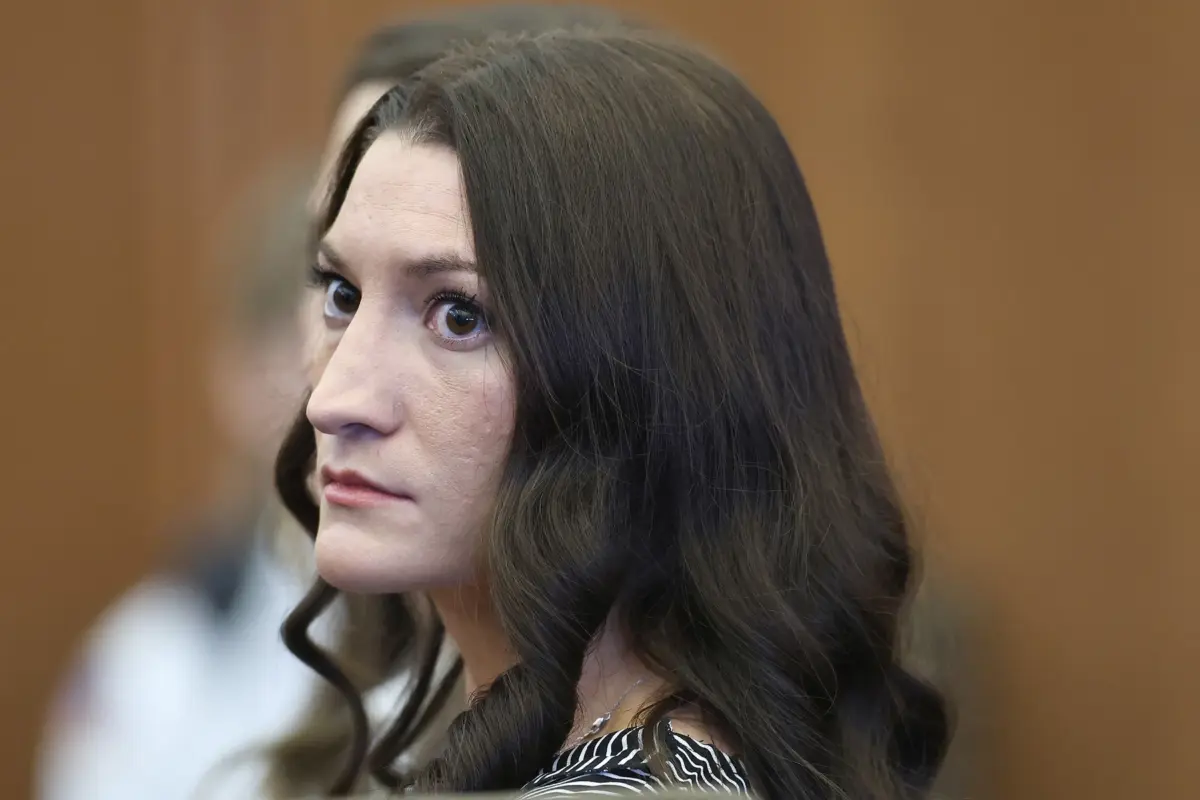
Executive Overview
The tragic saga surrounding Lindsay Clancy—the Massachusetts mother whose previous trial for the 2023 killings of her three young children ended in a dramatic and contentious mistrial—is officially heading back to the courtroom. Massachusetts Judge William Sullivan announced during a hearing that a new trial is scheduled to begin on March 29. The decision follows a grueling six-week proceeding this past summer that captivated national attention, deeply polarized the public, and ultimately collapsed in September when a heavily divided jury declared itself hopelessly deadlocked.
While prosecutors have not yet formally clarified whether they intend to re-try Clancy exclusively on first-degree murder charges, lesser homicidal counts, or alter their prosecutorial strategy entirely, legal experts point to the necessity of a new trial as a strong indicator that the state plans to maintain its first-degree murder indictment. Under Massachusetts legal frameworks, a judge could theoretically rule on lesser charges like second-degree murder or manslaughter without necessitating a completely fresh jury trial, signaling that the prosecution remains committed to securing the highest level of accountability.
The upcoming proceedings promise to unearth the same harrowing questions that dominated the initial trial: Where is the legal and moral boundary between premeditated murder and the catastrophic breakdown of a mind consumed by severe postpartum mental illness? Clancy’s defense team, spearheaded by attorney Kevin Reddington, has consistently maintained that Clancy was suffering from acute postpartum psychosis—experiencing vivid auditory hallucinations that commanded her to strangle her children, Cora, 5, Dawson, 3, and 8-month-old Callan, before attempting to take her own life.
As Clancy remains held in custody at a state mental hospital, her case continues to function as a devastating flashpoint in broader cultural and legal debates regarding how the American justice system evaluates postpartum psychiatric crises, the limits of double jeopardy, and the deep emotional toll exacted on every facet of the community involved. With a vital pre-trial hearing scheduled for December 30, the legal apparatus prepares once more to dissect the anatomy of an unprecedented domestic tragedy.
Detailed Chronology: From Duxbury to a Deadlocked Jury
To fully understand the gravity of the upcoming March trial, one must retrace the harrowing timeline of events that began in the quiet, affluent coastal town of Duxbury, Massachusetts, and spiraled into one of the most high-profile criminal cases of the decade.
The Tragedy of January 2023
On the evening of January 24, 2023, emergency responders rushed to a Duxbury residence following a 911 call placed by Lindsay Clancy’s husband, Patrick Clancy, who returned home to find unimaginable horror. Inside the home, their three children—Cora (5), Dawson (3), and Callan (8 months)—were found unconscious with signs of severe trauma. Lindsay Clancy herself was discovered severely injured on the ground outside the home, having sustained critical trauma from a self-inflicted leap out of a second-story window.
While Cora and Dawson were pronounced dead at the scene, baby Callan succumbed to his injuries days later at a Boston hospital. Within days, investigators pieced together the immediate physical sequence of events, leading to hospital-bed arraignment charges of murder against Lindsay Clancy as she recovered from her extensive physical injuries under heavy guard.
The Six-Week Summer Trial
The case finally reached a courtroom before Judge William Sullivan this past summer, transforming into a six-week legal battle characterized by harrowing emotional testimony, fierce medical debates, and intense media scrutiny. Prosecutors laid out a narrative suggesting calculated planning, pointing to digital searches, phone records, and physical actions they argued demonstrated that Clancy possessed a clear understanding of her actions.
Conversely, the defense presented a devastating portrait of a dedicated mother and nurse who had slipped past the safety nets of the healthcare system. Reddington introduced clinical testimony detailing Clancy’s desperate descent into profound postpartum depression and psychosis—a condition exacerbated, the defense argued, by an aggressive, poorly managed cocktail of psychiatric medications prescribed in the weeks leading up to the tragedy. Witnesses testified to her rapidly deteriorating mental state, radical personality shifts, and desperate pleas for psychiatric help in the days immediately preceding the killings.
The September Mistrial and Jury Fracture
By September, the trial reached its dramatic climax when the jury began deliberations. After days of intensive discussions, the panel sent a note to Judge Sullivan indicating that they were completely deadlocked and unable to reach a unanimous verdict. A mistrial was subsequently declared, abruptly halting the proceedings without a legal resolution.
Post-trial revelations exposed deep, acrimonious divisions within the jury room. It was later revealed that 11 of the 12 jurors had favored acquitting Clancy, concluding that her mental state precluded criminal responsibility. However, a single holdout juror—identified as Michael P. Desronvil—firmly stood his ground, maintaining that Clancy was fully aware of her actions.
In a subsequent public statement defending his position, Desronvil stated, "Based on all the physical evidence, key witnesses and what the prosecution presented, I thought it was enough proof that she knew exactly what she was doing and planned."
Other jurors strongly criticized Desronvil’s approach, with one describing him as "very arrogant" and claiming he had initially admitted to having reasonable doubts about her guilt before hardening his stance. This bitter internal split underscored the profound difficulty of applying rigid legal definitions of sanity and intent to cases involving catastrophic psychiatric deterioration.
Supporting Context & Metrics: Public Sentiment, Financial Fallout, and Legal Battles
The Lindsay Clancy case has transcended the walls of the Massachusetts courtroom, generating waves of financial support, intense public debate, and aggressive legal maneuvers that highlight the deep societal polarization surrounding the tragedy.
The GoFundMe Phenomenon and Community Division
In the wake of the September mistrial, the collateral damage experienced by Clancy’s extended family came into sharp focus. A GoFundMe campaign established to support Clancy’s grieving parents—whose lives, in the words of organizers, were "put on hold" as they navigate the emotional, logistical, and financial strains of supporting their daughter through continuous legal battles—rapidly surged past $1.1 million in donations.
The staggering financial milestone highlights a deeply fractured public response. While a vocal segment of the population views any financial or sympathetic support for the Clancy family as an insult to the memory of the three murdered children, a massive counter-segment views the family—and Lindsay herself—as secondary victims of a broken mental healthcare system that failed to properly diagnose and treat acute postpartum psychosis.
Legal Maneuvers: The Debate Over Double Jeopardy and Executive Action
Defense attorney Kevin Reddington has taken an aggressive stance against the state’s decision to pursue a retrial, arguing that putting Clancy through another grueling legal proceeding constitutes a form of cruel and unusual punishment. Reddington has even gone so far as to petition President Donald Trump for a pardon, a long-shot maneuver reflecting the defense’s desperation to shield a deeply compromised psychiatric patient from further criminal prosecution.
Furthermore, Reddington has raised legal arguments centered on the concept of double jeopardy, asserting that the state should not be permitted to roll the dice a second time after failing to secure a unanimous conviction from a jury where an overwhelming supermajority favored acquittal. However, established criminal procedure permits retrials following mistrials caused by deadlocked juries, paving the way for the scheduled March 29 court date.
Official Statements and Institutional Responses
The legal maneuvering and procedural updates have drawn commentary from key stakeholders across the judicial and medical landscapes.
Judge William Sullivan’s formal announcement of the March 29 trial date set the gears of the justice system back into motion, cutting through months of post-mistrial speculation. Yet, the relative silence from the District Attorney’s office regarding the exact tier of charges—whether they will narrow their focus or re-indict on first-degree murder—leaves a layer of tactical ambiguity that defense attorneys must navigate in the coming weeks.
Medical and advocacy organizations have also weighed in, albeit indirectly, through the ongoing national discourse surrounding the trial. Mental health advocates have long pointed to the Clancy case as a glaring indictment of how postpartum psychiatric conditions are stigmatized, misunderstood, and mishandled by both general practitioners and institutional emergency systems.
Dr. Sarah Jenkins, a leading maternal mental health researcher not directly involved in the case, noted in a recent symposium commentary: "When society treats postpartum psychosis as a simple matter of criminal deviance rather than a catastrophic medical emergency of the brain, we fail not only the mother experiencing the break from reality, but we fail to build the protective systems necessary to keep children safe from preventable tragedies."
Meanwhile, the prosecution maintains that the physical evidence—including the precise actions taken during and immediately after the tragedy—speaks louder than clinical retrofitting. Their position asserts that regardless of psychiatric distress, the threshold for criminal culpability and premeditation was met, necessitating a definitive judgment by a fresh jury of Massachusetts citizens.
Future Outlook: The Road to March 29
As the legal teams prepare for the upcoming proceedings, several critical milestones and procedural hurdles loom on the horizon.
+-----------------------------------------------------------------+
|                       TIMELINE TO RETRIAL                       |
+-----------------------------------------------------------------+
|  [December 30]  --> Pre-trial hearing & motion filings          |
|  [Early 2026]   --> Resolution of evidentiary challenges         |
|  [March 29]     --> Opening statements of the second trial       |
+-----------------------------------------------------------------+
The December 30 Pre-Trial Hearing
The immediate next phase in the legal saga will unfold on December 30, when Judge Sullivan presides over a critical pre-trial hearing. During this session, both the prosecution and defense are expected to file preliminary motions, address evidentiary parameters, and potentially clarify the exact nature of the charges Clancy will face. This hearing will serve as a vital operational blueprint for how the second trial will be conducted, potentially introducing new expert witnesses or modified legal arguments shaped by the lessons learned from the summer mistrial.
Custody and Care
Presently, Lindsay Clancy remains confined under secure psychiatric care at a Massachusetts state hospital, where she has been treated since her physical stabilization following the events of January 2023. Her ongoing medical status remains a foundational element of her defense; any shifts in her psychiatric evaluation could significantly influence defense strategies or competency assessments moving forward.
What Lies Ahead for the Jury Pool
Perhaps the most formidable challenge facing the court system in late March will be jury selection. Finding an impartial panel in a state—and indeed a nation—where the details of the Lindsay Clancy case have been broadcast, analyzed, and debated ad nauseam will require an exhaustive voir dire process. Prospective jurors will have to demonstrate an ability to set aside preconceived notions regarding postpartum depression, criminal intent, and the outcome of the previous trial.
Ultimately, the retrial beginning on March 29 will not merely rehash old testimony; it will test the limits of our legal system’s capacity to render justice when a terrible crime intersects with profound psychological devastation. As the courtroom doors open once more, a fractured community and a closely watching nation await a resolution to one of the most agonizing chapters in modern legal history.
