

Executive Overview
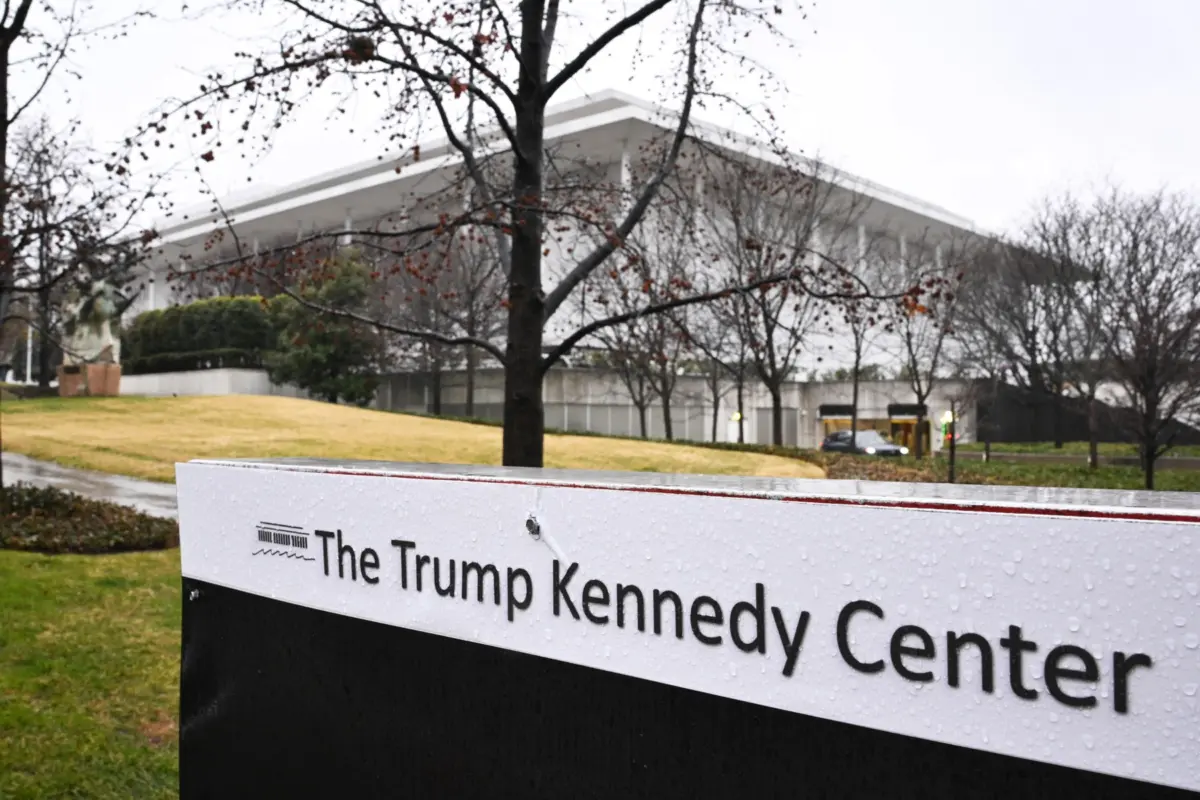
The John F. Kennedy Center for the Performing Arts—long revered as America’s cultural crown jewel and a living memorial to the 35th U.S. President—finds itself at the epicenter of an unprecedented collision between partisan politics, financial peril, and the performing arts industry. Against a backdrop of ongoing courtroom battles, plummeting revenues, and an existential threat of demolition, the institution has announced the hiring of veteran music representative Rick Canny as its new artistic director.
Canny, widely known for managing rock heavyweights such as Mötley Crüe drummer Tommy Lee, Creed frontman Scott Stapp, and rock legends ZZ Top, steps into the role with a sweeping mandate. He will be responsible for spearheading the creative direction of the center’s programming, overseeing marquee events, consulting on complex booking strategies, orchestrating pricing and ticketing models, expanding media coverage, and securing critical industry sponsorships.
However, Canny’s arrival has intensified an already volatile internal and external climate. Former staff members and high-ranking artistic leaders have raised sharp ethical and financial questions regarding his steep consulting fees, unearthed in internal memos during a period when the institution’s very survival is in question. Furthermore, Canny’s appointment arrives while the venue remains locked in a high-stakes legal battle involving President Donald Trump. Following a 2025 board takeover, intense nationwide boycotts by legendary artists, and a bitter fight over the physical structure of the building itself, the Kennedy Center’s future is no longer just a matter of cultural debate—it is a daily constitutional and legal drama.
This report examines the intricate timeline of events leading to Canny’s appointment, analyzes the deep financial crisis gripping the venue, explores the explosive internal memos detailing his compensation, and evaluates the uncertain legal horizon facing one of America’s most storied cultural institutions.
Detailed Chronology
To fully understand the gravity of Rick Canny’s appointment, it is necessary to retrace the rapid deterioration of the Kennedy Center’s political, structural, and financial stability over the past two years.
The 2025 Board Takeover and the Rebranding Backlash
The seeds of the current crisis were planted in 2025, when President Donald Trump executed a series of maneuvers to assert administrative control over the historic Washington, D.C., venue. Utilizing executive influence, the administration filled the center’s board of trustees and high-ranking administrative staff with loyalists and pro-Trump officials.
Almost immediately upon securing a board majority, the newly reconstituted leadership proposed and voted on a measure to affix President Trump’s name to the building. What the board likely anticipated as a routine administrative honor instead triggered a massive, nationwide cultural uprising.
The Great Boycott of 2025
The decision to brand the institution with Trump’s name galvanized the American creative community. A cascade of high-profile artists, touring productions, and cultural icons launched immediate, sweeping boycotts against the venue.
Among the high-profile casualties of the boycott was a major national touring production of Hamilton, followed closely by refusals to perform from legendary songstress Barbra Streisand, the San Francisco Ballet, acclaimed contemporary composer Philip Glass, and visionary comedian and creator Issa Rae, among dozens of others. The message from the artistic community was unequivocal: the Kennedy Center was intended to be a nonpartisan national monument to the arts, not a vehicle for personal political branding.
Legal Retaliation and the Threat of Demolition
As public pressure mounted and performances were canceled en masse, the legal front expanded. In May, a federal judge intervened, ruling that the signage bearing Trump’s name violated federal oversight protections and ordering its immediate removal.
Rather than backing down, the administration escalated its posture. The threat from the executive branch became stark and direct: restore the presidential signage to the building, or face plans to completely demolish the historic Kennedy Center structure.
The Fall 2026 Legal Injunction
By September 2026, the battle had officially entered the federal court system. A federal judge issued a critical ruling dictating that the administration must legally provide at least 30 days of advance public notice before taking any physical action to tear down the Kennedy Center. While this ruling temporarily staved off immediate bulldozers, the litigation remains ongoing, leaving the physical security of the building suspended in a fragile legal limbo.
The Hiring of Rick Canny (October 2026)
It was directly against this backdrop of courtroom battles, empty halls, and an existential threat of physical destruction that NPR and the New York Times broke the news in October 2026: the Kennedy Center had officially hired Rick Canny as its new artistic director to steer the institution through its darkest hour.
Supporting Context & Metrics: Financial Freefall and Internal Dissent
While the public face of the Kennedy Center controversy has centered on political naming rights and architectural preservation, the internal reality has been defined by an unmitigated economic disaster.
Plummeting Revenues and the Threat of Bankruptcy
Following the 2025 board takeover and the subsequent artist boycotts, revenue at the Kennedy Center plummeted drastically. Without the draw of premier touring acts, blockbuster musicals, and marquee classical performances, ticket sales dried up almost overnight.
By mid-2026, financial disclosures indicated that the institution was hemorrhaging capital at an unsustainable rate. Members of the board publicly warned that continued, compounded financial losses could soon leave the center entirely unable to pay its administrative and stage staff, pushing the historic institution perilously close to bankruptcy.
The Leaked Memos: Scrutiny Over Canny’s Consulting Fees
It is within this fragile fiscal climate that Canny’s financial arrangement has drawn intense scrutiny from former leadership and internal whistleblowers. According to internal documents and memos obtained by NPR and reported by the New York Times, top brass at the center—including former Senior Director of Music Programming Sammy Miller—expressed deep alarm over the exorbitant sums being paid to Canny for his preliminary consulting work.
The internal documents revealed that during a single month of consulting work prior to his official appointment, Canny billed the center $30,000 in professional consulting fees. A separate billing cycle uncovered charges totaling $28,000, which included both consulting fees and first-class, round-trip airfare between his base in Los Angeles, California, and Washington, D.C.
For an institution staring down the barrel of payroll insolvency and bankruptcy, these luxury travel expenditures and high monthly retainers sparked fierce internal pushback. Critics within the organization argued that pouring massive sums into the pockets of a single rock manager was fiscally irresponsible while rank-and-file staff faced potential layoffs and pay freezes.
When pressed for comment by the New York Times, representatives for the Kennedy Center defended the trajectory of the hire, noting that the leaked invoices did not reflect Canny’s permanent, post-appointment salary structure. However, the administration pointedly declined to disclose the exact financial terms of Canny’s new contract.
Official Statements and Internal Communications
The ideological and strategic divide between the legacy cultural establishment and the new administrative regime is laid bare in statements and internal emails obtained by investigative journalists.
The Administration’s Rationale
In an official statement provided to the New York Times, representatives for the Kennedy Center framed Canny’s aggressive hiring as a non-negotiable step for institutional survival, regardless of whether the physical building remains open or undergoes mandatory infrastructure closures:
"Regardless of building closure timelines, the center must continue to curate programming during infrastructure upgrades and deliver a commanding reopening season that brings audiences back and puts the center on stable financial footing."
The statement underscores a belief that only a high-powered industry insider with deep ties to mainstream commercial entertainment can break through the stigma of the recent boycotts and inject commercial viability back into the venue.
Canny’s Unflinching Defense
Rick Canny himself has shown no hesitation in stepping into the line of fire. In an internal email intercepted and published by the New York Times, Canny made a forceful, unapologetic case for his leadership style and his perceived monopoly on institutional salvation:
"I know what it will take to reset and move forward. I’m committed to this effort! I should be the face and voice to our industry. There is no one else at the center who can do this — unless you hire someone new."
Canny’s supporters argue that his extensive Rolodex—featuring multi-platinum rock acts, stadium-tier musicians, and mainstream commercial promoters—is precisely the kind of shock therapy the high-culture venue needs to modernize its audience base, boost ticket sales, and distance itself from its legacy of institutional elitism.
Conversely, detractors counter that Canny’s heavy reliance on classic rock and commercial heavyweights represents a fundamental betrayal of the Kennedy Center’s historical mission as a multidisciplinary home for jazz, ballet, opera, theater, and avant-garde composition.
Future Outlook: A Cultural Crossroads
As the final quarter of 2026 unfolds, the Kennedy Center stands at the most precarious crossroads in its history. The institution faces a multi-front war for its identity, its finances, and its physical existence.
1. The Commercial Gamble
Can Rick Canny successfully utilize his rock-and-roll pedigree to resurrect the center’s bottom line? The strategy relies on pivoting away from traditional, high-brow programming toward high-grossing commercial acts, strategic sponsorships, and dynamic pricing models. If Canny can deliver sell-out crowds and restore investor confidence, he will be vindicated as the savior who rescued the institution from bankruptcy. If he fails—or if top-tier artists maintain their strict boycotts—the financial hemorrhage will only accelerate.
2. The Legal Damocles Sword
Above all artistic and financial planning hangs the shadow of the federal judiciary. While the September 2026 injunction protects the building from sudden, unannounced demolition by requiring a 30-day notice, the underlying legal battle between the federal government and preservationists is far from resolved. A change in federal judicial rulings or executive actions could instantly render Canny’s booking strategies and programming plans entirely moot.
3. The Soul of a National Memorial
Beyond the spreadsheets and the courtroom filings lies the intangible question of cultural heritage. The John F. Kennedy Center was established by Congress as a living national memorial to foster and showcase the performing arts in all their diversity. Whether that mission can survive a partisan political takeover, a scorched-earth public relations crisis, and a pivot toward hard-nosed commercial rock management remains the ultimate unanswered question.
For now, the curtain remains up, the lawyers remain in court, and all eyes are on Washington to see whether the grand stage of the Kennedy Center will experience a triumphant renaissance or a tragic final act.