

Executive Overview
The John F. Kennedy Center for the Performing Arts—long revered as America’s premier national cultural nexus and a living monument to the slain 35th president—finds itself trapped at the violent intersection of high-stakes federal politics, massive institutional financial strain, and a bitter legal battle for its very survival. Amid swirling uncertainty regarding the physical preservation of the historic Washington, D.C., landmark, the institution has announced the hiring of veteran music representative and artist manager Rick Canny as its new artistic director.
Canny, a prominent figure in the rock-and-roll management sphere known for representing high-profile acts such as Mötley Crüe drummer Tommy Lee, Creed frontman Scott Stapp, and rock legends ZZ Top, steps into an extraordinarily volatile environment. In his new capacity, Canny will assume sweeping control over the creative direction of the center’s programming, major marquee events, booking strategies, pricing and ticketing frameworks, media relations, and lucrative industry sponsorships.
Yet, this high-profile appointment arrives against a backdrop of deep-seated internal dissent, plummeting revenues, and a hostile political takeover initiated by President Donald Trump. Since late 2025, the institution has been reshaped by a pro-Trump administration overhaul of its board and high-ranking executive staff. This shift triggered mass boycotts from elite artists and touring productions—ranging from Barbra Streisand and the San Francisco Ballet to the touring cast of Hamilton—and sparked an ongoing existential debate over whether the landmark will be radically altered, defunded, or ultimately demolished.
As Canny attempts to orchestrate a high-stakes cultural reset to salvage the institution’s finances, investigative disclosures reveal intense internal resistance regarding his steep consulting fees and compensation packages. With federal judges intervening in a tangled web of lawsuits governing everything from building signage to demolition threats, the appointment of Rick Canny may either be the bold stroke of business pragmatism that saves the venue or the final, discordant chord in the dismantling of a national cultural treasure.
Detailed Chronology: The Fall and Re-Engineering of a National Landmark
The 2025 Administrative Overhaul and the Naming Controversy
The modern crisis enveloping the Kennedy Center began in earnest in 2025, when President Donald Trump initiated a sweeping administrative restructure of the federally chartered institution. Utilizing executive influence, the administration systematically replaced veteran board members and high-ranking cultural executives with a cadre of loyalist, pro-Trump officials.
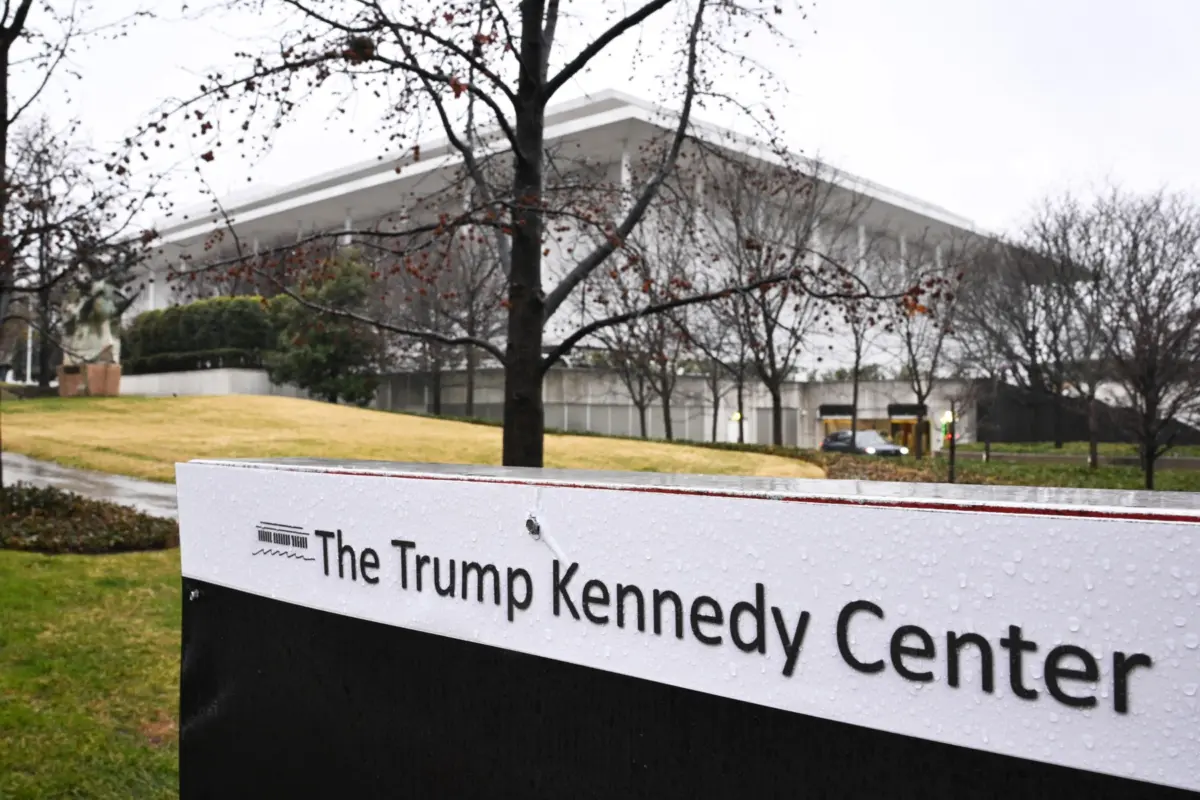
The turning point of public hostility occurred swiftly thereafter. The newly constituted board voted to incorporate President Trump’s name directly onto the historic building’s exterior signage—a move critics decried as an unprecedented politicization of a national cultural memorial. The backlash was immediate and fierce. The arts community rallied in universal defiance. High-profile performers, classical composers like Philip Glass, comedian and creator Issa Rae, the San Francisco Ballet, and major theatrical undertakings such as the national tour of Hamilton announced immediate boycotts, refusing to set foot on stages managed by the restructured leadership.
The resistance culminated in the judicial system. In May, a federal judge intervened, ruling that the unauthorized addition of the president’s name violated federal oversight statutes, ordering the signage promptly removed. Rather than backing down, the administration escalated its posture. The threat shifted from mere institutional branding to physical survival: either the administration’s preferred nomenclature and restructuring remain intact, or the facility faces the ultimate threat—demolition.
The Financial Precipice
The ensuing cultural boycott and political polarization inflicted catastrophic damage on the center’s balance sheets. According to financial disclosures, ticket sales and contributed revenue plummeted drastically throughout late 2025 and 2026.
By mid-2026, the board of directors issued dire public warnings that the institution was hurtling toward total insolvency. Internal communications leaked to media outlets indicated that the severe cash-flow crisis threatened to leave staff indefinitely unpaid, pushing the Kennedy Center toward historic bankruptcy. It is within this theater of economic devastation and administrative panic that the institution opted to pivot toward a commercial, rock-and-roll-minded outsider to engineer its survival.
The Appointment of Rick Canny
Enter Rick Canny. Tasked with dragging the center out of its financial tailspin, Canny was officially brought on to oversee the creative direction of programming. Representatives for the center defended the hire in a stark statement issued to The New York Times, emphasizing the pragmatic necessity of structural adaptation:
"Regardless of building closure timelines, the center must continue to curate programming during infrastructure upgrades and deliver a commanding reopening season that brings audiences back and puts the center on stable financial footing."
Canny’s pedigree is rooted strictly in commercial rock management rather than institutional classical or theatrical administration. By leveraging his deep-rooted connections in the commercial music touring industry, the administration hopes Canny can secure lucrative sponsorships, massive festival-style bookings, and high-margin ticketed events capable of generating immediate capital.
Supporting Context & Financial Metrics: The Cost of Commercialization
While the Kennedy Center leadership champions Canny as the commercial savior required to reset the venue’s fortunes, the decision has exposed deep fissures among the remaining career staff and arts advocates. Internal documents and investigative reports obtained by NPR shed light on significant financial friction surrounding Canny’s compensation prior to his formal appointment.
The Consulting Memo Controversy
According to leaked internal memos, top-tier institutional brass—including former Senior Director of Music Programming Sammy Miller—expressed profound alarm over Canny’s steep consultancy fees during preliminary advisory stints.
- Month One: Canny reportedly billed the institution $30,000 in professional consulting fees for a single month of advisory work.
- Month Two: A subsequent invoice totaled $28,000, which covered a combination of advisory fees and first-class, round-trip airfare between Washington, D.C., and Los Angeles, California.
These financial disclosures ignited fierce internal debates over fiscal responsibility at a time when the institution was simultaneously warning employees of impending payroll shortfalls and operational bankruptcies. When pressed by journalists regarding these figures, representatives for the Kennedy Center maintained that the cited invoices did not reflect Canny’s finalized, long-term employment compensation package. However, the administration pointedly declined to disclose the specific financial terms of Canny’s new artistic director contract, fueling ongoing transparency concerns among public watchdogs and cultural unions.
The Internal Power Struggle
Canny himself has displayed an unyielding, aggressive confidence regarding his mandate. In an internal email intercepted and published by The New York Times, Canny outlined his uncompromising vision for total operational control:
"I know what it will take to reset and move forward. I’m committed to this effort! I should be the face and voice to our industry. There is no one else at the center who can do this — unless you hire someone new."
This uncompromising stance underscores the central tension of his hire: Canny views himself as a singular, disruptive force necessary to break institutional inertia, while critics view his corporate-management approach as an existential threat to the high-art mission and non-partisan legacy of the Kennedy Center.
Official Statements and Institutional Perspectives
The ideological battle lines surrounding the Kennedy Center are starkly defined by the public pronouncements of its current administration, the testimonies of departed cultural leaders, and the legal briefs filed by federal attorneys.
The Administration’s Stance
Pro-Trump board members and institutional loyalists maintain that traditional models of arts administration have failed the venue. In various statements, they argue that sentimental attachments to pre-2025 operational frameworks are luxuries the center can no longer afford. By embracing commercial powerhouses like Canny, the administration asserts it is injecting necessary market realism into a bloated, culturally detached institution. Their core narrative is simple: commercial viability must precede high artistic curation; otherwise, there will be no building left to curate.
The Artist and Staff Resistance
Conversely, the diaspora of artists, musicians, and former executives who have severed ties with the venue view Canny’s appointment as the final corporate coup over a public cultural trust. Critics argue that replacing career artistic directors with commercial artist reps signals the complete commodification of a national memorial. The boycott coalition maintains that financial stability purchased at the cost of artistic integrity, institutional independence, and political neutrality is a Faustian bargain that strips the Kennedy Center of its soul.
Future Outlook: Legal Precipice and the Threat of Demolition
Even as Rick Canny crafts his master plan for a lucrative reopening season, the ultimate destiny of the John F. Kennedy Center for the Performing Arts rests not in the boardroom or the box office, but within the sterile chambers of the federal court system.
The Legal Stand off
The legal battle has evolved into a slow-motion constitutional thriller. In September, a federal judge issued a critical injunction ruling that the Trump administration is legally mandated to provide a formal 30-day advance notice before executing any plans to demolish or structurally dismantle the Kennedy Center facility.
This ruling established a fragile, highly monitored ceasefire. While the administration is currently barred from taking sudden bulldozer action against the complex, the looming threat of demolition remains an active weapon in the ongoing political standoff. The litigation continues to wind through federal courts, leaving the physical structure, its staff, and its upcoming performance schedules in a state of perpetual jeopardy.
What Lies Ahead
As the legal skirmishes grind forward, Canny faces an impossible operational tightrope. He must attempt to attract world-class talent and corporate sponsors to a venue that is simultaneously fighting off closure, suffering from ongoing artist boycotts, and threatened with physical destruction.
Whether Rick Canny’s rock-and-roll acumen can successfully monetize and rescue a beleaguered national monument remains one of the great unanswered questions in contemporary American culture. What is certain, however, is that the curtain has not yet fallen on the most turbulent, politically charged act in the history of the Kennedy Center—and the final scene promises to be explosive.