

Executive Overview
In the fast-paced landscape of modern gastronomy, few culinary subcultures match the fervent, idiosyncratic dedication of the artisanal apple tasting community. As the autumn harvest reaches its peak, reviewers and pomology enthusiasts continue to comb orchards, roadside stands, and heirloom preservation sites for rare varieties. Following the release of the initial evaluation batch, a secondary wave of critique—colloquially championed by the "Apple Snack Gang"—has shed light on a fascinating cross-section of heritage, hybrid, and wild-cultivated pomological specimens.
This investigative report examines the second installment of a serialized, highly subjective pomological evaluation sweeping digital horticultural circles. Featuring seven distinct cultivars—ranging from the nutmeg-heavy Kickapoo Spice to the remarkably stubborn Graham—this assessment explores the intersection of flavor chemistry, agricultural history, and sensory critique.
Far from a simple collection of fruit reviews, these evaluations serve as a microcosm of modern agricultural preservation. They highlight the tension between commercial, high-yield cultivars optimized for shelf-life and the complex, occasionally abrasive, and deeply idiosyncratic heirloom varieties that defined historical pomology. Through rigorous taste-testing methodologies, historical cross-referencing, and uncompromising sensory reporting, this inquiry details the triumphs, failures, and downright bizarre flavor profiles dominating the current harvest season.

Detailed Chronology of the Evaluation Process
The evaluation protocol, unfolding over several weeks at the height of autumn, requires a strict sensory framework. Each specimen is subjected to rigorous physical inspection—assessing skin texture, density, structural integrity, and olfactory notes—followed by standardized mastication and aftertaste profiling.
The chronology of this secondary tasting batch reveals a volatile spectrum of agricultural outcomes, heavily dependent on post-harvest storage conditions, cultivar genetics, and temporal distance from the branch.
Phase 1: The Spice and the Shark-Skin (Kickapoo Spice and St Edmunds Pippin)
The testing phase commenced with varieties characterized by complex aromatic profiles. The Kickapoo Spice, noted for its dense structural composition and prominent nutmeg and clove overtones, demonstrated the unpredictable nature of post-harvest maturation. Despite its promising aromatic profile, the lack of intrinsic juiciness and an unexpected, sub-optimal aftertaste reminiscent of freshly cut grass highlighted the precarious window of optimal apple consumption.

Conversely, the St Edmunds Pippin—the reviewer’s inaugural proper apple of the season—exceeded expectations. Exhibiting a rough, abrasive exterior skin likened colloquially to tactile contact with a marine predator, the fruit delivered an explosive acoustic and physical crunch. Beyond its mechanical resilience, the Pippin presented a sophisticated, herbaceous flavor profile featuring pronounced fennel pollen nuances balanced by a harmonious tart-sweet equilibrium.
Phase 2: Texture Anomalies and Historical Speculations (Sops of Wine and Fenceline Surprise)
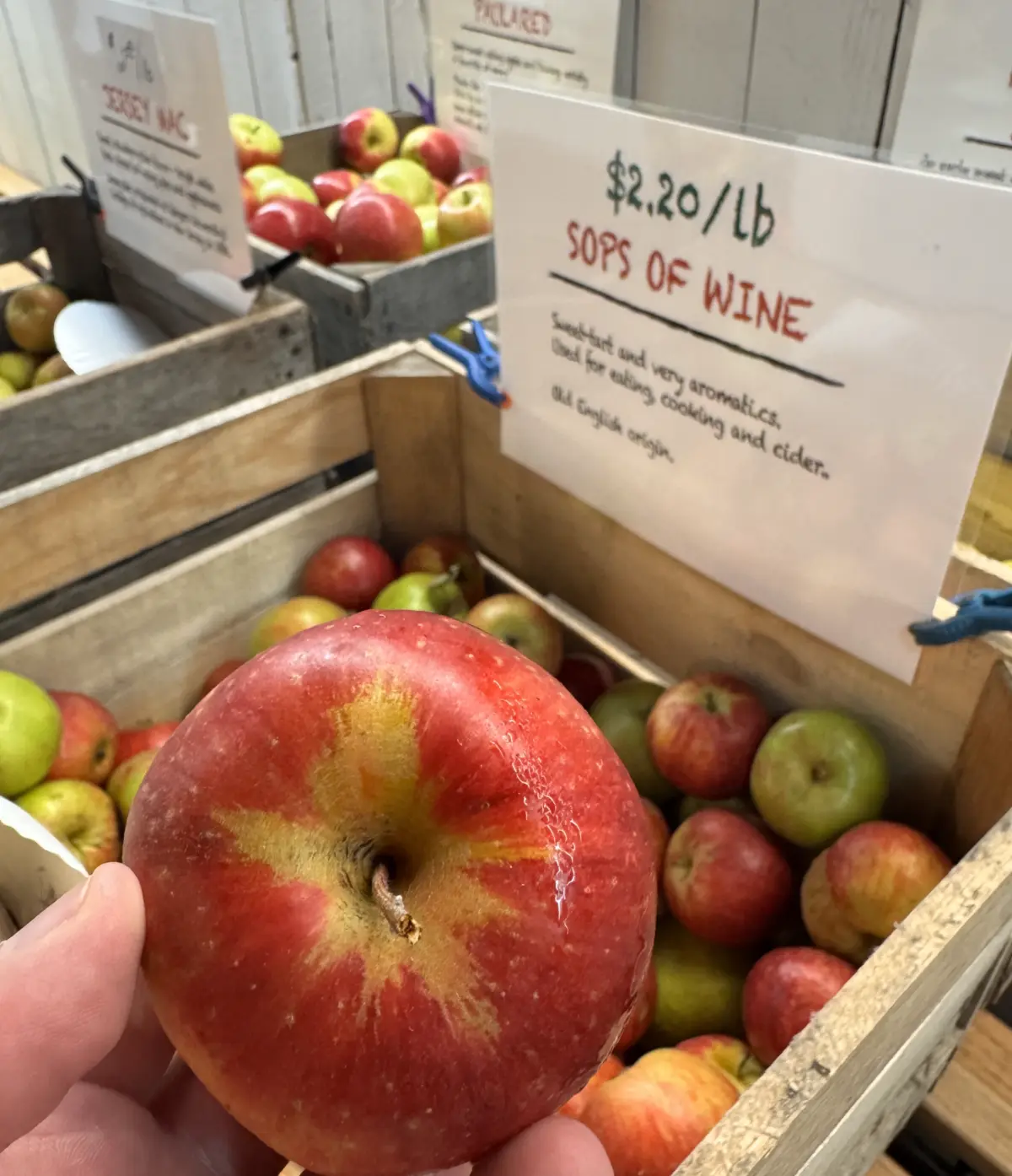
As the tasting calendar progressed into mid-autumn, the evaluation encountered significant structural degradation within certain cultivars. The Sops of Wine specimen, burdened by a rich tapestry of literary and historical associations, offered a fascinating study in textural failure. Despite promising sweet-to-subacid flavor notes intermingled with vanilla and spice, the fruit suffered from a distinctly mealy and gritty mouthfeel, indicative of over-ripening or prolonged cold storage.
This trend of structural disappointment culminated in the evaluation of the Fenceline Surprise. Garnering the lowest metric score of the session, the cultivar presented a dual identity: a sophisticated linguistic and aesthetic presentation juxtaposed with a thoroughly dismal sensory reality. Characterized by a bland, sandy texture and an ephemeral, ghost-like pear essence, the specimen underscored the harsh reality of fruit harvested past its prime maturity window.

Phase 3: The Industrial Resistance (Americus Crab, Campfield, and Graham)
The final tier of the evaluation shifted focus toward utilitarian, high-tannin, and hyper-dense cultivars traditionally relegated to hard cider production or specialized culinary applications.
- The Americus Crab delivered a classic crabapple experience: aggressively savory, fiercely tart, mechanically tough, and saturated with tannins, rendering it largely unsuitable for casual raw consumption.
- The Campfield (False) presented a chewy, cellular structure accompanied by an intense astringency that emphasized its primary destiny as a fermentation stock rather than a table fruit.
- Finally, the Graham cultivar tested the absolute limits of human jaw mechanics. Boasting a density that resisted standard dental penetration, the fruit fractured with glacial severity. Yet, upon successfully breaching its formidable exterior, reviewers were met with an unexpected, uncanny, and intensely potent flavor profile directly mirroring commercial Juicy Fruit gum.
Supporting Context & Metrics
To properly contextualize these evaluations, one must analyze the quantitative metrics assigned to each cultivar alongside the qualitative descriptors recorded during testing. The scoring rubric utilizes a strict decimal scale out of 10, balancing structural integrity, flavor complexity, mouthfeel, and historical novelty.
| Cultivar Name | Assigned Score (/10) | Primary Flavor Notes | Dominant Textural Characteristic | Primary Horticultural/Culinary Classification |
|---|---|---|---|---|
| Kickapoo Spice | 6.9 | Nutmeg, cinnamon, clove, cut-grass finish | Dense, non-juicy | Fresh market / Heritage spice apple |
| St Edmunds Pippin | 8.3 | Fennel pollen, herbal, tart-sweet balance | Sharp-breaking, crunchy, juicy | Premium early-season table apple |
| Sops of Wine | 3.5 | Vanilla, spice, subacid sweetness | Mealy, gritty | Dual-purpose / Historical ambiguity |
| Fenceline Surprise | 1.0 | Faint pear essence, neutral/bland | Sandy, mushy, dry | Table apple (failed specimen) |
| Americus Crab | 2.5 | Savory, highly tart, high tannin | Tough, rigid | Crabapple / Specialized use |
| Campfield (False) | 4.1 | Tannic, astringent, overly sweet | Chewy, callused | Traditional hard cider apple |
| Graham | 8.0 | Artificial confectionary (Juicy Fruit gum) | Extremely dense, glacier-like fracture | Late-season heavy table apple |
The data reveals a stark bifurcation in the heirloom apple market. Cultivars that maintain an optimal balance between structural crunch and complex organic acidity—such as the St Edmunds Pippin and the deceptively flavored Graham—achieved high marks despite structural challenges. Conversely, varieties compromised by improper storage timelines or genetic mismatches for fresh eating suffered precipitous drops in consumer evaluation.

Official Statements and Historical Lore
The cultural discourse surrounding heirloom apple tasting is deeply enriched by the folklore, etymology, and historical documentation attached to individual varieties. Reviewers frequently note how nomenclature influences psychological perception, a phenomenon prominently displayed throughout this harvesting cycle.
The Matthew Canfield Historical Trace
The evaluation of the Campfield apple brought to light a remarkable piece of early American colonial history. Independent horticultural research linked the cultivar to the lineage of Matthew Canfield (alternatively spelled Campfield), an anti-royalist Puritan who arrived in North America prior to 1637 during the Great Puritan Migration.
Historical town records from New Haven and Newark document Canfield’s mandatory cultivation obligations:

"He requests a vacant lot which he receives after signing the requirement that he plant all but one of the four acres in fruit trees."
This legal mandate—requiring freeholders to cultivate extensive orchards—laid the groundwork for New Jersey’s historical reputation for producing premier hard ciders. The integration of such deep-rooted agricultural history into modern fruit review underscores the cultural weight carried by legacy pomological specimens.
Psychological and Cultural Associations
Beyond archival history, the tasting notes reflect a stream-of-consciousness interplay between nomenclature and popular culture. The Kickapoo Spice immediately invoked classic rock iconography, while the Sops of Wine triggered vivid cinematic associations with Tolkien adaptations. These psychological intrusions demonstrate that the appreciation of heirloom apples is not merely an exercise in gustatory analysis, but a holistic cultural experience where memory, literature, and agriculture intersect.

Future Outlook
As the autumn harvest transitions into late-season production, the momentum within the artisanal pomological community shows no signs of slowing down. With upcoming field expeditions scheduled across New York, New England, and Canada, evaluators are preparing to subject regional orchards to the same rigorous, uncompromising scrutiny.
The growing popularity of heirloom apple reviews signals a broader cultural shift toward agricultural literacy. Consumers are increasingly rejecting the homogenized uniformity of mass-market commercial apples (such as the ubiquitous Red Delicious) in favor of the diverse, unpredictable, and historically resonant flavors of heritage cultivars.
Whether future expeditions will yield stable, high-scoring culinary triumphs or uncover further instances of structural disappointment remains to be seen. However, one certainty remains: the global appetite for rigorous, eccentric, and deeply passionate fruit journalism has never been stronger.