

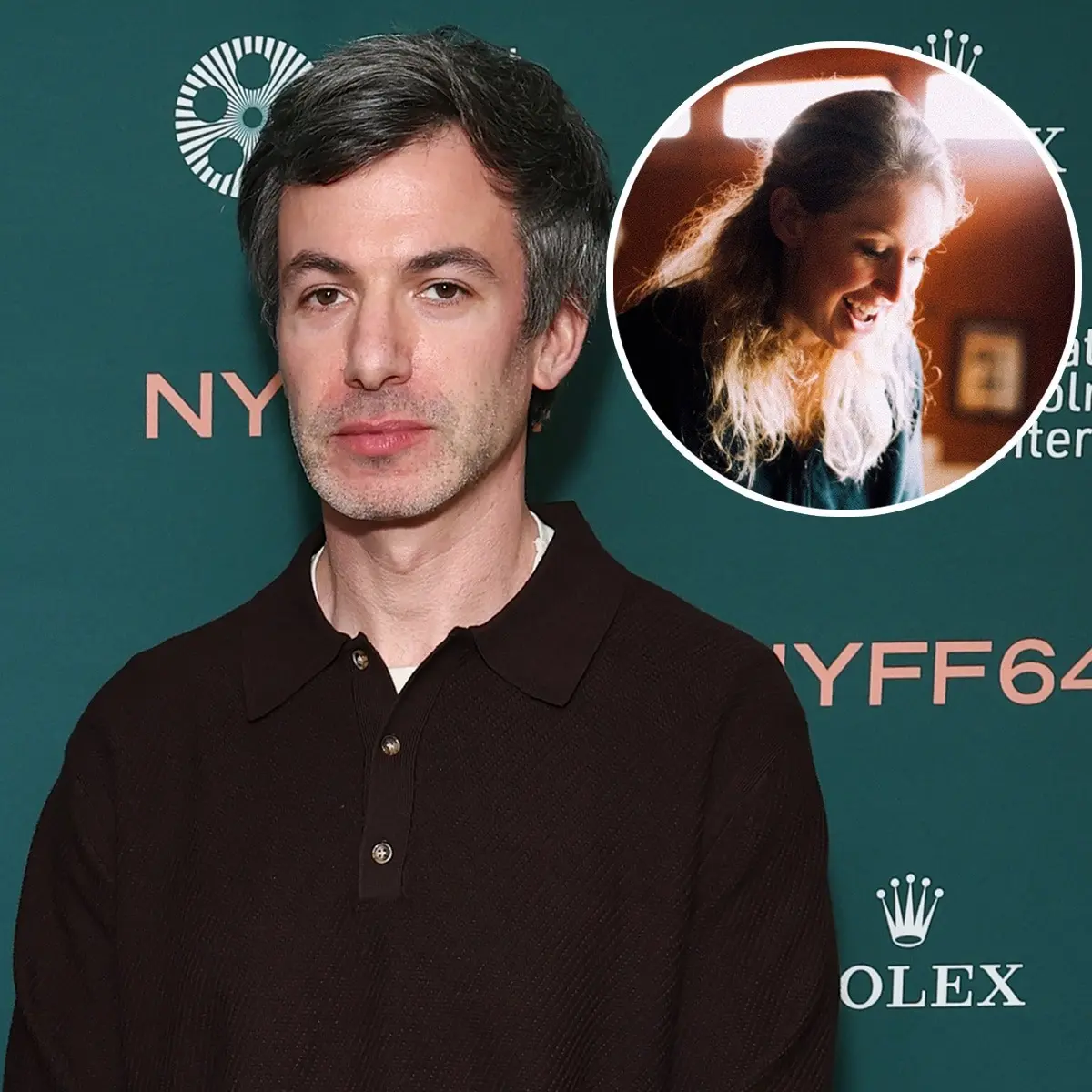
In an era defined by media saturation and carefully curated public personas, few cultural artifacts arrive with the disorienting, unvarnished shock of You Can See Everything. The top-secret, mind-bending documentary—helmed by visionary comedian and filmmaker Nathan Fielder alongside co-director Lance Oppenheim—has fundamentally disrupted the true-crime and documentary landscapes. Captured over a 34-day period in early 2023, the project places Fielder living in the guest house of disgraced Theranos founder Elizabeth Holmes just weeks before she began serving an 11-year federal prison sentence.
The resulting cinematic achievement, which made a surprise splash at the Telluride Film Festival, captures a bizarre intersection of modern celebrity, corporate malfeasance, and profound psychological dissonance. Holmes, maintaining an unwavering front of innocence while facing the culmination of one of the most high-profile white-collar fraud cases in modern history, invited a notoriously avant-garde satirist into her domestic sphere. For Fielder and Oppenheim, the experience left their collective intellectual faculties scrambled, offering a rare, deeply unsettling window into the mind of a woman whose biotech empire—and subsequent downfall—captivated the global imagination.
This comprehensive retrospective examines the genesis of You Can See Everything, the grueling mechanics behind its secret production, the ongoing cultural fallout of the Theranos scandal, and where the primary players in this historic corporate saga stand today.
Detailed Chronology
The Rise and Fall of Theranos (2003–2018)
Elizabeth Holmes founded Theranos in 2003 at the age of 19, dropping out of Stanford University to revolutionize healthcare. Promising a proprietary blood-testing technology—the "Edison" device—capable of running comprehensive panels from a single finger-prick of blood, Holmes secured billions in venture capital and assembled a board of directors stacked with political heavyweights, including former Secretaries of State George Shultz and Henry Kissinger.
However, the technology was fundamentally a mirage. Early warnings from clinical pharmacologist Dr. Phyllis Gardner and internal resignations by whistleblowers like Tyler Shultz and Erika Cheung were systematically ignored or aggressively suppressed by Holmes and company president Ramesh "Sunny" Balwani. The house of cards collapsed following investigative reports by journalist John Carreyrou in The Wall Street Journal, culminating in the publication of his 2018 bestselling book Bad Blood and the formal dissolution of Theranos in September 2018.
Trials, Sentencing, and Domestic Surreality (2021–2023)
While awaiting federal wire fraud charges, Holmes’ personal life continued to shift. In July 2021, she and her partner, Billy Evans, welcomed their first child, son William. Following a high-profile trial in San Jose, California, a federal jury convicted Holmes in January 2022 on one count of conspiracy to defraud investors and three counts of wire fraud.
In February 2023, while her legal team fought post-trial motions, Holmes gave birth to her second child, daughter Invicta. Shortly thereafter, facing an imminent 11-year prison sentence, Holmes and Evans made the unorthodox decision to open their San Diego rental home to Nathan Fielder and a micro-crew of seven or eight individuals operating under the A24 banner. For 34 days, Fielder resided in the guest house, engaging in psychological and conversational chess matches with a convicted felon attempting to normalize her existence on the precipice of incarceration.
On May 30, 2023, Holmes reported to the minimum-security Federal Prison Camp in Bryan, Texas, to begin her sentence.
The Secret Cinematic Deployment (2023–2026)
While Fielder maintained an active professional schedule—releasing The Curse with Emma Stone in late 2023 and launching the critically acclaimed second season of The Rehearsal in April 2025—he and Oppenheim quietly wrestled with the raw footage captured in San Diego.
The project finally broke containment on September 6, during a surprise screening at the Telluride Film Festival. The industry was left reeling by the stealth operation required to keep a major A24 production involving Elizabeth Holmes entirely secret for over three years. Following subsequent festival stops in New York and Los Angeles, You Can See Everything officially landed in theaters on October 16, 2026.
Supporting Context & Metrics
The production metrics behind You Can See Everything underscore the extreme lengths to which Fielder and Oppenheim went to preserve the authenticity of their subject:
- Crew Size: Approximately 7 to 8 core personnel, ensuring minimal intrusion and maximum psychological realism within the domestic space.
- Duration of Filming: 34 intensive days inside the San Diego rental home shared by Holmes, Evans, and their two children.
- Cinematographic Rigor: Led by cinematographer David Bolen, the production utilized a wide-lens setup capable of recording entire rooms simultaneously, paired with secondary tracking cameras to capture micro-expressions and shifts in body language.
- Legal and Institutional Weight: Holmes is currently serving an 11-year federal sentence with an anticipated halfway house transfer slated for August 2027. Her co-conspirator, Sunny Balwani, received a nearly 13-year prison sentence, with the U.S. Supreme Court officially declining his final appeal in October 2026.
Official Statements and Reflections
The psychological toll of the production on its creators cannot be overstated. Speaking at post-screening Q&A panels, Fielder and Oppenheim expressed profound cognitive dissonance regarding their time with Holmes.
“I really am struggling to this day to understand exactly what I experienced,” Fielder admitted during the Telluride Festival Q&A. “And one of the things I’m genuinely excited about is for this movie to come out and for people to help me understand what I experienced.”
Oppenheim echoed this sentiment during the New York Film Festival:
“I feel like our brains were scrambled. We were also unsure for so long if we even had anything that was worthwhile to make and put together… Every person that worked on this movie was going through a similar feeling of cognitive dissonance.”
For her part, Holmes broke her long public silence ahead of the documentary’s release, utilizing social media and prison interviews to frame her ongoing narrative. In a September 27 post on X (formerly Twitter), she wrote:
“I was silenced for a long time. And then imprisoned. I am fighting to prove my innocence and come home to my babies and the love of my life.”
In her first prison interview with People magazine in 2025, she reflected on her downfall and motherhood:
“I always wanted to be a mother. I truly did not think I would ever be convicted or found guilty.”
Future Outlook and Where They Are Now
With You Can See Everything now playing in theaters and reshaping the discourse surrounding corporate accountability and modern media manipulation, the key figures of the Theranos ecosystem occupy vastly different realities:
Elizabeth Holmes
Incarcerated at FPC Bryan in Texas, Holmes remains active in her legal appeals. Her current legal timeline places her transfer to a community-based halfway house in August 2027, bringing her closer to potential reunification with her family.
Ramesh "Sunny" Balwani
Serving a 12-year and 11-month sentence at FCI Lompoc II in California, Balwani’s legal avenues have officially been exhausted following the Supreme Court’s refusal to hear his appeal in late 2026.
Tyler Shultz & Erika Cheung
The primary whistlebusters have established enduring legacies in corporate ethics. Shultz co-founded Flux Biosciences and serves as a venture partner, while Cheung runs Ethics in Entrepreneurship, a nonprofit dedicated to preventing future corporate fraud through institutional transparency.
Nathan Fielder
Having successfully executed one of the most audacious documentary ambushes in cinema history, Fielder continues to push the boundaries of reality-based comedy and narrative experimentation, cementing his status as a singular, unpredictable voice in contemporary media.