

Executive Overview
In the realm of modern agricultural critique, few endeavors possess the idiosyncratic rigor and visceral honesty of the ongoing pomological evaluations conducted by self-appointed fruit connoisseurs. Following the widespread public engagement of previous tasting installments, a fresh cohort of unusual orchard specimens—collectively recognized as part two of a continuing seasonal audit—has been brought under the microscope.
This comprehensive investigation examines a curated selection of rare, heritage, and experimental cultivars circulating through contemporary distribution channels. From spice-heavy anomalies to iron-clad cider apples, the subjects of this review offer a sprawling narrative of horticultural unpredictability. Evaluated through a rigorous sensory framework that accounts for skin texture, structural density, aromatic profile, and post-harvest degradation, these specimens reveal the volatile nature of fruit maturation.
As consumer interest in heirloom varieties surges, understanding the biochemical and historical realities behind these niche fruits becomes paramount. This report breaks down the sensory metrics, historical anomalies, and structural integrity of seven distinct apples, providing an authoritative ledger for both casual snack enthusiasts and dedicated pomologists.
Detailed Chronology and Sensory Ledger
The methodology of this audit relies upon immediate, unvarnished sensory reporting, capturing the physical interaction between human consumer and botanical specimen. The evaluated cohort spans a wide spectrum of palatability, proving that agricultural heritage does not always translate to immediate culinary delight.

1. Kickapoo Spice
- Sensory Classification: Dense, high-spice profile, herbaceous finish.
- Numerical Score: 6.9 / 10
The evaluation cycle commenced with the robustly named Kickapoo Spice. Characterized by its formidable structural density, the specimen presented an intensely spice-forward aromatic profile dominated by heavy notes of nutmeg, underscored by subtle whispers of cinnamon and clove. True to its nomenclature, the spice component reigned supreme; however, the fruit suffered from a distinct lack of internal moisture.
Furthermore, a lingering aftertaste reminiscent of freshly cut grass introduced an unwelcome herbaceous dissonance. Pomological experts note that such characteristics often stem from improper post-harvest storage timelines. Apples exist on a precarious biochemical pendulum: certain cultivars mature gracefully after leaving the branch, while others begin an immediate, irreversible descent toward textural degradation the moment they are severed from the tree. Despite these shortcomings, the Kickapoo Spice earned a respectable 6.9 out of 10 for its sheer aromatic ambition.
2. St Edmunds Pippin
- Sensory Classification: Sharp-breaking, herbal-sweet, high-impact crunch.
- Numerical Score: 8.3 / 10
Representing a triumphant high point in the seasonal rotation, the St Edmunds Pippin delivered an exemplary masterclass in heirloom balance. Upon initial contact, the skin exhibited a rugged tactility, yet this exterior armor gave way to an intensely satisfying, acoustic auditory experience—characterized by a sharp, resonant snap.
Internally, the fruit proved exceptionally juicy, executing a complex flavor matrix that blended bright, herbal notes reminiscent of fennel pollen with a foundational, deeply satisfying sweetness. This delicate equilibrium between tartness and sugar highlights the unique viability of funky, non-standard heritage cultivars in modern consumption. Earning an impressive 8.3 out of 10, the St Edmunds Pippin stands as a benchmark for early-season superiority.

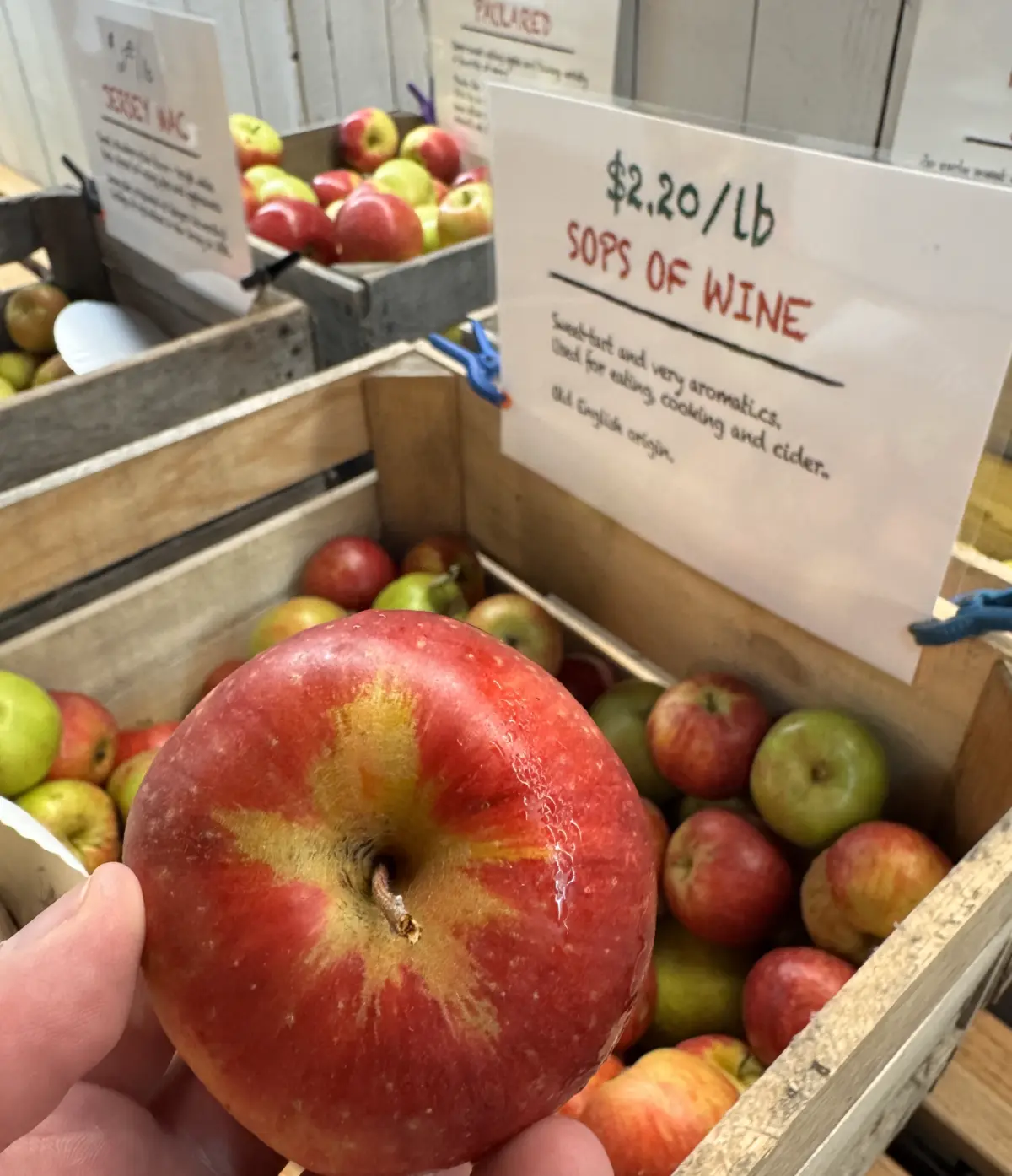
3. Sops of Wine
- Sensory Classification: Subacid, vanilla-noted, mealy texture.
- Numerical Score: 3.5 / 10
Moving further down the spectrum of structural integrity, the Sops of Wine cultivar provided a study in contradictory traits. While the olfactory and flavor profiles offered pleasant, albeit unconventional, notes of sweet-leaning subacid fruit accented by subtle undertones of vanilla and warm spice, the physical texture proved deeply problematic. Exhibiting a mealy and gritty mouthfeel, the specimen strongly suggested that its shelf life had expired prior to consumption.
Historical taxonomies surrounding the Sops of Wine suggest a broader botanical ambiguity, with the name often functioning as an umbrella term for several distinct historical lineages rather than a singular genetic entity. Some strains historically feature striking red-fleshed interiors or crimson-streaked meat, a trait entirely absent in this specific sample. Due to its compromised structural integrity and gritty descent into mealiness, the cultivar received a modest 3.5 out of 10.
4. Fenceline Surprise
- Sensory Classification: Bland, sandy, compromised structural matrix.
- Numerical Score: 1.0 / 10
If the culinary spectrum contains peaks, it invariably harbors profound valleys. The Fenceline Surprise lived up to its moniker by delivering an intensely disappointing sensory experience. Despite signage explicitly categorizing the cultivar as a "firm apple," the specimen presented as a thoroughly bland, amorphous mush.
A fleeting, highly muted whisper of pear-like distillate hinted at a more complex past, but this nuance vanished instantly, leaving the palate coated in an unpalatable, sandy texture evocative of coastal sediment. Whether the result of an inherently flawed batch or advanced post-harvest decay, the fruit offered virtually no redeeming structural qualities. Narrowly escaping a zero-point designation solely on the strength of its poetic nomenclature and external aesthetics, it concluded with a dismal 1.0 out of 10.

5. Americus Crab
- Sensory Classification: Tannic, savory, intensely wild crabapple.
- Numerical Score: 2.5 / 10
Diverging from traditional dessert apples, the Americus Crab represents the wild, untamed frontier of pomology. Classified strictly as a crabapple, the specimen defied casual, out-of-hand consumption norms. It presented a formidable wall of high tannins, aggressive tartness, and unexpected savory undertones, encased within a relentlessly tough cellular structure.
While unsuitable for the casual consumer seeking a casual mid-day snack, the Americus Crab possesses the unapologetic complexity prized by eccentric foragers and experimental botanists. It secures a 2.5 out of 10, designated strictly for specialized applications rather than direct ingestion.
6. Campfield (False?)
- Sensory Classification: Chewy, highly tannic, industrial cider profile.
- Numerical Score: 4.1 / 10
Labeled cryptically with the qualifier "(false)," the Campfield specimen offered an encounter characterized by a rubbery, almost callused resistance against the human bite. Exhibiting an overly sweet entry that quickly yielded to an overwhelming surge of astringent tannins, the fruit actively contested the consumer’s efforts, embodying the classic profile of an industrial cider apple rather than a table fruit.
Historical Lineage: The Canfield Legacy
Pertaining to its nomenclature, historical documentation links the Campfield lineage directly to early American colonial agriculture. Originating from the lineage of Matthew Canfield (alternately spelled Campfield)—an anti-royalist Puritan who emigrated from Harleston, England, during the Great Puritan Migration prior to 1637—the family established deep roots as founding figures in the New Haven Colony, Norwalk, Connecticut, and Newark, New Jersey.

Historical town records indicate that early colonial freeholders were legally mandated to cultivate discrete acreages of fruit trees to secure voting rights and support municipal infrastructure, including the production of winter fruit ciders. While the genetic authenticity of this specific "false" Campfield remains open to debate, its aggressive tannin structure aligns precisely with historical cider-making traditions. It achieved a utilitarian 4.1 out of 10.
7. Graham
- Sensory Classification: Armored density, explosive juiciness, artificial confectionary profile.
- Numerical Score: 8.0 / 10
The audit concluded with the Graham cultivar, an agricultural marvel of extraordinary physical density. Requiring immense mechanical force to penetrate, the fruit’s structural integrity rivaled high-tensile materials, testing the structural limits of human dentition. Upon finally breaching the exterior armor, however, the fruit fractured with the dynamic energy of a calving glacier, releasing an astonishing volume of juice.
Most astonishing was the flavor profile: an unmistakable, unreserved replication of commercial Juicy Fruit chewing gum. This startlingly synthetic yet entirely natural confectionary note vaulted the apple into elite culinary territory. Despite the rigorous physical exertion required to consume it, the Graham secured a robust 8.0 out of 10.
Supporting Context and Metrics
The ongoing evaluation of heirloom and experimental fruit varieties relies on a standardized matrix of physical and chemical metrics. To contextualize the variability observed across the audited batches, pomologists track several key indicators:

- Brix-Acid Balance: The ratio of soluble solids (sugars) to titratable acidity, determining whether a fruit reads as intensely tart, subacid, or cloyingly sweet.
- Cellular Turgor Pressure: The internal water pressure within the apple cells, directly correlating to the audible "snap" and crispness upon initial mastication.
- Tannin Concentration: Polyphenol levels that dictate astringency, crucial for identifying cider-specific cultivars versus fresh-eating dessert apples.
- Post-Harvest Respiration Rate: The speed at which a cultivar undergoes ethylene production and starch-to-sugar conversion off the branch, explaining why certain fruits improve in storage while others rapidly succumb to mealiness.
| Cultivar | Primary Texture | Dominant Flavor Notes | Evaluated Score |
|---|---|---|---|
| Kickapoo Spice | Dense / Dry | Nutmeg, Cinnamon, Cut Grass | 6.9 / 10 |
| St Edmunds Pippin | Sharp / Crisp | Fennel Pollen, Bright Sweetness | 8.3 / 10 |
| Sops of Wine | Mealy / Gritty | Vanilla, Subacid Spice | 3.5 / 10 |
| Fenceline Surprise | Mushy / Sandy | Faint Pear Water | 1.0 / 10 |
| Americus Crab | Tough / Fibrous | Savory, Wild Tartness | 2.5 / 10 |
| Campfield (False) | Chewy / Astringent | High Tannin, Industrial Cider | 4.1 / 10 |
| Graham | Armored / Hard | Explosive Juice, Juicy Fruit Gum | 8.0 / 10 |
Official Statements and Horticultural Perspectives
The broader agricultural community continues to monitor the renaissance of heirloom apple cultivation with cautious optimism. Speaking on the integration of rare regional varieties into modern supply chains, agricultural extension agents emphasize the critical role of provenance and storage management.
"The resurgence of interest in 17th- and 18th-century fruit varieties represents a vital safeguard for agricultural biodiversity," notes a leading regional orchard curator. "However, consumers must recognize that heirloom apples were rarely bred for uniform, long-distance supermarket distribution. They demand precise harvesting windows and localized handling. A cultivar designed for heavy fermentation or winter storage will inevitably disappoint the consumer expecting a soft, high-sugar table snack."
Furthermore, pomological societies stress that linguistic anomalies—such as historical mislabeling or multi-variety umbrella terms like Sops of Wine—highlight the urgent need for genetic mapping across historic orchards. As climate shifts alter growing zones, preserving these resilient, albeit occasionally eccentric, genetic lines remains a top priority for agricultural preservationists.
Future Outlook
As the current pomological season progresses, sensory audits will expand geographically, shifting focus toward the fertile orchards of the American Northeast, New York, New England, and the Canadian provinces. These cooler northern latitudes historically harbor some of the most complex, weather-hardened heirloom varieties in North America.

Future investigative trajectories will focus on:
- Climatic Adaptation: Assessing how unseasonable temperature fluctuations impact the tannin-sugar development in heritage cider varieties.
- Distribution Logistics: Analyzing the viability of transporting fragile, high-turgor dessert apples without compromising their acoustic and structural integrity.
- Consumer Education: Bridging the gap between wild, non-standard crabapples and public expectations of commercial sweetness.
With an upcoming expedition into northern growing regions underway, auditors anticipate encountering further botanical anomalies, ensuring that the intersection of rigorous science and subjective fruit critique remains as unpredictable as the orchards themselves.