

Executive Overview
The corporate rollout of artificial intelligence has quickly transformed into a high-stakes corporate farce. If boardrooms and leadership retreats were adapted for the screen, film critics would dismiss the narrative as entirely unbelievable, arguing that no group of executives could be so fundamentally misaligned with reality. Yet, enterprises across the globe find themselves stumbling through the exact same operational traps that defined the digital transformation era a decade ago.
According to digital strategist and author Paul Boag, who famously chronicled enterprise missteps in his 2014 Smashing Magazine book Digital Adaptation, the corporate world is once again treating a profound cultural and structural revolution as a mere IT upgrade. By treating artificial intelligence as a software license to be purchased and distributed uniformly rather than a human-centric evolution, organizations are triggering a cascade of unintended consequences.
Chief among these are plummeting employee buy-in, paralyzing corporate anxiety, an explosion of unauthorized "shadow AI," and rigid governance structures that actively stifle the innovation they were designed to protect. To survive the current technological shift, leadership teams must pivot away from centralized software deployments and instead embrace a philosophy rooted in psychological safety, organic peer-led adoption, and human motivation.
Detailed Chronology: A History of Repeated Mistakes
To understand why modern artificial intelligence adoption is failing in real time, one must look backward to the mid-2010s, when organizations rushed headlong into the digital transformation gold rush.
2014: The CMS and CRM Delusion
During the height of the digital adaptation era, corporate IT departments were given sweeping mandates to modernize. They rolled out expensive Content Management Systems (CMS), Customer Relationship Management (CRM) platforms, and sprawling internal intranets. Concurrently, customer-facing divisions hurried to launch native mobile applications and personalized web portals.
However, organizations made a fatal oversight: they invested almost zero energy into understanding how human beings—both internal staff and external customers—would actually interact with these systems. Internal enterprise software remained notoriously difficult to navigate, while customer-facing channels delivered experiences that consumers neither wanted nor understood. The technology was installed, the budget was spent, but the human integration failed entirely.
2024–Present: The Copilot Conundrum
Fast forward to the current AI landscape, and the playbook remains virtually unchanged. Buoyed by relentless media hype, senior management teams have rushed to procure enterprise-wide deployments of generative AI tools, such as Microsoft’s Copilot Studio licenses.
In many organizations, the entire change management strategy consists of a single, generic, organization-wide training webinar. Once the licenses are provisioned and the training video is archived, leadership considers the job done. Meanwhile, frontline staff are left staring at blank chat boxes, wondering how these tools fit into their daily responsibilities while simultaneously harboring quiet, pervasive fears that these very systems are designed to render their jobs obsolete.
By treating AI as a plug-and-play utility rather than a profound organizational disruption, enterprises are actively repeating the exact errors that crippled digital transformation initiatives ten years prior.
Supporting Context & Metrics: The Human Cost of Technological Force
The friction behind artificial intelligence adoption is not rooted in algorithmic limitations or hardware constraints; it is fundamentally psychological and cultural. Organizations consistently miscalculate the emotional and operational toll that sweeping technological change extracts from their workforce.

The Motivation Deficit
From the perspective of an average employee, corporate AI mandates offer very few personal incentives. When senior management champions artificial intelligence, their primary metric of success is productivity—the ability for individuals to accomplish more tasks in less time.
However, in a standard 9-to-5 corporate structure, increased productivity rarely translates to reduced working hours, expanded compensation, or genuine relief. Instead, it frequently results in an increased workload within the exact same timeframe. Employees are expected to output more simply because technology allows it, receiving no tangible personal benefit in return. Consequently, asking staff to willingly embrace a tool that feels engineered to either replace them or squeeze greater output from their day without additional reward creates immediate, understandable resistance.
Procedural Knowledge and Cognitive Overload
Adopting AI is not merely learning a new software shortcut; it requires dismantling and rebuilding procedural knowledge that employees have spent years, or even decades, refining. This cognitive restructuring is an immense ask, particularly when set against the backdrop of modern corporate burnout.
Most modern workers are chronically overworked, struggling daily to manage overflowing task lists. They lack the discretionary time required to sit down, experiment, fail, and slowly discover how generative tools fit into their specific daily workflows. Sending an employee to a generic two-hour seminar does nothing to solve this fundamental bandwidth crisis.
The Rise of Shadow AI
When official enterprise toolsets prove too rigid or inadequate for real-world tasks, employees do not simply abandon their goals—they bypass the bureaucracy. Just as the digital transformation era saw the unchecked rise of "shadow IT" (with workers covertly signing up for Dropbox and Google Docs to circumvent clunky internal servers), the AI era has given birth to Shadow AI.
Frustrated by slow-moving steering committees and restrictive corporate policies, staff routinely open personal ChatGPT or Claude accounts on their personal smartphones and home laptops to get their work done. This behavior introduces severe organizational vulnerabilities:
- Data Leakage: Proprietary company data, source code, and client information flow directly into consumer-grade tools outside enterprise legal oversight.
- Loss of Audit Trails: Organizations lose complete visibility into what prompts are being written and what data is being shared externally.
- Counterproductive Policing: The typical institutional reaction—clamping down with stricter web filters, disciplinary threats, and blocked domains—only drives the behavior deeper underground, transforming a symptom of poor tooling into a systemic security hazard.
Official Statements & Expert Insights: Shifting the Paradigm
Industry analysts and change management specialists emphasize that successful AI adoption requires a complete reversal of traditional corporate command-and-control hierarchies.
Cultivating Psychological Safety
According to organizational transformation frameworks, learning any complex new paradigm inevitably involves making mistakes. Yet, corporate cultures are frequently governed by an underlying climate of fear where errors are treated as indictments of competence.
During the digital transformation era, executives demanded sweeping digital modernization while stubbornly clinging to legacy Key Performance Indicators (KPIs) and ruthlessly penalizing errors during annual performance reviews. This created an impossible paradox: staff were ordered to innovate, but forbidden from stumbling.
In the current AI landscape, this dynamic has intensified. Reports frequently surface of employees receiving official reprimands for consuming too many API tokens just weeks after being instructed to experiment with AI, or being buried under so many compliance warnings that inaction feels like the only safe career choice.

"If management wants staff to adopt AI, then they need to make staff feel safe to experiment. They need to adjust KPIs, change how staff are reviewed, and relax some of the governance while staff are learning."
The Power of Social Proof and Grassroots Enthusiasm
Formal top-down memos and rigid training curricula consistently underperform when compared to organic peer-to-peer advocacy. Every enterprise contains a subset of internal enthusiasts who are already experimenting with artificial intelligence out of personal curiosity, long before any formal corporate directive is issued.
Rather than expending finite change-management capital trying to win over the most change-resistant corners of the organization first, leadership should identify these early adopters. By carving out protected time and physical or virtual space for these enthusiasts to share practical use cases, organizations can leverage the power of social proof. Employees are infinitely more likely to adopt a new workflow when they witness a peer in an identical role successfully utilizing it to solve a shared daily headache.
Light-Touch Governance
Governance remains an operational minefield. Too often, governance frameworks swing wildly between two extremes: complete absence of oversight or suffocating bureaucracy.
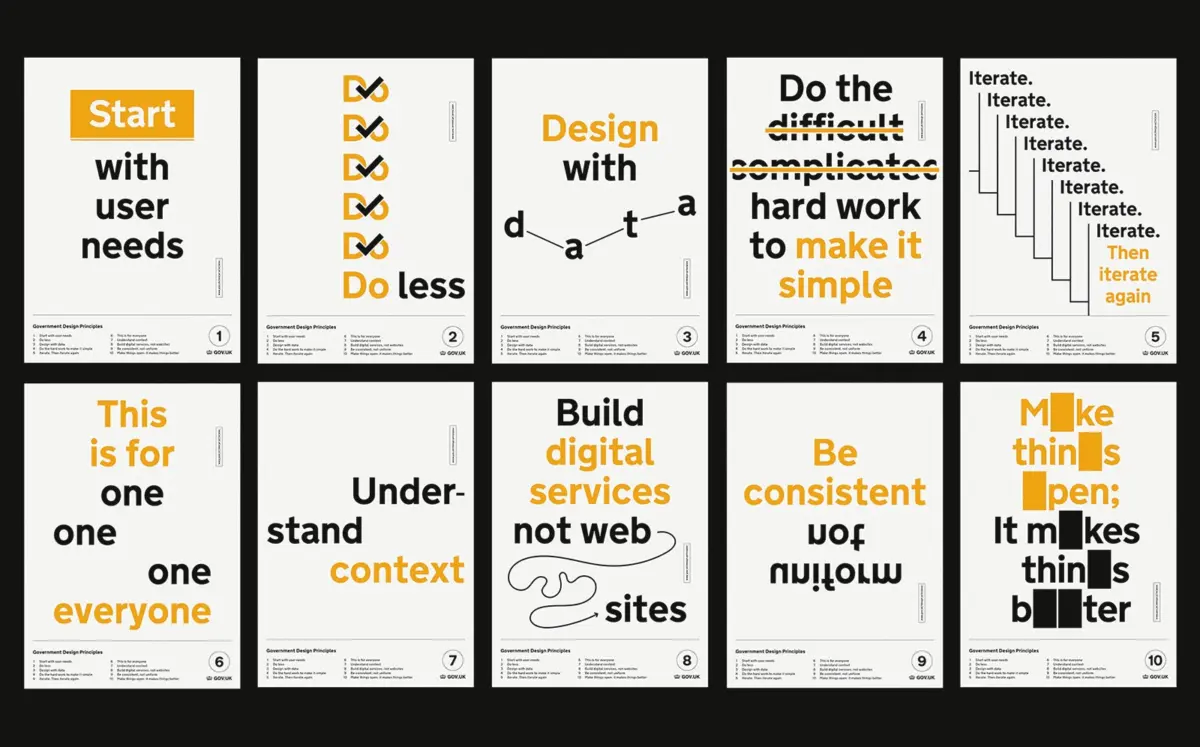
When governance is excessively restrictive—manifesting as fifty-page legal documents detailing every prohibited prompt and data-sharing restriction—it paralyzes the workforce. A more sustainable model mirrors the philosophy of public sector digital standards, such as the design principles pioneered by GOV.UK: a concise set of core principles that fit neatly onto a handful of posters, combined with institutional trust in the common sense and professional judgment of the staff.
Future Outlook: Navigating the Road Ahead
As enterprises look toward the remainder of the decade, the trajectory of artificial intelligence adoption will bifurcate sharply based on how leadership teams handle human change management.
Organizations that persist in viewing AI as an isolated information technology deployment—focusing exclusively on software licensing, centralized cost-cutting, and aggressive compliance monitoring—will continue to experience high rates of friction, hidden security liabilities, and profound employee disengagement. Conversely, forward-thinking enterprises that recognize AI as a deep cultural evolution will unlock sustainable productivity gains.
The path forward requires four foundational shifts in executive strategy:
- Redefining Value for the Employee: Transitioning the narrative from corporate output optimization to individual work-life improvement, explicitly helping staff automate the most frustrating aspects of their daily responsibilities.
- Embracing Controlled Chaos: Accepting a temporary phase of technological experimentation and varied tool usage, viewing shadow AI not as a disciplinary infraction, but as valuable market research signaling where official toolchains fall short.
- Establishing Safe Spaces for Failure: Re-calibrating performance metrics, relaxing restrictive governance during initial learning phases, and treating mistakes as inevitable investments in capability building.
- Fostering Peer-Led Communities: Empowering internal enthusiasts to share wins, build internal case studies, and drive adoption through organic demonstration rather than executive mandate.
Ultimately, the danger of moving too slowly in the age of artificial intelligence is far greater than the risk of moving too fast. However, the greatest peril of all remains the stubborn refusal by leadership to acknowledge the human, cultural, and psychological dimensions of technological evolution. The sooner organizations grasp the true scope of what they are attempting to transform, the more resilient their future will be.