

Executive Overview
As artificial intelligence rapidly transitions from a speculative technological novelty to an operational imperative, businesses across the globe are stumbling through a familiar cycle of corporate ineptitude. If modern organizational rollouts of AI were adapted for the silver screen, critics would universally dismiss them as unbelievable farce. Yet, this is the current reality for thousands of enterprises: executive leadership becomes intoxicated by sweeping technological promises, IT departments drop generic software licenses across the enterprise like confetti, and employees are left stranded—forced to navigate revolutionary tools with zero roadmap, while simultaneously fearing for their livelihoods.
According to digital strategist and author Paul Boag, who famously chronicled the mistakes of the digital transformation era in his 2014 book Digital Adaptation, organizations are committing the exact same foundational sins today. The overarching blunder remains identical: treating a profound cultural and operational evolution as a mere IT implementation challenge.
By evaluating the parallels between the mid-2010s digital adaptation era and today’s frantic AI gold rush, this analysis explores why corporate AI adoption is currently plagued by friction, shadow IT, and widespread employee resistance. Furthermore, it outlines a strategic framework for leadership teams to pivot toward a human-centric adoption model—one that balances psychological safety, organic peer-led support, and adaptive technological governance.
Detailed Chronology: From CMS to Copilot—A History of Repeated Mistakes
To understand why corporate AI adoption is currently misfiring, one must look backward to the tumultuous dawn of mainstream digital transformation.
The 2014 Digital Adaptation Era
Back in 2014, when Boag published Digital Adaptation through Smashing Magazine, organizations were undergoing a massive identity crisis. The mandate from the top was clear: "Go digital." In practice, however, this meant that internal IT departments were frantically procuring and deploying Content Management Systems (CMS), Customer Relationship Management (CRM) databases, and clunky enterprise intranets. Concurrently, customer-facing divisions were commanded to build websites, mobile applications, and early iterations of digital personalization.
The execution, however, was fundamentally flawed. Enterprises focused intensely on the mechanics of software deployment while entirely ignoring the end user—both customer and employee. Internal systems were notoriously hostile to navigate, and customer-facing digital assets frequently missed the mark because companies built what they wanted to sell rather than what users actually needed.
Moreover, corporate governance structures were rigid and monolithic. IT steering committees controlled every tech stack decision, resulting in glacial approval processes that crippled innovation. To bypass these administrative bottlenecks, employees resorted to "Shadow IT"—setting up unauthorized accounts on Dropbox, Trello, and Google Docs just to get their daily work done.
The 2026 AI Paralysis
Fast-forward to the present day, and the corporate playbook has barely evolved. Senior management, deeply influenced by external media hype, demands sweeping AI integration across all operational units. In response, IT departments purchase enterprise-wide licenses for tools like Microsoft Copilot Studio, push out a generic, mandatory one-hour training webinar, and declare victory.
The parallels to a decade ago are striking. Employees are once again caught in the crossfire, expected to fundamentally alter how they work without receiving the necessary time, training, or psychological safety to experiment. Meanwhile, overly restrictive governance frameworks are creating a new wave of "Shadow AI"—with staff secretly uploading sensitive corporate data into unvetted consumer-grade AI models on their personal devices out of sheer operational desperation.

Supporting Context & Metrics: The Human Element of Technological Shift
The core failure of modern AI integration lies in a fundamental misunderstanding of what artificial intelligence represents to the modern workforce. Leadership views AI primarily as an engine for unbridled productivity. If a tool allows an employee to draft reports, code software, or analyze data in half the time, executives see a clear operational win.
However, from the employee’s perspective, this equation offers little incentive and substantial threat.
+--------------------------------------------------------------------------+
                    THE AI ADOPTION VALUE DISCONNECT
+--------------------------------------------------------------------------+
  EXECUTIVE PERSPECTIVE                     EMPLOYEE PERSPECTIVE
  • Increased corporate output              • Same 9-to-5 working hours
  • Reduced operational costs               • Pressure to produce MORE output
  • Accelerated project timelines           • Zero additional compensation
  • Potential headcount optimization        • Constant existential job fear
+--------------------------------------------------------------------------+
The Motivation Deficit
When workers are told that AI will make them more productive, they rarely interpret this as a path to a better work-life balance. Instead, they fear it means producing twice as much work within the exact same boundaries of a standard 9-to-5 workday, with zero additional compensation, all while wondering if they are training their own digital replacement.
To overcome this motivation deficit, organizations must fundamentally reframe the narrative. AI cannot be introduced simply as a corporate efficiency metric; it must be presented as a tool for personal liberation. By working with employees to identify the most tedious, frustrating parts of their daily routines—such as data entry, formatting, or preliminary research—organizations can position AI as an ally that removes friction from working lives.
Overcoming Procedural Knowledge Debt
Furthermore, adopting AI is not merely about learning a new keyboard shortcut; it requires dismantling and rebuilding years, or even decades, of deeply ingrained procedural knowledge. Asking an overworked employee—already drowning in administrative tasks and relentless daily deadlines—to suddenly master generative tools without sacrificing their baseline Key Performance Indicators (KPIs) is a recipe for burnout and failure.
True adoption requires dedicated time, structured experimentation, and robust peer support networks.
Official Statements and Industry Insights
Industry analysts, organizational psychologists, and digital strategists increasingly agree that the biggest risk to enterprise AI adoption is not technological failure, but rather poor change management and cultural rigidity.
"Organizations need to recognize that AI is a cultural shift as much as a technology, and that shift has enormous implications for their staff. Rather than trying to win over the most resistant staff first, organizations should find the people already experimenting with AI, give them time to share what they have learned, and let social proof do the heavy lifting."
— Paul Boag, Author and Digital Strategist
Experts emphasize that top-down edicts rarely drive genuine technological assimilation. During the digital transformation era, internal case studies consistently demonstrated that peer-to-peer showcases—where everyday staff demonstrated practical digital applications to their colleagues—achieved exponentially higher adoption rates than any memo issued by the C-suite.

When employees witness a peer in a similar role successfully using AI to solve a genuine workflow problem, the psychological barrier to entry drops significantly.
The Necessity of Psychological Safety
Compounding the adoption crisis is the corporate aversion to failure. In many organizations, a culture of fear persists, where mistakes are treated as indicators of professional incompetence rather than natural milestones in a learning curve.
When management demands AI adoption while simultaneously maintaining punishing KPIs, weaponizing annual reviews against trial-and-error mistakes, or reprimanding teams for over-consumption of API tokens, employees quickly learn that the safest strategy is stagnation. True innovation requires an environment where it is safe to fail. Organizations must deliberately adjust their governance frameworks, relax strict operational guardrails during early adoption phases, and explicitly grant employees the grace—and the time—to experiment safely.
Future Outlook: Managing Shadow AI and Adaptive Technological Rollouts
As enterprises look toward the future, the strategic management of technology stacks will dictate which companies thrive in the AI landscape and which collapse under the weight of bureaucratic stagnation.
1. Harnessing, Not Hounding, Shadow AI
When official corporate tools fail to meet specialized departmental needs—such as a UX research team requiring custom repositories and dynamic AI personas that generic enterprise tools cannot support—staff will inevitably seek alternatives. This leads directly to Shadow AI, with employees utilizing personal ChatGPT or Claude accounts on unauthorized devices.
Rather than responding with heavy-handed surveillance, blocked domains, and threats of disciplinary action, forward-thinking organizations should view Shadow AI as diagnostic feedback. Shadow AI highlights precisely where official tools are falling short. By interviewing staff about their unauthorized workarounds, IT departments can gather invaluable intelligence to guide future software rollouts.
2. Striking the Balance with Lightweight Governance
Enterprise governance cannot be non-existent, nor can it be so suffocating that it completely halts innovation. Lengthy corporate handbooks detailing what data can and cannot be shared with AI models only serve to paralyze the workforce with anxiety.
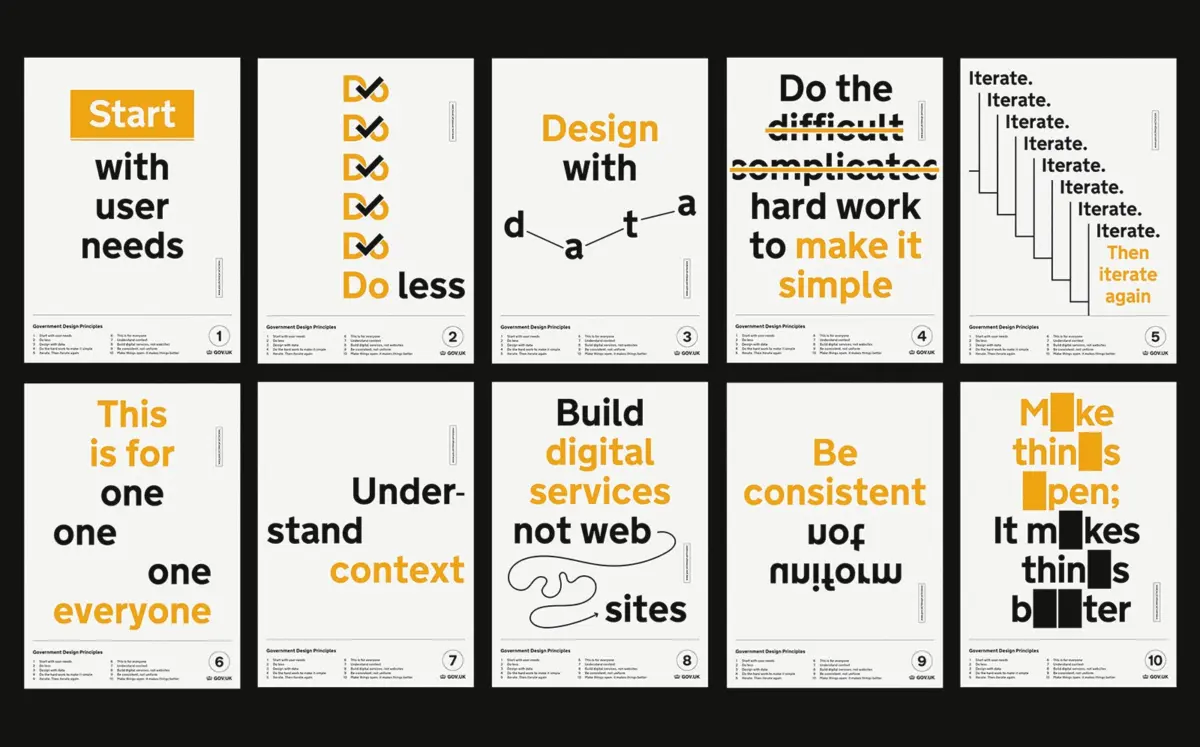
Instead, organizations should adopt concise, principles-based governance models—similar to the acclaimed design principles utilized by digital government services—which fit neatly on a poster and empower employees to use their professional common sense.
3. Embracing the Paradigm Shift
Ultimately, the AI era demands a departure from outdated command-and-control management styles. Organizations must recognize that technological capability without cultural readiness is worthless. By prioritizing the human element—fostering psychological safety, incentivizing personal workflow improvements, supporting organic peer communities, and maintaining adaptive technological rollouts—enterprises can finally break the cycle of historic transformation failures and successfully unlock the true potential of artificial intelligence.