

Executive Overview
If modern corporate artificial intelligence rollouts were adapted into a satirical screenplay, industry reviewers would dismiss the plot as wildly unrealistic. No executive board, critics would argue, could possibly be that blind to human psychology. Yet, across global enterprises, leadership teams continue to treat the integration of generative AI as a straightforward IT upgrade, repeating the exact missteps that plagued the digital transformation era a decade ago.
In 2014, digital strategist Paul Boag published Digital Adaptation through Smashing Magazine, detailing why organizations routinely failed to harness the potential of content management systems, mobile apps, and enterprise platforms. Today, as companies blindly distribute enterprise AI licenses—such as blanket rollouts of Copilot Studio—without cultural scaffolding or workflow alignment, the parallels are startling.
The core diagnosis remains unchanged: organizations treat technological evolution as an engineering challenge rather than a profound cultural shift. By ignoring the fundamental motivators, fears, and psychological safety needs of employees, modern businesses are cultivating an environment of stagnation, frustration, and hidden risk. To navigate the AI era successfully, leadership must abandon top-down dictates, embrace organic grassroots adoption, foster psychological safety, and reevaluate how institutional governance handles innovation.
Detailed Chronology: From CMS to Copilot
To understand why contemporary AI integration is faltering, one must examine the historical trajectory of enterprise technology adoption. The patterns currently playing out in boardrooms are part of a repeating historical cycle.
The Digital Transformation Era (2010–2018)
During the height of the digital transformation movement, corporate IT departments were tasked with modernizing legacy infrastructures. They procured and deployed complex Content Management Systems (CMS), Customer Relationship Management (CRM) databases, and internal intranets. Concurrently, external-facing divisions launched mobile applications and early personalization portals.
However, these rollouts were plagued by a critical oversight: zero emphasis on user experience or internal adoption mechanics. Internal tools were notoriously unintuitive, while customer-facing platforms frequently failed to align with consumer demands. Executive teams measured success by software deployment metrics rather than actual utilization or behavioral change. The result was widespread employee resistance, expensive software shelf-ware, and projects that cratered beneath the weight of bureaucratic approval workflows.
The Dawn of Enterprise AI (2023–Present)
Fast forward to the present day. Buoyed by relentless media hype, C-suite executives have rushed to procure generative AI solutions. Much like the IT departments of the previous decade, organizations are purchasing enterprise-wide licenses, executing generic, one-size-fits-all training webinars, and checking boxes.
Staff members are left staring at powerful interfaces with no contextual guidance on how to integrate these tools into their day-to-day work. Compounding the issue, the psychological stakes are infinitely higher today. While a new CRM in 2014 represented an annoying administrative hurdle, AI represents an existential threat. Employees have consumed the same dystopian headlines as leadership; no amount of hollow corporate reassurance can erase the underlying fear that these tools are ultimately designed to replace them.
Supporting Context & Metrics: The Human Element of Technology
True technological evolution is never about the hardware or software; it is about the intricate ecosystem of human behavior, procedural knowledge, and organizational culture.
The Motivation Deficit
To evaluate AI adoption objectively, leadership must view the transition from the perspective of the frontline worker. From a staff member’s vantage point, AI offers negligible personal incentive.

The primary business justification for executive adoption is pure productivity. Leadership expects employees to accomplish more tasks in less time. Yet, this efficiency gain rarely translates to structural benefits for the worker. Staff are still bound to a rigid schedule, but their quotas are increased. They do not receive additional compensation, nor do they enjoy shortened working hours. Consequently, asking overworked employees to embrace a tool designed to accelerate their output—without offering tangible professional or personal returns—triggers immediate friction.
Organizations must recalibrate their approach. Rather than demanding baseline productivity increases, enterprises should encourage staff to identify the most tedious, hated aspects of their daily routines and deploy AI to eliminate those bottlenecks. Change management succeeds only when it is framed as a direct improvement to the quality of the worker’s professional life, supported by career progression pathways or commensurate compensation adjustments.
Rebuilding Procedural Knowledge
Adopting AI is not as simple as clicking an onboarding tutorial. It requires dismantling working practices, cognitive habits, and workflows that employees have cultivated over decades. This dismantling of procedural knowledge demands immense cognitive bandwidth—a resource that is perpetually scarce in modern corporate environments.
Most employees are already drowning in backlogs and operational demands. Expecting them to independently carve out experimental time to learn complex toolsets is unrealistic. Formal training programs are a necessary baseline, but they are insufficient on their own. Comprehensive integration requires role-specific education, ongoing mentoring, and protected periods for trial and error.
Official Insights: Grassroots Innovation vs. Top-Down Control
Experience from both the digital transformation era and early AI integration demonstrates that top-down memos from executive leadership hold remarkably little persuasive power. Real, sustainable cultural shifts rely instead on internal social proof and psychological safety.
Leveraging the Enthusiasts
Every organization contains a contingent of early adopters—individuals who are already experimenting with generative AI in their personal and professional capacities, entirely unprompted. Rather than focusing initial change management efforts on winning over hardened skeptics, organizations should aggregate these enthusiasts.
By establishing internal communities of practice, providing these pioneers with the time and space to share successful use cases, and letting their enthusiasm cascade through peer networks, organizations can harness natural social proof. Employees are infinitely more likely to adopt a workflow when they witness a peer in a parallel role utilizing it effectively, rather than reading about it in an executive mandate.
The Imperative of Psychological Safety
Experimentation is inherently synonymous with failure. However, many corporate cultures remain mired in risk-aversion, where mistakes are penalized as professional incompetence.
During the digital transformation era, leadership demanded agility while continuing to evaluate staff against rigid, legacy Key Performance Indicators (KPIs). Employees quickly realized that the invitation to innovate was a trap: any operational misstep during the learning curve would be highlighted in their annual reviews.
In the AI era, this dynamic has intensified. Reports abound of employees being reprimanded for incurring excessive API token costs weeks after being urged to explore AI tools, or being subjected to paralyzing governance frameworks that dictate every permissible prompt. When the cost of failure is high, employees rationally choose self-preservation: they default to legacy habits.

To foster genuine adoption, leadership must deliberately engineer a safe-to-fail environment. This requires:
- Temporary relaxation or reweighting of performance metrics during the initial learning curve.
- Constructive reframing of errors as valuable data points rather than performance liabilities.
- Clear, streamlined boundaries that encourage creative exploration without fear of disciplinary action.
Navigating Governance and Shadow AI
Enterprise governance is often handled through two disastrous extremes: complete absence of oversight or draconian restriction.
Excessively restrictive policies—such as exhaustive, multi-page compliance manuals outlining what data cannot be shared with an AI model—cultivate a climate of fear. When the official corporate toolset is too bureaucratic or technologically limited to fulfill real business needs, employees naturally circumvent IT security.
This phenomenon, known as Shadow AI, mirrors the corporate proliferation of unsanctioned cloud storage platforms (like Dropbox and Google Docs) during the 2010s. When in-house tools fail to meet functional demands, employees open personal ChatGPT or Claude accounts on their personal devices to finish their work.
Shadow AI introduces massive security vulnerabilities, funneling sensitive company data into external systems entirely outside organizational visibility. The instinctive executive reaction—clamping down with blocked domains and threats of termination—only drives the behavior deeper underground.
Instead of treating shadow AI as a disciplinary infraction, forward-thinking organizations treat it as a diagnostic tool. By analyzing why employees are turning to external tools, IT departments can identify the exact shortcomings of their official software stack and procure solutions that genuinely serve operational needs.
Future Outlook: Navigating the Road Ahead
As enterprises look toward the horizon of technological integration, the defining factor between market leaders and corporate casualties will not be the sophistication of their algorithms, but the maturity of their change management.
The risk of moving too slowly—failing to adapt while agile competitors harness automation—is exponentially greater than the risk of mismanaging a flexible rollout. However, treating AI strictly as an IT deployment while ignoring human capital is a fatal error.
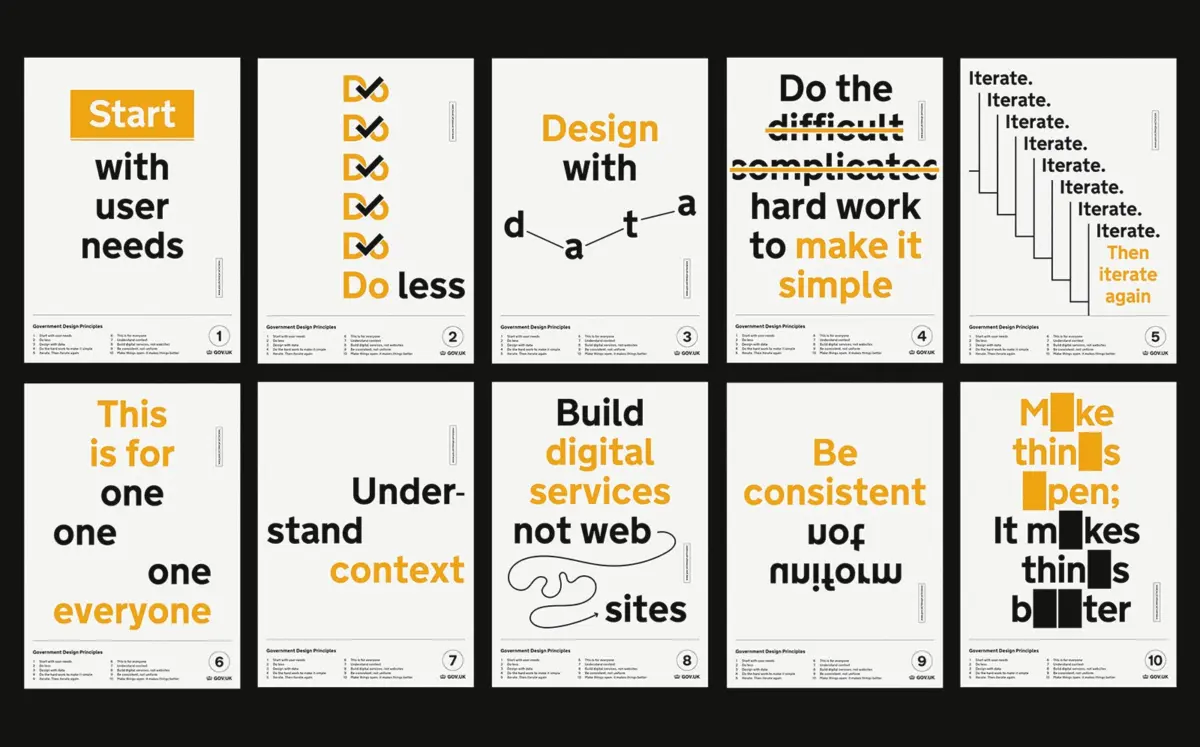
Organizations must recognize that AI adoption is a holistic exercise in culture, empathy, and organizational design. By establishing lightweight, principle-based governance (akin to agile design manifestos), empowering internal enthusiasts, creating safe environments for experimentation, and listening closely to the signals sent by shadow AI, businesses can finally bridge the chasm between technological potential and real-world execution. The tools are ready; the question is whether corporate culture is finally ready to evolve alongside them.