

Executive Overview
As organizations globally scramble to integrate generative artificial intelligence into their daily workflows, the executive suite often congratulates itself on being at the cutting edge of modern enterprise evolution. Yet, beneath the veneer of corporate press releases and sweeping digital mandates lies an operational reality that borders on farce. If current enterprise AI rollouts were adapted into a feature film, critics would dismiss the plot as entirely unbelievable; audiences simply would not accept that senior leadership could be so consistently blind to human realities.
We have, in fact, been here before.
A decade ago, organizations approached the "digital transformation" wave with the exact same misplaced zeal. They treated the deployment of Content Management Systems (CMS), Customer Relationship Management (CRM) platforms, and bespoke mobile applications as purely technological checkboxes. They assumed that simply procuring a license and granting access was enough to guarantee success. The resulting friction, employee resistance, and widespread project failure should have served as a generational warning.
Instead, history is repeating itself with algorithmic precision.
By revisiting the core tenets of Paul Boag’s seminal 2014 Smashing Magazine publication, Digital Adaptation, this report examines how modern enterprises are fundamentally mishandling the AI revolution. By reducing monumental cultural shifts to mere IT procurement exercises, leadership teams are inviting widespread staff alienation, stifling genuine innovation, and inadvertently fueling the dangerous rise of "Shadow AI." Navigating the challenges of artificial intelligence requires an urgent pivot: organizations must stop viewing AI as a technological fix and finally recognize it for what it truly is—a profound cultural, behavioral, and human evolution.
Detailed Chronology: A Decade of Misguided Transformation
To understand why contemporary AI adoption is stumbling, we must trace the historical parallels between the digital transformation boom of the 2010s and today’s generative AI gold rush.
2014: The Illusion of Digital Adaptation
During the height of the digital transformation era, corporate IT departments were tasked with modernizing legacy infrastructure. Enterprises flooded the market with enterprise software solutions—intranets, heavy CMS architectures, and sprawling databases—while marketing departments rushed to deploy consumer-facing mobile apps and personalization engines.
The strategy, if it could be called one, was top-down and tech-centric. Little to no research was conducted into how actual human beings—both internal staff and external customers—would interact with these new systems. Internal tools remained famously user-hostile, requiring complex training manuals just to complete basic internal requests. Customers, meanwhile, were bombarded with digital touchpoints that failed to solve their actual problems.
The consequence was a staggering failure rate for digital transformation projects. Enterprises blamed the technology, but the root cause was always human: they had upgraded their software without adapting their workflows, psychological safety nets, or organizational cultures.
The Present: The Copilot Monopoly
Fast-forward to the current landscape. Senior leadership teams, thoroughly saturated by relentless media hype surrounding generative AI, are rushing to purchase enterprise-wide software licenses—such as Copilot Studio packages—treating the procurement process as the finish line.
A generic, organization-wide training webinar is scheduled, a few high-level memos are circulated, and management considers the job done. Meanwhile, frontline employees look at these new tools with a mixture of confusion and existential dread. They are expected to absorb complex, paradigm-shifting capabilities into daily operations without any meaningful reduction in their baseline workloads.
Just as in 2014, the prevailing institutional mindset remains stubbornly fixated on the hardware and software layers, completely ignoring the complex human machinery required to make those layers function.

Supporting Context & Metrics: The Human Cost of Mismanaged AI
When examining why employees resist adopting AI tools, leadership must look past corporate enthusiasm and confront the underlying economic and psychological disincentives facing the modern workforce.
The Motivation Deficit
From an employee’s perspective, the corporate push for AI offers remarkably few personal benefits—and considerable personal risk.
The primary business case for executive leadership is straightforward: productivity. Enterprises want staff to accomplish more in less time. However, in a standard 9-to-5 employment structure, increased productivity rarely translates into reduced working hours or increased compensation for the individual. Instead, it frequently translates into higher output expectations within the exact same timeframe, effectively raising the baseline of corporate demands without offering compensatory rewards.
Compounding this friction is the psychological shadow of automation anxiety. Employees read the same headlines as executives; they are acutely aware that corporations view AI as a potential pathway to headcount reduction. No amount of reassuring internal memos from C-suite executives can dispel the very rational fear that an employee is actively training their digital replacement.
To overcome this fundamental motivation deficit, organizations must fundamentally reframe the narrative. AI adoption cannot be pitched as a vehicle for corporate extraction; it must be presented as an opportunity to eliminate the most tedious, hated aspects of daily labor. When staff are supported in using AI to automate administrative drudgery, change management becomes vastly more palatable.
Procedural Knowledge and the Tax on Time
Adopting AI is not simply a matter of learning a new keyboard shortcut; it requires dismantling and rebuilding procedural knowledge that professionals have accumulated over years—or even decades—of career experience.
Most contemporary workforces are already operating at or above capacity. Employees are perpetually trying to stay afloat amid overflowing inboxes, endless meetings, and relentless key performance indicators (KPIs). Expecting these overworked professionals to carve out unallocated time to experiment with, evaluate, and integrate generative tools into their daily routines is entirely unrealistic.
Furthermore, formal training courses are insufficient. While role-specific instruction is vital, true technological fluency requires space for trial, error, and organic peer-to-peer discovery.
Official Statements and Industry Insights
Industry analysts, design strategists, and organizational psychologists increasingly agree that the primary bottleneck to technological advancement is not computational power, but organizational psychology.
"Organizations need to recognize that AI is a cultural shift as much as a technology, and that shift has enormous implications for their staff." — Paul Boag, Digital Strategist and Author
This sentiment highlights a critical governance blind spot. When organizations establish rigid bureaucratic barriers out of fear of data leaks or over-spending, they inadvertently push employees away from sanctioned tools and straight into unsanctioned alternatives—a phenomenon known as Shadow AI.
When internal IT policies are so restrictive that an employee cannot accomplish a basic research task using official corporate software, that employee will inevitably open a personal ChatGPT or Claude account on their phone or home laptop.

[Strict Corporate Governance]
        │
        ▼
[Stifled Internal Innovation & Bureaucracy]
        │
        ▼
[Employee Frustration & Deadlines Looming]
        │
        ▼
[Shadow AI: Data Leaking to Uncontrolled Personal Accounts]
As security experts frequently warn, trying to stamp out Shadow AI through disciplinary threats and blanket website blocks is a fool’s errand. Shadow AI is merely a symptom; it serves as a high-fidelity diagnostic tool indicating precisely where official enterprise systems are failing to meet operational demands. Rather than clamping down with draconian restrictions, forward-thinking organizations are learning from these unauthorized workarounds to redesign their official toolsets.
Future Outlook: Building an Adaptive, Safe-to-Fail Enterprise
If organizations are to survive the current technological transition, leadership must fundamentally alter their approach to change management across four distinct pillars:
1. Cultivate Psychological Safety
True innovation cannot coexist with a culture of fear. If employees are reprimanded for exceeding token budgets, making prompt-engineering errors, or experiencing minor productivity dips during the learning curve, they will naturally default to safer, legacy methods.
Organizations must adjust their KPIs, modify performance review frameworks, and intentionally relax governance during the initial exploratory phases. Employees must feel categorically safe to fail.
2. Leverage Social Proof Over Top-Down Mandates
Top-down memos from executive leadership carry very little persuasive weight in matters of operational change. Instead of targeting the most resistant departments first, organizations should identify internal enthusiasts—the "shadow innovators" who are already experimenting with AI unprompted.
By gathering these early adopters, giving them protected time and space to share their successes, and letting organic peer enthusiasm spread through the ranks, organizations can harness the power of social proof. As history proved during the digital transformation era, people adopt new behaviors when they see a respected peer succeeding with them, not when they are ordered to do so by management.
3. Implement Lightweight, Principle-Based Governance
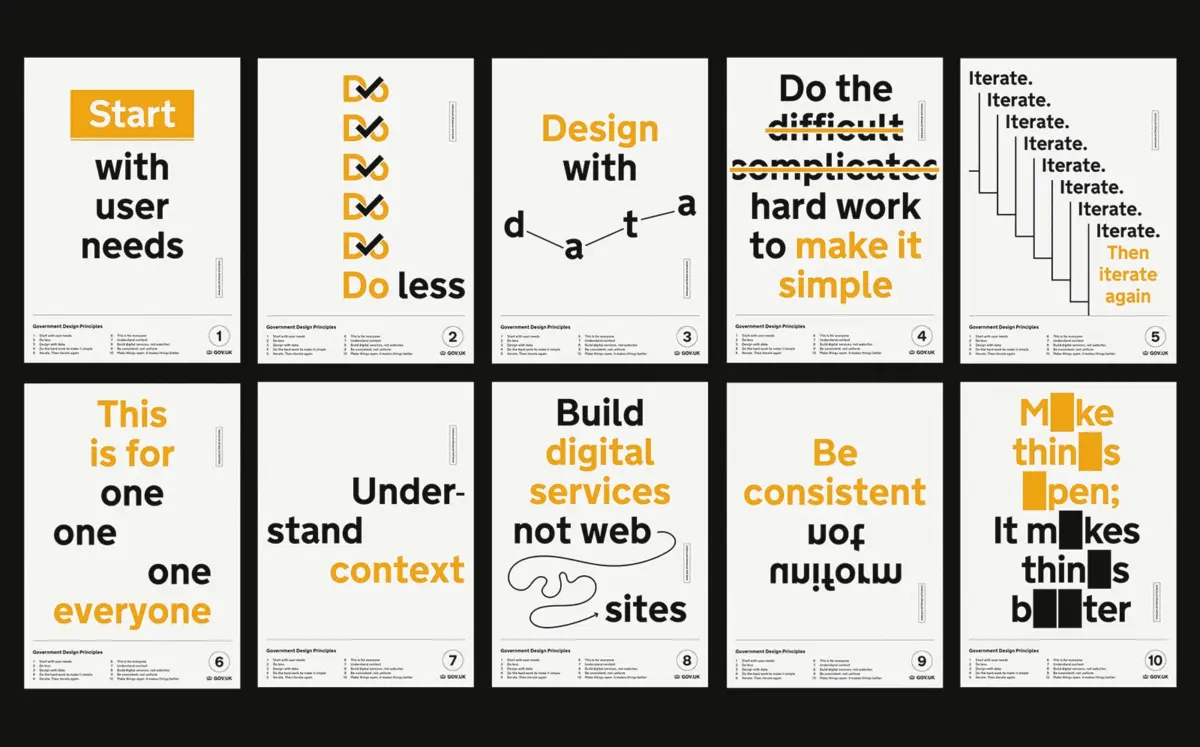
Governance is necessary to manage risk, but it must be handled with surgical care. Rather than drafting sprawling, multi-page compliance documents that paralyze action, enterprises should adopt a handful of concise, guiding principles—mirroring models like the UK government’s renowned design principles. Trusting employees to exercise common sense within clear, overarching boundaries is far more effective than building bureaucratic steering committees that grind innovation to a halt.
4. Transition to Adaptive Technical Infrastructure
IT departments must move away from the "one-size-fits-all" software monopoly model. By offering flexible, multi-tool environments and listening closely to the workarounds developed by staff, organizations can build resilient, adaptive technological ecosystems that scale organically alongside human capability.
Conclusion
The parallels between the digital transformation errors of 2014 and the artificial intelligence adoption crises of today serve as a stark reminder of corporate amnesia. AI is not a piece of enterprise software to be procured, installed, and forgotten. It is a profound, human-centered cultural revolution.
Until executive leadership steps away from the comfort of technological determinism and confronts the messy, essential realities of human motivation, psychological safety, and cultural adaptation, organizations will continue to cycle through expensive, performative farces. The path forward demands courage, empathy, and trust—qualities no algorithm can replicate.