

Executive Overview
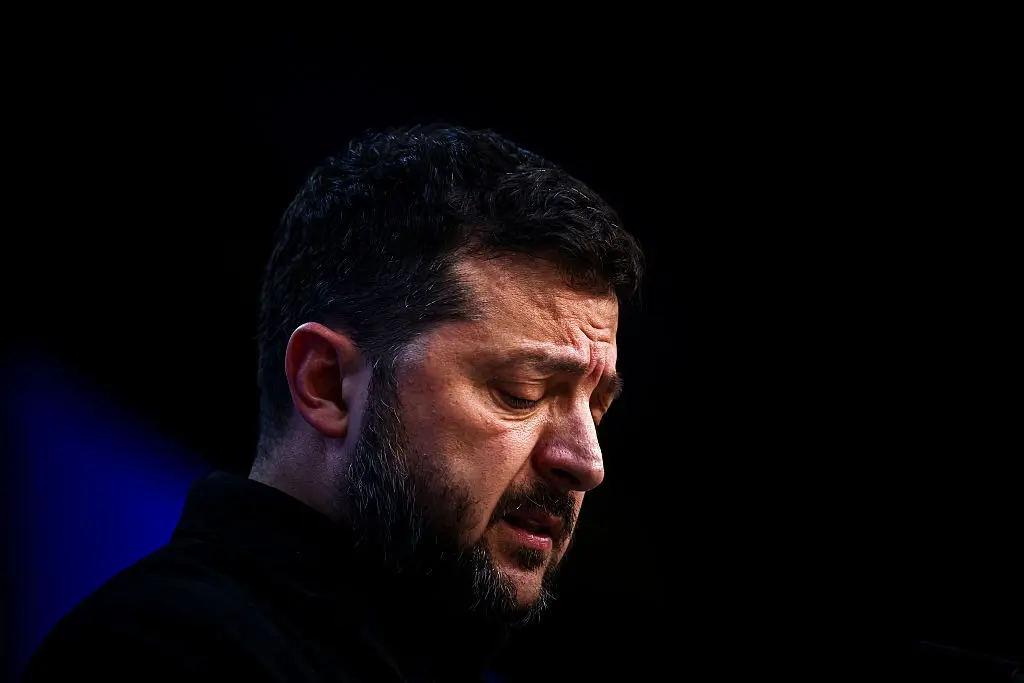
As the freezing temperatures of late autumn descend upon Eastern Europe, the geopolitical landscape of the Russia-Ukraine war has shifted dramatically. Ukrainian President Volodymyr Zelenskyy has issued a blistering condemnation of U.S. President Donald Trump’s decision to execute an eleventh-hour suspension of severe economic penalties against Moscow. The waiver—signed via executive order on Friday, October 17, 2026—halted sweeping sanctions and tariffs mandated by the newly enacted Lindsey O. Graham Sanctioning Russia and Iran Act of 2026 just hours before they were scheduled to take legal effect.
The White House defended the sudden pivot as a measure taken in the "national interest," leaving existing legacy sanctions untouched while shelving the more aggressive tools forged by Congress. This diplomatic blow to Kyiv coincided precisely with one of the most devastating aerial bombardments of the conflict to date. In a relentless 12-hour blitz overnight, Russian forces unleashed hundreds of drones and missiles directly into Ukraine’s critical power generation and transmission infrastructure.
While Moscow’s inner circle openly rejoiced over Washington’s decision—hailing it as a historic step toward the normalization of economic ties—Kyiv and its European allies are left scrambling to patch holes in a battered energy grid. Meanwhile, domestic critics in the United States have accused the administration of betraying bipartisan legislative intent and capitulating to Russian President Vladimir Putin. As both nations brace for a brutal winter characterized by deliberate blackouts and energy warfare, the future of Western unity and Ukraine’s survival hangs in a precarious balance.
Detailed Chronology: From Legislative Triumph to Executive U-Turn
The path leading to the October 17 crisis was paved over several weeks of intense legislative maneuvering in Washington, followed by a swift and contentious dismantling of those very measures by the executive branch.
- September 2026: Following months of negotiations, Congress successfully passed the Lindsey O. Graham Sanctioning Russia and Iran Act of 2026, a bipartisan legislative package designed to implement maximum economic pressure on Moscow. President Donald Trump signed the bill into law, earning praise from hawks in both parties who believed the act would permanently alter the financial calculus of the Kremlin’s war machine. The legislation authorized sweeping new economic penalties, targeted secondary tariffs on nations purchasing Russian energy, and set a hard enforcement deadline.
- Friday, October 16, 2026: Rather than allowing the scheduled activation of the penalties on Sunday, President Trump utilized discretionary waiver authorities embedded within the legislation. He signed an executive order implementing the Lindsey O. Graham Sanctioning Russia and Iran Act specifically to suspend the impending sanctions and tariffs. The White House defended the move late Friday evening, claiming the pause was vital for broader diplomatic maneuvers and served the national interest of the United States.
- Overnight, October 16–17, 2026: Taking advantage of the diplomatic turbulence and shifting U.S. postures, the Russian military launched an unprecedented anti-energy campaign. Between 7:00 PM and 7:00 AM, more than 320 jet-powered and gasoline-powered "Shahed" drones, loitering munitions, and precision-guided cruise and ballistic missiles saturated Ukrainian airspace, targeting critical infrastructure nodes across multiple regions.
- Saturday, October 17, 2026: President Zelenskyy took to social media and diplomatic channels to publicly excoriate the White House’s decision. Hours later, prominent American lawmakers, including Democratic Representative Don Beyer of Virginia, echoed these concerns, publicly castigating the administration for undermining congressional authority and emboldening the Kremlin. Simultaneously, senior Russian officials, including Putin’s investment envoy Kirill Dmitriev, publicly praised the U.S. policy shift as a historic moment for bilateral relations.
Supporting Context & Metrics: The Anatomy of an Energy Blackout
The timing of the U.S. sanctions waiver has injected severe operational stress into an already fragile Ukrainian emergency response framework. As Kyiv attempts to balance diplomatic survival on the world stage, its domestic population faces an imminent humanitarian crisis driven by calculated Russian military strategy.
According to operational reports released by the Ukrainian Air Force and President Zelenskyy’s administration, the overnight assault on October 16–17 targeted more than 15 critical power generation and transmission facilities. The sheer scale of the bombardment overwhelmed standard defensive patterns:
- Total Projectiles Launched: Over 320 aerial threats, encompassing Iranian-designed "Shahed" loitering munitions, cruise missiles, and ballistic missiles.
- Geographic Impact Zones: The most severe damage was reported in western and central urban hubs, including Lutsk, Rivne, Zhytomyr, Vinnytsia, Shepetivka, Slavuta, and Netishyn. Essential infrastructure was additionally struck in the Kharkiv, Kyiv, and Dnipro regions.
- Systemic Intent: Intelligence assessments indicate that Moscow has scaled up its systematic anti-energy operations. The explicit strategic objective is to stretch Ukraine’s repair reserves, spare parts inventories, and air defense interceptor stocks to a breaking point before deep winter conditions set in.
The Graham Act was explicitly designed to choke off the revenues fueling these exact military campaigns. By granting the president the authority to issue national-interest waivers, however, the law inadvertently created an administrative loophole that critics argue has transformed a potent legislative club into an easily avoidable speed bump for the Kremlin.
Official Statements and Political Fallout
The divergence in international reactions highlights deep fractures in the global coalition supporting Ukraine, igniting fierce political debates in both Kyiv and Washington.
Kyiv’s Reaction
President Volodymyr Zelenskyy did not mince words when addressing the dual crises of mounting energy devastation and American diplomatic retreat:
"A decision was unfortunately made in America to completely disregard the Lindsey Graham Act, which was supposed to impose truly effective pressure on Russia to bring this war to an end… A U.S. sanctions blackout, easing pressure on the aggressor, financial rewards for Putin—all of this only encourages him to keep attacking. We must not give up ground."
Zelenskyy emphasized that while European partners continue to assemble robust new military and financial support packages, the sudden withdrawal of American economic leverage threatens to neutralize those gains. He stressed that millions of Ukrainian citizens face the distinct prospect of forced winter blackouts unless Western financial walls around Moscow are rigorously reinforced.
Washington’s Domestic Backlash
In the United States, the executive order triggered immediate condemnation from congressional Democrats and foreign policy traditionalists who view the waiver as a dangerous reversal of American commitments.
Representative Don Beyer (D-Va.) released a scathing statement condemning the action:
"Trump just waived all of the sanctions on Russia provided for in the Lindsey Graham Sanctioning Russia Act, just as I and others warned he would. Trump’s latest surrender to Putin again betrays our Ukrainian partners and defies clear congressional intent of legislation designed to punish Russia for its illegal war of aggression."
Beyer further warned that the structure of the Graham Act leaves open dangerous possibilities, noting that while tariff enforcement was temporarily paused, the statute grants sweeping authorities that could theoretically be weaponized against traditional American trade allies. He urged Congress to immediately amend the legislation to strip the executive branch of unconditional waiver powers.
Moscow’s Celebration
Conversely, the mood in the Russian capital was celebratory. Kirill Dmitriev, serving as Vladimir Putin’s special investment envoy, publicly embraced Washington’s retreat from the brink of broader economic isolation. Dmitriev characterized the suspension as an "important and truly historic moment," signaling to international markets that channels for potential normalization and economic re-engagement with the United States remain open, regardless of ongoing military operations in Eastern Europe.
Future Outlook: Navigating a Perilous Winter
As the fallout from the October 17 executive order reverberates through international capitals, the immediate future presents a daunting matrix of challenges for Ukraine and its remaining Western allies.
- Grid Resilience and Humanitarian Stakes: Ukrainian engineers, emergency crews, and municipal workers are currently engaged in a relentless, round-the-clock race against time. Repairing transformer stations, substations, and generation plants before sub-zero temperatures arrive is now an existential priority. Without additional Western air defense systems capable of intercepting high-speed ballistic and cruise missiles, these facilities remain sitting ducks for subsequent Russian waves.
- The Legislative Battle in Washington: Pressure is mounting on Capitol Hill to rein in presidential discretion regarding foreign policy enforcement mechanisms. Lawmakers who championed the Graham Act are facing a test of legislative will: whether to draft emergency amendments that mandate strict, non-waivable enforcement triggers, or risk watching future sanctions packages dissolve under executive fiat.
- The Global Diplomatic Calculus: The administration’s flip-flop on sanctions has injected profound uncertainty into international coalition-building. European leaders must now recalibrate their own strategic planning under the assumption that Washington’s commitment to maximum economic pressure is conditional and volatile.
Ultimately, as the snow begins to gather over the scarred landscapes of Kharkiv, Kyiv, and the western provinces, the message from the battlefield is stark. The suspension of economic penalties has not brought peace closer; instead, it has cleared the psychological runway for Moscow to double down on its campaign of infrastructural destruction, leaving Ukraine to fight for its light, its heat, and its sovereignty in the dead of winter.