

Executive Overview
In the high-stakes arena of global climate modeling, scientists are perpetually hunting for feedback loops, carbon sinks, and hidden buffers that might alter the trajectory of a warming planet. For decades, the narrative surrounding methane—a greenhouse gas roughly 28 to 36 times more potent than carbon dioxide over a 100-year timescale—has been one of unrelenting alarm. Vast emissions escape from thawing Arctic permafrost, sprawling wetlands, and intensive agricultural operations, threatening to accelerate global temperature spikes.
However, a new, meticulously detailed study paints a complex and surprisingly hopeful picture regarding one of nature’s most unsung climate mitigation systems: forest soils.
Published in the journal Agricultural and Forest Meteorology, groundbreaking research led by scientists from the University of Göttingen and the Baden-Württemberg Forest Research Institute (FVA) has revealed that certain forest soils are not weakening in their capacity to absorb atmospheric methane—as many broad international models have previously suggested. Instead, under specific environmental conditions, these soils are actually getting better at it.
Analyzing the world’s most comprehensive collection of long-term methane absorption measurements—spanning up to 24 years across 13 diverse forest sites in southwestern Germany—the research team found that methane uptake has increased by an average of approximately 3% annually. Contrary to the prevailing scientific consensus that rising temperatures and altered weather patterns universally degrade the soil’s microbial methane sinks, this European study suggests that drier, warmer conditions can radically improve soil porosity, allowing atmospheric methane to sink deeper and be devoured more aggressively by specialized microorganisms known as methanotrophs.
This investigative report explores the mechanics of this phenomenon, breaks down the multi-decade methodology behind the discovery, contextualizes the findings against global meta-analyses, and examines what these regional shifts mean for the future of Earth’s climate architecture.
Detailed Chronology: Tracking Methane Across a Quarter-Century
To fully appreciate the significance of the Göttingen-FVA findings, one must examine the painstaking, decades-long journey required to capture them. Environmental science is often plagued by short-term data sets—snapshots of ecosystems captured over a single season or a couple of years that fail to account for decadal climate variability. This study breaks that mold, relying on a continuous, uninterrupted stream of empirical data gathered over nearly a quarter of a century.
The Foundation of the FVA Monitoring Program
The historical bedrock of this research lies in the FVA’s long-running soil gas monitoring program in southwestern Germany. Initiated decades ago to track baseline forest health, soil chemistry, and the impacts of acid rain, the program gradually evolved to capture deeper biochemical dynamics, including greenhouse gas fluxes.
The researchers focused on 13 distinct forest sites carefully selected to represent a wide spectrum of soil types, tree species, and local topographies across the region. To track how methane behaves as it moves from the atmosphere into the earth, the scientific teams deployed two complementary, highly rigorous measurement techniques:
- Subsurface Soil Gas Profiling: Technicians installed specialized, thin sampling tubes at varying depths beneath the forest floor. Every two weeks without fail, air samples were drawn from these subterranean conduits and transported to a laboratory for gas chromatography analysis. This method produced detailed "soil gas profiles," creating a multi-layered historical record of how methane concentrations fluctuate at different depths throughout the seasonal cycle.
- Airtight Surface Chamber Measurements: To cross-verify the subsurface data and quantify actual surface exchange rates, the research team utilized static, airtight chambers placed directly onto the soil surface. By measuring the precise rate at which methane concentrations inside the chamber dropped over set intervals, scientists could calculate the net flux—determining definitively whether the soil was emitting or absorbing methane, and at what rate.
The Decadal Synthesis
By combining these dual methodologies, the researchers bypassed the limitations of single-point sampling. They accumulated a robust, high-resolution temporal dataset tracking how forest soils responded to severe droughts, heatwaves, heavy precipitation years, and shifting seasonal temperatures from the late 1990s through the modern era.
When Professor Martin Maier—now at the University of Göttingen’s Department of Crop Sciences, but formerly heavily involved in the FVA’s monitoring operations—began analyzing the cumulative data alongside his colleagues, a clear, persistent upward trend in methane uptake emerged. Year after year, despite the chaotic weather anomalies characterizing the turn of the century and the 2010s, the capacity of these southwestern German forest soils to ingest atmospheric methane was steadily climbing.
Supporting Context & Metrics: The Physics and Biology of Subterranean Sinks
To understand why these forest soils are consuming more methane, one must dive into the microscopic world of soil physics and microbial ecology. Methane ($textCH_4$) in the atmosphere does not simply vanish; it must be intercepted, drawn inward, and chemically dismantled.
The Porosity Factor: How Water Blocks Gas
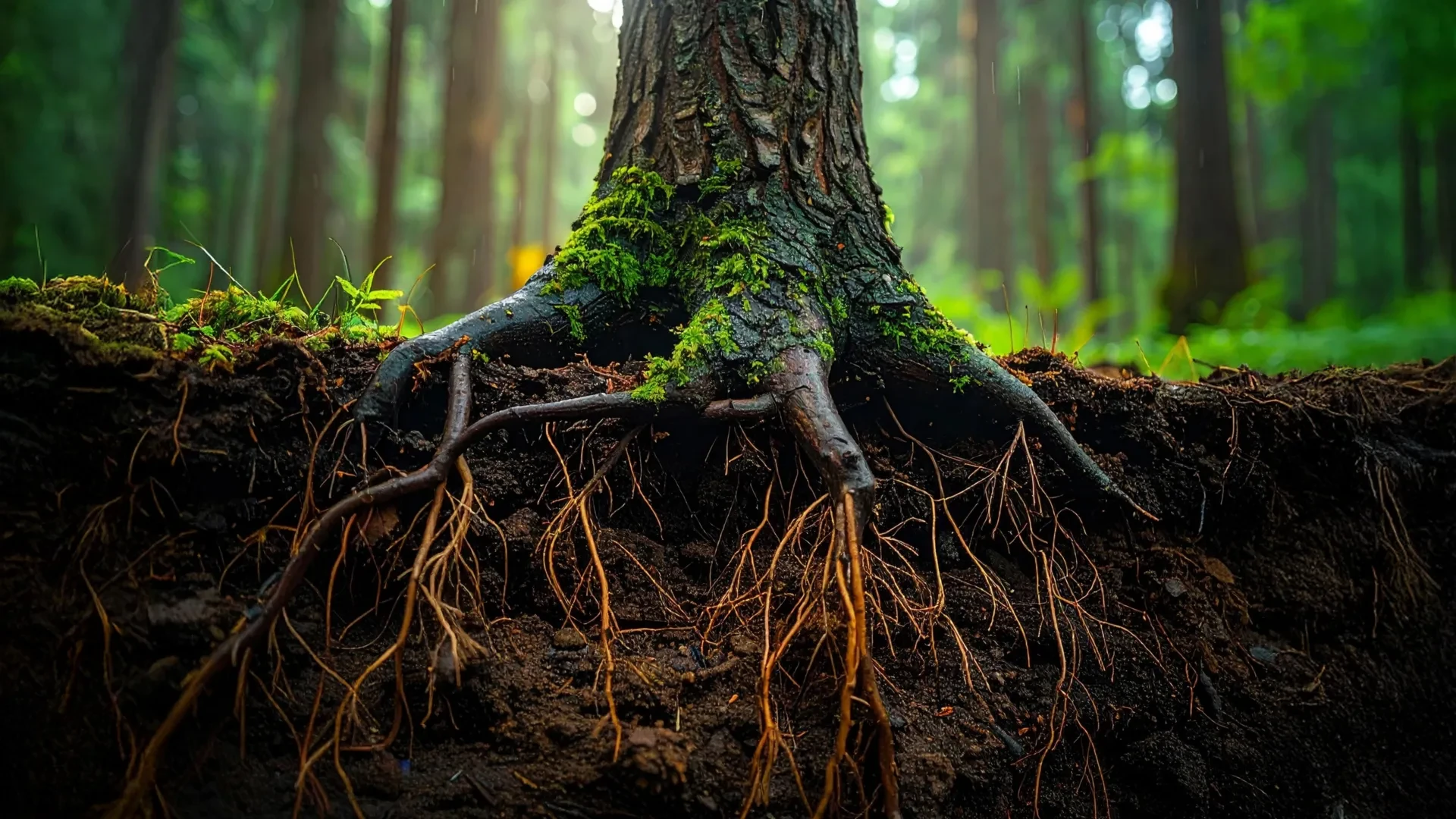
The journey of an atmospheric methane molecule into the earth is governed primarily by soil moisture. Under normal, highly saturated conditions, rainwater fills the intricate network of macropores and micropores weaving between mineral particles, organic matter, and roots in the forest floor.
Water acts as a physical barrier. Because gases diffuse through air roughly 10,000 times faster than they diffuse through water, a water-logged soil acts as a nearly impenetrable shield, trapping methane in the atmosphere and blocking its descent into the soil matrix.
However, when prolonged dry spells and elevated temperatures take hold—conditions that have become increasingly frequent in Central Europe due to climate change—the moisture content of the upper soil layers drops significantly. As water evaporates and drains, air re-enters these pores. The soil becomes more porous, effectively opening subterranean highways that allow atmospheric methane to diffuse deeper and faster into the profile.
The Methanotrophs: Nature’s Methane Cleaners
Once the methane molecules have successfully penetrated the drier soil layers, they encounter a specialized guild of microorganisms known as methanotrophs (methane-oxidizing bacteria).
These organisms utilize methane as their sole source of carbon and energy, breaking the stable $textC-H$ bonds and converting the greenhouse gas into carbon dioxide and water through a series of enzymatic reactions.
The Göttingen study highlights a secondary compounding factor: warmer ambient and soil temperatures can slightly accelerate the metabolic rates of these methanotrophs. Within certain operational thresholds, as the soil warms up, these microbial communities consume methane more aggressively.
When combined—increased gas diffusivity driven by low rainfall and enhanced microbial activity driven by higher temperatures—the result is a measurable, sustained surge in net methane absorption. Across the 13 monitored sites, this translated to an average annual increase in methane uptake of roughly 3%.
Official Statements and Academic Debate
The publication of these findings in Agricultural and Forest Meteorology has sparked intense discussions within the global biogeochemistry community, largely because they stand in stark contrast to prevailing international meta-analyses.
Challenging the Global Consensus
For years, major international reviews—which aggregate data from dozens of disparate studies worldwide—have concluded that climate change is systematically degrading the capacity of soils to act as methane sinks. For instance, the largest study to date on the subject, conducted in the United States, documented a devastating decline in methane uptake of up to 80 percent, driven primarily by increasing rainfall and subsequent soil saturation.
The divergence between the U.S. findings and the German findings illustrates the profound complexity of regional climate impacts.
"Our long-term data shows that climate change does not necessarily have a negative impact on how much methane forest soils absorb," explains Professor Martin Maier, who led the Göttingen University research team.
"While the largest study to date from the US found a decline in methane uptake of up to 80 percent due to increasing rainfall, our significantly more comprehensive field study in south-western Germany found the opposite. We observed a significant long-term increase in methane uptake in the forest areas we studied."
A Nuanced View of Climate Change
Maier and his co-authors are careful to frame their findings correctly. They do not argue that climate change is "good" for forests. Rising temperatures, prolonged droughts, and erratic precipitation regimes continue to place immense stress on European forestry, predisposing timberlands to bark beetle infestations, root rot, and catastrophic wildfires.
Instead, the study demonstrates that the biological and physical responses of ecosystems are rarely uniform. While increased rainfall in certain geographies (like parts of North America) chokes off soil aeration and suppresses methane sinks, reduced rainfall and warming in other regions (like southwestern Germany) can temporarily or persistently boost the earth’s ability to scrub methane from the air.
Furthermore, the researchers emphasize that these nuanced, counterintuitive regional trends can easily be missed by short-term studies. Without a multi-decadal timeline, natural inter-annual variability can obscure slow, directional trends, leading scientists to erroneous or overly generalized conclusions.
Future Outlook: Implications for Climate Modeling and Monitoring
The revelations from the University of Göttingen and the FVA carry significant implications for how international climate models account for terrestrial feedback loops, and they underscore the irreplaceable value of long-term environmental monitoring infrastructure.
Refining Global Methane Budgets
Global climate models, such as those evaluated by the Intergovernmental Panel on Climate Change (IPCC), rely heavily on parameterized equations to estimate natural greenhouse gas fluxes. If models assume a monolithic global decline in soil methane uptake driven by climate change, they may be miscalculating the atmospheric residence time and overall budget of methane.
The German study proves that regional climatic shifts interact with local soil architecture in ways that require localized, high-resolution modeling. To accurately project atmospheric methane concentrations over the coming century, climate scientists must incorporate dynamic soil-porosity and microbial-activity variables that account for regional wetting and drying trends, rather than applying a blanket global degradation factor.
The Imperative for Long-Term Observatories
As climate extremes accelerate, funding for long-term ecological research stations is frequently threatened by shifting political and institutional priorities. The Göttingen-FVA study serves as a powerful empirical argument for the preservation and expansion of these monitoring networks.
"Our results make it clear that taking a series of measurements over many years and running monitoring programs are indispensable for assessing the real effects of climate change," Maier asserts.
Had the FVA monitoring program been shuttered after three or five years—as many research initiatives are due to funding cycles—the researchers would likely have captured only random weather noise rather than the clear, 24-year upward trajectory of methane uptake.
Conclusion: A Complex Horizon
Earth’s ecosystems are not passive victims of climate change; they are active, dynamic participants reacting through complex physiological, physical, and microbial pathways. While forest soils in southwestern Germany have demonstrated an unexpected resilience—stepping up their methane-scrubbing operations in response to warming and drying—this phenomenon is part of a larger, highly complex global puzzle.
As scientists continue to decode the intricate dialogue between climate, soil, and microbes, studies like this remind us that nature’s responses are rarely black-and-white. Understanding these hidden regional buffers is essential not only for predicting the future of our atmosphere, but for appreciating the quiet, relentless work being done beneath our feet in the world’s ancient and managed forests.