

Executive Overview
The current wave of artificial intelligence adoption across global enterprises risks repeating the worst strategic blunders of the digital transformation era. According to digital strategist and author Paul Boag, who revisited his seminal 2014 Smashing Magazine text Digital Adaptation, organizations are once again treating profound cultural and organizational overhauls as mere IT implementations.
Senior leadership teams frequently succumb to industry hype, purchasing enterprise-wide licenses for generic platforms—such as Copilot Studio—and considering their digital evolution complete. Meanwhile, frontline employees are left feeling anxious about job security, overwhelmed by legacy workloads, and unmotivated to embrace tools that appear designed solely to extract higher productivity without personal benefit.
Compounding these human hurdles are risk-averse corporate governance frameworks and rigid, top-down technology procurement policies. These restrictions frequently trigger the resurgence of "Shadow AI," where frustrated workers bypass official channels to use personal AI accounts, inadvertently creating severe data security vulnerabilities.
To break this cycle, businesses must pivot from a technology-first mindset to a people-first strategy. Organizations must incentivize AI adoption, foster a culture where experimentation and failure are culturally safe, establish high-level governance through concise design principles, and embrace adaptive technological rollouts that mirror employee needs rather than suppressing them.
Detailed Chronology
Understanding the current missteps in AI deployment requires examining how organizations have chronically mishandled technological evolutions over the past decade.
2014: The Digital Transformation Mirage
When Digital Adaptation was published, businesses were racing to modernize their operations. IT departments aggressively deployed Content Management Systems (CMS), Customer Relationship Management (CRM) platforms, and internal intranets. Concurrently, customer-facing divisions rushed to launch responsive websites and mobile applications.
However, leadership made a critical error: they focused almost exclusively on the software rather than the end-user experience. Internal systems were notoriously difficult to navigate, and external digital products failed to align with actual consumer needs. Furthermore, corporate cultures remained rigidly anchored to old metrics, penalizing employees for the inevitable friction of transitioning to digital workflows.

2023–Present: The AI Gold Rush and the Sequel of Errors
Fast-forward to the generative AI boom, and the corporate playbook has barely evolved. Leadership teams, mesmerized by efficiency gains, treat artificial intelligence as a plug-and-play utility.
- Phase 1: Blanket Licensing. Enterprise IT departments roll out company-wide AI licenses accompanied by generic, one-size-fits-all training modules.
- Phase 2: Employee Alienation. Staff members, facing the same workloads and grappling with existential fears regarding job displacement, view AI not as an empowering assistant, but as a productivity-monitoring Trojan horse.
- Phase 3: The Rise of Shadow AI. Frustrated by bureaucratic approval processes and restrictive official tools that fail to meet specialized departmental needs (such as UX research repositories), employees increasingly resort to using personal ChatGPT or Claude accounts on unauthorized devices. This behavior drives critical corporate data beyond the reach of institutional governance.
Supporting Context & Metrics: The Human Element of Change
The core friction in AI adoption stems from a fundamental disconnect between managerial incentives and employee realities.
The Productivity Trap
Management is primarily motivated by the promise of productivity: the ability for staff to produce more output in less time. Yet, for the average employee, this equation offers zero personal return. Workers are still expected to log standard hours, but their output quotas increase. They receive no additional compensation, no reduction in working hours, and no stake in the efficiency gains. Without a clear alignment between technological adoption and improved quality of work-life, employee resistance is entirely rational.
Rebuilding Procedural Knowledge
Adopting AI is not merely a matter of learning a new shortcut; it requires dismantling and rebuilding years, or even decades, of established procedural knowledge. In an era where employees are chronically overworked and buried under unmanageable daily task lists, carving out the cognitive space for experimentation is a luxury few feel they possess.
Paul Boag notes that formal training sessions are insufficient. Sustainable adoption relies heavily on peer validation—amplifying the voices of early internal enthusiasts who are already experimenting with AI organically, and leveraging social proof to demonstrate tangible value to the wider workforce.
Official Perspectives and Expert Insights
Industry analysts, change management specialists, and digital pioneers agree that artificial intelligence represents a paradigm shift far exceeding the scope of traditional IT upgrades.
Culture Trumps Code
Experts emphasize that enterprise AI integration is fundamentally a cultural transformation. When governance models are excessively punitive—such as penalizing staff for excessive token usage or reprimanding minor policy infractions—they breed a culture of fear. In such environments, employees quickly calculate that it is safer to maintain inefficient legacy habits than to risk executive reprimand through experimentation.

Designing for Trust
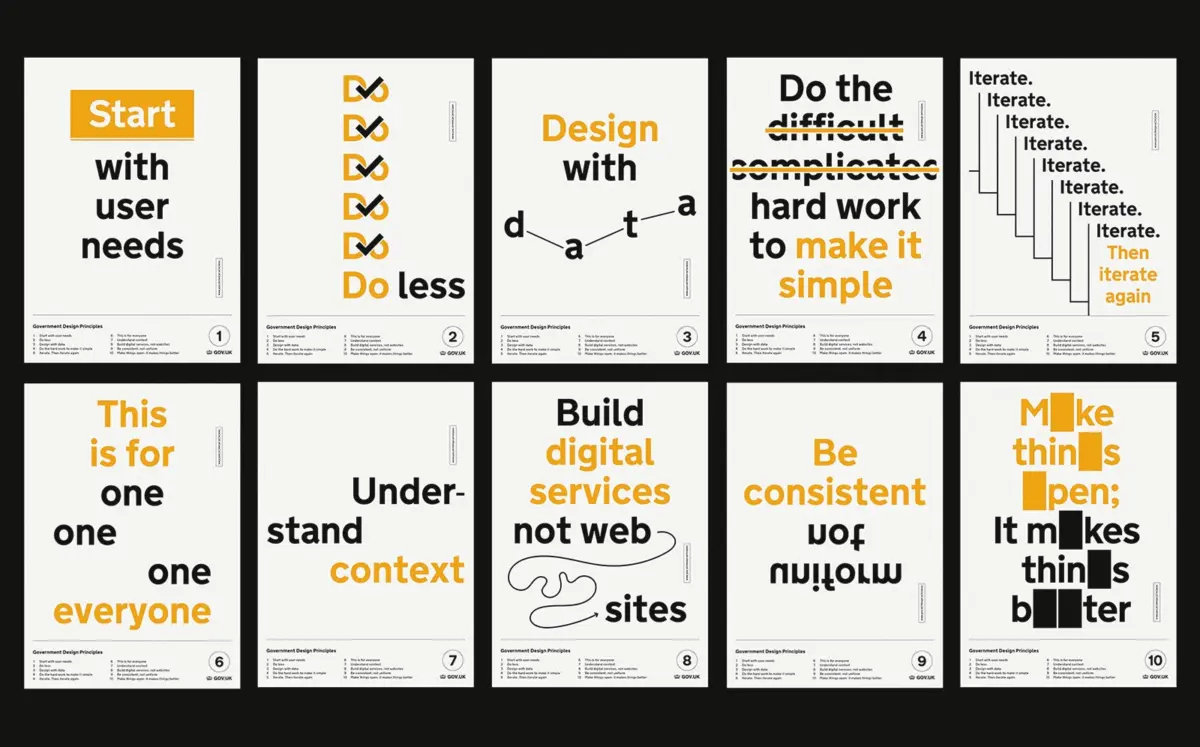
To combat this, progressive organizations are abandoning exhaustive, multi-page compliance manuals in favor of lightweight design principles. Drawing inspiration from frameworks like the UK Government Digital Service (GOV.UK), organizations are discovering that providing a concise, high-level set of operational values—paired with organizational trust in employee common sense—yields significantly higher compliance and engagement than draconian restrictions.
Paul Boag highlights the danger of bureaucratic friction through real-world casework:
"Management is pushing hard for AI adoption, and the team is excited about the potential… Unfortunately, the reality is that nothing is happening because the official tool cannot deliver on the team’s vision, and so they are currently bogged down in bureaucracy as they try to persuade the AI steering group that they need to use a different toolset. Understandably, the team’s enthusiasm is waning."
Future Outlook
Navigating the next phase of artificial intelligence deployment demands a radical strategic reorientation. Organizations that fail to learn from the digital transformation era risk compounding their vulnerabilities as AI capabilities accelerate.
Key Imperatives for Leadership
- Redefine the Value Proposition: Connect AI adoption directly to the elimination of tedious, deeply disliked tasks, thereby improving the day-to-day work experience of frontline staff rather than merely increasing their output quotas.
- Establish Psychological Safety: Adjust Key Performance Indicators (KPIs) and performance review criteria to accommodate the learning curve. Employees must feel safe to experiment, fail, and iterate without fear of professional penalty.
- Embrace Adaptive IT: Move away from monolithic, top-down software mandates. Listen to the signals sent by "Shadow AI" to understand where official toolsets are failing, and establish flexible procurement pathways that allow specialized departments to utilize appropriate technological ecosystems.
- Cultivate Internal Champions: Shift away from top-down enforcement by identifying, empowering, and providing platforms for internal enthusiasts to share organic success stories across peer networks.
Conclusion
The ultimate danger facing modern organizations is not that artificial intelligence will fail to deliver technological capability, but that leadership will continue to misdiagnose a profound human and cultural challenge as a simple IT rollout. By recognizing that AI adoption is an exercise in change management, empathy, and organizational trust, enterprises can finally bridge the gap between technological potential and operational reality.