

Executive Overview
As organizations globally rush to integrate artificial intelligence into their daily operations, a familiar and alarming pattern is emerging. Executive leadership teams, intoxicated by productivity promises and headline-driven hype, are approaching AI integration as a purely technological challenge. Licenses for enterprise-wide systems like Microsoft Copilot are purchased, a generic, one-size-fits-all training video is circulated, and the corporate leadership declares the job done.
Yet, this superficial approach is breeding organizational dysfunction on a massive scale. According to digital transformation expert and author Paul Boag, today’s botched AI rollouts feel less like strategic planning and more like an elaborate corporate farce. Revisiting the hard-earned lessons from the digital transformation wave of the 2014 era—chronicled in his seminal Smashing Magazine book Digital Adaptation—Boag argues that businesses are sleepwalking into the exact same traps they fell into a decade ago.
By framing AI adoption as an IT project rather than a profound cultural and human shift, organizations are creating environments defined by employee anxiety, over-governance, administrative bottlenecks, and the dangerous rise of "Shadow AI." To successfully navigate the challenges of the AI era, leaders must fundamentally pivot their strategies. They must prioritize psychological safety, incentivize meaningful workflow integration, leverage internal enthusiasts over top-down mandates, and treat employee-driven workarounds as diagnostic tools rather than disciplinary infractions.
Detailed Chronology: From CMS to Copilot—A Decade of Blind Spots
To understand why contemporary AI adoption is floundering, one must look backward to the era of digital transformation. The historical parallels between the technological migrations of the mid-2010s and the artificial intelligence revolution of the 2020s are striking, revealing a persistent institutional amnesia among corporate leadership.
2014: The Digital Transformation Delusion
During the height of the digital transformation era, IT departments were tasked with modernizing legacy infrastructures. Organizations rushed to deploy Content Management Systems (CMS), Customer Relationship Management (CRM) platforms, and internal intranets. Simultaneously, customer-facing divisions launched mobile applications and personalization engines.
However, these rollouts suffered from a fatal flaw: an almost total disregard for the human element. Internal systems were engineered with little regard for user experience, resulting in bloated, incomprehensible software that employees despised. On the external front, organizations built digital products based on what executives wanted customers to experience, rather than what users actually needed or valued. The result was widespread project failure, blown budgets, and deep-seated organizational cynicism toward "innovation" initiatives.
2024–Present: The AI Deja Vu
Fast forward to the current landscape, and history is repeating itself with algorithmic precision. Senior management teams, fearful of being left behind in the generative AI gold rush, authorize company-wide rollouts of enterprise AI suites without consulting the end-users.
The playbook remains painfully identical:
- The Top-Down Purchase: Leadership procures enterprise AI licenses based on broad productivity claims.
- The Superficial Broadcast: A generic, organization-wide training webinar or compliance document is sent to all staff.
- The Expectation Trap: Employees are suddenly expected to fundamentally alter their daily workflows while continuing to meet legacy Key Performance Indicators (KPIs).
- The Institutional Freeze: Bureaucratic governance structures and fear of making costly mistakes paralyze innovation, driving frustrated employees to bypass official channels entirely.
Supporting Context & Metrics: The Human Cost of Algorithmic Pressure
The fundamental oversight in modern AI implementation is failing to recognize that artificial intelligence is, at its core, a cultural and psychological disruption rather than a software upgrade.

Why Employees Are Resisting AI
From an employee’s perspective, corporate AI mandates present very few personal benefits and a staggering amount of existential risk.
- The Productivity Paradox: When senior management champions AI, their primary motivation is organizational productivity—achieving more output in fewer hours. For the frontline worker, however, this rarely translates to shorter workweeks, increased compensation, or reduced stress. Instead, it creates an invisible treadmill: employees are expected to produce higher volumes of work within the exact same eight-hour shift.
- The Job Security Threat: Unlike the software migrations of the past, generative AI arrives packaged with explicit headlines about automation and workforce reduction. No amount of reassuring internal memos from the C-suite can eliminate the very real fear that employees are actively training the algorithms designed to replace them.
Cultivating Psychological Safety
Overcoming this resistance requires dismantling corporate cultures of fear. In many enterprises, learning a new technological paradigm is severely hampered by legacy performance metrics. When organizations demand experimentation on one hand while punishing minor errors or inefficient token usage in annual performance reviews on the other, they send contradictory signals.
True innovation requires a foundational license to fail. If employees fear that a misplaced prompt, an experimental workflow failure, or an initial productivity dip will be held against them, they will inevitably retreat to what is safe and familiar: manual, legacy processes.
Official Statements and Industry Insights
Industry analysts and thought leaders are increasingly calling for a dramatic overhaul in how corporate entities approach change management during technological shifts.
Paul Boag emphasizes that successful adoption cannot be manufactured through executive decrees or heavy-handed compliance manuals:
"Organizations need to recognize that AI is a cultural shift as much as a technology, and that shift has enormous implications for their staff. Rather than trying to win over the most resistant staff first, organizations should find the people already experimenting with AI, give them time to share what they have learned, and let social proof do the heavy lifting."
Rather than attempting to convert administrative holdouts through top-down mandates, organizations are finding vastly superior results by identifying grassroots "enthusiasts"—employees who are already testing AI boundaries out of personal curiosity. By creating internal forums for these early adopters to showcase practical, role-specific wins, companies can leverage the power of peer validation. When workers see a colleague in a matching role successfully integrate AI to eliminate tedious administrative tasks, skepticism gives way to genuine curiosity.
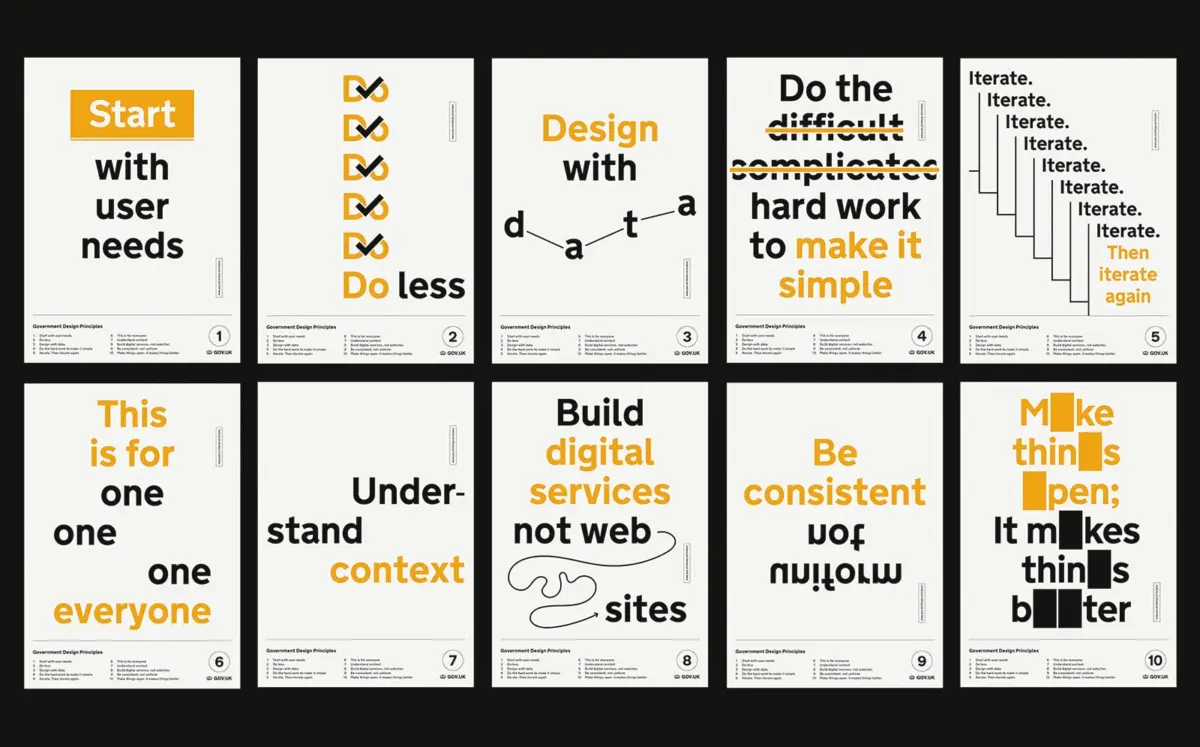
Furthermore, governance must shift away from exhaustive, restrictive rulebooks toward agile, principles-based frameworks. Citing successful models like the UK government’s digital design principles, Boag advocates for concise, easily digestible sets of guidelines that fit on a single page, empowering employees to exercise professional common sense rather than hiding behind paralyzing administrative red tape.
Future Outlook: Surviving the Era of Shadow AI
As organizations look toward the horizon, the greatest threat to corporate security is not the unbridled adoption of artificial intelligence, but rather the heavy-handed restriction of it.

The Rise of Shadow AI
When IT departments and centralized steering committees implement overly rigid gatekeeping—such as blocking external AI applications, enforcing draconian data-sharing policies, or restricting access to preferred toolsets—they inadvertently trigger a wave of Shadow AI.
Just as employees during the digital transformation era bypassed sluggish internal file-sharing systems to sign up for unauthorized Dropbox or Google Docs accounts, today’s workforce is utilizing personal smartphones and home laptops to access consumer-grade instances of ChatGPT, Claude, and specialized tools. When official enterprise software cannot fulfill a specialized department’s workflow requirements (such as a UX research team attempting to build an AI-powered insights repository), staff will inevitably find workarounds.
This creates a severe, invisible security vulnerability. Proprietary company data, client information, and sensitive intellectual property end up flowing through unmonitored external systems completely outside the purview of corporate oversight.
A Call for Adaptive Governance
The instinctive corporate reaction to Shadow AI is often a clampdown: stricter firewalls, threatening disciplinary warnings, and expanded policy documentation. This approach is fundamentally counterproductive.
Instead of treating Shadow AI as a disciplinary infraction, forward-thinking organizations should view it as an invaluable diagnostic tool. Shadow AI reveals precisely where official enterprise tooling is falling short of operational needs. By engaging directly with employees to understand why they are seeking out external applications, IT leadership can tailor future software acquisitions and integrations to match real-world workflows.
Conclusion: People Before Code
Ultimately, the organizations that thrive in the age of artificial intelligence will be those that abandon the illusion of centralized technological control. AI adoption is not an IT milestone to be checked off a quarterly roadmap; it is a complex, human-centric journey requiring empathy, flexible governance, psychological safety, and cultural adaptation.
The risks of moving too slowly, stifling employee ingenuity, and ignoring the human cost of digital disruption far outweigh the risks of temporary operational chaos. Leaders must choose whether to repeat the expensive mistakes of the past or finally recognize that technology is only ever as effective as the empowered, supported people wielding it.