

Executive Overview
The global appreciation of heritage, wild, and rare apple cultivars has reached a critical cultural inflection point. As consumers increasingly reject the uniform, cardboard-tasting industrial monocultures dominating supermarket shelves, an underground vanguard of pomological enthusiasts is turning to niche, esoteric varietals. Entering the fray of this seasonal evaluation is the second installment of the definitive 2026 apple tasting series, offering a merciless, unvarnished look at what orchards are currently producing.
From the densely spiced profiles of historic regional finds to the jaw-shattering structural integrity of elite cider apples, this year’s batch tests the limits of human dental architecture, culinary patience, and flavor profiling. Utilizing a strict numerical evaluation scale spanning from 1 to 10, this review synthesizes sensory data regarding skin texture, flesh density, acidity-to-sugar ratios, and erratic flavor anomalies—such as accidental notes of bubblegum, cut grass, and colonial history.

Detailed Chronology of Tastings
The evaluation period encompasses a diverse spectrum of harvests, ranging from premier early-season picks to neglected storage experiments that perhaps stayed on or off the branch a fraction too long. Below is the chronological breakdown of the six distinct cultivars evaluated during this phase of the 2026 trial.
1. Kickapoo Spice
- Score: 6.9 / 10
- Sensory Profile: Heavy on nutmeg, cinnamon, and clove; distinctly lacking in juiciness; features a polarizing cut-grass aftertaste.
- Analysis: Compact and structurally dense, this cultivar immediately makes an impression with its robust spice cabinet profile. True to its nomenclature, the spice notes are front and center, bypassing standard sweetness in favor of baking-spice aromatics. However, pomological inconsistencies plague the finish. The absence of juice combined with a herbaceous, lawn-like aftertaste indicates a delicate harvesting window. It is a prime example of an apple that likely suffered from sub-optimal storage timing, demonstrating how quickly off-the-tree maturation can derail a potential triumph. Still, its complex aromatic profile earns it a respectable, highly memeable score.
2. St Edmunds Pippin
- Score: 8.3 / 10
- Sensory Profile: Exceptionally crunchy, immensely juicy, sharp-breaking, and bright with distinct fennel-pollen herbal notes balanced by a clean sweetness.
- Analysis: As the inaugural proper tasting of the season, the St Edmunds Pippin established an exceptionally high standard. Despite possessing a coarse, rough-textured exterior skin that tests the boundaries of tactile comfort, the internal mechanics of this fruit are magnificent. Upon impact, the flesh delivers a crisp, satisfying acoustic and physical snap. The flavor profile is an avant-garde masterclass, merging wild herbal undertones reminiscent of fennel pollen with a traditional, harmonious sweet-tart core. It stands as a shining beacon for how weird, funky heirloom apples can simultaneously deliver mainstream culinary satisfaction.
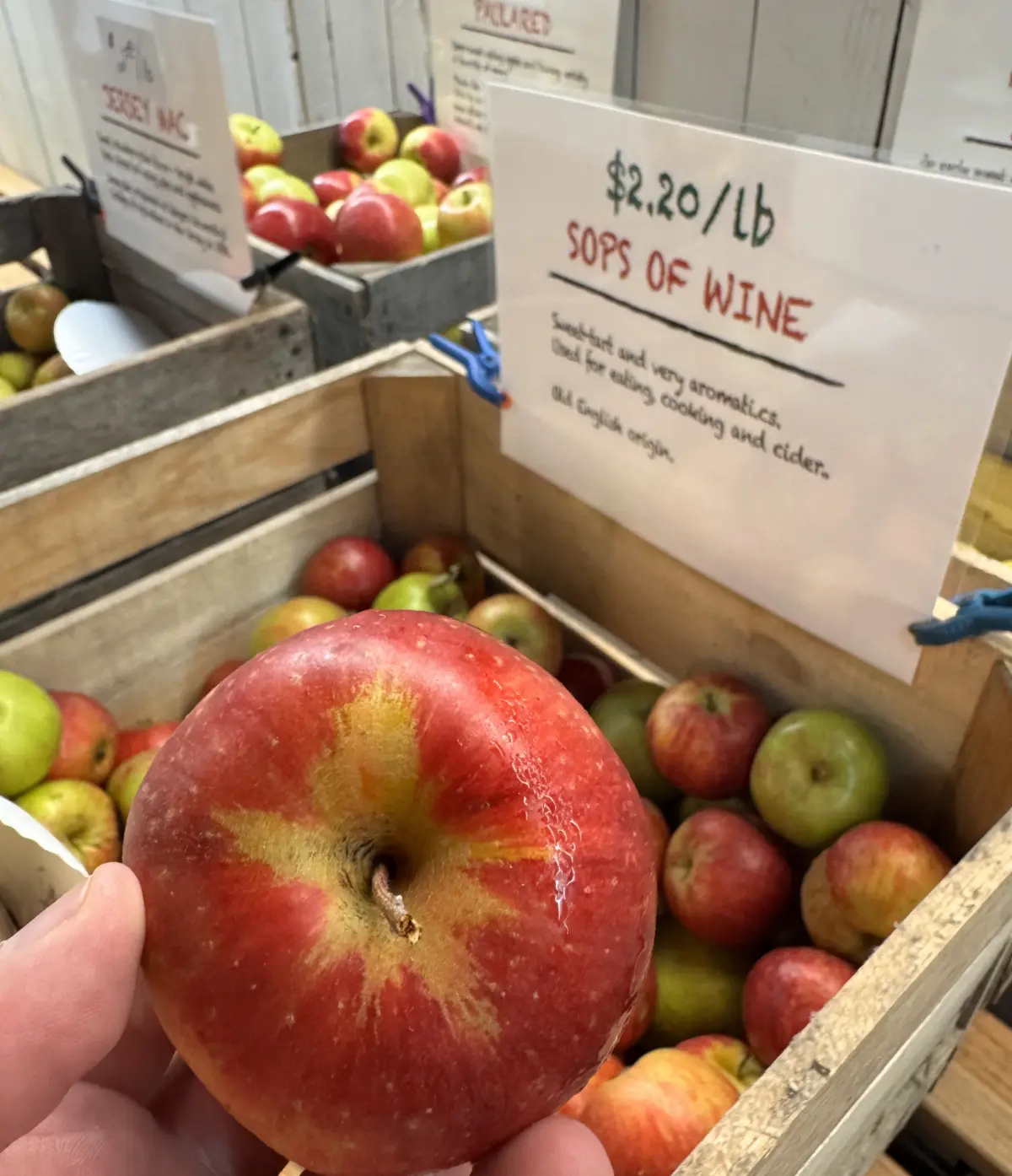
3. Sops of Wine
- Score: 3.5 / 10
- Sensory Profile: Funky vanilla and spice notes overshadowed by a mealy, gritty texture and a lack of true varietal clarity.
- Analysis: Etymological and psychological baggage often weighs heavily on heritage fruit trials, and the "Sops of Wine" is no exception, conjuring dramatic, cinematic visions of historic proportions. Unfortunately, the real-world agricultural experience fails to match the cinematic grandeur. While the flavor profile attempts a pleasant "subacid" approach with subtle whispers of vanilla and spice, the physical structure collapses entirely. The texture leans uncomfortably mealy and gritty, suggesting the fruit spent too many days languishing off the branch. Compounded by historical identity crises—whether it is a singular true variety or a catchment term for a dozen disparate ancestral apples—the experience leaves much to be desired.
4. Fenceline Surprise
- Score: 1.0 / 10
- Sensory Profile: Bland, mushy, with a fleeting, ghostly mist of pear juice quickly yielding to a mouthfeel akin to beach sand.
- Analysis: Living up to its ironic moniker, the primary surprise of the Fenceline Surprise is just how profoundly disappointing an apple can be. Despite promotional signage promising a "firm apple," this specimen delivered an unmitigated textural catastrophe: a mushy interior that disintegrates instantly upon mastication. A fleeting, highly diluted whisper of pear flavor attempts to rescue the profile, but it vanishes instantaneously, leaving the taster with the distressing sensation of chewing fine coastal sediment. Whether the result of poor post-harvest handling or genetic predisposition, this fruit ranks among the lowest tiers of contemporary culinary utility.
5. Americus Crab
- Score: 2.5 / 10
- Sensory Profile: Savory, hyper-tart, structurally formidable, and swimming in high concentrations of astringent tannins.
- Analysis: Classified strictly as a crabapple, the Americus Crab defies conventional eating-out-of-hand protocols. It is a rogue element within the pomological landscape—demanding a palate that appreciates punishment. Packed with tannins and boasting an aggressively tough skin, it is not engineered for casual snacking. Instead, it serves as a fascinating botanical curiosity. It is savory, punishingly tart, and structurally resilient, acting less like a fruit and more like a culinary gauntlet thrown down for the adventurous or the masochistic.
6. Campfield (False?)
- Score: 4.1 / 10
- Sensory Profile: Chewy, overly sweet, and tannin-heavy, acting as a transitional cider fruit rather than a dessert apple.
- Analysis: Labeled ambiguously with a "(false)" designation, this specimen presents a chewy, callused tactile experience that feels as though the fruit is consuming the taster in a reciprocal biological struggle. High in tannins and overly saccharine, its structural reality aligns with its true destiny: it is fundamentally a cider apple. Consuming it raw bypasses the necessary metallurgical magic of fermentation, leaving the uninitiated tongue regretting the experiment.
Historical documentation links the lineage of the Campfield nomenclature to New Jersey Puritan roots, detailing agricultural mandates where early colonial freeholders were legally bound to cultivate vast orchards of winter fruit for hard cider production. While rich in ancestral lore, its direct-consumption profile remains strictly functional.

7. Graham
- Score: 8.0 / 10
- Sensory Profile: Monumentally dense, glacier-breaking structural integrity yielding an unmistakable, shockingly accurate profile of commercial Juicy Fruit gum.
- Analysis: The Graham closes out this evaluation block with a display of unyielding physical strength. Its flesh is so heavily fortified that it threatens structural damage to the human jaw, breaking apart with the glacial fracture patterns usually reserved for high-grade timber. However, once the defenses are breached, the reward is utterly surreal: an unadulterated, unabashed flavor profile that tastes identically to standard-issue Juicy Fruit chewing gum. Despite the extensive dental preparation required to access it, this whimsical, confectionery flavor note rescues the apple from the heavy-duty gym class it clearly attended, securing an elite position in the 2026 rankings.
Supporting Context & Metrics
The 2026 apple tasting metrics continue to highlight a widening chasm between aesthetic marketing and internal pomological reality. Statistical trends across this batch emphasize that historic nomenclature—while rich in cultural and fictional associations—bears zero correlation to structural stability or flavor harmony.
- Average Variety Score: 4.88 / 10
- Highest Scored Cultivar: St Edmunds Pippin (8.3)
- Lowest Scored Cultivar: Fenceline Surprise (1.0)
- Primary Failure Point: Post-harvest storage degradation and premature mealiness.
- Secondary Failure Point: Excessive tannin loads intended exclusively for fermentation pipelines rather than fresh human consumption.
Official Statements and Observer Commentary
Pomological researchers and underground snack associations have noted an unprecedented resurgence in public interest regarding heirloom varietals. While commercial agricultural boards continue to champion high-yield, shelf-stable monoliths, independent investigators emphasize the cultural necessity of preserving wild, weird, and structurally challenging apples.

"Apples are weird like that," notes the lead pomological investigator during the Kickapoo Spice assessment. "Some improve off the tree, some begin their descent to crap-town the moment they drop."
Furthermore, the intersection of historical lineage—spanning from colonial New Jersey freeholders buried beneath municipal structures to cinematic hallucinations of Middle-earth—proves that fruit evaluation is as much a psychological endeavor as it is a sensory one.

Future Outlook
As the 2026 harvest season progresses, the epicenter of evaluation shifts northward. With upcoming expeditions planned across New York, New England, and the Canadian provinces, the apple-tasting vanguard is poised to encounter entirely new microclimates, regional strains, and obscure agricultural anomalies.
Observers anticipate that regional growers will continue to unearth forgotten heritage trees, testing the limits of human dental endurance and expanding our understanding of what an apple can, and perhaps should, taste like. The public is advised to prepare their jaws, curate their regional travel schedules, and ensure that all upcoming orchard visits are adequately supplied with an appetite for pomological chaos.