

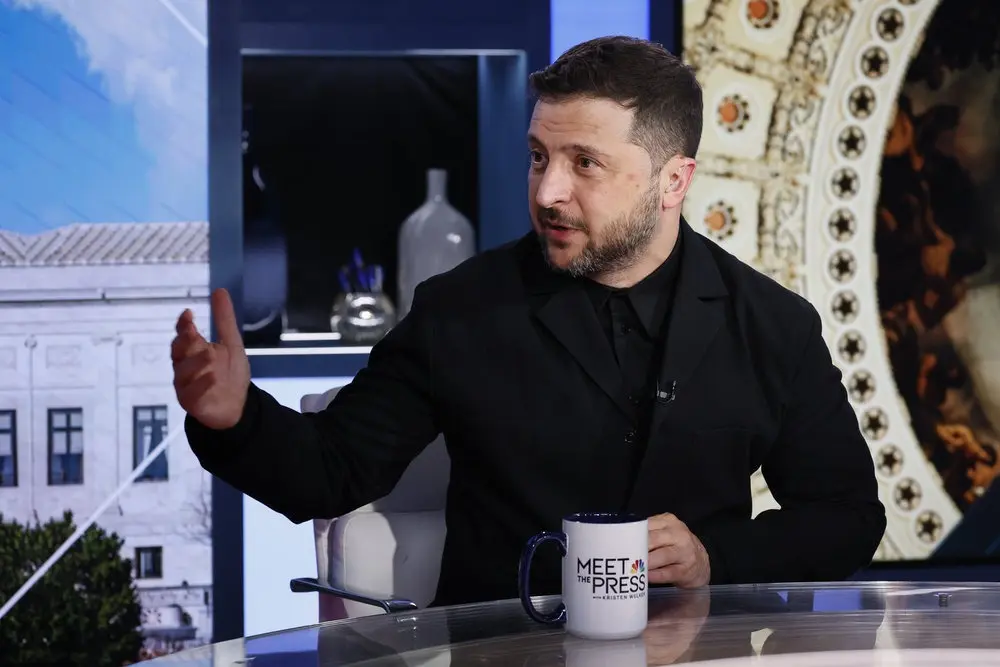
WASHINGTON — Amid an escalating diplomatic and strategic rift between Washington and Kyiv, Ukrainian President Volodymyr Zelenskyy has confirmed that the United States temporarily halted vital intelligence-sharing operations. The admission, made during a prominent Sunday morning broadcast appearance, directly contradicts earlier assertions from the Trump administration.
The revelation has unleashed a wave of scrutiny across Capitol Hill, culminating in sharp demands from senior lawmakers for comprehensive congressional investigations. At the heart of the controversy are sudden disruptions affecting critical Ukrainian battlefield communications and defense infrastructure, raising urgent questions regarding the long-term reliability of American backing for Ukraine’s defensive war effort.
Executive Overview
The unfolding diplomatic crisis highlights a profound fracture in the transatlantic alliance as the war in Ukraine grinds toward an unpredictable juncture. During an interview on NBC’s Meet the Press, President Zelenskyy verified that American intelligence feeds—specifically those utilized to provide advance warning of incoming Russian ballistic and cruise missile strikes—were briefly severed before being restored.
This confirmation undercuts repeated claims by President Donald Trump that intelligence pipelines had remained entirely uninterrupted throughout the diplomatic friction. Compounding Kyiv’s anxieties are parallel disruptions to SpaceX’s Starshield satellite communications network, a linchpin of Ukrainian tactical coordination on the front lines.
While administration officials, including Treasury Secretary Scott Bessent and Secretary of State Marco Rubio, have sought to downplay the severity of the operational pauses or distance the White House from direct responsibility, the fallout has been immediate. Key congressional Republicans are breaking with the executive branch, demanding formal inquiries into whether political calculations are compromising Ukrainian lives.
As Washington simultaneously pursues policies that critics argue favor Moscow—such as waiving fresh sanctions and allowing Russian diesel imports—the fundamental question of whether the United States still views Ukraine as an ally remains agonizingly unanswered.
Detailed Chronology of Events
The Breakdown and Restoration of Intelligence Feeds
The friction surrounding intelligence cooperation burst into public view following reports from Ukrainian officials that several recent Russian aerial attacks had struck targets without the customary early warnings provided by U.S. defense networks. For months, real-time intelligence sharing has served as a critical shield for Ukrainian population centers and critical infrastructure, allowing air defense batteries to intercept incoming bombardments.
Appearing on Meet the Press, Zelenskyy addressed the reports head-on. While confirming the interruption, he expressed relief that data channels had eventually been re-established.
"We are very thankful for this," Zelenskyy told moderator Kristen Welker through an interpreter. "Now it works."
The temporary blackout occurred despite public assurances from President Trump that military and intelligence cooperation remained fully operational. Ukrainian leadership, however, has grown increasingly wary of sudden policy shifts within Washington, viewing intermittent communications and data freezes not as administrative glitches, but as symptoms of a broader tactical recalibration by the White House.
Starshield Disruptions and the Push for Congressional Oversight
Parallel to the intelligence freeze, Ukrainian frontline units experienced severe disruptions involving SpaceX’s Starshield—the military-grade variant of the Starshield satellite internet constellation essential for drone operations, artillery targeting, and secure unit-to-unit communications.
The outages prompted swift blowback from Capitol Hill. Representative Mike Turner (R-Ohio), a senior voice on national security matters, rejected explanations offered by Secretary of State Marco Rubio, who maintained that the White House had not ordered any deliberate slowdown or interference with Ukrainian terminal access.
Appearing on CBS’s Face the Nation, Turner made it clear that the administration’s denials were insufficient to satisfy congressional oversight bodies.
"Absolutely not," Turner stated firmly when asked if Rubio’s explanation resolved the issue. "There needs to be a congressional investigation."
Turner warned that degrading Ukraine’s communications architecture during active combat operations directly endangers soldiers on the front lines and undermines the strategic positioning of Western allies against Russian aggression.
Official Statements and Diplomatic Posturing
The public divergence between White House objectives and congressional oversight was on stark display as cabinet officials fanned out across Sunday news programs to defend administration policy.
Treasury Secretary Bessent Avoids the "Ally" Label
Perhaps the most telling moment of the Sunday news cycle occurred during Treasury Secretary Scott Bessent’s appearance alongside Zelenskyy on Meet the Press. Pressed repeatedly by Kristen Welker to clarify whether the United States officially designates Ukraine as an ally, Bessent declined three successive times to affirm the status.
"I’m not the secretary of state. I’m not the president," Bessent demurred, deflecting the direct question.
Instead, the Treasury Secretary pointed toward ongoing, albeit scrutinized, financial and intelligence assistance, arguing that the ultimate goal of the administration remains finding a negotiated settlement to end hostilities. Critics, however, interpreted the refusal to use the word "ally" as a deliberate signal of transactional diplomacy, indicating that Washington’s commitment to Kyiv is conditional and increasingly tenuous.
Zelenskyy’s Warning Over Sanction Waivers and Russian Fuel
Zelenskyy used his media platform to confront the administration directly over its recent economic and trade decisions. He pointed specifically to Washington’s choices to permit Russian diesel imports and waive newly drafted sanctions packages designed to constrict Moscow’s wartime economy.
The Ukrainian leader warned that easing economic pressure on the Kremlin while simultaneously creating bottlenecks in Ukrainian defense capabilities creates an existential threat to his nation’s survival.
"If the United States will officially take the side of Russia… we will not prevail and we will not be able to stand," Zelenskyy cautioned.
Supporting Context & Strategic Metrics
To fully understand the gravity of the current rift, it is necessary to examine the deeply integrated nature of the support infrastructure that has sustained Ukraine’s defense since the 2022 invasion:
- Intelligence Integration: U.S. and allied intelligence sharing provides predictive telemetry on Russian missile trajectories, troop movements, and logistics hubs. Even a brief cessation of these feeds leaves air defense networks operating "blind" during critical defensive windows.
- Communications Dependency: Ukrainian tactical units rely heavily on satellite-based internet constellations for decentralised command and control. Disruptions to these networks degrade artillery response times and hinder drone reconnaissance missions, which form the backbone of modern asymmetric defense.
- Economic Leverage: Western sanctions and energy restrictions were architected to starve the Russian war chest. Policy waivers permitting the flow of Russian diesel undermine multilateral compliance frameworks and provide Moscow with crucial liquidity.
The intersection of these factors suggests that current U.S. policy is experiencing a profound internal tug-of-war between traditional national security hawks—who view supporting Ukraine as essential to European stability—and factions advocating for a rapid, negotiated disengagement, irrespective of the territorial concessions required from Kyiv.
Cultural Resonance and Satirical Commentary
The dizzying pace of diplomatic developments has not escaped the notice of popular culture. The friction between Washington and Kyiv recently became the focal point of a comedy sketch on SNL UK, which spoofed an awkward diplomatic summit between President Zelenskyy and British Prime Minister Andy Burnham.
In the sketch, actor James Austin Johnson reprised his acclaimed impersonation of Donald Trump, crashing the bilateral meeting to offer a caricature of U.S. foreign policy: promising to help Ukraine with "anything, provided it’s not help with war." While satirical, the performance captured the growing public perception that international support for Ukraine has entered an era of theatrical ambiguity and transactional detachment.
Future Outlook
As Washington and Kyiv navigate this precarious phase of the conflict, the path forward remains fraught with peril.
- Congressional Inquiries: Representative Turner and allied lawmakers are expected to move forward with formal bipartisan requests for briefings and document production regarding both the intelligence pauses and the Starshield communications disruptions. These inquiries will test the limits of executive privilege versus congressional oversight on national security matters.
- The Fate of Future Aid: With Treasury Secretary Bessent declining to label Ukraine an ally and sanctions waivers easing economic pressure on Moscow, the legislative battle over future military assistance packages in the upcoming fiscal cycle will likely intensify.
- Ukraine’s Strategic Adaptation: Facing intermittent support from its primary benefactor, Kyiv’s military leadership is increasingly focused on bolstering domestic defense manufacturing and diversifying its communications and intelligence networks to insulate front-line units from the shifting political winds of Washington.
Ultimately, the events of mid-October 2026 mark a watershed moment in the Russia-Ukraine war. The erosion of unconditional trust between Kyiv and Washington signals that the final chapters of this conflict may be defined less by battlefield breakthroughs and more by the shifting political calculations of an increasingly ambivalent American administration.