The 2026 U.S. Senate election in Texas—historically a stronghold for the Republican Party—has evolved into one of the most expensive and volatile political battles in modern American history. For months, national Republicans watched with growing alarm as Democratic challenger James Talarico dominated the airwaves, capitalized on massive fundraising hauls, and maintained a consistent polling lead in nonpartisan public surveys. Facing the unthinkable prospect of losing a state-wide seat they have held for over three decades, the GOP launched an unprecedented rescue mission.
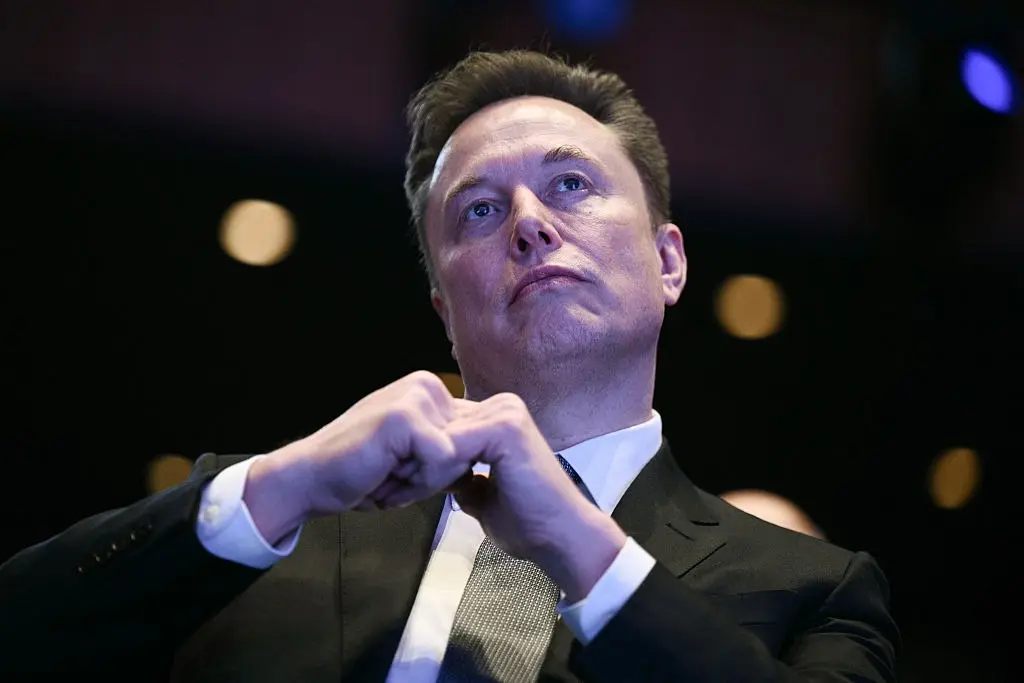
At the center of this electoral earthquake is Elon Musk. Newly minted as a resident of South Texas following the expansion of SpaceX’s Starbase facility, the world’s wealthiest individual transformed the landscape of the Texas midterms. Through a carefully orchestrated series of massive financial injections funneled into the Senate GOP’s premier outside spending group, the Senate Leadership Fund (SLF), Musk poured nearly $190 million into his adopted home state.
This staggering cash infusion broke the back of a Democratic financial advantage, completely altered media market dynamics, and breathed new life into the campaign of Republican nominee Ken Paxton. Beyond the Senate contest, Musk’s political network—including America PAC—has heavily bankrolled ground games, mailers, and targeted digital campaigns across critical congressional districts. This extensive deep-dive explores the chronology, financial mechanics, political ramifications, and controversial entanglements defining Elon Musk’s unprecedented intervention in Lone Star State politics.
Detailed Chronology: Anatomy of a Mega-Donor Intervention
The transformation of the Texas Senate race from a Democratic-leaning battleground into a heavily fortified Republican firewall did not happen by accident. It was engineered through high-level strategic negotiations, synchronized financial transfers, and rapid-response media deployment.
The Initial Outreach and Alliance
The intervention began when Musk’s political team reached out directly to the Senate Leadership Fund. Deeply concerned by Ken Paxton’s precarious standing in the polls following a grueling and expensive primary battle against incumbent Senator John Cornyn, Musk sought to align his immense capital with the Republican Party’s institutional machinery.
Initial conversations forged a collaborative strategy. According to disclosures and sources familiar with the discussions, Musk agreed to provide an initial $10 million to Lone Star Liberty PAC—the primary outside group backing Paxton—provided that the SLF matched with $5 million and the PAC raised an additional $5 million. This arrangement was critical because Lone Star Liberty PAC had been financially drained during the primary, entering the general election cycle with a meager $35,000 in cash reserves.
The September Financial Blitz
The operational phase of Musk’s intervention shifted into high gear in September, coinciding strategically with the GOP midterm convention in Dallas.
September 9: On the opening day of the convention, Musk delivered a massive $75 million check to the Senate Leadership Fund.
September 10: Moving with lightning speed, the SLF transferred $75 million into a newly established entity called Texas PAC.
The Weekend Push: By the weekend immediately following the convention, Texas PAC was saturating television and digital markets with targeted messaging, highlighting Paxton’s record on sex trafficking while launching sharp attacks on James Talarico.
Late September Follow-Up: Just two weeks after his initial contribution, Musk cut an even larger check, providing an additional $83 million to the SLF, which was similarly funneled through Texas PAC the very next day.
Through this calculated pipeline, Musk’s total contributions to the Senate GOP apparatus approached $190 million, instantly arming Republicans to reclaim dominance over the airwaves.
Supporting Context & Metrics: Money, Media, and Momentum
To fully grasp the magnitude of Musk’s intervention, one must examine the extraordinary financial metrics and polling data that dictated the urgency of the Republican rescue mission.
The Financial Arms Race
Prior to Musk’s entry, the financial dynamics of the race heavily favored the Democrats. James Talarico waged an extraordinary fundraising campaign, pulling in a record-shattering $64 million between July and September alone. This haul set an all-time third-quarter record for any U.S. Senate candidate in American history. Talarico’s war chest allowed him to dictate the narrative and outpace Republican ad buys on television and digital platforms across major Texas media markets.
However, the deployment of Musk’s capital completely inverted these dynamics. Utilizing Texas PAC as a financial vehicle, the SLF deployed over $159 million strictly on television, radio, and digital advertisements. According to media tracking firm AdImpact, this Republican ad output doubled the total financial outlay of Talarico’s campaign during the peak months of the general election. By the end of September, a coalition of outside conservative groups led by the SLF had pumped a cumulative $217 million into the Texas Senate contest.
[Elon Musk's Capital]
       │
       ▼
[Senate Leadership Fund (SLF)]
       │
       ▼
[Texas PAC / Lone Star Liberty PAC]
       │
       ▼
[Over $217M in Anti-Talarico & Pro-Paxton Airwave Saturation]
Expanding the Conservative Donor Ecosystem
Musk’s financial dominance also served as a catalyst for other sidelined conservative mega-donors to open their checkbooks. Filings reveal a resurgence of giving from prominent Texas figures:
Farris Wilks: The West Texas oil billionaire and hardline political financier contributed $250,000 to one of Paxton’s joint fundraising committees in August, marking his first major federal expenditure of the cycle.
Alex Fairly: The Amarillo billionaire supplemented his maximum $7,000 direct contribution to Paxton’s campaign with an additional $274,300 donation to his joint fundraising committee.
The Jones Family: The leadership of the Dallas Cowboys entered the fray, with team president Stephen Jones ($122,000) and chief sales and marketing officer Jerry Jones Jr. ($100,000) providing substantial checks to bolster the Republican nominee.
Official Statements and Political Rhetoric
The intersection of Big Tech wealth, populist conservatism, and institutional Republican strategy has generated intense rhetoric from all sides of the political spectrum.
GOP Leadership and the Defense of Other States
National Republican leaders were quick to praise the efficiency of the fundraising apparatus that allowed them to contest Texas without sacrificing other competitive Senate maps.
Alex Latcham, executive director of the Senate Leadership Fund, addressed the unprecedented spending during an appearance on Bloomberg TV:
"Thanks to some generous investors who have dedicated money to an affiliate, Texas PAC, we’ve been able to go in and support Ken Paxton," Latcham stated. "We’ll spend nearly $200 million in that race. But again, thanks to Leader John Thune and the Republican caucus and our fundraising, we haven’t had to subtract resources from other states to do so."
National Republican Senatorial Committee (NRSC) fundraising communications leaned heavily into the narrative of Musk as an economic refugee fleeing progressive policies:
"Elon Musk understands what it’s like to live under far-left Democrats," read an NRSC email blast. "He fled an oppressive regime in California that crippled the state with a radical agenda before finding a new home in Texas. But now, the same Far Left Democrats that ran California into the ground are coming to seize Elon’s new home!"
Paxton’s Alignment with Musk
Ken Paxton has historically embraced Musk’s political footprint. Speaking at Turning Point USA’s AmericaFest in 2024, Paxton lauded the tech billionaire’s efforts to secure Republican electoral victories:
"Aren’t you all glad he’s on our side?" Paxton told cheering crowds. "I am convinced that whatever he did, whatever rocket science thing he did, made a huge difference in this election."
Scrutiny and Blind Spots: The Big Tech Paradox
Despite the deep financial alignment between Musk and Paxton, the relationship has not escaped political scrutiny, particularly regarding Paxton’s posture toward technology giants.
As Texas Attorney General, Paxton has built a formidable reputation for challenging Big Tech companies, launching aggressive high-profile investigations and lawsuits against corporate giants such as Meta, Netflix, WhatsApp, and Discord, often framing these actions as efforts to protect children from addictive and harmful algorithms.
However, critics have repeatedly pointed out a glaring exception in Paxton’s regulatory crusade: the companies owned and operated by Elon Musk.
The X Platform: While Paxton aggressively probed competitors over issues ranging from user metrics to advertising practices, his office has largely avoided scrutinizing X (formerly Twitter).
Artificial Intelligence Concerns: In January, state Democratic representatives formally urged Paxton to launch an investigation into Musk’s artificial intelligence chatbot, Grok, following public outcry over the generation of exploitative and non-consensual content involving women and children. Furthermore, while a multi-state coalition of attorneys general formally demanded that xAI address these safety failures, Paxton notably declined to join the inquiry.
Critics argue that this regulatory leniency represents a classic conflict of interest, underscoring how massive political financing can intersect with and potentially shield corporate entities from state-level accountability.
Future Outlook: The New Frontier of Political Finance
As the 2026 midterms reach their climax, the implications of Elon Musk’s financial intervention in Texas will reverberate far beyond a single Senate seat.
The Normalization of Nine-Figure Megadonors: Musk’s willingness to single-handedly anchor a state-level rescue mission with hundreds of millions of dollars establishes a new baseline for ultra-wealthy political participation. Traditional party committees are increasingly reliant on individual billionaires to shift electoral maps in ways that dwarf traditional grassroots fundraising.
The Decentralization of Super PAC Engineering: The deployment of nested funding structures—moving money from Musk to the SLF, down to Texas PAC, and out to media buyers—demonstrates the evolving sophistication of campaign finance engineering, testing the limits of transparency and coordination rules under federal election law.
The Corporate-Political Nexus in Texas: With Musk’s corporate footprint firmly anchored in Austin, Bastrop, and Brownsville, the fusion of Texas state politics with Silicon Valley technology capital is complete. Whether Paxton ultimately wins the Senate seat or falls short against Talarico’s sustained grassroots momentum, the structural power of tech-billionaire capital in determining the future of American governance has been irrevocably cemented.