

Executive Overview
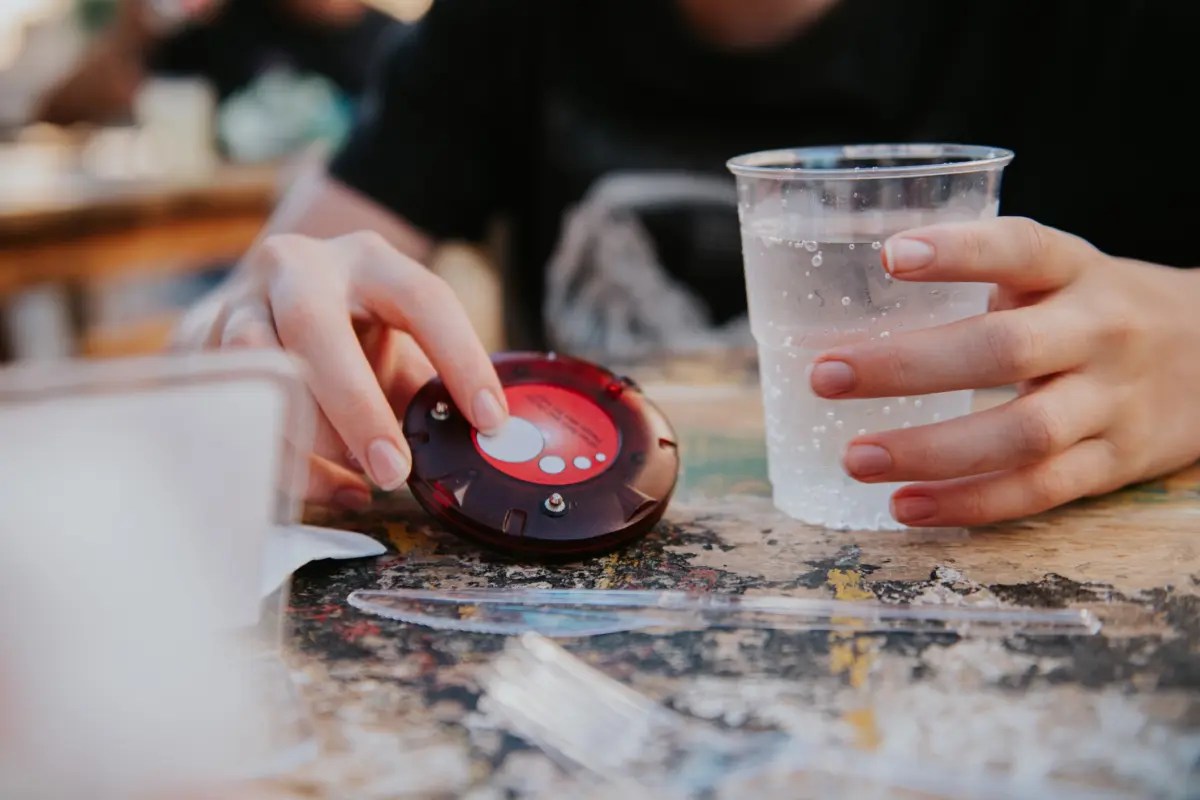
For decades, the physical restaurant pager—a humble, chunky plastic puck that blinked, buzzed, and occasionally vibrated against a faux-leather booth—acted as the unpretentious gatekeeper of casual American dining. These devices had a singular, beautifully limited mandate: to alert a hungry diner that their table was ready, without requiring any interaction beyond the four walls of the establishment.
Today, that unassuming piece of plastic has been all but eradicated, replaced by an invisible infrastructure of SMS notifications, QR-code menus, algorithmic waitlists, and continuous digital tracking. While ostensibly framed as an evolution in convenience, this digital shift has fundamentally transformed waiting into an administrative chore. What was once an analog pause—a brief, uninterrupted interlude to breathe, converse, or simply anticipate a meal—has morphed into yet another excuse to pull out our smartphones, opening the floodgates to work emails, push notifications, and the relentless hum of modern connectivity.
This report examines the quiet erosion of hospitality’s analog boundaries, exploring the psychological toll of mandatory smartphone dependency, the friction points of public and private digital infrastructure, and why a growing number of consumers are yearning for the uncomplicated grace of a device that stays at the restaurant.
Detailed Chronology: From the Wire Rack to the Pocket Tap
To understand how our pockets became the host stand’s primary real estate, it is necessary to retrace the trajectory of front-of-house technology over the last thirty years.
- The Late 1990s and 2000s: The Era of the Pager Puck. At suburban staples like Chili’s, Olive Garden, and regional family chains, the host stand was anchored by a wire rack holding dozens of programmable, heavy-duty pagers. Hostesses and hosts would jot down a last name, party size, and pager number on paper waitlists. Customers were given a tangible radius—often restricted to the lobby or the immediate parking lot—and trusted to return when the puck sprang to life.
- The Early 2010s: The Rise of the Digital Waitlist. As smartphone penetration approached saturation, pioneering reservation platforms like OpenTable and Yelp Reservations began shifting waitlist management from paper clips and plastic pucks to cloud-based software. Initially, these systems ran on proprietary tablets operated exclusively by front-of-house staff, leaving the diner’s personal devices blissfully unbothered.
- The 2020 Pivot: The Pandemic Catalyst. The onset of the COVID-19 pandemic accelerated a massive sanitization and touch-reduction sweep across the service industry. Minimizing the circulation of shared physical objects—such as menus, payment books, and plastic pagers—became a public health priority. Because consumers already carried smartphones, restaurants bypassed the cleaning protocols of hardware by migrating the waiting experience entirely onto personal devices via SMS prompts and web apps.
- The Post-Pandemic Creep (2022–Present): The End-to-End Digital Loop. What began as a touchless safety measure quickly metastasized into an all-encompassing operational model. Today, a single dinner out frequently demands that a consumer use their phone to join a digital waitlist, receive an SMS notification, scan a QR code to view the menu, input an order through a web interface, split and settle the bill via digital wallet, and finally, receive an automated text message requesting a customer satisfaction rating hours after leaving the premises.
Supporting Context & Metrics: The Cognitive Cost of "Convenience"
The steady creep of digital infrastructure into spaces traditionally reserved for disconnection—such as restaurants, public transit turnstiles, and medical waiting rooms—has created a paradox of modern efficiency. We save physical seconds while spending cognitive hours managing our devices.
The Smartphone as Mandatory Civic Infrastructure
It is not merely the restaurant industry that has offloaded logistics onto personal technology. Across modern urban life, the smartphone has transitioned from a personal luxury item to a piece of mandatory civic infrastructure:
- Transit Turnstiles: Digital transit cards (such as Chicago’s Ventra or New York’s OMNY) promise frictionless boarding. Yet, as legacy physical terminals age and communication protocols fail, commuters frequently find themselves blocked at the gates, reverting to physical cards or cash machines.
- Healthcare and Retail: Checking in for routine medical appointments, retrieving parking validations, and proving identity across firewalled web portals now require a charged battery, an active data connection, and uninterrupted digital literacy.
When these systems fail, the consumer absorbs the friction. When they succeed, they nonetheless bind the user tighter to a screen. In the context of dining out, this constant tethering subverts the core psychological promise of hospitality: that for a brief window of time, an establishment takes absolute responsibility for your comfort and logistics.
The Micro-Inconvenience of the Text-Based Host Stand
Consider the common contemporary scenario: a couple arrives at a restaurant, provides a mobile phone number to the host, and sits down in the lobby. Ten minutes later, a text message pings their phone: “Your table is ready!”
Upon looking up, the host stand is precisely three feet away.
While the software functioned flawlessly, executing a task that could have been handled with a glance and a polite verbal cue, it forced the diner to consult a device they may have actively been trying to ignore. The digital waitlist permits wandering—allowing patrons to browse nearby shops or run simultaneous errands—which proponents champion as a major lifestyle upgrade. However, the ability to multitask does not inherently equal the ability to rest. For many diners, the compulsion to be perpetually reachable strips away the restorative luxury of doing nothing at all.
Official Statements and Industry Perspectives
Hospitality analysts and restaurant technology providers defend the shift toward mobile-integrated dining as an inevitable maturation of operational efficiency, citing labor shortages and the demand for speed.
"Guest expectations have permanently shifted," notes a representative from a leading restaurant software provider. "Modern diners expect transparency. They want to see their exact place in line, receive real-time updates without hovering anxiously around a host stand, and have the flexibility to utilize their wait time productively rather than being tethered to a physical radius."
Conversely, front-of-house veterans and hospitality theorists argue that efficiency has come at the expense of charm.
"Hospitality is fundamentally an exercise in human care," explains a veteran restaurant consultant based in the Midwest. "When you replace the direct eye contact of a host saying, ‘You’re all set,’ with an automated push notification, you remove a micro-interaction of warmth. You turn dining out into a transaction managed by software architectures rather than human gestures."
Consumer advocates also highlight accessibility concerns. The assumption that every diner owns a smartphone with a reliable data plan, sufficient battery life, and the technical fluency to navigate third-party web apps risks alienating older demographics and lower-income patrons who may rely on older, non-smart cellular devices or pre-paid plans.
Future Outlook: Can We Reclaim the Analog Pause?
As the hospitality sector looks toward the remainder of the decade, the question is not whether digital waitlists will vanish—they are far too cost-effective and data-rich for operators to abandon entirely. Instead, the frontier lies in whether restaurants can intentionally carve out "low-tech sanctuaries" within their spaces.
- The Rise of Hybrid Options: Forward-thinking establishments are beginning to recognize the alienation caused by compulsory smartphone usage. Providing physical menus upon request, offering analog bill-settling methods without requiring a QR code scan, and retaining a small reserve of physical pagers or alternative alert systems for guests who prefer to keep their phones stowed can significantly enhance the guest experience.
- Redefining "Frictionless": True technological maturity in hospitality should mean that technology works silently in the background, serving the staff and the diner without demanding active engagement from the consumer’s attention span. If a digital tool requires a customer to constantly wake their screen, monitor battery percentages, and manage notifications, it has ceased to be a service and has become a tax on attention.
- The Value of Disconnection: As digital fatigue deepens across the workforce and consumer base, restaurants that champion analog hospitality—where guests can intentionally let their phones die in their bags and still be welcomed to breakfast—may find a powerful differentiator in the marketplace.
The heavy, blinking plastic pucks of the 1990s and 2000s may never make a widespread return to the suburban chain restaurant host stand. But their underlying philosophy—that a waiting guest deserves to disconnect, unwind, and let someone else handle the logistics—remains as vital to the dining experience as ever.