

Executive Overview
Artificial intelligence has rapidly evolved from a futuristic speculative concept into an urgent board-level mandate. Across every industry, executives are rushing to integrate AI into their operational pipelines, often with a breathless urgency reminiscent of the early dot-com days or the dawning of the cloud computing era. Yet, a closer examination of current corporate AI deployments reveals a troubling paradox: while the technological tools have never been more sophisticated, the organizational strategies governing their rollout remain astonishingly primitive.
According to digital transformation strategist and author Paul Boag, the prevailing corporate approach to AI adoption feels less like a calculated strategic maneuver and more like an operational farce. Organizations are making the exact same foundational errors they made a decade ago during the height of the digital transformation boom. The root cause of this persistent failure is a fundamental misunderstanding of the challenge at hand. Senior leadership consistently treats AI adoption as a technological procurement problem rather than a complex socio-cultural shift.
By purchasing enterprise-wide software licenses, issuing generic compliance memos, and expecting immediate productivity dividends, organizations are setting themselves up for friction, resistance, and failure. True AI integration requires a complete reimagining of workplace culture, robust psychological safety nets for experimentation, flexible governance frameworks, and a deep empathy for the human beings whose daily workflows are being fundamentally disrupted. To survive and thrive in the age of automation, businesses must look backward to the lessons learned from the digital transformation era to navigate the turbulent waters of AI today.
Detailed Chronology: A Decade of Disconnected Deployments
To understand why modern AI rollouts are faltering, one must trace the historical parallels between current practices and the digital transformation era of the early 2010s. In 2014, digital strategist Paul Boag published Digital Adaptation through Smashing Magazine, diagnosing a chronic corporate illness: companies were throwing technology at structural problems without preparing their people for the realities of digital workflows.
The 2014 Digital Transformation Playbook
During the mid-2010s, IT departments across the global corporate landscape were tasked with rolling out massive enterprise software suites—Content Management Systems (CMS), Customer Relationship Management (CRM) platforms, and complex corporate intranets. Concurrently, customer-facing divisions were instructed to launch responsive websites, mobile applications, and personalized digital experiences.
However, these initiatives were characterized by a fatal blind spot: management placed virtually zero emphasis on how internal staff and external customers were actually going to interact with these systems. Internal databases were clunky, counter-intuitive, and difficult to navigate. Customers frequently discovered that digital touchpoints offered little value compared to legacy channels, while internal employees were handed new software with minimal training and maximum performance expectations. The resulting friction led to stalled projects, wasted capital, and widespread employee pushback.
The 2024–2026 AI Echo
Fast forward to the present day, and the corporate script remains virtually unchanged. Senior management teams, mesmerized by generative AI hype cycles, are authorizing enterprise-wide rollouts of tools like Copilot Studio, treating the procurement phase as the finish line rather than the starting gate.
[Procurement & Licensing] ---> [Generic Compliance Email] ---> [Workforce Confusion & Fear]
            ^                                                              |
            |-------------------- (The AI Adoption Loop) ------------------|
In many organizations, the entire change management strategy consists of bulk software provisioning accompanied by a generic, one-size-fits-all training webinar. Employees are left staring at advanced language models and automated agents, wondering how these tools fit into their daily responsibilities, while simultaneously harboring a deep, unspoken anxiety about their own job security. The technology has evolved from static web apps to dynamic intelligence engines, but corporate institutional behavior has remained entirely static.
Supporting Context & Metrics: The Human Cost of Automation
The fundamental flaw in modern AI strategies lies in a failure of basic motivational psychology and change management. Organizations assume that efficiency gains are universally appealing, failing to realize that productivity metrics designed for the executive suite often translate to increased stress on the front lines.
The Motivation Mismatch
Why should an overworked employee embrace AI? From the perspective of senior leadership, artificial intelligence is a vehicle for undeniable productivity gains—the ability to generate more output in less time. Yet, for the average staff member working a standard nine-to-five schedule, these productivity gains do not translate into tangible personal benefits.
- The Productivity Trap: Employees are still expected to occupy the same hours at their desks, but their output quotas are quietly doubled. They do not receive additional compensation, nor do they enjoy reduced working hours or increased autonomy. Instead, they are simply handed more work to fill the void left by automation.
- The Specter of Obsolescence: Unlike the digital transformation era, where new software represented an operational tool, generative AI represents a direct cognitive competitor. Employees read the same headlines predicting mass automation and workforce replacement; no amount of corporate reassurance from executive leadership can dispel the existential dread of being engineered out of a job.
To overcome this resistance, organizations must radically reframe how AI is presented to their workforce. Change is warmly embraced only when it is framed as a direct upgrade to the employee’s quality of life. Management must actively work with teams to identify the most tedious, demoralizing aspects of their daily routines—the administrative busywork, repetitive formatting, and data entry nightmares—and position AI specifically as a tool to eliminate those pain points.
The Necessity of Procedural Rebuilding
Adopting artificial intelligence is not merely a matter of learning a new shortcut; it involves challenging and dismantling procedural knowledge built up over years or even decades. Every professional relies on deeply ingrained mental models, workflows, and muscle memory to execute their daily tasks.
Forcing employees to abandon these routines while they are already overwhelmed by existing workloads is an exercise in futility. Most professionals operate at or near maximum capacity. Expecting them to carve out hours of deep concentration to experiment with complex AI systems without clearing their existing plates is unrealistic. Comprehensive AI adoption requires dedicated time, structured experimentation, and role-specific training programs that go far beyond generic corporate seminars.
Official Perspectives: Trust, Governance, and the Rise of Shadow AI
As organizations grapple with the operational realities of artificial intelligence, internal governance has emerged as a major battleground. The tension between maintaining rigid corporate control and fostering organic innovation has created dangerous blind spots across the enterprise.
The Danger of the Over-Regulated Workplace
Many enterprises have responded to the security risks of AI by drafting massive, restrictive governance policies. Pages upon pages of legal directives warn employees about what data they can input, which prompts are forbidden, and how tokens must be managed.
While risk mitigation is a necessary corporate function, overly draconian policies achieve the exact opposite of their intended effect: they paralyze the workforce. When employees are threatened with disciplinary action for minor operational errors or token-budget overruns, a culture of intense fear takes root. Staff quickly calculate that the safest career move is to ignore AI entirely and revert to legacy methods.
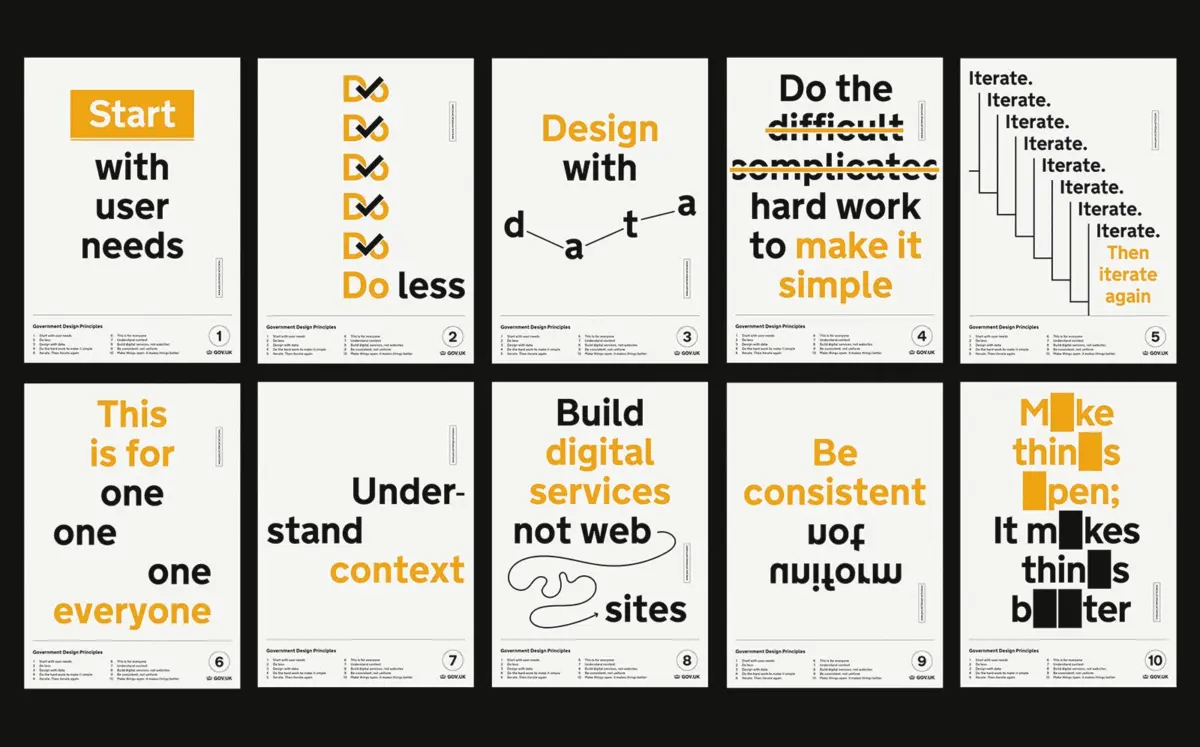
"Organizations need a short set of principles that would fit on a handful of posters, similar to GOV.UK’s design principles. Beyond that, they need to demonstrate a degree of trust in their staff to use common sense."
— Paul Boag, Digital Transformation Strategist
Rather than drowning employees in legalese, progressive organizations are adopting concise, principles-based governance models. By providing clear ethical boundaries while trusting professionals to apply common sense, companies can maintain security without sacrificing innovation.

The Proliferation of "Shadow AI"
When official corporate tools prove too restrictive, bureaucratic, or functionally inadequate, employees inevitably bypass internal IT departments altogether. Just as the digital transformation era gave rise to "Shadow IT"—where staff secretly deployed Dropbox, Google Docs, and unauthorized project management apps—the AI era has ignited the wildfire of Shadow AI.
When a centralized IT steering committee locks down enterprise AI tools or rejects requests for specialized software, innovative employees simply open personal ChatGPT, Claude, or Midjourney accounts on their personal devices or home laptops.
[Strict IT Lockdown] ---> [Inadequate Internal Tools] ---> [Shadow AI Use on Personal Devices] ---> [Unmonitored Data Leakage]This phenomenon introduces severe enterprise risk. Proprietary company data, confidential client information, and unreleased intellectual property end up flowing through external tools completely outside the visibility of the organization’s security architecture.
Rather than reacting to shadow AI with heavy-handed bans and disciplinary threats, forward-thinking security teams treat shadow AI as a vital diagnostic tool. By investigating why employees are seeking outside solutions and discovering which operational gaps the official tools failed to bridge, organizations can directly inform their subsequent technology rollouts.
Future Outlook: Cultivating Sustainable, Human-Centric Innovation
Looking ahead, the long-term success of artificial intelligence in the enterprise will not be determined by the sophistication of the underlying algorithms, but by the maturity of the organization’s internal culture.
The Power of Social Proof Over Top-Down Mandates
Top-down memos and executive decrees have historically proven ineffective at driving genuine technological adoption. The most successful deployments leverage internal enthusiasm through peer-to-peer communities of practice. Every organization possesses a subset of tech-savvy pioneers who are already experimenting with AI unprompted.
By bringing these internal enthusiasts together, providing them with dedicated time and space to share their successes, and letting their organic enthusiasm spread through the workforce, companies can harness powerful social proof. Employees are infinitely more likely to adopt a new workflow when they see a trusted peer in a parallel role utilizing it to solve everyday problems successfully.
Creating a Safe Space to Fail
Ultimately, true innovation cannot exist in an environment of zero tolerance for error. Learning to wield advanced cognitive tools involves a natural learning curve characterized by missteps, inefficient prompts, and flawed outputs. If organizations continue to penalize employees for experimental mistakes during performance reviews, AI adoption will remain superficial.
To secure a competitive advantage in the modern economy, leadership must actively dismantle the culture of fear. By adjusting performance metrics, granting temporary leniency during the learning phase, and celebrating intelligent experimentation, organizations can transform artificial intelligence from an existential threat into an empowering collaborative partner. The sooner businesses realize that AI adoption is fundamentally a challenge of human culture rather than software procurement, the closer they will come to realizing its true transformative potential.