

Executive Overview
As artificial intelligence permeates the modern enterprise, the corporate rollout strategy frequently resembles a farce. If the haphazard deployment of AI across industries were dramatized for the cinema, critics would dismiss it as implausible, arguing that no group of business leaders could be so systematically blind to human psychology. Yet, this is the prevailing reality for countless organizations. The frustration is compounded by a stark, sobering truth: modern enterprises have walked this exact path before.
A decade ago, during the fever pitch of the "digital transformation" era, organizations made identical systemic errors when introducing content management systems, customer relationship management platforms, and enterprise apps. In his seminal 2014 Smashing Magazine book, Digital Adaptation, consultant Paul Boag diagnosed these recurring pathologies, warning that treating corporate evolution as a purely technological challenge was a recipe for failure.
Today, as senior executives rush to mandate generative AI tools like Copilot Studio, enterprise leadership is repeating every historical misstep. By fixating on software licenses while ignoring the profound cultural, psychological, and operational friction experienced by staff, organizations are engineering their own adoption failures. This comprehensive analysis revisits the lessons of digital adaptation to provide an authoritative roadmap for navigating the human and technical minefields of the AI era.
Detailed Chronology: From CMS Rollouts to Enterprise Generative AI
To understand why corporate AI adoption is faltering, one must examine the historical trajectory of enterprise technology integration. The parallels between the mid-2010s digital transformation wave and today’s generative AI gold rush reveal an unbroken chain of strategic oversight.
The Digital Transformation Era (2010–2018)
In the early 2010s, organizations faced existential pressure to "go digital." The C-suite panicked, fearing disruption from agile startups. The standard corporate response was an aggressive, top-down technological procurement cycle. IT departments were tasked with modernizing infrastructure by deploying enterprise-wide CMS platforms, intranets, and complex CRM ecosystems.
Simultaneously, customer-facing divisions launched mobile apps and personalization engines. However, these initiatives were characterized by a fatal flaw: zero emphasis on user experience or how employees and customers would actually interact with the systems.
- Internal Disconnect: Internal software was notoriously obtuse, forcing employees to navigate broken workflows.
- Customer Apathy: Customer-facing digital products frequently missed the mark because organizations built what executives wanted to build rather than what users needed.
- The Steering Committee Bottleneck: Overstretched IT teams established rigid approval processes and steering committees to control software deployments, resulting in a glacial pace of change that crippled organizational agility.
The AI Era (2022–Present)
Fast-forward to the post-ChatGPT landscape, and the playbook remains unchanged. Senior leadership teams, driven by fear of missing out (FOMO) and intense market hype, buy enterprise AI packages en masse. IT departments purchase organization-wide licenses—such as Copilot Studio—and declare the digital transformation complete, offering little more than generic, company-wide webinar training.
Just as they did a decade ago, employees are left stranded. They stare at blank prompt windows, feeling intense pressure to demonstrate productivity gains while wondering if the very tool they are forced to use has been designed to render their jobs obsolete. Rather than learning from the ghost of digital transformations past, modern corporations are sleepwalking into an identical crisis of adoption.
Supporting Context & Metrics: The Human Cost of Technological Mandates
The root cause of these recurring failures is a fundamental misdiagnosis of the problem. Both digital transformation and AI integration are consistently treated as IT challenges when they are, in reality, profound cultural and human shifts.
The Psychology of Resistance: Why Employees Reject AI
From an employee’s perspective, corporate AI mandates offer very few personal benefits—and considerable existential risk.
- The Productivity Trap: The primary driver for executive enthusiasm is raw productivity. Management expects staff to generate higher outputs within the exact same working hours. Employees are not rewarded with shorter workweeks, financial compensation, or genuine time back; instead, they are simply given heavier workloads.
- The Threat of Obsolescence: Unlike previous enterprise software updates, generative AI carries a terrifying subtext: job displacement. Staff have read the headlines warning that AI will replace knowledge workers. Platitudes from senior management do little to alleviate this deep-seated anxiety.
- Procedural Knowledge Bankruptcy: Adopting AI requires dismantling decades of established procedural knowledge. Rebuilding workflows from scratch demands immense cognitive bandwidth. For overworked employees struggling simply to stay afloat, learning a new tool feels less like an opportunity and more like an impossible burden.
The Danger of a "Zero-Failure" Culture
A successful transition requires experimentation, and experimentation inherently produces errors. Yet, modern corporate environments are frequently characterized by a pervasive culture of fear.
During the digital transformation era, executives demanded radical digital change while continuing to enforce rigid, legacy Key Performance Indicators (KPIs). Employees were penalized in annual reviews for any missteps made while navigating new systems, effectively eliminating any psychological safety.
Today, this dynamic is amplified. Reports emerge of employees being reprimanded by management for consuming excessive API tokens weeks after being commanded to integrate AI into their daily routines. Others are subjected to exhaustive, terrifying lists of compliance restrictions until they are paralyzed by the fear of making a mistake. Consequently, employees quickly realize that the safest professional strategy is to ignore the new technology entirely and revert to legacy methods.
Official Perspectives and Industry Insights
Navigating this transition successfully requires a fundamental overhaul of how organizations approach governance, training, and technological rollout. Industry experts and adaptive frameworks offer clear alternatives to top-down authoritarian mandates.
Rethinking Training and Internal Advocacy
Formal, one-size-fits-all training courses are insufficient. Employees require role-specific education that addresses their unique departmental challenges—whether they belong to UX design, legal, or finance. However, formal training should only serve as the baseline.
The most potent catalysts for technological adoption are not memos from the C-suite, but peer-to-peer social proof. Every organization houses a contingent of enthusiastic "shadow" experimenters who are already testing AI capabilities out of sheer curiosity.

- The Power of Internal Showcases: Rather than trying to force laggards to adopt AI, organizations should gather these early enthusiasts, allocate them dedicated time and space to share their successes, and let organic enthusiasm spread through social proof.
- Historical Precedent: During the digital transformation era, internal "show-and-tell" conferences where staff demonstrated practical digital builds achieved exponentially higher adoption rates than any top-down executive communication.
Governance Through Principles, Not Bureaucracy
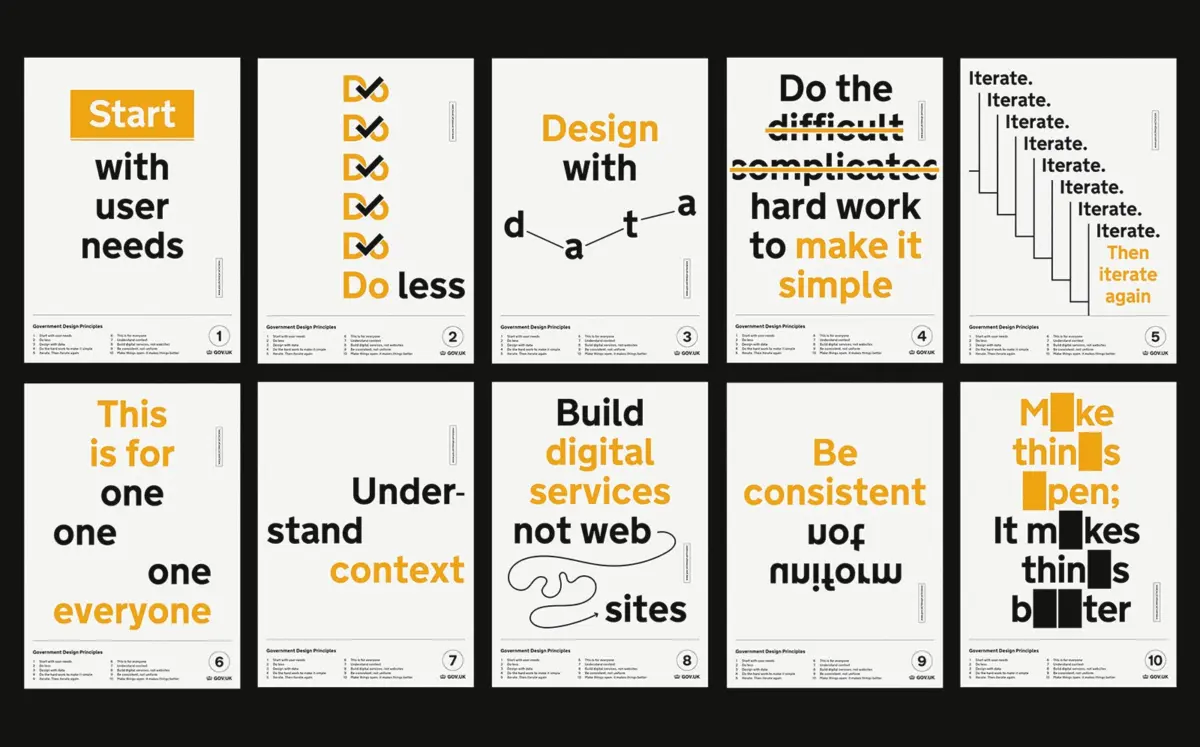
Governance is essential, but it must be handled with surgical precision. Overly strict regulatory frameworks that run to dozens of pages create an atmosphere of dread. Organizations should instead look to agile governance models, such as the design principles utilized by digital government services (e.g., GOV.UK).
[Core AI Governance Model]
┌────────────────────────────────────────────────────────┐
│               A Few Concise Principles                 │
│      (Fit on a single poster, easily digestible)       │
└───────────────────────────┬────────────────────────────┘
                            │
                            ▼
┌────────────────────────────────────────────────────────┐
│       Corporate Trust in Employee Common Sense         │
│  (Mitigating minor errors as the acceptable cost of change)│
└────────────────────────────────────────────────────────┘
By distilling governance into a handful of core principles that fit on a single poster—and demonstrating genuine trust in employee common sense—organizations can maintain necessary guardrails without suffocating innovation. Mistakes will happen, but accepting error as the inevitable cost of progress is vital for long-term survival.
Addressing the Threat of "Shadow AI"
When IT departments lock down enterprise software stacks behind impenetrable approval gates, they inevitably trigger a dangerous underground phenomenon: Shadow AI.
Just as frustrated employees once bypassed official IT channels during the digital transformation era by signing up for unauthorized cloud storage services like Dropbox, today’s workers are opening personal ChatGPT or Claude accounts on their mobile devices and home laptops when official enterprise tools fail to meet their operational needs.
- The Hidden Risk: Shadow AI represents a severe security hazard. Proprietary corporate data flows into unmonitored external systems completely outside organizational visibility.
- The Corrective Response: Rather than reacting with draconian bans and disciplinary threats—which merely drive the behavior deeper underground—forward-thinking organizations view shadow AI as diagnostic feedback. By investigating why employees are turning to unauthorized tools, IT leadership can identify gaps in the official tech stack and iteratively improve enterprise capabilities.
Future Outlook: Navigating the Adaptive Technological Horizon
As organizations look toward the horizon, the primary danger is not technological immaturity, but organizational rigidity. The temptation to centrally control every facet of AI adoption is understandable, driven by a desire to mitigate risk and maintain pristine technical infrastructure. However, the risk of moving too slowly far outweighs the risk of calculated experimentation.
+-------------------------------------------------------------------------+
|                  THE STRATEGIC CHOICE FOR ENTERPRISES                   |
|                                                                         |
|  [Option A: Centralized Control]  -->  Rigid Governance & Fear          |
|                                        Result: Shadow AI & Stagnation   |
|                                                                         |
|  [Option B: Adaptive Rollout]     -->  Psychological Safety & Trust     |
|                                        Result: Organic, Sustainable AI  |
+-------------------------------------------------------------------------+
To survive and thrive in the age of artificial intelligence, executive leadership must embrace an adaptive technological rollout. This requires accepting a temporary period of operational messiness while cross-functional teams explore the boundaries of what generative tools can achieve.
Ultimately, AI adoption is not an IT project; it is a profound exercise in change management, cultural alignment, and human empathy. Organizations that recognize this reality early—empowering their staff, fostering psychological safety, and replacing bureaucratic friction with trusted principles—will outpace competitors trapped in the cycles of historical repetition. Those that do not will find themselves wondering why their expensive technological investments withered away in an atmosphere of fear and institutional indifference.