

Executive Overview
In a landmark achievement for precision cosmology, an international research collective has captured the most accurate measurement to date of the helium produced during the universe’s formative moments. Spanning 130 hours of rigorous deep-space observation utilizing the Large Binocular Telescope (LBT), the findings—unveiled across a suite of five papers published in The Astrophysical Journal—reduce the uncertainty of this fundamental cosmic metric to a staggering 0.5 percent. This triples the precision of previous baseline estimates, offering astrophysicists an unprecedented, high-definition window into the extreme conditions that governed the cosmos mere minutes after the Big Bang.
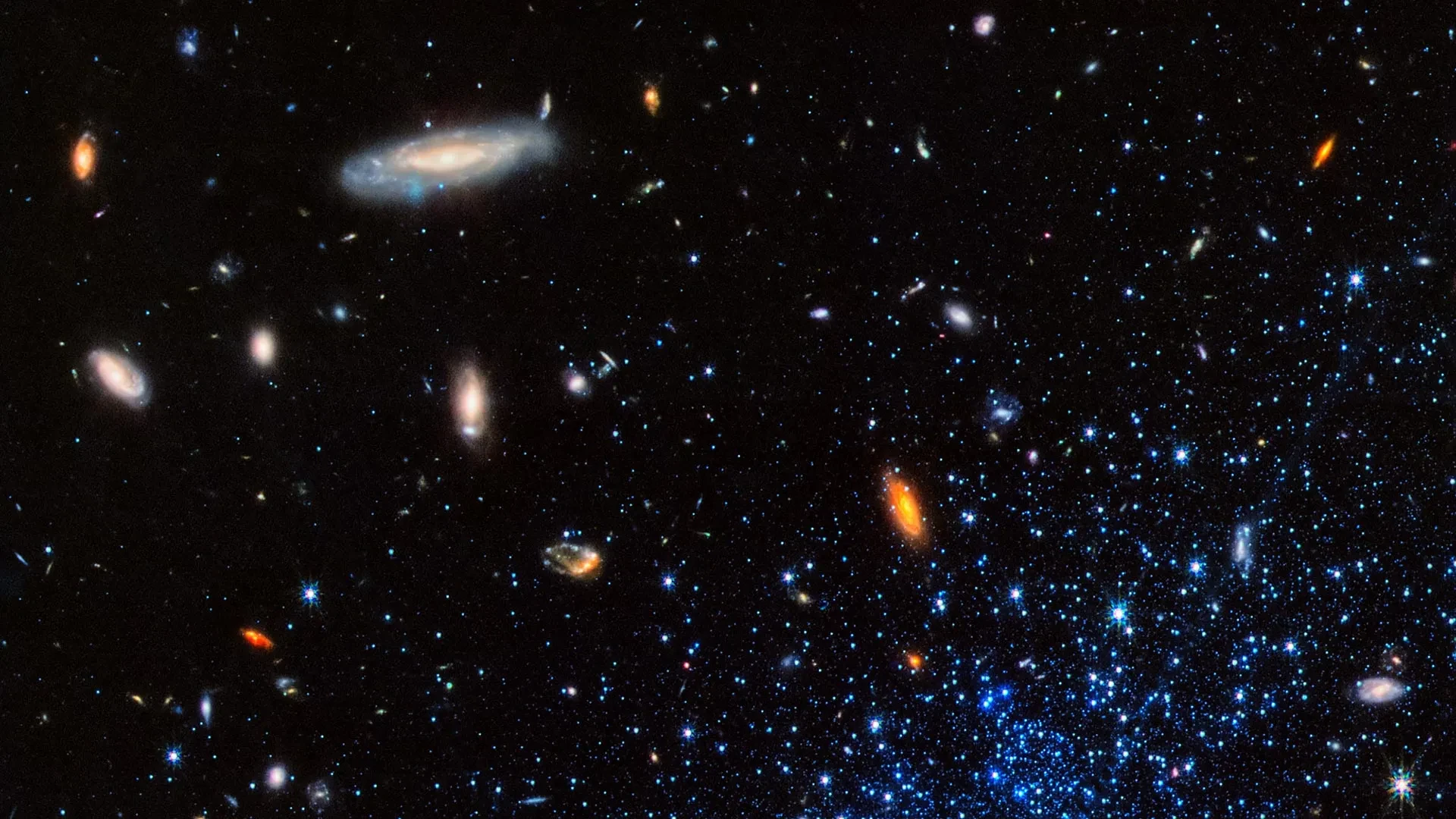
The breakthrough relies on a paradigm shift in observational strategy. Rather than evaluating massive statistical samples of galaxies and extrapolating backwards through complex chemical evolution models, the research team targeted 15 exceptionally pristine, compact, and distant dwarf galaxies. Serving as cosmic time capsules, these isolated systems have experienced minimal stellar processing over billions of years, preserving their primordial chemical signatures relatively untouched. Coupled with state-of-the-art multi-object spectrographs developed at Ohio State University, the team analyzed over 10 helium spectral lines and 15 hydrogen lines simultaneously.
This unprecedented clarity does far more than rewrite the chemical history books; it erects a robust new testing ground for fundamental physics. By locking down the primordial helium abundance with sub-percentage precision, researchers have gained a powerful diagnostic tool to probe the validity of the Standard Model of particle physics, calculate the number of neutrino families present in the early universe, and constrain physics beyond our current standard paradigms. As researchers celebrate the realization of a goal set over a decade ago, the scientific community recognizes this milestone as a triumph of instrumental engineering and collaborative global science that reshapes our understanding of existence at its inception.
Detailed Chronology of the Breakthrough
From Conception to First Light: The Instrumentation Journey
The roots of this monumental achievement extend more than a decade into the past, anchored by the development of specialized instrumentation designed specifically to tackle the subtle challenges of high-precision spectrophotometry. The primary instruments driving this discovery are the Multi-Object Double Spectrographs (MODS), engineered and built by a team led by astronomers at Ohio State University.
Conceived to maximize the light-gathering power of the twin 8.4-minute mirrors of the Large Binocular Telescope located on Mount Graham in southeastern Arizona, the MODS instruments took 12 years from initial design concepts to "first light" observations on the sky. The engineering challenge was formidable: to capture faint optical signatures from distant, low-surface-brightness dwarf galaxies while simultaneously recording numerous helium and hydrogen spectral lines with negligible distortion.
"This is the kind of project we designed them to do, and to see them deliver is enormously satisfying," reflected Richard Pogge, College of Arts and Sciences Distinguished Professor of Astronomy at Ohio State University. "It’s not every day you can help build instruments that measure something fundamental about our Universe."
The 130-Hour Observation Campaign
Once commissioned, the research team—comprising institutions spanning the United States, Mexico, and Canada—embarked on a meticulous observational campaign. Utilizing the combined aperture of the LBT, the team accumulated 130 hours of deep exposures targeting 15 selected dwarf galaxies.
Traditional approaches to determining primordial helium required surveying vast quantities of galaxies, measuring their chemical compositions, and applying theoretical models to subtract the contributions of helium manufactured by successive generations of stars. This statistical extrapolation introduced substantial error bars.
The LBT campaign bypassed this hurdle by cherry-picking ultra-pristine environments. These systems, characterized by low metallicity (sparse heavier elements), allowed the team to measure pristine gas directly. By simultaneously capturing more than 10 helium lines and 15 hydrogen lines, the researchers could cross-examine the data streams in real time, isolating and correcting for faint, systematic errors that had plagued historical surveys. Accounting for these minute second-order effects proved to be the decisive factor in shrinking the measurement uncertainty down to the historic 0.5 percent threshold.
Supporting Context & Metrics: Why Helium Holds Clues to the Big Bang
The Three Pillars of Modern Cosmology
To appreciate the significance of this half-percent precision measurement, one must view it within the broader framework of standard cosmological theory. Modern understanding of the origin and evolution of the universe rests on three foundational pillars:
- The Expansion of the Universe: First observed by Edwin Hubble, the systematic redshift of distant galaxies demonstrates that the cosmos is expanding outward from a hotter, denser past.
- The Cosmic Microwave Background (CMB): The faint, omnipresent microwave glow left over from recombination, mapped with extreme precision by satellites like WMAP and Planck, providing a snapshot of the universe when it was 380,000 years old.
- Big Bang Nucleosynthesis (BBN): The theoretical framework governing the nuclear reactions that occurred during the first three to twenty minutes of cosmic history, during which protons and neutrons fused to create the lightest stable elements: hydrogen, deuterium, helium-3, helium-4, and lithium-7.
While cosmic expansion and the CMB have been probed to exquisite tolerances over the past thirty years, primordial helium—despite making up roughly 25% of the ordinary matter in the universe by mass—has historically presented stubborn observational hurdles. Because stars continuously fuse hydrogen into helium throughout cosmic time, teasing out the original "primordial" fraction left over from the Big Bang has remained a formidable geochemical challenge.
The Diagnostic Power of Primordial Matter
The amount of helium forged during the first five minutes of the universe is not random; it is strictly dictated by the expansion rate of the universe at that time, the temperature of the primordial plasma, and the ratio of baryons (protons and neutrons) to photons.
By pinning down the primordial helium mass fraction ($Y_p$) to an uncertainty of just 0.5%, researchers now possess an exceptionally sharp analytical probe. If the observed abundance of helium deviates even slightly from theoretical predictions derived from BBN and the physics of the early universe, it signals either an incomplete understanding of nuclear astrophysics or the presence of exotic, undiscovered physics—such as anomalous particle decay rates or unconventional early-universe expansion dynamics.
Official Statements and Perspectives
The implications of this breakthrough have reverberated throughout the international physics and astronomy communities, prompting praise from senior researchers who have dedicated their lives to unravelling cosmic origins.
Evan Skillman, Distinguished Professor in the School of Physics and Astronomy at the University of Minnesota’s College of Science and Engineering, noted the rarity of such precise alignment between theoretical prediction and empirical validation:
"This is a physics experiment on a grand scale and one of the biggest findings in my entire 40-year career. It’s a fundamental number that tells us specifically about the conditions of our Universe in its first five minutes. It has diagnostic power that speaks directly to the Standard Model of Physics."
Skillman emphasized the audacity of the initial project goals, noting that hitting the predicted error margins is an extreme rarity in empirical research:
"We promised a half-percent uncertainty in our proposal, and we got there. In the unpredictable world of science, that doesn’t happen very often."
Richard Pogge of Ohio State University highlighted the symbiotic relationship between advanced hardware engineering and groundbreaking astrophysical discovery:
"The MODS spectrographs took 12 years to build from conception to first light on sky. This is the kind of project we designed them to do, and to see them deliver is enormously satisfying."
A Global Collaborative Effort
The success of the initiative underscores the power of modern multidisciplinary astronomical consortia. The research team integrated theoretical astrophysicists, observational astronomers, and instrumentation engineers from a powerhouse network of institutions, including:
- University of Minnesota Twin Cities
- Ohio State University
- Gonzaga University
- Northwestern University
- The University of Texas at Austin
- Indiana University Bloomington
- University of California, Santa Cruz
- University of Illinois Urbana-Champaign
- Universidad Nacional Autónoma de México (UNAM)
- TRIUMF (Canada’s particle accelerator center)
This cross-institutional synergy ensured that every link in the scientific chain—from photon collection on the mirror surfaces to the complex spectral extraction and theoretical modeling of nuclear reaction cross-sections—met the highest standards of peer-reviewed rigor.
Future Outlook: Testing the Limits of the Standard Model
Constraining Neutrino Families and Beyond
With the 0.5 percent primordial helium benchmark securely established, the scientific horizon expands rapidly. One of the most immediate applications of this high-precision data is the rigorous constraint of particle physics parameters that are otherwise inaccessible via terrestrial laboratory experiments.
Specifically, the helium abundance is sensitive to the effective number of neutrino species ($N_eff$) present during BBN. Neutrinos interact so weakly with normal matter that detecting primordial cosmic neutrinos directly remains well beyond current technological horizons. However, their gravitational and thermodynamic influence during the first five minutes of the universe directly impacts the neutron-to-proton ratio, which in turn dictates the final yield of primordial helium.
By comparing the newly refined helium abundance against theoretical BBN models, researchers can calculate the number of neutrino families active in the early universe with unprecedented confidence. Any divergence from the three known standard generations of neutrinos (electron, muon, and tau neutrinos) could point toward sterile neutrinos or other light, undiscovered relativistic particles predicted by extensions of the Standard Model, such as supersymmetry or string theory.
Paving the Way for Next-Generation Observatories
Furthermore, this methodological triumph establishes a vital template for future cosmological investigations. As next-generation facilities—such as the Extremely Large Telescope (ELT) and the space-based observatories of the coming decades—come online, the techniques pioneered by the LBT team will be scaled up to probe even fainter, more distant dwarf galaxies situated further back in cosmic time.
Ultimately, this achievement reinforces a timeless scientific truth: that by looking backward into the deepest recesses of space and dissecting the faint, ancient light of dying dwarf galaxies, humanity gains profound insights into the fundamental laws governing matter, energy, and existence itself. The first five minutes of the universe are no longer veiled in ambiguity; they are coming into sharp, luminous focus.