

Executive Overview
The rollout of Artificial Intelligence across modern enterprises is increasingly defined by systemic failure, cultural friction, and strategic shortsightedness. If the current landscape of AI adoption were adapted into a satirical screenplay, industry critics would dismiss it as an unrealistic caricature, arguing that no corporate leadership team could be so thoroughly detached from operational reality. Yet, this high-stakes farce is playing out daily across boardrooms and IT departments worldwide.
The most alarming aspect of this phenomenon is not the novelty of the technology, but the profound déjà vu it evokes. Enterprises are stumbling over the exact same obstacles they faced a decade ago during the chaotic rush toward "digital transformation."
Drawing upon insights from his seminal 2014 Smashing Magazine publication, Digital Adaptation, consultant and digital strategist Paul Boag argues that contemporary organizations are viewing AI strictly through a technical lens while completely ignoring the human element. By treating AI integration as a routine IT deployment rather than a profound cultural shift, businesses are inadvertently breeding widespread employee resistance, inviting security risks through "Shadow AI," and suffocating innovation under heavy layers of administrative governance. To successfully navigate the AI era, organizations must pivot away from top-down technological mandates and instead focus on motivation, psychological safety, and organic, employee-led experimentation.
Detailed Chronology: From CMS to Copilot
To understand where corporate AI adoption is faltering, one must look backward to the mid-2010s, a period when enterprises rushed headlong into digital transformation without a coherent roadmap.
The Digital Transformation Era (2012–2018)
During the height of the digital adaptation movement, corporate IT departments were tasked with modernizing legacy infrastructures. They rolled out sweeping, enterprise-wide Content Management Systems (CMS), Customer Relationship Management (CRM) platforms, and complex internal intranets. Concurrently, customer-facing divisions rushed to launch responsive websites, mobile applications, and personalized digital experiences.
However, these initiatives were plagued by a fatal flaw: a near-total disregard for how human beings would interact with these systems. Internal software was notoriously difficult to navigate, while customer portals were built based on executive assumptions rather than actual user research. The result was a historic wave of failed IT projects, massive sunk costs, and pervasive employee frustration.
The AI Adoption Era (2023–Present)
Fast forward to the present day, and the playbook remains virtually unchanged. Spurred by generative AI hype, senior leadership teams are purchasing enterprise-wide software licenses—such as Microsoft’s Copilot Studio—treating the procurement process as the finish line rather than the starting block. A generic, one-size-fits-all training video is circulated company-wide, and management considers their job done.
Meanwhile, front-line employees are left stranded. They face intense pressure to incorporate these new tools into their daily workflows, yet they receive little guidance on how to do so effectively. Compounding this friction is the omnipresent specter of job displacement; unlike the CMS rollouts of the past, today’s workforce is acutely aware that AI is frequently marketed by executives as a headcounter-reduction strategy. By failing to account for these psychological and cultural dynamics, organizations are inadvertently replicating the exact conditions that doomed their previous digital transformation initiatives.
Supporting Context & Metrics: The Human Cost of Mismanaged Tech
The friction observed in modern workplaces is not merely an operational inconvenience; it is symptomatic of a fundamental disconnect between executive expectations and employee realities.
The Motivation Deficit
The primary driver behind executive enthusiasm for AI is productivity—the promise that employees can accomplish more tasks in less time. From a corporate governance standpoint, this appears to be an unalloyed good. However, from an employee’s perspective, the value proposition is profoundly skewed.
Staff members are still bound to traditional working hours, yet they are now expected to produce a higher volume of work within the exact same timeframe. They receive no reduction in working hours, no compensation increases, and no tangible personal benefit. Consequently, the unspoken question echoing across offices is simple: Why should I embrace a technology designed to make me work harder, or worse, replace me entirely?
The Toll on Procedural Knowledge
Adopting AI requires individuals to dismantle and rebuild procedural knowledge structures that may have taken decades to form. This cognitive restructuring is an exhausting endeavor under optimal conditions. In today’s hyper-optimized corporate environment—where staff are perpetually overworked and struggling against endless backlogs of administrative tasks—expecting employees to organically master complex new tools is entirely unrealistic.
Furthermore, formal training programs fall woefully short. A standard introductory webinar cannot address the nuanced, role-specific applications required by a UX researcher, a financial analyst, or a human resources specialist. Without tailored support, dedicated experimentation time, and peer-led learning networks, employees inevitably retreat to familiar, comfortable workflows.
The Rise of Shadow AI and Security Vulnerabilities
When official enterprise tools are too rigid or inadequate to meet operational demands, employees inevitably seek workarounds. Just as the digital transformation era saw the unchecked proliferation of "Shadow IT"—with staff adopting unauthorized cloud storage services like Dropbox and Google Docs—today’s workplaces are experiencing a surge in Shadow AI.

When internal IT policies restrict access or censor effective applications, employees simply open personal ChatGPT, Claude, or specialized AI accounts on their personal mobile devices or home laptops to get their work done. This behavior creates severe compliance and cybersecurity vulnerabilities. Proprietary company data, intellectual property, and client information are routinely fed into external algorithms entirely outside the purview of corporate governance. Ironically, by attempting to lock down AI usage through draconian restrictions, organizations manufacture the very security risks they were trying to prevent.
Official Perspectives and Industry Insights
Industry analysts, organizational psychologists, and digital strategists increasingly agree that the primary bottleneck to technological integration is never the software itself, but the organizational culture surrounding it.
- On the Necessity of Cultural Shift: Paul Boag emphasizes that artificial intelligence is fundamentally a cultural transformation disguised as a technological upgrade. "Organizations need to recognize that AI is a cultural shift as much as a technology, and that shift has enormous implications for their staff," Boag notes. Without addressing the human element, technological investments yield minimal return.
- On the Power of Peer-Driven Adoption: Traditional, top-down memos from executive leadership carry very little weight when it comes to changing daily habits. Sustainable adoption is almost always grass-roots. "Every organization has a handful of people who are already experimenting with AI, often without anybody asking them to," Boag observes. "Bring those people together, give them the time and space to share what is working for them, and let their enthusiasm spread to everyone else."
- On Psychological Safety and the Freedom to Fail: Innovation inherently requires experimentation, and experimentation inevitably results in errors. Yet, many corporate cultures remain hostile to failure. When staff members are publicly reprimanded for administrative missteps—such as exceeding token limits or misusing a tool weeks after its rollout—a culture of fear takes root. "If management want staff to adopt AI, then they need to make staff feel safe to experiment," asserts Boag. "They need to adjust KPIs, change how staff are reviewed, and relax some of the governance while staff are learning."
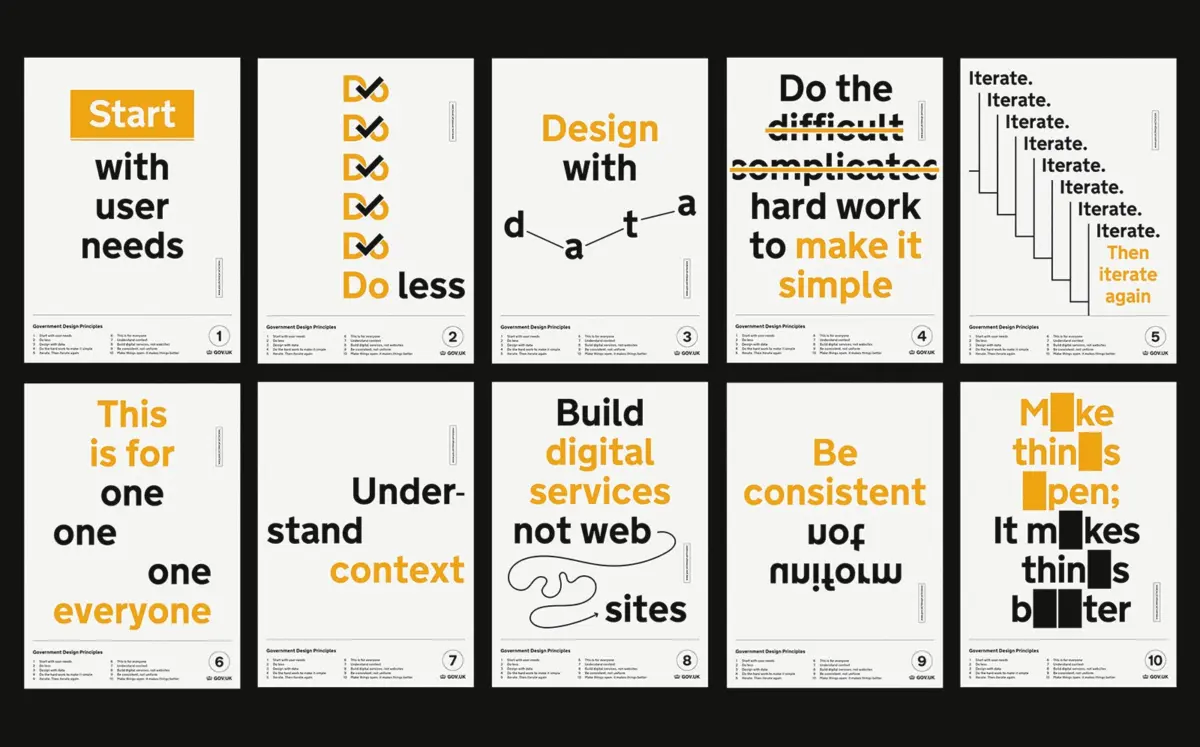
- On Streamlining Governance: Effective governance cannot consist of prohibitive rulebooks spanning dozens of pages. Organizations that succeed in technological adaptation typically rely on concise, principle-based frameworks that empower employees to exercise common sense, drawing inspiration from minimalist models like the UK government’s digital design principles.
Future Outlook: Navigating the Road Ahead
As enterprises look toward the horizon of the AI-driven economy, the path forward requires a radical recalibration of priorities. The risk of moving too slowly—falling behind more agile competitors—pales in comparison to the risk of moving too fast without a cohesive human strategy. However, the greatest danger of all remains the persistent refusal of leadership teams to look beyond the technology itself.
To break the cycle of failed technological rollouts, organizational leaders must embrace a series of strategic imperatives over the coming years:
- Reframe AI as an Employee Benefit: Organizations must intentionally position AI not as a mechanism for staff reduction, but as an assistant designed to eliminate the most tedious, hated aspects of daily labor. By framing change around the improvement of working lives, companies can foster genuine receptivity.
- Cultivate Psychological Safety: Corporate leadership must explicitly decouple initial experimentation from punitive performance reviews. Adjusting Key Performance Indicators (KPIs) to accommodate the learning curve is vital for lowering anxiety and encouraging proactive exploration.
- Embrace Adaptive Governance: Rather than attempting to control every interaction through restrictive IT policies, organizations should establish a concise, trust-based framework of core principles. Governance should guide rather than paralyze.
- Learn from Shadow AI: Instead of treating unauthorized tool usage as a disciplinary infraction, forward-thinking enterprises will use Shadow AI as diagnostic feedback. By analyzing why employees are turning to external tools, IT departments can better understand operational gaps and scale official resources accordingly.
Ultimately, the success or failure of AI adoption will not be determined by the sophistication of the algorithms deployed, but by the empathy, patience, and strategic foresight of the humans guiding them. Until organizations realize that transformation is a human endeavor first and a technological one second, the farce of modern AI rollout will continue to play out in boardrooms across the globe.