

Originally published by Northwestern University’s Medill Local News Initiative and republished with permission.
Executive Overview
Last summer, public broadcasters across the United States peered into a financial abyss. Driven by a historic policy reversal under President Donald Trump, Congress passed the Rescissions Act of 2025, which clawed back roughly $1.1 billion in federal appropriations earmarked for public broadcasting. For nearly six decades, the federally chartered Corporation for Public Broadcasting (CPB) had served as the lifeblood of educational, emergency, and local journalism infrastructure nationwide.
The passage of the rescission package forced the CPB to wind down its operations within weeks, cutting off a lifeline that many small, rural stations depended on for up to 40% of their operating budgets. Media observers and industry insiders braced for an apocalypse of station closures, massive newsroom layoffs, and the deepening of local "news deserts" across America.
Yet, contrary to apocalyptic predictions, the anticipated wave of widespread station closures never materialized. Instead, public media experienced an unprecedented wave of grassroots financial activism, colloquially dubbed "rage giving." Propelled by angry everyday listeners, aggressive community fundraising campaigns, and millions of dollars in emergency stabilization grants from elite philanthropic institutions, public broadcasters managed not only to survive the initial blow, but in some regions, expand their journalistic footprints.
Nevertheless, industry analysts warn that the reprieve may be temporary. As the initial wave of public outrage cools, structural vulnerabilities remain. Layoffs have already hit major production hubs, rural stations remain in existential jeopardy, and the long-term sustainability of public media hangs in a delicate balance.
Detailed Chronology: The Anatomy of a Crisis
The Build-Up and the Blow (Summer 2025)
For years, conservative critics targeted the Public Broadcasting Service (PBS) and National Public Radio (NPR), accusing the networks of systematic political bias. The political rhetoric turned into executive action when President Trump urged Congress to eliminate federal subsidies entirely.
The mechanism chosen was a "rescission"—a formal clawing back of funds already appropriated by a previous Congress. This represented an unprecedented policy shift, marking the first time in nearly 60 years that Washington withdrew financial support from the national network of public stations.
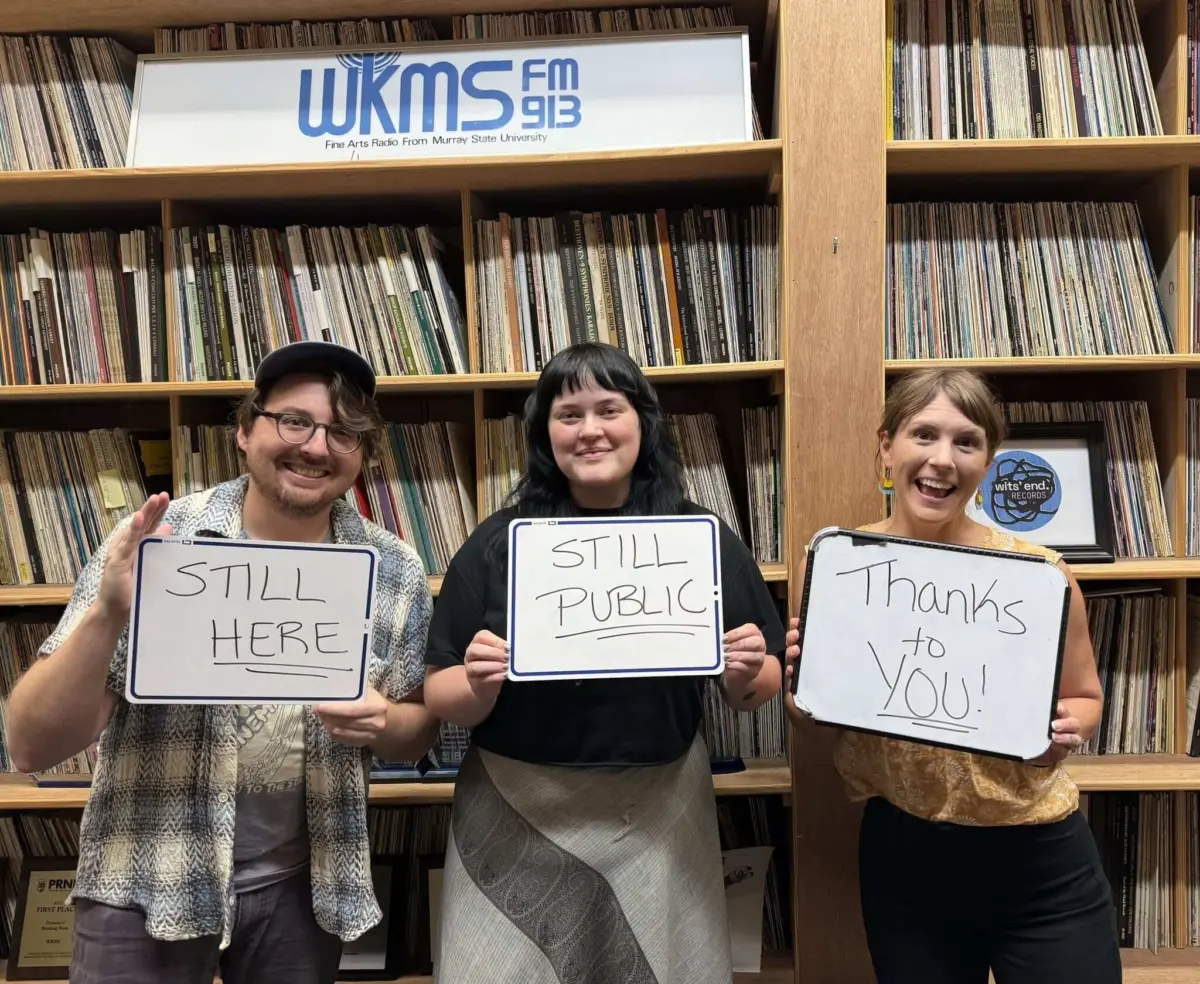
When the Rescissions Act of 2025 was signed into law last July, the impact was immediate. Within fourteen days, the CPB announced it was winding down operations. Stations nationwide faced instant budgetary blackouts. WKMS in southwestern Kentucky, for instance, lost $215,000 annually—representing 15% of its total budget. In a region where per capita income barely hovers around $30,000, station manager Asia Burnett feared local sponsors and listeners lacked the capacity to fill the void.
Similarly, Oregon Public Broadcasting (OPB) lost $5 million, or 9% of its operating budget, while rural outlets like KEET-TV in California’s Humboldt County saw nearly half their funding evaporate overnight.
The Phenomenon of "Rage Giving" (Late 2025)
As station managers prepared for deep cuts, an unexpected counterweight emerged: public indignation. Mobilized by the suddenness of the federal defunding, everyday citizens opened their wallets in record numbers.
In Kentucky, WKMS listeners contributed over $900,000 in the months following the cuts—roughly 2.5 times the station’s typical annual fundraising total. Donations ranged from modest contributions by supermarket cashiers and farmers to a single $250,000 gift. This unexpected windfall allowed Burnett to preserve her eight-person newsroom and build up the station’s endowment.
Data from the Contributor Development Partnership (CDP), which analyzes fundraising trends across 170 public stations, revealed that revenue actually rose by an average of 44% in the immediate aftermath of the federal clawback. Major institutions like WFAE in Charlotte emphasized their reliance on community support in urgent fundraising pitches, reaping a harvest of new donors determined to protect local journalism.
Philanthropic Intervention and Emergency Stabilization (Late 2025 – Present)
While listener-supported stations in major markets thrived, rural and indigenous stations faced severe structural disadvantages. Outlets such as KNBA-FM in Anchorage, which broadcasts daily Alaska Native newscasts, and KGLP-FM in Gallup, New Mexico, which serves Navajo and Zuni communities, lacked wealthy donor pools to offset federal losses.
To prevent catastrophic collapses in these vulnerable areas, the nonprofit Public Media Bridge Fund stepped in. Aggregating resources from major philanthropic heavyweights—including the Knight Foundation, Ford Foundation, Carnegie Corporation, MacArthur Foundation, and Mellon Foundation—the fund injected approximately $26 million into emergency stabilization grants and loans. Concurrently, the Bureau of Indian Affairs allocated $9.4 million across 35 Native American-operated stations.
To date, a coalition of roughly 1,500 donors and institutional funders has committed $86 million to secure a bridge over the turbulent post-federal landscape.
Supporting Context & Metrics
The post-rescission reality is characterized by a stark paradox: while total revenues spiked for many stations due to outrage-driven donations, the underlying structural costs led to localized contractions, workforce reductions, and shifting operational models.
- Fundraising Growth: According to CDP metrics, revenue surged by an average of 44% among surveyed stations immediately following the rescission.
- The Workforce Toll: Despite revenue spikes, Semipublic (a public media tracking organization) reports that approximately 550 layoffs (roughly 3% of the total public media workforce) have occurred due to cumulative federal and state funding declines.
- Major Institutional Cuts:
- NPR: Eliminated 10 journalism positions and offered buyouts to 18 others in mid-2025.
- WETA (Washington, D.C.): Cut staff by 10%, canceled production of the weekend edition of NewsHour, and shuttered its NewsHour West bureau.
- GBH (Boston): Eliminated 15 positions following federal funding losses, impacting producers of national staples like Frontline and Antiques Roadshow.
- Philanthropic Lifeline: The Public Media Bridge Fund distributed $26 million to stabilize the 115 most financially precarious public TV and radio stations in the country.
Official Statements and Industry Perspectives
Public media leaders have offered mixed assessments of the post-rescission landscape, balancing gratitude for grassroots support with pragmatic anxiety about the future.
"That’s a lot of money for a small, rural station to lose. It was a large hit… But it shows how important local journalism is. Journalism is always changing, but this speaks to how people still need a trusted source, a trusted voice."
— Asia Burnett, Station Manager, WKMS"The end of federal funding was an incredibly dramatic event. People were motivated to give."
— Alex Curley, Executive Director, Semipublic"The reality across local journalism is that resources are tight, philanthropic dollars are competitive and audiences are fragmented. The goal wasn’t just to save a dollar today. It was to build an organization with the scale and resilience to sustain robust, independent local reporting… for decades to come."
— Ashley Alvarado, Chief Executive, Texas Public Radio"It’s not the imminent crisis that everyone thought it would be a year ago. It doesn’t mean the crisis has been resolved. It just means it’s delayed."
— Alex Curley, on the two-year runway provided by emergency philanthropy
Future Outlook: Collaboration, Consolidation, and the Road Ahead
As the initial shock waves subside, public broadcasters are accelerating structural transformations to survive in an era defined by tight budgets, fragmented audiences, and declining state support.
Mergers and Digital Integration
To reduce administrative overhead and preserve newsgathering capacity, public media organizations are increasingly merging with digital-native newsrooms. For instance, Texas Public Radio combined operations with the San Antonio Report, forming a unified 31-journalist newsroom. This follows similar historical models like Chicago Public Media’s acquisition of the Chicago Sun-Times and the creation of LAist in Southern California. These partnerships recognize that modern public media extends far beyond traditional broadcast towers into newsletters, podcasts, and digital-first video reporting.
Collaborative Regional Networks
Resource-sharing models pioneered by The Texas Newsroom have been replicated by NPR across the South, California, the Midwest, New England, Appalachia, and the Mountain West. These regional hubs allow independent stations to pool resources for coverage of state politics, education, and climate change. Furthermore, specialized networks like the Florida Public Radio Emergency Network demonstrate how low-cost, state-funded partnerships ($256,270 annually) can reliably deliver life-saving public safety alerts across 14 stations during natural disasters.
The Looming Horizon: An "Enrollment Cliff" and Cooling Donations
Despite current stability, warning signs are mounting. Data from the Contributor Development Partnership indicated a 16% decline in new donors last July, signaling that "rage giving" is beginning to normalize and cool off now that public broadcasting is out of the immediate legislative spotlight.
Compounding this challenge is the vulnerability of university-licensed stations. More than half of public radio stations and a quarter of public TV stations are owned by colleges and universities. These institutions are bracing for their own financial reckoning driven by an impending demographic "enrollment cliff" and shrinking state higher-education subsidies.
Ultimately, while emergency philanthropy and grassroots activism have successfully delayed a systemic collapse, industry leaders caution that the future will require deeper consolidation. The public media ecosystem of tomorrow will likely feature fewer originating organizations, tighter operational collaborations, and an unyielding focus on digital sustainability to ensure that trusted local journalism survives the post-federal era.