

Executive Overview
The architecture of modern journalism—built on a fragile foundation of constitutional protections, institutional norms, and public trust—is undergoing a profound, multi-front stress test. From the corridors of the White House and international conflict zones to state capitals and legacy broadcast networks, the mechanisms governing press access and journalistic integrity are increasingly fractured.
At the federal level, the Trump administration’s systematic restructuring of the presidential press pool has created an unprecedented institutional standoff. Major broadcast and print networks are locking horns with the executive branch over the deliberate exclusion of critical outlets such as CNN and Politico. Meanwhile, right-leaning alternative platforms like Real America’s Voice have stepped into the breach, filling primary secondary-tier roles that established networks routinely boycott. This institutional friction coincides with administrative instability, underscored by the historically brief, five-day tenure of White House Press Secretary Katie Zacharia, whose ouster laid bare internal West Wing fractures.
Yet, the crisis of press freedom extends far beyond Washington. Internationally, the physical safety of journalists covering localized violence has deteriorated alarmingly, as demonstrated by the brutal, coordinated assault on Washington Post photographer Heidi Levine by masked settlers in the West Bank. Domestically, the blurring lines between objective reporting and partisan commentary have sparked internal crises at networks like CBS News, while a shrinking local news ecosystem contends with systemic stonewalling and transparency roadblocks from regional and state governments.
This comprehensive report examines the compounding crises currently reshaping the media landscape, analyzing the systemic erosion of press access, the geopolitical perils facing reporters in the field, and the ethical fault lines dividing contemporary newsrooms.
Detailed Chronology
The convergence of media-access disputes, high-profile staff upheavals, and physical attacks on journalists unfolded across a turbulent multi-week window, highlighting a systemic acceleration in press-related conflicts.
The Federal Pool Standoff and Alternative Broadcasters
- September 18: President Donald Trump enacts a ban barring CNN, Politico, and MS NOW from participating in the White House press pool, fundamentally altering the decades-old rotation managed historically by the White House Correspondents’ Association.
- September 24: Real America’s Voice—an alternative conservative network known for hosting programs featuring figures such as Steve Bannon and Charlie Kirk—launches a free public feed (ravpoolorg.com), offering its White House pool footage and reporting notes gratis to any interested media outlet.
- Late September – Mid-October: Major networks (ABC, CBS, Fox, NBC) resume standard pool rotations but systematically refuse to occupy CNN’s assigned primary television slots on days the ban is enforced. In response, the White House repeatedly assigns Real America’s Voice to the secondary TV pool slot, bypassing the primary networks’ boycott. Legal challenges mounted by excluded outlets prompt federal judicial intervention, restoring limited access for specific organizations while broader litigation remains active.
The White House Press Office Upheaval
- October 13: Katie Zacharia hosts her first and only official press briefing as White House Press Secretary on the South Lawn of the White House, a debut widely characterized by institutional observers as rocky and ill-prepared.
- Late October (Mid-Week): Following subsequent media appearances on Fox News—during which Zacharia admitted to entering her debut briefing with minimal preparation—reports emerge detailing conflicting accounts of who engineered the interviews. While Politico sources describe the appearances as a "sanctioned hit" orchestrated by White House Chief of Staff Susie Wiles, New York Post reports indicate Zacharia herself actively pushed for the broadcasts.
- October 16–18: Zacharia’s tenure officially concludes after just five days, marking what is widely believed to be the shortest term for a White House Press Secretary in modern political history—eclipsing even Anthony Scaramucci’s notorious 10-day stint as White House Communications Director in 2017.
International Violence and Domestic Editorial Controversies
- October 16 (West Bank): Washington Post photojournalist Heidi Levine, wearing clearly marked "PRESS" protective gear, is targeted, knocked to the ground, and beaten with sticks and metal objects by a group of masked Israeli settlers while documenting Palestinian olive harvesters. Levine suffers severe injuries, including lacerations, a broken rib, four fractured vertebrae, and a severely torn finger requiring surgery. The incident draws swift international condemnation from press freedom watchdogs.
- Mid-October (Detroit, Michigan): During a campaign town hall, Democratic U.S. Senate nominee Abdul El-Sayed is publicly challenged by a spectator regarding his stance on the Muslim Brotherhood. CBS News Chief Legal Correspondent Jan Crawford subsequently publishes a social media post celebrating the exchange, writing that El-Sayed’s response constituted a "spectacular self own." Following intense backlash from journalistic peers and internal network stakeholders, Crawford deletes the post and issues a formal public apology on October 18 for violating network editorial standards.
Supporting Context & Metrics
The ongoing erosion of journalistic access and independence cannot be understood as a collection of isolated incidents; rather, it reflects a measurable institutional shift.
The White House Pool Architecture
Since taking direct control of the press pool from the independent White House Correspondents’ Association last year, the executive branch has systematically reengineered the mechanics of presidential reporting. Historically, the pool operated on a strict, rotating consensus among five major legacy networks, ensuring standardized, neutral documentation of the presidency.
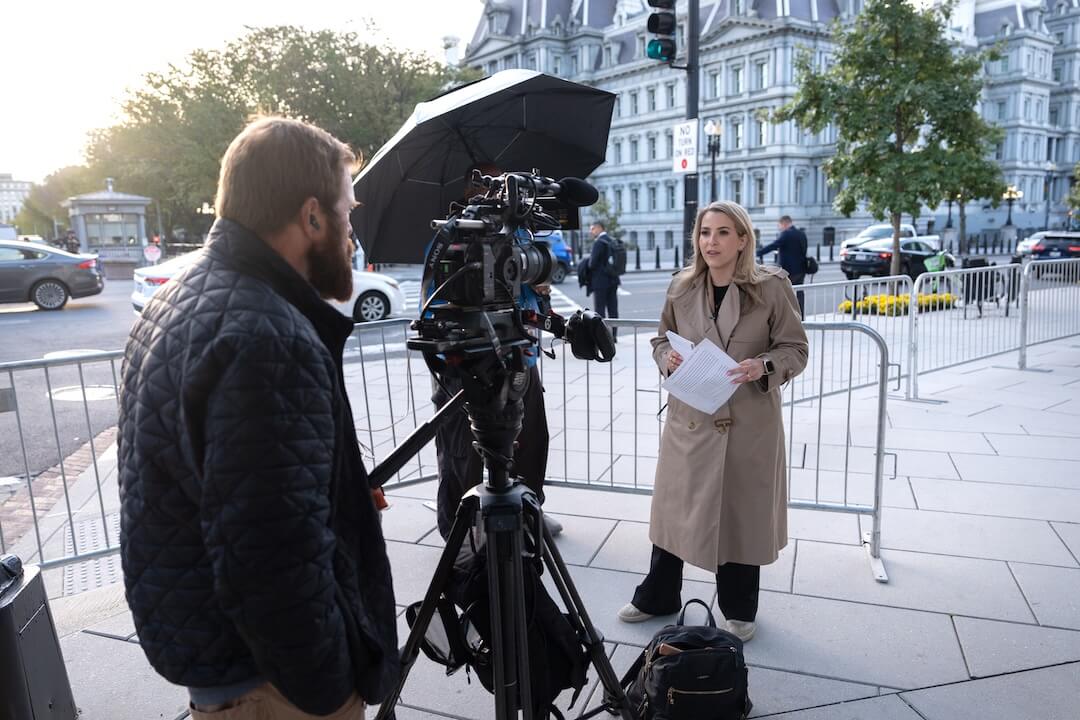
The introduction of the "secondary TV slot" by the administration has fundamentally disrupted this equilibrium. According to media analyses by outlets such as Poynter, this secondary tier has disproportionately favored conservative, non-legacy media organizations. When major networks refuse to backfill spaces vacated by banned outlets like CNN, alternative outlets such as Real America’s Voice have stepped forward, effectively establishing a parallel media infrastructure approved by the executive branch.
Local Transparency Deficits
While national media battles dominate headlines, a parallel crisis is unfolding across regional and municipal governments. Citing the formation of state-level equivalents to federal oversight bodies—such as the Kansas Senate’s Committee on Government Efficiency (COGE)—local journalists note an alarming increase in administrative stonewalling.
Public records requests, legally mandated to be fulfilled within tight statutory windows (such as Kansas’s three-business-day requirement), are increasingly met with deliberate delays, unresponsiveness, or outright denials. Outlets like the Kansas Reflector have been forced to rely on leaked documentation to break significant stories because state agencies routinely withhold public portals and correspondence until forced by investigative pressure.
Official Statements
The widening chasm between the executive branch, mainstream media institutions, and international actors is sharply reflected in their public rhetoric:
- White House Press Office: Defending the exclusion of mainstream media outlets from primary pool access, a senior White House official stated via email:
"The Fake News has no place demanding a spot in the President’s Oval Office. The lies they smear are a disservice to the American public and tear at the very fabric of our Democracy. They’re completely capable of reporting from directly outside."
- Matt Murray, Executive Editor, The Washington Post: Responding to the violent assault on photojournalist Heidi Levine in the West Bank, Murray issued a condemnation demanding systemic accountability:
"This morning, a Washington Post photographer, Heidi Levine, was attacked by Israeli settlers while reporting in the West Bank. She was wearing visible markings clearly identifying her as a journalist. While we are relieved that Heidi has received medical care and is safe, we are outraged by this unwarranted attack on a journalist doing her job and urge a thorough investigation and follow-through from authorities."
- Sara Qudah, Regional Director, Committee to Protect Journalists (CPJ): Highlighting the escalating dangers faced by media personnel covering regional conflicts, Qudah remarked:
"The brutal beating of Levine is neither isolated nor the first on a journalist covering the olive harvest in the West Bank… [It represents] a disturbing pattern of violence and harassment against journalists covering the olive harvest, regardless of their nationalities."
- Jan Crawford, Chief Legal Correspondent, CBS News: Issuing a retraction and apology following widespread criticism over her social media commentary regarding a political town hall, Crawford stated:
"I deleted that tweet because it was a violation of CBS News standards. I apologize."
Future Outlook
As the legal battles winding through federal courts—including ongoing lawsuits filed by CNN, Politico, MS NOW, and The Associated Press against executive branch access restrictions—continue to evolve, the long-term trajectory of American journalism faces a critical inflection point.
The institutional normalization of parallel press pools, right-leaning alternative networks, and executive gatekeeping signals a permanent departure from the post-war consensus of press relations. If federal courts ultimately uphold restrictions on mainstream journalistic bodies while empowering administration-vetted alternatives, the foundational concept of a unified, objective press corps serving as an independent check on executive power will be fundamentally rewritten.
Concurrently, internal newsroom standards are under intense scrutiny. Incidents like the CBS News social media controversy underscore the difficulty legacy organizations face in maintaining perceived neutrality in a hyper-polarized political environment. Meanwhile, the physical perils confronting reporters internationally—typified by the West Bank assaults—and the systemic decay of transparency at the local government level demonstrate that the threats to a free press are simultaneously existential, physical, and administrative.
The coming months will test the resilience of judicial oversight, the solidarity of media institutions resisting administrative carve-outs, and the public’s appetite for an increasingly fractured and partisan information ecosystem.