

Executive Overview
In the realm of pomology, few seasons generate as much eager anticipation—or as much unpredictable variation—as the autumn harvest. For the uninitiated, the modern consumer grocery aisle presents a homogenized, heavily curated selection of cosmetic perfection, dominated by industrial heavyweights like the Honeycrisp and Gala. However, a parallel universe exists off the beaten path: an artisanal landscape of heirloom varieties, feral discoveries, historic cider fruits, and idiosyncratic regional anomalies.
This rigorous, deeply textured investigation explores the second installment of a definitive seasonal review series conducted by leading culinary field researchers. By examining a diverse cohort of seven distinct apple cultivars—ranging from spice-heavy anomalies to high-tannin cider grapes of the tree world—this report exposes the triumphs, failures, and eccentricities of the current agricultural yield.

The findings indicate a harvest year defined by stark contrasts. While certain traditional varieties delivered exceptional structural integrity and shocking aromatic profiles (such as unexpected confections reminiscent of mass-market chewing gum), others suffered from premature storage degradation, textural collapse, and catastrophic structural impenetrability. As agricultural demands shift and consumer palates increasingly embrace the strange, the funky, and the historically rich, this audit serves as the ultimate consumer compass for navigating the orchard.
Detailed Chronology and Cultivar Evaluation
The evaluation period comprised a meticulous, multi-stage sensory analysis of select heirloom and experimental specimens. Each apple was subjected to rigorous tactile examination, olfactory profiling, structural integrity testing via dental impact, and prolonged aftertaste assessment. Below is the chronological breakdown of the tested cultivars, detailing their physical characteristics, flavor profiles, and ultimate performance metrics.

1. Kickapoo Spice
- Initial Assessment: The evaluation commenced with the delightfully named Kickapoo Spice, a cultivar evoking immediate sensory and cultural associations. Physically described as a "dense boy" with a distinctly eccentric personality, this specimen immediately declared its aromatic intentions.
- Flavor Profile and Chemistry: Dominating the palate was a remarkably high spice component, leaning heavily on notes of nutmeg, supported by secondary undertones of cinnamon and clove. True to its moniker, the spice aspect was entirely apropos. However, the specimen lacked internal moisture, registering as notably unjuicy. A confounding aftertaste akin to freshly cut grass lingered on the finish, suggesting the fruit may have suffered from sub-optimal storage duration—a reminder of the fickle nature of post-harvest apple maturation, where some varieties flourish off the branch while others rapidly descend into culinary obsolescence.
- Final Verdict: A compelling, intellectually interesting addition to the pomological spectrum, securing a solid 6.9 out of 10.
2. St. Edmunds Pippin
- Initial Assessment: Serving as the lead-off batter for the reviewer’s primary seasonal consumption, the St. Edmunds Pippin arrived with high expectations that were comprehensively met. The external presentation featured a rugged skin texture—metaphorically likened to tactile interaction with the underside of a shark—which immediately gave way to a satisfying acoustic and physical profile.
- Flavor Profile and Chemistry: Upon biting into the fruit, the taster reported a magnificent pop and crunch. The internal matrix was exceptionally crunchy, intensely juicy, and sharp-breaking. Aesthetically, the flavor profile combined bright, herbal characteristics reminiscent of fennel pollen with a robust foundational sweetness. This cultivar represents the gold standard of weird, funky heirloom apples that successfully balance tartness and sugar.
- Final Verdict: An elite performer, commanding an impressive 8.3 out of 10.
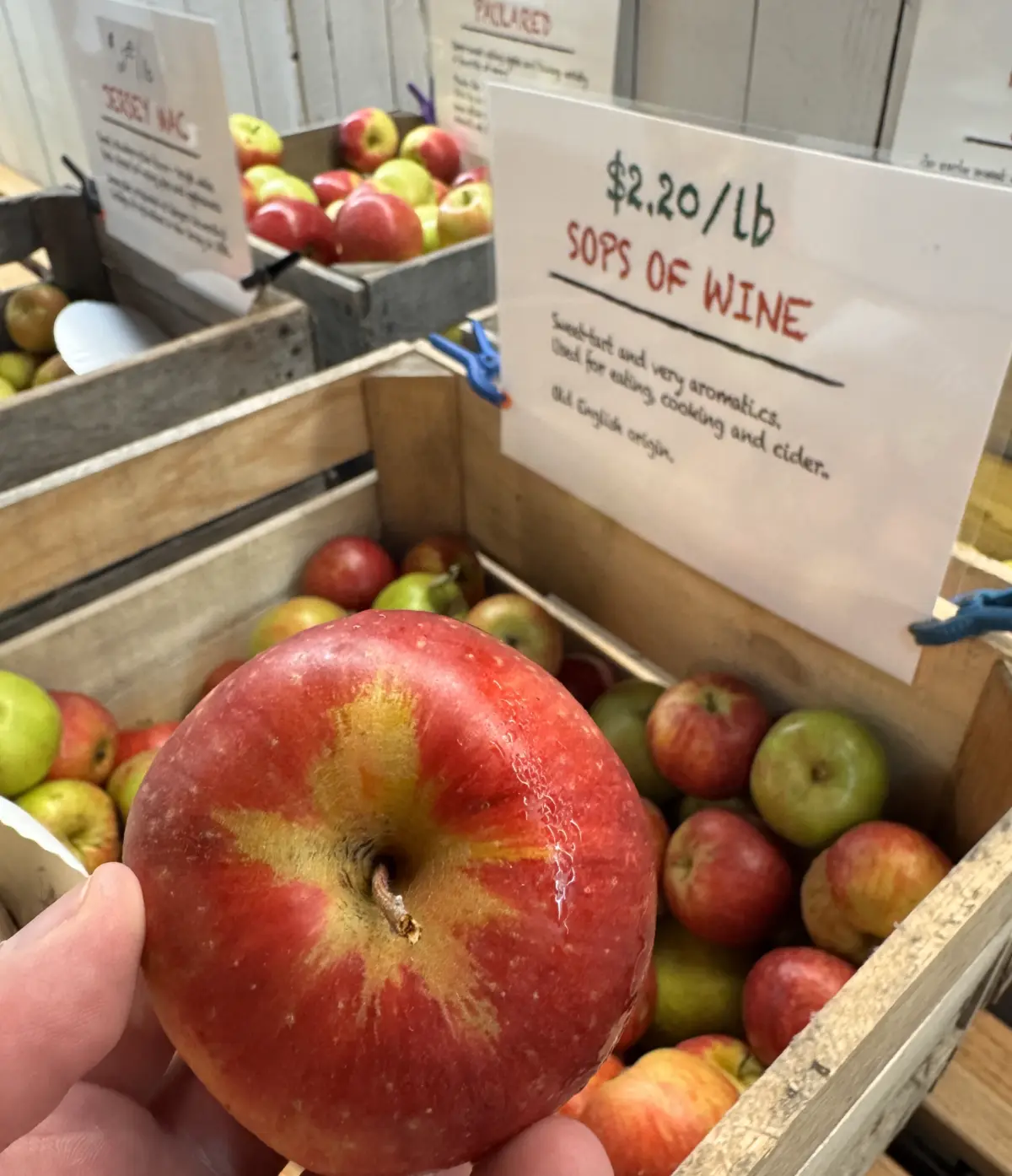
3. Sops of Wine
- Initial Assessment: Steeped in historical and literary resonance, Sops of Wine presented a fascinating psychological case study before the fruit even reached the taster’s palate. Visually and nominally, the specimen triggered involuntary cinematic recollections of classic literary adaptations, invoking deep-seated cultural echoes of epic cinematic feasts.
- Flavor Profile and Chemistry: Unfortunately, the physical reality of the specimen failed to match its dramatic nomenclature. Exhibiting decent underlying flavor profiles characterized by sub-acid sweetness, vanilla, and subtle spice notes, the apple was catastrophically undermined by its texture. Having lingered perhaps too long off the tree, the flesh had degraded into a mealy, gritty consistency. Furthermore, while the true Sops of Wine is classically documented as possessing red-fleshed characteristics or red-streaked white meat, this particular iteration lacked these markers, pointing toward the broader taxonomic chaos surrounding the name—which often functions as an umbrella term for multiple disparate historical varieties.
- Final Verdict: A disappointing culinary experience, resulting in a meager 3.5 out of 10.
4. Fenceline Surprise
- Initial Assessment: Operating under the guise of an upscale linguistic play—inviting a faux-French pronunciation rather than a standard agrarian translation—the Fenceline Surprise delivered on its name in the most disappointing manner imaginable: the surprise was that the apple was fundamentally deficient.
- Flavor Profile and Chemistry: Structurally, the fruit was categorized as a bland mush. A fleeting, highly muted whisper of pear juice hovered over the initial bite, but this ephemeral note vanished almost instantaneously, leaving the taster with a dry, abrasive mouthfeel comparable to beach sand. Although commercial signage categorized the batch as a "firm apple," post-mortem analysis indicates the specimen was either harvested during a profoundly substandard agricultural cycle or had spent an unacceptable duration in cold storage prior to acquisition.
- Final Verdict: A near-total failure, meriting a generous 1 out of 10 solely on the strength of its aesthetic nomenclature and a fleeting phantom trace of pear.
5. Americus Crab
- Initial Assessment: Evoking the imagery of a fictional steampunk inventor or a silver-age maritime superhero ("America’s Crab"), the Americus Crab introduced the trial to the wild, untamed world of crabapples.
- Flavor Profile and Chemistry: True to its classification, this cultivar is inherently specialized. It is aggressively savory, fiercely tart, structurally rigid, and saturated with high levels of plant tannins. It is explicitly not designed for casual, out-of-hand snacking. Instead, it offers a challenging, high-intensity sensory experience tailored strictly for adventurous palates willing to engage with fruit that aggressively pushes back against human consumption.
- Final Verdict: A niche novelty product, rated at 2.5 out of 10 for general eating, though vastly superior in specialized industrial applications.
6. Campfield (False?)
- Initial Assessment: Labeled cryptically with the modifier "(false)," the Campfield specimen invited immediate suspicion. Physically presenting a chewy, dense structural resistance comparable to a callused thumb, this apple tested the boundaries of human-to-fruit interface mechanics.
- Flavor Profile and Chemistry: The fruit straddled an awkward line: overly sweet yet heavily loaded with astringent tannins, creating a dynamic where the apple appeared to consume the taster simultaneously. Horticultural context resolves this anomaly: Campfield is historically celebrated as a premier cider apple, designed specifically to be transformed through the alchemy of fermentation rather than consumed raw.
- Historical Provenance: Deepening the investigative trail, archival records connect the Campfield lineage to Matthew Canfield, an anti-royalist Puritan migrant from Harleston, England, who arrived during the Great Puritan Migration prior to 1637. A founding father of New Haven, Norwalk, and Newark, Canfield’s historical land grants in New Jersey mandated the cultivation of fruit orchards, cementing a legacy of winter-fruit cider production that stretches from colonial town records directly to modern arboriculture.
- Final Verdict: Unsuited for raw human consumption, the table fruit earns a 4.1 out of 10.
7. Graham
- Initial Assessment: The grand finale of the testing cycle, the Graham cultivar arrived with an intimidating physical presence. Described as possessing washboard abdominal musculature impervious to standard ballistic intervention, this apple was so dense and hard that it actively threatened the taster’s temporomandibular joint (TMJ). Penetrating the skin required immense physical exertion, after which the flesh fractured with the dramatic acoustic profile of a calving glacier.
- Flavor Profile and Chemistry: The immense physical effort required to breach the fruit was rewarded by an astonishing, unprecedented flavor profile. Upon accessing the interior matrix, the taster was met with an explosion of pure, unadulterated, unrestrained Juicy Fruit chewing gum flavor, paired with exceptional internal juiciness.
- Final Verdict: Despite its jaw-shattering exterior, the payoff was extraordinary, earning a stellar 8 out of 10.
Supporting Context and Metrics
To properly contextualize the 2026 harvest data, agricultural analysts must weigh the physical metrics of heirloom conservation against modern commercial demands. The divergence between mass-market varieties and heritage cultivars is widening.
| Cultivar | Structural Density | Juiciness Index | Flavor Profile | Final Score (/10) | Primary Culinary Use |
|---|---|---|---|---|---|
| Kickapoo Spice | High | Low | Nutmeg, Cinnamon, Cut Grass | 6.9 | Fresh / Snacking |
| St. Edmunds Pippin | Medium-High | High | Fennel Pollen, Sweet Tart | 8.3 | Premium Fresh Eating |
| Sops of Wine | Low (Mealy) | Medium | Vanilla, Sub-acid Spice | 3.5 | Historical Curiosity |
| Fenceline Surprise | Negligible | Low | Faint Pear, Beach Sand | 1.0 | Unrecommended |
| Americus Crab | Extreme | Low | Savory, Tannic, Tart | 2.5 | Culinary Processing |
| Campfield (False?) | Extreme | Low | Tannic, Astringent, Sweet | 4.1 | Hard Cider Production |
| Graham | Maximum | High | Juicy Fruit Gum | 8.0 | Fresh / High-Effort Eating |
The data clearly indicates that structural density does not directly correlate with flavor quality. While extremes like the Graham and Campfield require significant mechanical effort to consume, their chemical payloads range from revolutionary confectionery notes to industrial-grade cider tannins. Conversely, lower-density cultivars such as Sops of Wine and Fenceline Surprise demonstrated structural degradation, highlighting the critical importance of cold-chain logistics and precise harvest windows.

Official Statements and Industry Insights
Pomological researchers and agricultural historians emphasize that the 2026 harvest reflects an ongoing renaissance in heritage agriculture. As consumer interest pivots away from monolithic supermarket staples, regional orchards are increasingly resurrecting obscure, localized, and multi-use cultivars.
Industry experts note that heritage apples—particularly cider-focused variants like the Campfield and wild-foraged anomalies like the Americus Crab—require a fundamental re-education of the modern consumer base. These fruits were never engineered for immediate, mindless desk-side snacking; they are complex agricultural artifacts designed for preservation, fermentation, and culinary transformation. The survival and propagation of these strains depend entirely on adventurous consumers willing to risk dental integrity for the sake of pomological discovery.

Future Outlook
As the autumn harvest shifts geographically, field researchers are expanding their investigative footprint. With upcoming expeditions targeting the prolific orchards of New York, New England, and the agricultural corridors of Canada, the search for anomalous, historic, and exceptional apples intensifies.
Consumers and orchardists alike are advised to prepare for a dynamic market phase. Climate volatility, shifting storage technologies, and a renewed appreciation for pre-industrial agricultural lineages ensure that future harvests will continue to challenge, surprise, and delight the global apple-consuming community. The journey into the heart of the world’s orchards is far from over—and the next great fruit discovery is perpetually waiting just beyond the fence line.