

Executive Overview
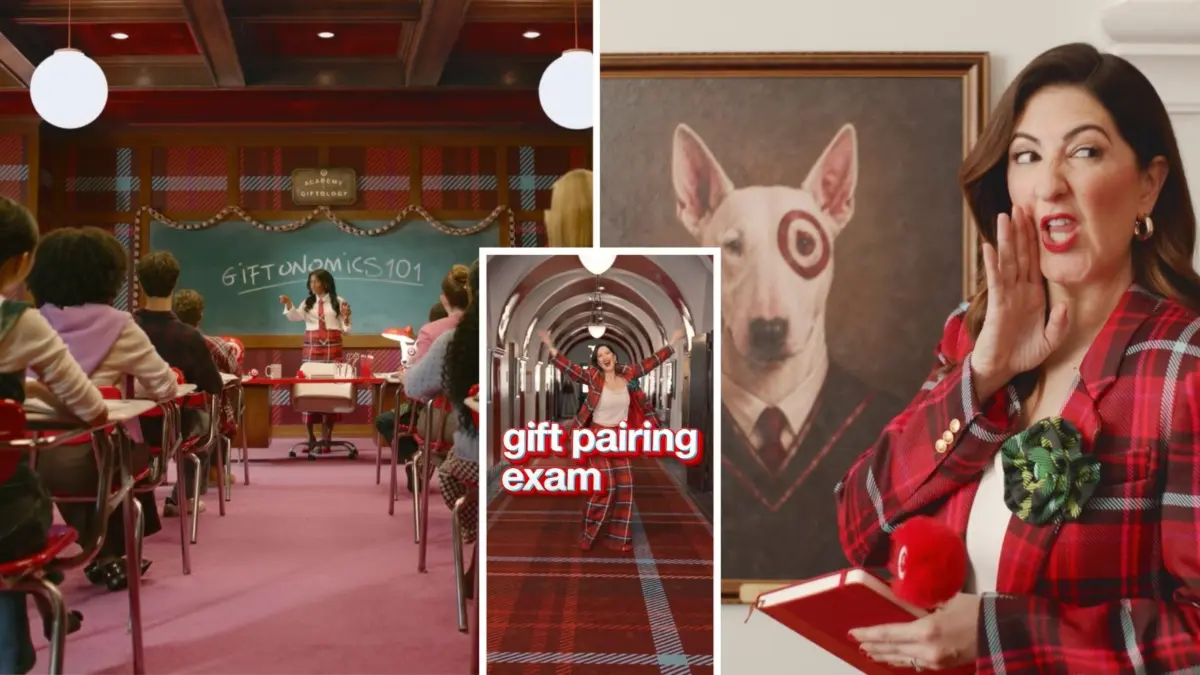
As the retail industry braces for the critical Q4 holiday shopping season, major brands are locked in an intense battle for consumer wallet share against a backdrop of economic caution, shifting consumer behaviors, and relentless competition from e-commerce giants. In response to these complex market dynamics, retail titan Target Corporation has unveiled a fundamentally restructured marketing playbook for the holiday season. Eschewing the broad, catch-all promotional campaigns of previous years, the retailer is pivoting toward hyper-focused, emotionally resonant engagement. At the center of this new strategy is the debut of a comprehensive marketing initiative titled the "Academy of Giftology."
Designed to alleviate the friction, stress, and guesswork historically associated with holiday shopping, the "Academy of Giftology" aims to position Target not merely as a destination for cheap goods, but as an indispensable partner in the art of meaningful gift-giving. According to company executives, the campaign is engineered to place the gift-giver firmly at the center of the narrative, delivering tailored content, curated selections, and confidence-building solutions that elevate the shopping experience from a stressful chore to an act of thoughtful expression.
This deep-dive investigative report examines the genesis of Target’s strategic pivot, analyzing the structural changes behind the "Academy of Giftology," contextualizing the move within broader macroeconomic and retail trends, reviewing exclusive executive commentary, and forecasting what this high-stakes marketing gambit means for Target’s financial health and competitive positioning in the months and years ahead.
Detailed Chronology: The Evolution of Target’s Holiday Strategy
To fully understand the significance of the "Academy of Giftology," it is necessary to trace the evolution of Target’s holiday marketing strategies over the past several years. The trajectory reveals a clear, intentional shift away from mass-market broadcasting toward precision-targeted, value-added consumer experiences.
Phase 1: The Era of Mass Spectacle (2018–2020)
For decades, big-box retailers relied heavily on blockbuster holiday campaigns characterized by high production values, celebrity partnerships, and a focus on massive product assortment. During this era, Target’s holiday marketing was designed to generate high-volume traffic through broad assertions of value and wonder. Commercials featured sweeping cinematic narratives, whimsical characters, and a massive array of goods spanning electronics, apparel, home decor, and toys.
While effective during periods of high consumer confidence, this approach increasingly led to sensory overload. As retail analytics evolved, consumer feedback indicated that shoppers were becoming overwhelmed by the sheer volume of choices, leading to decision fatigue and a reliance on last-minute, uninspired purchases.
Phase 2: The Pandemic and Post-Pandemic Pivot (2021–2023)
The COVID-19 pandemic permanently altered consumer habits, accelerating the adoption of omnichannel retail, curbside pickup, and digital discovery. During the supply-chain disruptions of 2021 and 2022, Target—like many of its peers—had to pivot rapidly toward inventory management, emphasizing availability and convenience over pure inspirational storytelling.
By 2023, as supply chains normalized and inflationary pressures began to weigh heavily on household budgets, consumer sentiment shifted again. Shoppers became significantly more intentional with their discretionary spending. They sought ways to maximize value without sacrificing the emotional resonance of holiday traditions. Target responded with incremental adjustments to its promotional calendar, testing localized curation and digital-first gift finders, but lacked a cohesive, unified thematic narrative across all marketing channels.
Phase 3: The "Academy of Giftology" Genesis (2024–Present)
Recognizing that modern consumers demand more than just a list of discounted items, Target’s internal brand and marketing teams—led by Senior Vice President and Chief Brand Officer Michelle Mesenburg—began conceptualizing a radically different approach for the upcoming holiday season.
Rather than focusing primarily on what was being sold, the strategy team inverted the equation to focus entirely on who was buying and why. The result of this months-long developmental phase is the "Academy of Giftology." Rolled out across digital, social, broadcast, and in-store touchpoints, the campaign treats gift-giving not as a transaction, but as a practiced art form where the retailer acts as an empathetic mentor, equipping shoppers with the tools, insights, and confidence needed to succeed.
Supporting Context & Metrics: The Retail Landscape of Q4
To evaluate the potential impact of Target’s new strategy, one must examine the macroeconomic environment and retail metrics framing the current holiday shopping season.
The Consumer Mindset: Inflation, Fatigue, and Intentionality
Economic indicators heading into the final stretch of the year present a mixed picture. While headline inflation has cooled from its historic peaks, cumulative price increases over the past several years have left consumers hyper-aware of their spending. According to recent retail pulse surveys, consumers are planning their holiday purchases earlier, hunting more deliberately for perceived value, and cutting back on impulse buys.
Crucially, psychological studies of holiday spending indicate that gift-givers are experiencing heightened anxiety. The pressure to find the "right" gift amidst economic uncertainty creates a friction point that traditional advertising often ignores. Retailers that can successfully reduce this cognitive load stand to capture outsized market share. By focusing the "Academy of Giftology" on building the gift-giver’s confidence, Target is directly addressing this psychological barrier.
Omnichannel Integration and the Role of Content
In the modern retail ecosystem, marketing campaigns cannot live on television screens alone. The success of a campaign like the "Academy of Giftology" hinges on seamless omnichannel execution. Target has invested heavily in its digital infrastructure, blending AI-driven product recommendations with human-curated editorial content.
Metrics from previous digital initiatives indicate that when shoppers engage with interactive gift guides and personalized content hubs on Target’s app and website, their average basket size increases, and return rates decrease due to higher purchase satisfaction. The "Academy of Giftology" formalizes this dynamic, scaling it across every customer touchpoint from social media video shorts to in-store endcaps.
Official Statements and Leadership Vision
The philosophical core of Target’s new marketing direction was articulated by Michelle Mesenburg, Senior Vice President and Chief Brand Officer for Target, during an exclusive interview with ADWEEK. Mesenburg’s comments shed light on the internal strategic realignment that prioritized the buyer over the product catalog.
"This year, what you will see is that we are zoned in, very much focused on the gift giver at the center, solving for the gift giver, making sure that all of our content supports the gift giver, building their confidence," Mesenburg explained.
This statement encapsulates a profound shift in retail marketing philosophy. For decades, the default industry playbook has placed the merchandise—the hot toy, the designer collaboration, the must-have electronics—at the absolute center of promotional gravity. The underlying assumption was that exceptional products would sell themselves if shouted loud enough.
Mesenburg’s commentary signals the obsolescence of that model in an era of hyper-choice. By framing Target’s role as "solving for the gift giver," the brand is elevating its value proposition from a mere purveyor of goods to a consultative partner. The "Academy of Giftology" is structured to provide actionable guidance—demystifying gift selection for difficult recipients, offering creative presentation ideas, and reassuring shoppers that their choices will be well-received.
Industry analysts have praised this pivot, noting that emotional resonance and empathy are powerful differentiators in a retail landscape increasingly dominated by algorithmic price comparisons and automated logistics.
Future Outlook: Implications for Target and the Broader Retail Industry
As the holiday season unfolds and final sales figures are tallied in the new year, the performance of the "Academy of Giftology" will be scrutinized by Wall Street analysts, brand strategists, and competitors alike. Several key outcomes and long-term implications emerge from this strategic gambit.
1. Brand Loyalty and Customer Lifetime Value
If Target successfully positions itself as an empathetic ally to the holiday shopper, the benefits will extend far beyond temporary Q4 revenue spikes. Building consumer confidence fosters brand trust, which is a primary driver of long-term customer lifetime value (LTV). Shoppers who experience a frictionless, satisfying holiday season with Target are significantly more likely to return for everyday essentials, apparel, and home goods throughout the subsequent year.
2. A New Benchmark for Experiential Retail Content
The success or failure of the "Academy of Giftology" will likely influence how other major retailers structure their marketing campaigns. If Target proves that a narrative centered on the buyer’s emotional journey outperforms traditional product-dump advertising, competitors across the retail spectrum—from department stores to specialty chains—will likely adopt similar consultative, confidence-building frameworks in future promotional cycles.
3. The Integration of AI and Human Curation
Looking ahead, initiatives like the "Academy of Giftology" pave the way for deeper integration between advanced artificial intelligence and creative storytelling. As machine learning models become more adept at understanding individual consumer preferences, future iterations of Target’s gift-giving campaigns could scale hyper-personalization down to the individual user level, making every shopper feel as though they have a personal concierge guiding their holiday purchases.
Conclusion
Target’s "Academy of Giftology" represents a mature, sophisticated response to the complexities of modern consumerism. By shifting the spotlight away from relentless product promotion and placing it squarely on the emotional needs, anxieties, and aspirations of the gift-giver, Target is charting a compelling course for the future of retail marketing. As Michelle Mesenburg and her team execute this vision, the initiative stands as a masterclass in how heritage retail brands can reinvent their relevance through empathy, focus, and strategic clarity.