

Executive Overview
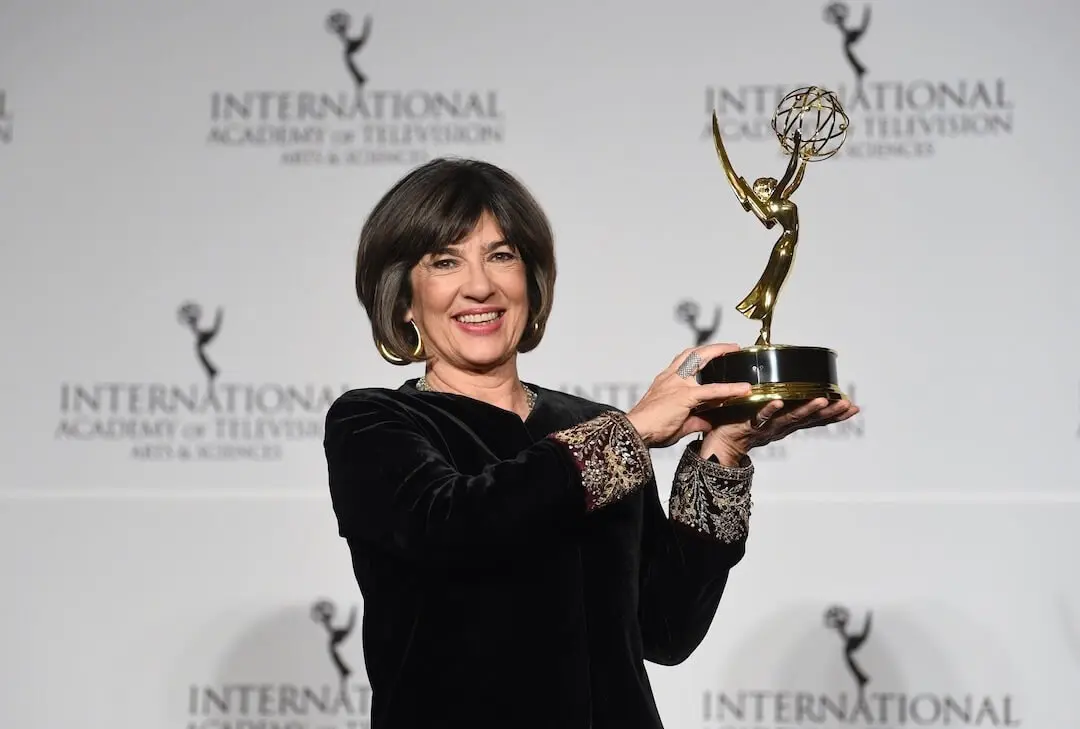
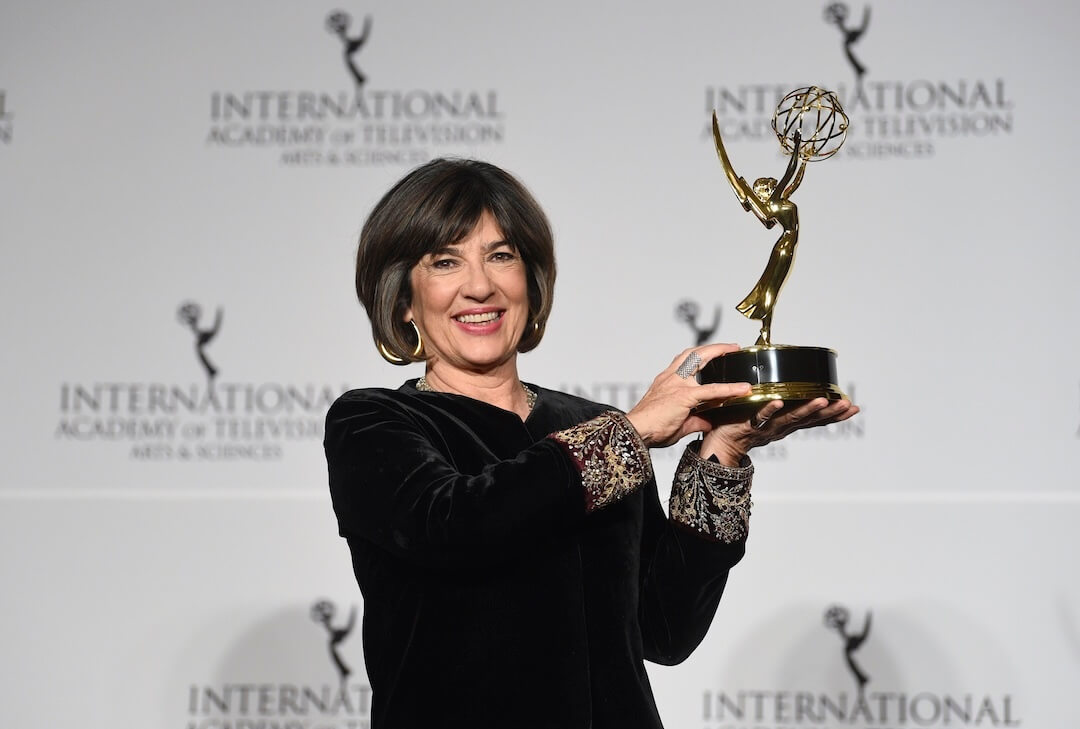
In a seismic announcement that reverberates across the global journalism landscape, legendary chief international anchor and foreign correspondent Christiane Amanpour has revealed that she will officially leave CNN next June. Bringing to a close a tenure spanning over four decades, Amanpour’s departure marks the exit of one of the foundational figures who helped define CNN’s identity and international prestige from its infancy.
Her exit arrives against a backdrop of sweeping transformation within the media industry, most notably the recent acquisition of CNN’s parent company, Warner Bros. Discovery, by David Ellison’s Paramount Skydance. While CNN CEO Mark Thompson emphasized that discussions regarding Amanpour’s departure had been underway for months, the timing coincides with intense scrutiny over corporate realignments, editorial independence, and a shifting cultural zeitgeist across legacy media institutions.
Simultaneously, the broader media ecosystem is undergoing profound recalibration. On the same day as Amanpour’s announcement, comedian Jon Stewart committed to remaining at the helm of Comedy Central’s The Daily Show through the 2028 election, offering a counterweight of continuity amid late-night television contraction. Meanwhile, international reporting faced acute dangers over the weekend as Israeli police arrested ten suspects following a violent West Bank attack on Washington Post photojournalist Heidi Levine. Together, these events paint a portrait of an industry at a historic crossroads, grappling with structural consolidation, political pressures, and the physical perils of front-line journalism.
Detailed Chronology of the Announcement and Corporate Shifts
Amanpour’s Journey: From Entry-Level Desk Assistant to Global Icon
Christiane Amanpour’s history with CNN is virtually synonymous with the network’s rise as a global superpower. Arriving in 1983 as an entry-level assistant on the international assignment desk—just three years after the network’s inception—Amanpour quickly ascended through the ranks.
Her defining work emerged from the crucible of history’s most volatile conflict zones. During the Gulf War, the Bosnian genocide, the Rwandan civil war, and the post-9/11 war in Afghanistan, Amanpour’s fearless dispatching brought the visceral realities of war into living rooms worldwide. She did not merely report the news; her uncompromising style and demand for accountability helped establish CNN as a premier global newsgathering organization.
After months of internal deliberation and sleepless nights, Amanpour announced on Monday that her 43-year partnership with the network will conclude in June of next year. Her departure will be executed in phases: her CNN International program will scale back to a weekly broadcast at the beginning of 2027 before ending entirely in May, while her PBS program, Amanpour & Company, is slated to wrap up in December. She will, however, continue her podcast, The Ex Files, alongside her ex-husband, Jamie Rubin.
The Ellison Era and Corporate Realignments
Amanpour’s announcement is the first major departure of a marquee personality at CNN since David Ellison’s Paramount Skydance finalized its acquisition of Warner Bros. Discovery earlier this month. The multi-billion-dollar megacompany now unites CNN and CBS News under a single corporate umbrella.
While neither Amanpour nor network executives have explicitly attributed her exit to the merger, the geopolitical and corporate climate surrounding the deal has been fraught with tension. In May, prior to the merger’s completion, Amanpour publicly voiced grave concerns over what she characterized as the "ideological realignment of CBS and the destruction, potentially, of 60 Minutes."
Those fears materialized following Paramount Skydance’s installation of Bari Weiss as editor-in-chief of CBS News. Weiss, previously known for her commentary at The New York Times and The Free Press, instituted rapid structural and personnel overhauls. The shakeup resulted in the departures of numerous veteran staff members, most notably longtime 60 Minutes correspondent Anderson Cooper, who exited the program in July after more than two decades. (Cooper subsequently signed a contract extension to remain with CNN in December.)
Despite these underlying tensions, CNN leadership has projected stability. CEO Mark Thompson—who will remain at the helm of CNN under the new ownership structure—confirmed that conversations regarding Amanpour’s departure had been progressing for months. Furthermore, as part of a regulatory settlement with states challenging the merger, Skydance agreed to establish an independent board of journalists charged with safeguarding the editorial integrity of both CNN and CBS News.
Supporting Context & Metrics: Late-Night Survival and Front-Line Perils
Jon Stewart Stays Put at The Daily Show
While legacy newsrooms navigate corporate consolidation, the late-night comedy landscape is experiencing its own seismic shifts. In tandem with Amanpour’s news, Jon Stewart announced on Monday that he has extended his contract to host Comedy Central’s The Daily Show through the 2028 U.S. presidential election.
Stewart’s return to the anchor chair in February 2024, following a nine-year hiatus, has proved to be a lucrative and culturally potent lifeline for the network. Although he currently restricts his hosting duties to Mondays, the show recently posted its best third-quarter audience metrics in eight years, alongside an astonishing 1.6 billion views across social media platforms over the past year.
The renewal is particularly noteworthy given that Comedy Central now falls under the unified Paramount Skydance-Warner Bros. Discovery umbrella. Stewart has established a reputation for fiercely critiquing political leaders, media conglomerates, and even his own corporate bosses. Last year, following CBS’s abrupt cancellation of The Late Show with Stephen Colbert—a move justified by executives as purely financial, though timed closely with regulatory reviews and legal settlements—Stewart openly questioned corporate motivations.
Stewart’s long-term commitment runs counter to broader industry trends. The cancellation of Colbert’s 33-year franchise in May, coupled with ongoing contract negotiations between Disney and Jimmy Kimmel—prompting Disney President Dana Walden to describe late night as a "very challenging day part"—highlights an era where linear late-night television is fighting for survival.
Violence Against Journalists in the West Bank
Amid executive boardroom realignments and television contract negotiations, the physical dangers facing reporters in the field were underscored over the weekend in the occupied West Bank.
Israeli police announced Monday that ten unidentified suspects had been arrested in connection with a series of violent incidents, most notably a coordinated assault on Washington Post photojournalist Heidi Levine. On Friday, Levine—who was wearing a clearly marked protective vest bearing the word "PRESS" on both front and back—was knocked to the ground and repeatedly kicked by a group of masked Israeli settlers.
The incident is part of an alarming escalation of settler violence across the West Bank. While international bodies and the United States government have repeatedly urged Israeli authorities to crack down on such lawlessness, legal advocates note that prosecutions of Israeli settlers remain exceedingly rare, leaving frontline journalists to navigate mounting perils while documenting global conflicts.
Official Statements and Industry Reactions
Throughout her career, Amanpour has positioned fierce independence as the bedrock of journalistic integrity. Addressing her viewers and colleagues regarding her departure, she emphasized the timeless necessity of independent reporting:
"You know that I’ve always been fiercely independent, and I will continue to be that for you for as long as I am here and beyond," Amanpour said. "That’s especially important today as we face unprecedented pressures from all sides—political, financial, and also from the rising dangers in the field."
While choosing not to directly name David Ellison or reference the corporate merger in her farewell address, her parting words carried a clear mandate for the network she helped build: "I will always be rooting for CNN and maintaining its history of independent journalism."
CNN CEO Mark Thompson echoed mutual respect in statements regarding her departure, acknowledging the lengthy discussions that preceded her announcement and praising her extraordinary four-decade legacy. Meanwhile, press freedom advocates and media analysts continue to monitor how the newly formed Skydance media empire will balance commercial pressures with the traditional editorial independence demanded by icons like Amanpour.
Future Outlook
As Christiane Amanpour prepares to turn the page on her historic 43-year tenure at CNN, the broader media landscape faces an era of profound reckoning. The integration of legacy networks under corporate behemoths like Paramount Skydance introduces new frameworks for television news and entertainment—one where figures like Jon Stewart cement their roles as satirical anchors through 2028, while foundational hard-news pillars like Amanpour choose to step away to pursue independent ventures.
For CNN, entering the "Ellison era" with leadership continuity at the top provides a degree of institutional calm. However, the departure of a figure whose very identity was forged in the heat of international conflict signals the end of an era. As Amanpour looks toward new projects and the continuation of her podcast, The Ex Files, the industry is left to ponder how the next generation of foreign correspondents will uphold the standard of fearless, independent reporting in an increasingly polarized and hazardous world.