

Executive Overview
The global landscape of journalism is facing an unprecedented convergence of systemic institutional hostility, political exclusion, and physical violence. Over a tense week in mid-October 2026, the fault lines dividing the press, political administrations, and partisan actors widened dramatically. From the highest offices of the executive branch in Washington to the volatile olive groves of the West Bank, and down to the localized struggle for public records in the American heartland, reporters are finding themselves locked out, shouted down, and physically targeted.
At the center of this turbulence is a calculated reshaping of institutional media access. The Trump administration’s systematic exclusion of major news organizations—most notably CNN and Politico—from Air Force One pools and daily press briefings has established a new, highly partisan protocol. As mainstream networks refuse to cross the picket line set by the administration, right-wing outlets like Real America’s Voice are stepping in to fill the void, creating an alternate ecosystem of state-adjacent media distribution.
Simultaneously, the revolving door of the administration’s communications apparatus suffered another historic failure. White House Press Secretary Katie Zacharia was forced out of her role after a tumultuous five-day tenure, setting a modern record for brevity. Yet, while administrative chaos dominated Washington headlines, the threats facing working journalists transcended partisan politics. In the West Bank, veteran Washington Post photographer Heidi Levine suffered brutal, coordinated physical assaults by masked Israeli settlers while documenting the annual olive harvest—a stark reminder of the escalating dangers faced by international correspondents in conflict zones.
Domestically, ethical lines within major newsrooms blurred as prominent cable correspondents faced public reckonings for violating internal standards. Meanwhile, away from the glare of national networks, local newsrooms continued their grinding, daily attrition against stonewalling municipal governments and delayed public records requests.
This comprehensive report examines the multi-front crisis confronting modern journalism, analyzing the structural changes in press access, the geopolitical and domestic dangers faced by reporters, and the long-term implications for the Fourth Estate.
Detailed Chronology: A Week of Unprecedented Media Crises
The events of mid-October 2026 unfolded with a rapid, chaotic intensity across multiple fronts, setting off alarms among press freedom advocates globally.
The Weekend Exclusions on Air Force One
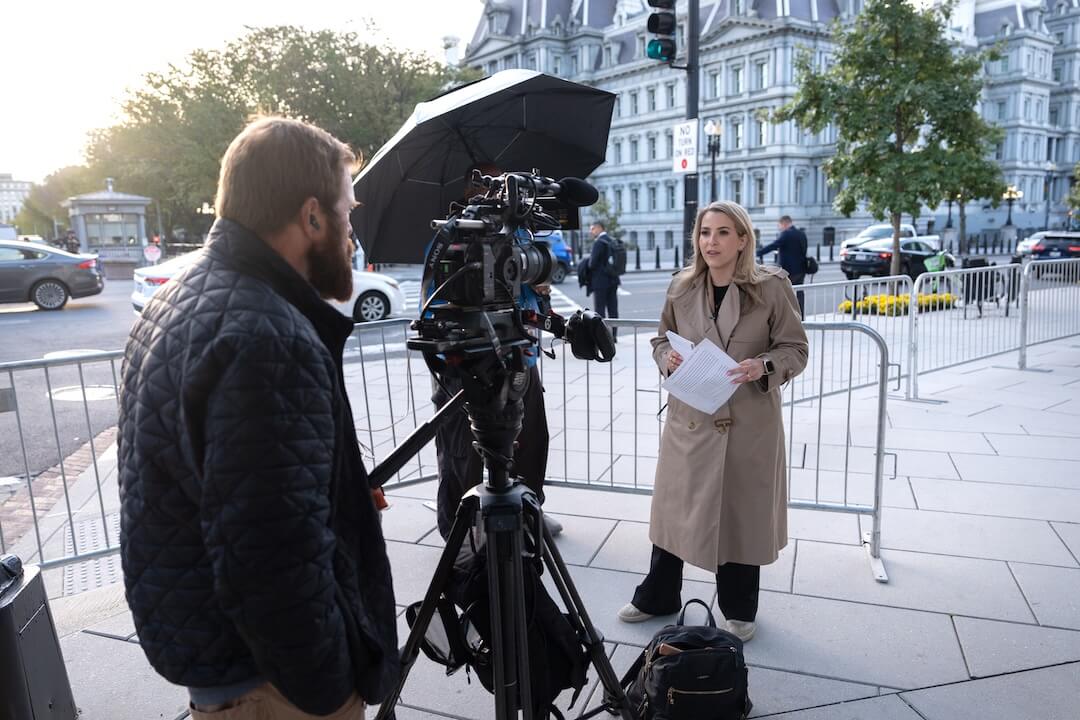
Over the weekend of October 17–18, CNN was once again barred from traveling with President Donald Trump on Air Force One. This marked the latest installment in a pattern that began on September 18, when the Trump administration officially banned CNN, Politico, and MS NOW from standard White House press pools. Under traditional protocols, the five major television networks (ABC, CBS, Fox, and NBC) rotate through primary pool duties, sharing unedited footage and notes with the broader press corps.
In response to the ban, the four other major networks upheld a unified front, refusing to backfill CNN’s assigned slot. However, the conservative network Real America’s Voice—known for hosting programs featuring far-right political figures like Steve Bannon and Charlie Kirk—readily stepped into the secondary TV slot created by the White House. By providing its pool footage and reporting notes free of charge to any media outlet willing to take them, Real America’s Voice has effectively provided the administration with a mechanism to bypass traditional journalistic gatekeeping.
The Five-Day Press Secretary
On Friday, October 16, the inner workings of the White House press office imploded. Katie Zacharia, who had assumed the role of White House press secretary just days prior, officially stepped down after a disastrous five-day tenure. Zacharia’s brief run—shorter even than Anthony Scaramucci’s infamous ten-day stint as White House communications director in 2017—followed an inaugural press briefing plagued by substantive stumbles and intense media scrutiny regarding her professional credentials, specifically her claims of being an attorney despite failing the California bar exam.
Attempts to stabilize her standing via a series of late-week appearances on Fox News backfired significantly. During an interview with Sean Hannity, Zacharia admitted she entered her first briefing with "very little prep time." Leaked accounts and text messages subsequently revealed an internal power struggle, with conflicting reports over whether her media tour was a "sanctioned hit" engineered by White House Chief of Staff Susie Wiles or a series of appearances pushed by Zacharia herself. By Friday afternoon, her departure was finalized.
The Attack on Heidi Levine in the West Bank
On Friday, October 16, veteran Washington Post photojournalist Heidi Levine was severely injured during a coordinated attack in the occupied West Bank. Levine, who was wearing a protective vest clearly marked "PRESS" on both the front and back, was documenting the Palestinian olive harvest in a West Bank village alongside local farmers.
A group of masked Israeli settlers, armed with wooden sticks and metal rods, descended upon the harvesters and journalists. Levine was knocked to the ground, where she curled into a protective posture with her helmet and flak jacket on. Attackers repeatedly kicked her and stole her professional camera equipment and cellular phone. She sustained lacerations across her body, a broken rib, four broken vertebrae, and deep hand wounds that exposed bone, requiring emergency surgery. The attack coincided with the burning of local olive groves by settlers.
Editorializing on Social Media: The Jan Crawford Controversy
On Sunday, October 18, CBS News chief legal correspondent Jan Crawford issued a public apology and deleted a contentious social media post that had ignited severe backlash within the journalism community. Days prior, Crawford had published a post praising an unidentified man who confronted Democratic U.S. Senate nominee Abdul El-Sayed at a Michigan town hall meeting.
The questioner had aggressively demanded whether El-Sayed, who is Muslim, would disavow the Muslim Brotherhood. When Crawford publicly mocked El-Sayed’s immediate response and praised the heckler for executing a "spectacular self own," media critics and internal CBS staffers argued she had flagrantly violated fundamental standards of journalistic neutrality. Crawford conceded the violation in her public retraction, apologizing for the post as scrutiny mounted over CBS News’ shifting editorial direction.
Supporting Context & Metrics: Structural Shifts in Press Access
The events of October 2026 are not isolated anomalies; they represent systemic shifts in the relationship between political power and the media.
The Evolution of White House Press Pools
Historically, the White House press pool was managed independently by the White House Correspondents’ Association (WHCA), ensuring that access was governed by professional peers rather than political appointees. Last year, the White House seized direct control of the pool structure, introducing a "secondary TV slot."
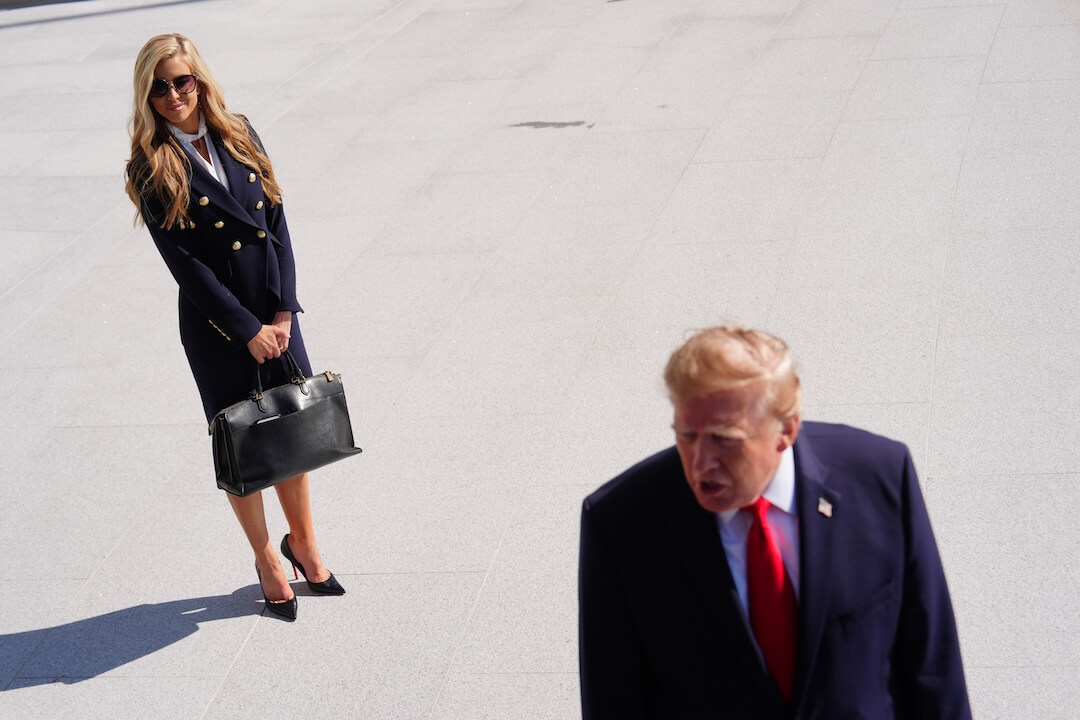
While administration officials defended the move as an effort to democratize access for independent and alternative outlets, data from media watchdog groups paints a more partisan picture. An analysis published by Poynter in May 2025 revealed that the secondary slot has been predominantly allocated to right-leaning and conservative media organizations, functioning as a pressure valve when mainstream networks boycott administration actions.
| Outlet / Entity | Action Taken Amid CNN Ban | Current Status of Access |
|---|---|---|
| ABC, CBS, NBC, Fox | Refused to backfill CNN’s pool slot | Retain primary rotation access |
| Real America’s Voice | Accepted secondary slot, offered free pool feed | Granted secondary TV slot during CNN exclusions |
| Hearst & Scripps | Signed amicus briefs supporting CNN lawsuit | Participating conditionally; limiting secondary feeds |
| The Associated Press | Litigating prior exclusion over geographic naming disputes | Subject to restructured print pool rotation |
The Legal Battlegrounds
The erosion of press access has increasingly migrated from the briefing room to the courtroom. Federal judges have intervened in several high-profile disputes, ordering the restoration of access for outlets like The Associated Press after the administration attempted to bar the wire service over stylebook disagreements regarding geographic terminology. Concurrently, ongoing joint lawsuits filed by CNN, Politico, and MS NOW challenge the legality of viewpoint-based exclusions from presidential travel and press facilities.
Despite these legal challenges, the administration has demonstrated a willingness to structurally dismantle traditional pool mechanisms—such as eliminating dedicated wire-service slots and replacing them with rotational print slots—to dilute the organizational leverage of major journalistic institutions.
Official Statements and Institutional Responses
The growing rift between the state and the media has prompted pointed rhetoric and formal denunciations from both government officials and press freedom advocates.
- The White House: Defending the exclusion of mainstream outlets, a senior White House official delivered a scathing indictment in an email statement: "The Fake News has no place demanding a spot in the President’s Oval Office. The lies they smear are a disservice to the American public and tear at the very fabric of our Democracy. They’re completely capable of reporting from directly outside."
- The Washington Post: Following the brutal assault on photojournalist Heidi Levine, Executive Editor Matt Murray released an official statement demanding accountability: "This morning, a Washington Post photographer, Heidi Levine, was attacked by Israeli settlers while reporting in the West Bank. She was wearing visible markings clearly identifying her as a journalist. While we are relieved that Heidi has received medical care and is safe, we are outraged by this unwarranted attack on a journalist doing her job and urge a thorough investigation and follow-through from authorities."
- Committee to Protect Journalists (CPJ): Sara Qudah, CPJ’s regional director, condemned the West Bank violence, emphasizing that the physical targeting of reporters during agricultural harvests has become systemic: "The brutal beating of Levine is neither isolated nor the first on a journalist covering the olive harvest in the West Bank. It represents a disturbing pattern of violence and harassment against media workers regardless of their nationality."
- CBS News / Jan Crawford: Following widespread internal and external condemnation, correspondent Jan Crawford issued a concise mea culpa on social media: "I deleted that tweet because it was a violation of CBS News standards. I apologize."
Future Outlook: The Intersection of Local and National Press Fights
As the media industry looks toward the horizon, the struggles at the national level are mirrored—often with less public attention—at the hyper-local level across the United States.
The steady contraction of local newspapers has left municipal and state governments unchecked, emboldening public officials to adopt hostile postures toward transparency. A prime example occurred in Kansas, where state reporters attempting to examine citizen submissions to the newly formed Committee on Government Efficiency (COGE) faced weeks of stonewalling and administrative delays, ultimately receiving records only after independent leaks forced the government’s hand.
Whether dealing with the denial of Air Force One seats to major networks, the physical targeting of photojournalists in conflict zones, or the obstruction of public records requests by local bureaucrats, the core principles of the Fourth Estate are under severe strain. The normalization of exclusion as a political tool suggests that the adversarial tension between the press and the state will define the journalistic landscape for the foreseeable future, forcing news organizations to increasingly rely on the courts, investigative resilience, and global solidarity to defend the public’s right to know.