In the grand pantheon of seasonal gastronomy, few obsessions rival the quiet, fervent subculture of heirloom pomologists and itinerant fruit reviewers. Following the widespread critical acclaim and chaotic energy of part one, the orchard audit has officially entered its second phase. This comprehensive investigation revisits the relentless pursuit of pomological truth, examining a fresh slate of regional cultivars that have recently graced the tasting table.
From the nutmeg-heavy depths of the Kickapoo Spice to the jaw-shattering, gum-flavored defiance of the Graham apple, this evaluation captures the unpredictable nature of pomology in 2026. This report synthesizes tasting notes, historical anecdotes, textural anomalies, and quantitative scoring metrics to provide a definitive assessment of the season’s secondary harvest. Observers of the agricultural landscape will find that while some varietals offer transcendent flavor profiles, others serve as stark reminders of the perils of improper storage, botanical mislabeling, and the unforgiving laws of nature.
Detailed Chronology of the Tasting Circuit
The evaluation of the current batch followed a rigorous, unstructured chronological path, dictated largely by the rapid ripening schedules of regional orchards and the unpredictable decay rates inherent to seasonal fruit.
Phase One: The Spiced and the Sharp
The tasting cycle commenced with the examination of the Kickapoo Spice, an obstinate, dense specimen whose aromatic profile leaned heavily into autumnal baking spices. Observers immediately noted the absence of juiciness, replaced instead by an unexpected, grass-like aftertaste that hinted at premature harvesting or suboptimal cellar conditions.
Transitioning from the dense profile of the Kickapoo, the circuit moved to the St Edmunds Pippin, widely celebrated as an early-season triumph. Despite a rough exterior texture that challenged tactile comfort, the Pippin delivered a resounding acoustic and physical snap upon impact. This initial phase set a high standard for acid-sugar equilibrium, introducing herbal nuances reminiscent of fennel pollen.
Phase Two: The Subacid and the Misidentified
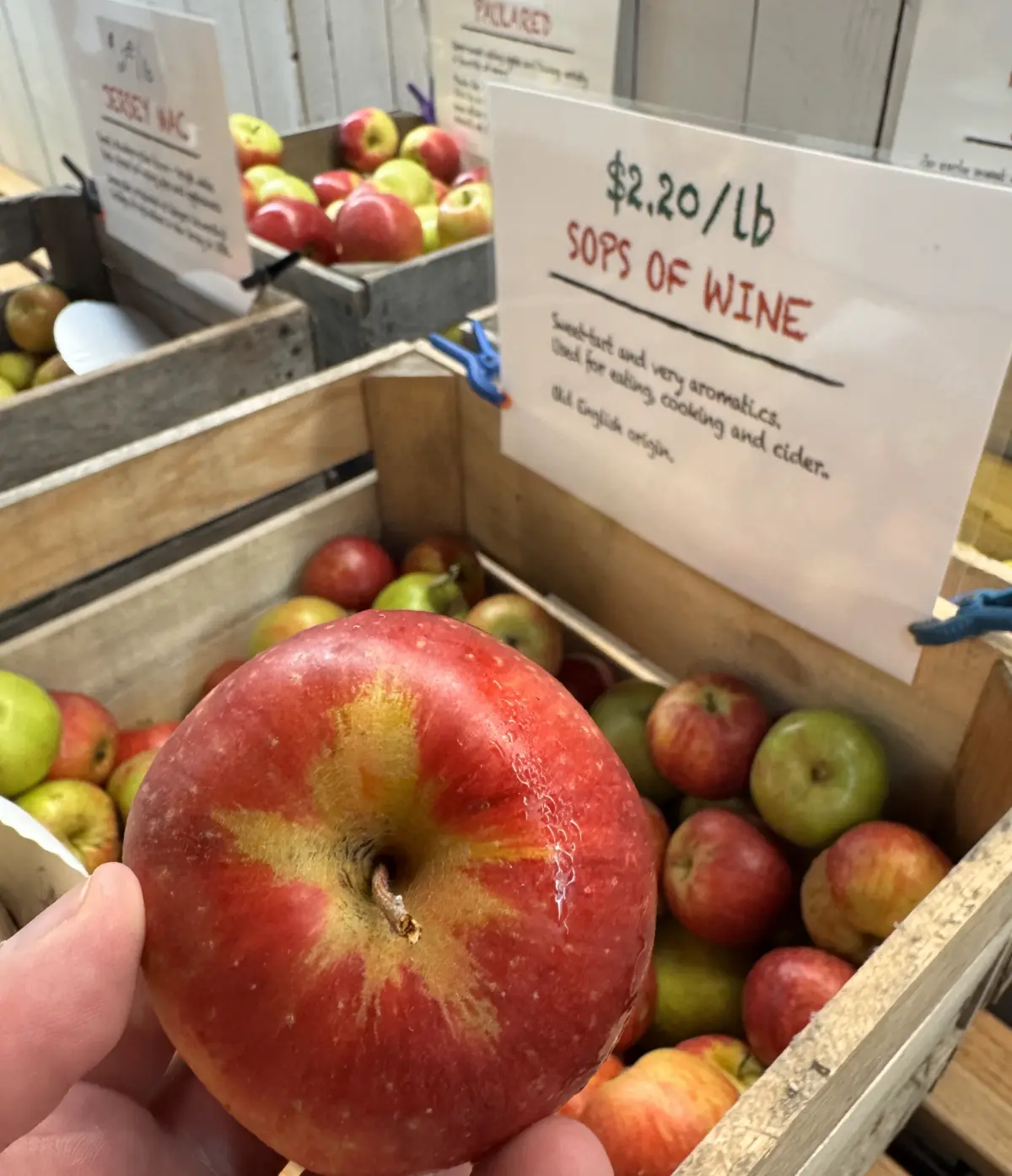
As the tasting progressed into mid-season varieties, the narrative shifted toward textural disappointment and historical confusion. The Sops of Wine varietal presented a classic cautionary tale of post-harvest degradation. Consumed days after acquisition, the fruit suffered from a mealy, gritty mouthfeel, despite offering a nuanced subacid profile infused with notes of vanilla and spice.
Parallel to this, the Campfield (False?) specimen introduced a layer of botanical uncertainty. Marked by tannins aggressive enough to challenge human consumption, the fruit validated its intended destiny as a dedicated cider component rather than a fresh-eating snack.
Phase Three: The Anomalies and the Armor-Plated
The investigative arc concluded with two diametrically opposed experiences: the deeply disappointing Fenceline Surprise and the formidable Graham. The former offered little more than a fleeting mist of pear-like flavoring followed by the sensory illusion of beach sand, earning a near-failing grade.
Conversely, the final evaluation focused on the Graham apple—a structural marvel requiring immense mastication effort. Once breached, however, the fruit yielded an astonishing and unadulterated flavor profile mirroring commercial bubblegum, neutralizing the physical toll exacted upon the taster’s jaw.
Supporting Context & Metrics
To properly contextualize the subjective experiences of the tasting circuit, a quantitative and qualitative breakdown of each evaluated varietal has been established. The scoring system operates on a standard decimal scale from 0 to 10, factoring in structural integrity, flavor complexity, post-harvest viability, and overall culinary utility.
Comprehensive Cultivar Scorecard
Varietal Name
Assigned Score (/10)
Primary Flavor Notes
Dominant Textural Trait
Primary Deficiency
Kickapoo Spice
6.9
Nutmeg, cinnamon, clove
Dense, rigid
Cut-grass aftertaste, dry
St Edmunds Pippin
8.3
Herbal, fennel pollen, sweet-tart
Crisp, sharp-breaking
Rough skin texture
Sops of Wine
3.5
Vanilla, subtle spice, subacid
Mealy, gritty
Rapid textural degradation
Fenceline Surprise
1.0
Faint pear mist
Mushy, sandy
Devoid of substantial flavor
Americus Crab
2.5
Savory, highly tart
Tough, high tannin
Incompatible with casual eating
Campfield (False?)
4.1
Tannic, astringent
Chewy, cellularly dense
Overwhelming astringency
Graham
8.0
Juicy Fruit gum
Rock-hard, glacier-like
Extreme mastication hazard
Historical and Etymological Anomalies
The 2026 tasting sessions were notable not only for their gustatory properties but also for the rich web of historical lore attached to specific cultivars. Most notably, the Campfield apple brings with it a lineage deeply intertwined with the Great Puritan Migration of 1637. Historical records trace the lineage to figures such as Matthew Canfield, an anti-royalist Puritan whose agricultural requirements in the New Haven and Newark colonies mandated the cultivation of fruit trees to secure civic status. The intersection of colonial jurisprudence, swine damage assessments, and foundational orchard ordinances provides a profound backdrop to a fruit whose modern incarnation remains largely unpalatable to the unprepared human palate.
Official Statements and Observations
Pomological evaluation, while ostensibly a casual pursuit, relies heavily on the internal monologue and spontaneous psychological associations of the reviewer. Throughout the evaluation period, distinct thematic reflections emerged regarding the nature of fruit naming conventions and structural resilience.
On the subject of nomenclature, reviewers noted the evocative nature of historical monikers. The Americus Crab, for instance, elicited commentary regarding its cinematic potential as an old-timey superhero or a steampunk inventor, highlighting how historical agricultural labels often transcend their botanical utility to occupy cultural imagination.
Regarding structural integrity, the physical demands placed upon the taster by ironclad varietals like the Graham apple prompted serious considerations regarding jaw health and structural mechanics:
"So dense and hard it was difficult to penetrate with my weak human teeth. This is clearly an apple that has gone to the gym. He’s got washboard abs you couldn’t pierce with 20 gauge birdshot. I’m pretty sure this apple gave me TMJ."
Similarly, the unpredictable nature of storage viability was summarized as a fundamental truth of the agricultural ecosystem:
"Apples are weird like that. Some improve off the tree, some begin their descent to crap-town the moment they drop."
Future Outlook
As the 2026 domestic harvest transitions into its next phase, the spotlight turns northward and eastward. With upcoming expeditions scheduled across New York, New England, and the expansive orchards of Canada, the tasting circuit shows no signs of slowing down.
Industry analysts and members of the Apple Snack Gang anticipate a robust influx of regional varietals influenced by shifting climate patterns and micro-climatic storage developments. The impending geographic shift in the audit promises to uncover forgotten homestead trees, rare colonial cider apples, and unexpected flavor profiles that will continue to challenge the limits of human mastication. Observers are advised to monitor official itinerary pages for live updates, public appearances, and opportunities to contribute wild or heirloom samples to the ongoing audit.