

Executive Overview
Artificial Intelligence has firmly transitioned from an experimental novelty to a corporate board-level mandate. Across virtually every industry, senior executives are racing to integrate AI into their operational pipelines, viewing these advanced large language models and machine learning architectures as the ultimate catalysts for efficiency, growth, and market dominance. Yet, beneath the corporate press releases, exuberant shareholder reports, and widespread software licensing rollouts, a quieter, more concerning narrative is unfolding on the ground floor.
To many observers, the current corporate rollout of AI feels less like a calculated strategic deployment and more like an avoidable farce. If modern AI adoption cycles were adapted for the screen, film critics would likely dismiss the plot as wildly unrealistic, arguing that no group of corporate professionals could be quite that myopic.
The most frustrating element of this ongoing corporate scramble is that organizations have walked this exact path before. Barely a decade ago, the business world was gripped by a remarkably similar panic known as "digital transformation." Companies rushed to deploy content management systems, customer relationship management platforms, and corporate intranets, treating these initiatives as pure technology projects while completely ignoring the human beings expected to interact with them.
Reflecting on these historical missteps in his seminal 2014 Smashing Magazine book, Digital Adaptation, consultant and strategist Paul Boag outlined the exact behavioral and cultural traps that doom technology implementations. Today, those same lessons serve as a critical diagnostic tool for the AI era. By treating artificial intelligence primarily as an IT problem rather than a profound cultural shift, organizations are repeating historic mistakes—alienating their workforce, stifling genuine innovation, and inadvertently cultivating dangerous security vulnerabilities through unmonitored "Shadow AI."
Detailed Chronology: From the Digital Adaptation Era to the AI Frontier
To understand why modern artificial intelligence rollouts are stalling, one must trace the parallels between the digital transformation boom of the early 2010s and the generative AI gold rush of today.
The 2014 Digital Adaptation Playbook
During the height of the digital transformation era, IT departments were tasked with modernizing legacy infrastructure. They rolled out heavy enterprise CMS solutions, sprawling CRMs, and complex intranets. Simultaneously, customer-facing divisions rushed to launch slick mobile applications and personalized web experiences.
However, organizations consistently committed a foundational error: they invested massive budgets into the technology stack while allocating virtually zero resources toward understanding how employees and customers would actually use those systems. Internal platforms were notoriously difficult to navigate, forcing staff into cumbersome workarounds. Customers, meanwhile, either found the new digital touchpoints irrelevant or wanted entirely different functional capabilities altogether. The resulting friction led to high rates of project abandonment and millions of dollars in wasted capital.
The Modern AI Parallels
Fast forward to the present day, and the corporate script remains unchanged. Senior management teams, intoxicated by the breathless hype surrounding generative AI, are instructing IT departments to purchase enterprise-wide software licenses—such as blanket deployments of Copilot Studio—and considering the job finished.
Barring a few generic, company-wide training videos that explain basic prompt engineering, employees receive little to no tailored guidance. Staff members are abruptly handed sophisticated new systems, left to guess how these tools fit into their daily responsibilities, and simultaneously pressured to immediately deliver measurable productivity gains. The underlying assumption from leadership is that technological capability automatically translates to human adoption. History proves this assumption to be fundamentally false.
Supporting Context & Metrics: The Human Cost of Technological Imposition
Organizations must recognize that artificial intelligence is, at its core, a cultural shift with profound human implications. Unlike passive software upgrades of the past, generative AI arrives accompanied by intense public discourse regarding job displacement. Employees have read the same sobering headlines about automation as executive leadership, and no amount of generic corporate reassurance can entirely alleviate their anxieties.
Why Staff Resistanse is Rational
When viewed from an employee’s perspective, corporate AI mandates often offer very little personal benefit—while carrying massive professional risks.
The primary driver for executive enthusiasm surrounding AI is simple: productivity. Leadership wants employees to accomplish more tasks in less time. Yet, for the average staff member, this rarely translates into tangible personal gains. Employees are still bound to traditional working hours, but they are now implicitly expected to process a higher volume of work within the exact same timeframe. They do not receive additional compensation, nor do they enjoy shortened workweeks. Consequently, asking overworked staff to voluntarily embrace tools that feel designed to marginalize them creates natural psychological resistance.
+--------------------------------------------------------------------------+
                  THE CORPORATE AI MOTIVATION GAP
+------------------------------------+-------------------------------------+
|      EXECUTIVE PERSPECTIVE         |        EMPLOYEE PERSPECTIVE         |
+------------------------------------+-------------------------------------+
| • Increased output per head        | • Same 9-to-5 schedule              |
| • Lower operational costs          | • Increased workload expectations   |
| • Accelerated delivery timelines   | • Persistent fear of job automation |
| • Streamlined bottom-line growth   | • No financial compensation upside  |
+------------------------------------+-------------------------------------+
To overcome this hurdle, organizations must fundamentally rethink how they incentivize adoption. Instead of focusing solely on corporate output metrics, leadership must help employees identify the most tedious, hated aspects of their daily jobs and demonstrate how AI can alleviate those specific pain points. Change management succeeds only when it is framed as an opportunity to genuinely improve working lives, backed by meaningful incentives such as career advancement, specialized skill development, or tangible improvements in work-life balance.
The Reality of Procedural Knowledge and Cognitive Load
Adopting AI is not a trivial task that can be mastered over a lunch break. It requires challenging and dismantling professional working practices that staff have spent decades developing. Rebuilding this deep procedural knowledge demands immense cognitive effort.
Most enterprise employees are already operating at or above capacity, struggling endlessly to clear their daily to-do lists. They simply do not have the unallocated mental bandwidth or time required to sit down, experiment with a novel interface, and map out its ideal integration into existing workflows.
Formal training courses alone cannot solve this deficit. While role-specific training—such as targeted prompt workshops for user experience researchers or data analysts—is essential, it must be paired with protected time for open-ended experimentation.
Leveraging Internal Enthusiasts and Social Proof
Interestingly, the most effective support structures rarely originate from formal Human Resources directives or top-down management memos. In almost every organization, a small faction of employees is already experimenting with AI tools independently, driven purely by personal curiosity.
Rather than focusing initial change management efforts entirely on skeptical or resistant workers, organizations should identify these grassroots enthusiasts. By bringing these early adopters together, providing them with dedicated time and space to share their successes, and letting their authentic enthusiasm propagate organically, companies can harness the power of social proof. Colleagues are far more likely to adopt a new workflow when they see a peer in a similar role utilizing it successfully, rather than when they are commanded to do so by an executive steering committee.
Official Statements and Industry Insights: Safety to Fail and Adaptive Governance
A successful AI transition requires a delicate balance between fostering creative exploration and maintaining operational guardrails. Unfortunately, corporate governance during technology rollouts historically leans toward extremes: it is either completely non-existent or so draconian that it stifles all organizational agility.
The Need for a "Safe to Fail" Culture
By its very nature, mastering an experimental technology involves making errors. Yet, many modern enterprises operate under an unyielding culture of fear where mistakes are interpreted as professional incompetence.
During the digital transformation era, senior management routinely demanded rapid innovation while simultaneously holding staff to rigid Key Performance Indicators (KPIs) and penalizing any operational missteps during annual reviews. This created an impossible double-bind: staff were ordered to innovate, but given zero psychological safety to fail.
In the current AI landscape, this dynamic has intensified. Reports frequently emerge of employees being reprimanded for consuming excessive token usage limits mere weeks after being instructed to embrace AI tools, or being subjected to such an overwhelming list of compliance warnings that they become terrified to execute even basic queries. Under these conditions, employees quickly deduce that the safest career move is to simply ignore the new tools and revert to legacy methods.

"If management wants staff to adopt AI, then they need to make staff feel safe to experiment. They need to adjust KPIs, change how staff are reviewed, and relax some of the governance while staff are learning."
Reimagining Enterprise Governance
Governance is undeniably necessary; organizations cannot permit the unregulated ingestion of sensitive proprietary data into public models. However, when governance is reduced to dense, multi-page legalistic instructions detailing everything employees cannot do, it breeds paralysis.
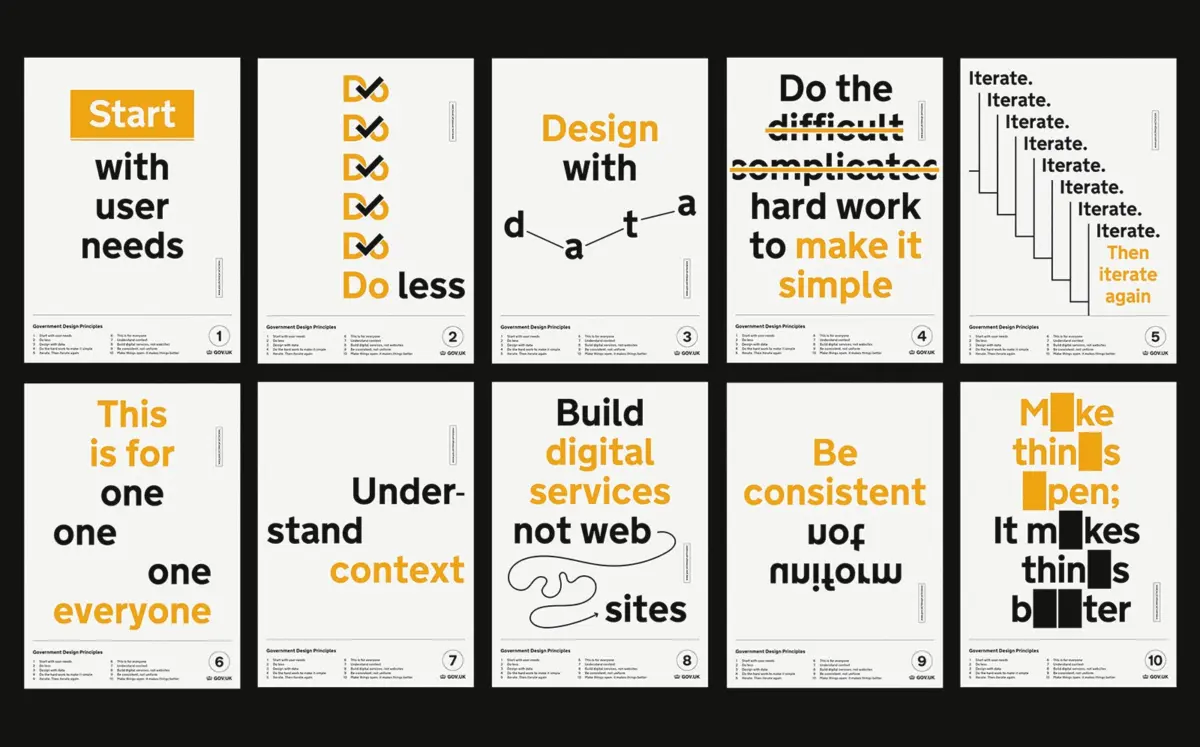
Forward-thinking organizations are instead adopting concise, principles-based governance models—similar to the famous design principles established by GOV.UK. By distilling ethical and operational boundaries down to a handful of core principles that fit neatly onto a single poster, and balancing those rules with a genuine institutional trust in employee common sense, companies can protect their assets without choking off innovation. Mistakes will inevitably occur, but they must be accepted as the operational cost of transformation.
The Danger of Shadow AI
When official corporate channels fail to provide the tools necessary for employees to perform their jobs effectively, staff will inevitably seek out alternatives. Just as the digital transformation era birthed "Shadow IT"—with employees secretly utilizing unauthorized cloud storage platforms like Dropbox because corporate intranets were too cumbersome—today’s workplace is plagued by Shadow AI.
When an internal AI tool is too restrictive or incapable of fulfilling a specialized departmental workflow, employees simply open personal ChatGPT or Claude accounts on their mobile devices or home laptops to complete their work.
This behavior introduces severe cybersecurity and compliance risks. Corporate intellectual property, client data, and proprietary code end up in external systems entirely outside the organization’s visibility or control.
+--------------------------------------------------------------------------+
                     THE SHADOW AI FEEDBACK LOOP
+--------------------------------------------------------------------------+
|  1. IT / Leadership implements rigid, overly restrictive AI tools        |
|     (e.g., blanket licensing with limited capabilities)                  |
+--------------------------------------------------------------------------+
                                     |
                                     v
+--------------------------------------------------------------------------+
|  2. Employees find official tools inadequate for specific workflows      |
+--------------------------------------------------------------------------+
                                     |
                                     v
+--------------------------------------------------------------------------+
|  3. Staff resort to unauthorized personal apps (Shadow AI)               |
|     (e.g., unmonitored consumer ChatGPT or Claude accounts)              |
+--------------------------------------------------------------------------+
                                     |
                                     v
+--------------------------------------------------------------------------+
|  4. Organization reacts with stricter blocks and disciplinary threats    |
+--------------------------------------------------------------------------+
                                     |
                                     v
+--------------------------------------------------------------------------+
|  5. Behavior goes further underground, increasing security vulnerabilities|
+--------------------------------------------------------------------------+
Rather than attempting to stamp out Shadow AI through draconian monitoring software and disciplinary threats—tactics that inevitably drive the behavior further underground—progressive IT leaders use Shadow AI as a diagnostic indicator. When employees bypass official systems, it reveals exactly where corporate toolsets are falling short. By auditing these workarounds, organizations can gather invaluable intelligence to shape future technology rollouts.
Future Outlook: Moving Beyond the Technological Trap
As organizations look toward the horizon of enterprise technology, the overarching danger remains clear: viewing artificial intelligence purely as a technological challenge while ignoring the human and cultural ecosystem in which it operates.
The historical lessons of the digital transformation era teach us that software deployments do not succeed on the merits of their algorithms alone. They succeed when organizations prioritize change management, foster psychological safety, align employee motivations with corporate goals, and maintain an adaptive approach to technical infrastructure.
The risk of moving too slowly in the AI landscape is immense, but the risk of rushing forward blindly—trampling over employee anxieties and ignoring the human realities of workplace adaptation—is far greater. Organizations that recognize the true scope of this cultural shift today will be the ones defining the competitive landscape of tomorrow.