

Executive Overview
The landscape of American political journalism is undergoing a profound and contentious transformation under the second administration of President Donald Trump. At the epicenter of this friction is an escalating war of attrition between the White House and major news organizations—most notably CNN, Politico, and MS NOW—over physical access to the highest echelons of executive power.
On Monday, CNN issued a sharp ultimatum to the U.S. Department of Justice, warning of impending legal action should the administration continue its systematic exclusion of network journalists from Air Force One and the Oval Office. This latest escalation follows weeks of mounting tensions ignited by a September executive directive that barred several prominent outlets from standard press pools.
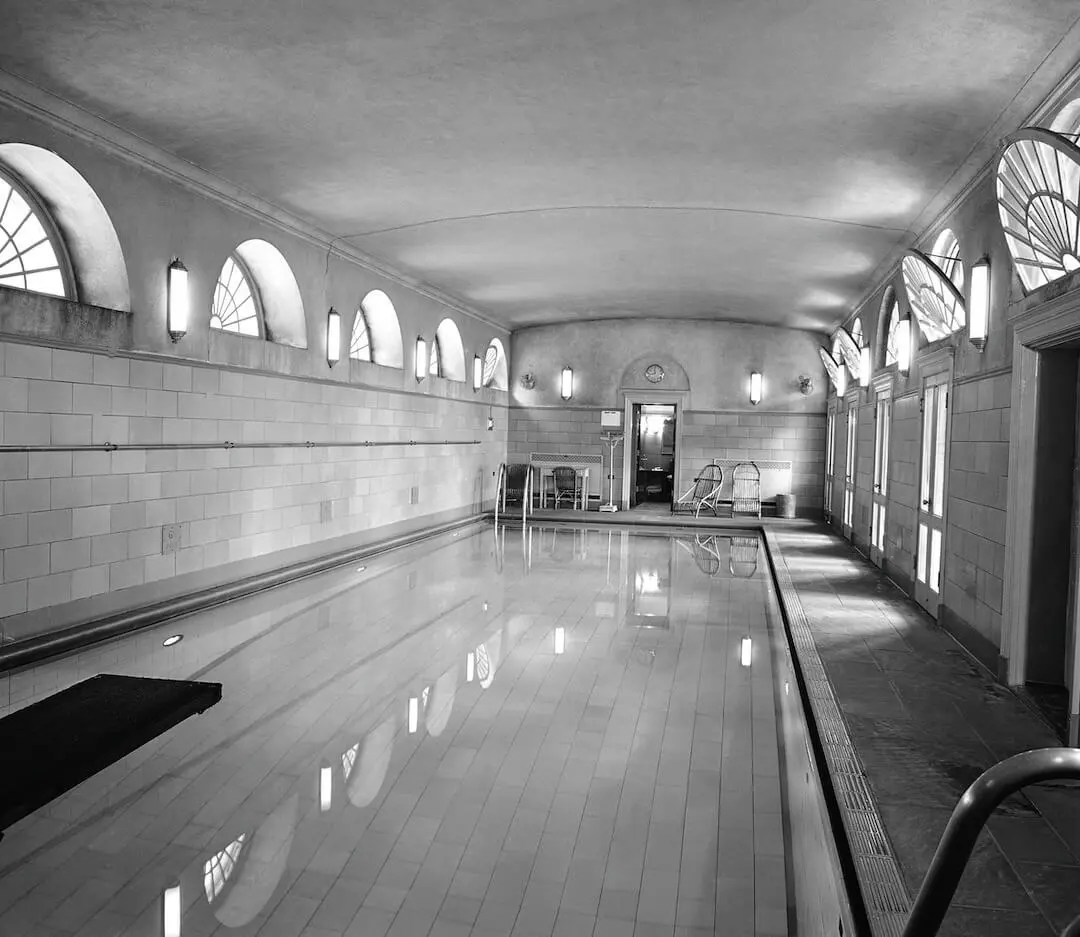
Simultaneously, internal discussions within the West Wing have revealed a radical proposal floated by President Trump: tearing down the modern White House press briefing room and restoring it to the indoor swimming pool originally constructed by Franklin D. Roosevelt. This convergence of physical exclusion, reshaped press protocols, and symbolic architectural threats highlights a broader, systemic effort to redefine the relationship between the presidency and the fourth estate.
Compounding these institutional challenges are sweeping demographic shifts in how the American public consumes news. New data from the Pew Research Center indicates that TikTok has cemented its status as a primary news vehicle, particularly among younger, Black, and Hispanic demographics. Together, these developments paint a picture of an embattled traditional press corps grappling simultaneously with government censorship, structural marginalization, and a digital revolution that is fundamentally altering the distribution of information.
Detailed Chronology of the Press Access Crisis
The current crisis did not emerge overnight; rather, it is the culmination of a protracted struggle over boundaries, access, and editorial independence that accelerated sharply at the start of President Trump’s second term.
September 18: The Initial Ban and Legal Retaliation
The flashpoint occurred on September 18, when the Trump administration abruptly blocked CNN, Politico, and MS NOW from core White House spaces. In response, a coalition of these outlets filed a joint federal lawsuit against the administration, arguing that the selective exclusion violated foundational First Amendment protections and equal access doctrines.
While a federal judge subsequently issued a preliminary injunction restoring a baseline level of access to the White House grounds, the administration has systematically circumvented the spirit of the ruling by exploiting loopholes regarding travel pools.
The Weekend Exclusions: Georgia and Florida
The practical impact of these restrictions was vividly demonstrated over a recent weekend, when CNN was barred from joining the presidential travel pool for a trip to Georgia and Florida.
In a traditional press ecosystem, the rotating "pool"—a small group of journalists representing television, print, and radio who travel with the president to provide coverage for the broader media corps—relies on solidarity among major networks. When one outlet is blocked, standard protocol dictates that other networks decline to fill the vacant spot. However, during the Georgia and Florida trip, the remaining major television networks—ABC, CBS, Fox, and NBC—did not fill CNN’s designated spot.
Consequently, President Trump traveled without mainstream television pool coverage. Instead, the "secondary TV" slot was occupied by the conservative network Real America’s Voice, a privilege that network has repeatedly enjoyed whenever CNN is systematically locked out of the rotation.
Escalation: The DOJ Ultimatum and South Carolina Travel
The tension reached a boiling point on Monday when CNN’s outside counsel, Ted Boutrous—who also represents Politico and MS NOW in the joint litigation—dispatched a formal letter to the Department of Justice.
Boutrous characterized the administration’s ongoing maneuvers as "mistaken, counterproductive, and unlawful." He issued a strict deadline, demanding that the DOJ confirm by Thursday evening that the White House would completely abandon any policy of excluding CNN from the Oval Office and Air Force One.
Despite being scheduled to serve as the primary TV pooler in Washington, D.C., CNN was conspicuously omitted from out-of-town travel manifests, signaling the administration’s intent to proceed with blocking the network from traveling aboard Air Force One to South Carolina. Real America’s Voice was once again slotted in as the secondary TV pooler for both local and out-of-town movements. The Department of Justice has thus far declined all requests for comment.
Supporting Context & Metrics
To fully understand the gravity of the White House’s access restrictions, one must examine where modern presidential communication actually takes place. The traditional venue for presidential accountability—the James S. Brady Press Briefing Room—has been largely sidelined in favor of informal, mobile environments.
The Shift from the Briefing Room to the Tarmac
According to legal filings and media tracking data, President Trump’s primary modes of engagement with the press have fundamentally shifted since the inauguration of his second term.
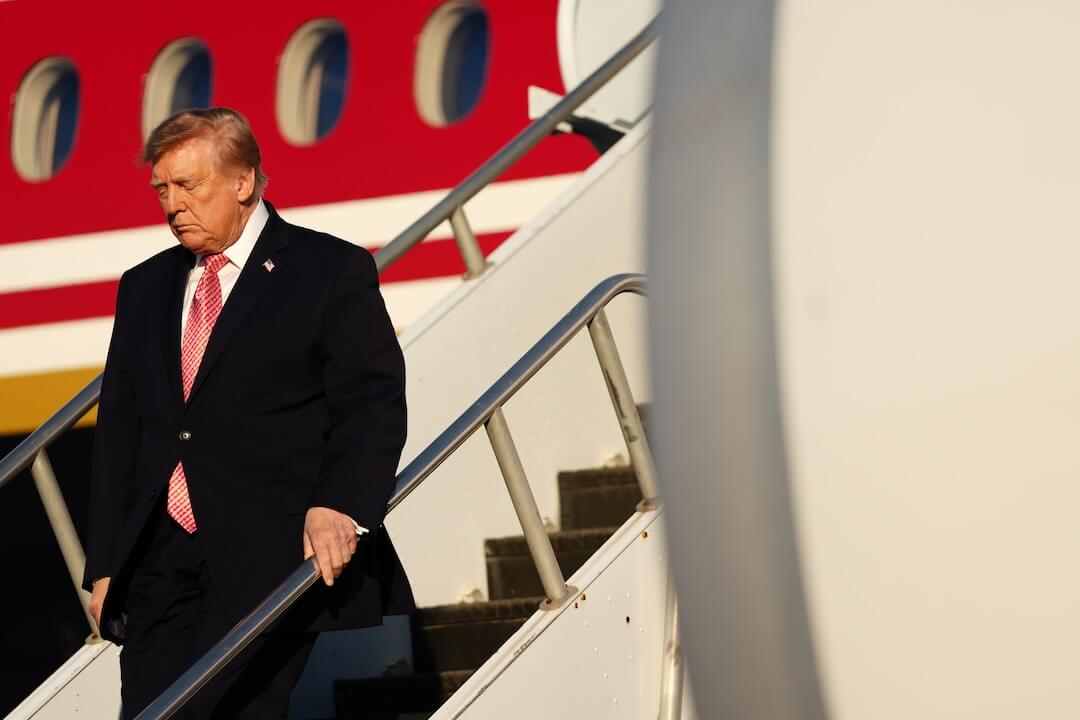
- 4,700+ Questions: This is the staggering number of queries President Trump has answered in the Oval Office, aboard Air Force One, and on airport tarmacs since taking office.
- 150 Questions: By contrast, the number of questions fielded by the president within the confines of the formal White House press briefing room over the same timeframe sits at a mere fraction.
By controlling access to Air Force One and the Oval Office—the venues where the vast majority of presidential news is generated—the administration exercises profound editorial control over which organizations can directly question the commander-in-chief.
The Architectural Threat: Returning to a Swimming Pool
This marginalization of the traditional press corps is not merely procedural; it may soon become literal. Reports surfaced this week that President Trump has repeatedly urged former White House press secretary Karoline Leavitt to spearhead the dismantling of the press briefing room, telling her that banishing the press could serve as her "last legacy."
The history of the space itself adds a layer of symbolic irony. Originally constructed as an indoor swimming pool by President Franklin D. Roosevelt to aid in his physical therapy, the basin was later covered over during the Nixon administration to accommodate the expanding needs of a modern White House press corps.
While previous administrations—most notably during the term of Bill Clinton, when First Lady Hillary Clinton briefly weighed a restoration project—have considered reverting the space to a pool, none have pursued it with the vindictive political animus demonstrated by the current administration. White House communications director Steven Cheung addressed the circulating rumors with a terse statement: "All options remain on the table, and we will make an announcement when appropriate."
Official Statements and Industry Impact
The ramifications of these restrictions extend far beyond individual corporate grievances, drawing condemnation from constitutional scholars, press freedom advocates, and journalists alike.
The Legal Argument for Access
Ted Boutrous’s letter to the Department of Justice underscores a fundamental legal tenet: the White House is not a private club, but the seat of the federal government, funded by taxpayers. Excluding specific, established journalistic entities based on editorial content or perceived hostility is viewed by legal experts as a direct violation of the First Amendment’s guarantees of a free press and the Fifth Amendment’s due process clauses.
Furthermore, the administration’s takeover of the press pool—a logistical function historically managed autonomously by the independent White House Correspondents’ Association (WHCA)—represents an unprecedented breach of protocol. By handpicking participants and inserting non-traditional, highly partisan digital outlets and podcasts into the rotation via newly created "new media" seats, the administration is effectively curating its own inquisitors.
The Human Cost of Journalism and Personal Backlash
While institutional battles rage in federal courts, individual journalists within the broader cultural zeitgeist are also navigating the complex intersections of public scrutiny and personal integrity.
This dynamic was recently highlighted in a Times Insider feature detailing Nikole Hannah-Jones’s explosive 8,000-word New York Times Magazine essay, "In Fighting For Every Child, Did I Betray My Own?" The piece, which explored the emotional and educational toll placed on her daughter, Najya, within New York City’s segregated public school system, sparked intense national debate.
Hannah-Jones’s reflections on the immense pressure of exposing one’s family to public critique underscore the high stakes involved when journalists turn their analytical lenses inward. Whether investigating systemic educational failures or documenting the erosion of democratic norms at 1600 Pennsylvania Avenue, modern media practitioners find themselves subjected to unprecedented levels of ideological warfare, online backlash, and institutional obstruction.
Future Outlook: A Precarious Crossroad for American Media
As the deadline set by CNN’s legal counsel approaches, the American media landscape stands at a dangerous precipice. The outcome of the ongoing litigation involving CNN, Politico, MS NOW, and the Department of Justice will likely set a decisive legal precedent governing the limits of executive power over press access for generations.
If the federal courts fail to check the administration’s authority to curate the presidential press pool, the traditional model of objective, adversarial White House reporting could be permanently supplanted by a state-managed information apparatus. Concurrently, the physical dismantling of the press briefing room would serve as a powerful, architectural symbol of a government actively seeking to physicalize its alienation from the fourth estate.
Yet, this institutional pushback is occurring alongside a seismic demographic shift in information consumption. With 1 in 5 Americans—and nearly 40% of young adults aged 18 to 29—now relying on platforms like TikTok for their daily news, the traditional gatekeeping power of elite Washington journalism is waning even as it fights to survive.
The convergence of legal battles, administrative censorship, architectural threats, and digital disruption signals that the rules of engagement between the presidency and the press have fundamentally broken down. What remains to be seen is whether the legal protections established under constitutional democracy can withstand an administration determined to rewrite them from the tarmac up.