

Executive Overview
As organizations globally scramble to integrate generative artificial intelligence into their core operations, a familiar, dispiriting pattern has emerged. To veteran observers of the corporate technology landscape, the current rollout of enterprise AI resembles less a well-calibrated strategic initiative and more an expensive, high-stakes farce. If modern enterprise AI adoption were adapted for the silver screen, critics would dismiss the plot as entirely unbelievable, arguing that no corporate leadership team could be so systematically shortsighted.
Yet, organizations find themselves locked in this exact loop. The frustration is compounded by a stark reality: we have traversed this exact terrain before.
A decade ago, the corporate world was consumed by the gospel of "digital transformation." IT departments rushed to deploy Content Management Systems (CMS), Customer Relationship Management (CRM) platforms, and sprawling intranets, while customer-facing divisions scrambled to launch apps and mobile portals. The vast majority of these projects failed to deliver their promised return on investment. The root cause was not a lack of technological sophistication, but a fundamental misunderstanding of the human and cultural dynamics at play.
Today, as organizations blindly deploy enterprise-wide licenses for tools like Microsoft Copilot and issue generic, high-level prompting guidelines, history is repeating itself. Leadership teams continue to approach AI as a pure IT challenge rather than a profound cultural shift. By ignoring the human element—failing to address employee anxiety, neglecting to provide psychological safety for experimentation, and suffocating grassroots innovation with draconian governance—businesses are setting themselves up for systemic failure.
To break this cycle, enterprise leaders must look back at the lessons of the digital transformation era. Only by prioritizing people over platforms, designing adaptive technical rollouts, and embracing calculated risk can organizations navigate the treacherous waters of the AI era.
Detailed Chronology: From the CMS Rush to the Copilot Craze
To understand why modern AI adoption is misfiring, one must trace the institutional memory of corporate technology deployment over the past fifteen years. The parallels between the digital transformation boom of the early 2010s and the artificial intelligence gold rush of today are not merely striking; they are functionally identical.
2014: The Digital Transformation Delusion
Back in 2014, digital strategist and author Paul Boag published Digital Adaptation through Smashing Magazine, diagnosing a widespread organizational sickness. Enterprises were treating digital transformation as a box-checking exercise. IT departments were handed marching orders to procure expensive enterprise software stacks—CMS platforms, intranets, and massive data warehouses—without ever consulting the end-users or examining internal workflows.
On the customer-facing side, brands rushed to launch responsive websites and mobile applications because "everyone else was doing it." Yet, internal systems remained notoriously difficult to use, and consumer-facing applications often offered little real utility. Organizations measured success by deployment metrics (e.g., "The intranet is live!") rather than adoption metrics (e.g., "Are employees actually saving time?"). The result was an era characterized by bloated budgets, stalled projects, and deep-seated employee cynicism toward digital initiatives.
The Present Day: Deja Vu in the Age of Generative AI
Fast forward to the current landscape. Senior leadership teams, thoroughly saturated by media hype regarding artificial intelligence, are demanding immediate enterprise-wide integration. In response, IT departments are purchasing enterprise AI licenses—such as Copilot Studio—rolling them out globally, and considering their work complete.
Employees are treated to a generic, one-size-fits-all training webinar, handed a dense legalistic policy document detailing what they cannot do, and told to drive productivity gains. Just as they were a decade ago, staff members are left staring at a new tool, wondering how it fits into their daily routines, and harboring a quiet, gnawing anxiety about their job security. The technology has evolved from static content management systems to dynamic neural networks, but the organizational ineptitude surrounding its implementation remains entirely unchanged.
Supporting Context & Metrics: The Human Cost of Technological Imposition
The fundamental flaw in modern AI adoption strategies lies in a basic misalignment of incentives and a profound disregard for procedural knowledge.
Why Employees Are Rejecting AI
From an executive perspective, AI is an unmitigated triumph: it promises enhanced productivity, allowing organizations to squeeze more output out of fewer hours. However, from an employee’s vantage point, the value proposition is opaque at best and deeply threatening at worst.
- The Productivity Trap: Employees are still required to work their standard hours. Increased productivity does not translate to shortened workweeks or higher compensation; instead, it simply raises the baseline expectations for daily output. Workers are expected to do more work in the same amount of time, with zero personal upside.
- The Threat of Displacement: Unlike the software upgrades of the past, generative AI carries an existential shadow. Employees read the same headlines as executives regarding automation and job replacement. Corporate assurances that "AI is here to assist, not replace you" ring hollow against a backdrop of aggressive corporate restructuring and tech sector layoffs.
- The Destruction of Procedural Knowledge: Adopting AI is not as simple as clicking a button. It requires dismantling working practices that employees have spent years, sometimes decades, refining. This procedural knowledge must be consciously rebuilt around new toolsets. For an overworked workforce already drowning in daily tasks, finding the bandwidth to experiment, fail, and relearn how to do their jobs is an immense, uncompensated burden.
The Rise of "Shadow AI"
When official enterprise tools fail to meet the specific, nuanced needs of working professionals, history repeats itself once more. Just as employees bypassed slow-moving IT departments a decade ago by adopting unsanctioned cloud storage tools like Dropbox and Google Docs—giving birth to the era of "Shadow IT"—today’s workers are turning to "Shadow AI."
When an in-house corporate AI tool proves too restrictive, slow, or bureaucratically bottlenecked, employees simply open personal ChatGPT, Claude, or Midjourney accounts on their mobile phones or home laptops to get their work done.
This behavior represents a severe security vulnerability. Corporate intellectual property, proprietary source code, and sensitive customer data are routinely pasted into external tools completely outside the purview of enterprise IT oversight.
The Institutional Misstep: The instinctive managerial reaction to Shadow AI is to clamp down—blocking websites, threatening disciplinary action, and issuing stricter compliance warnings. This is a profound mistake. Shadow AI is not a disciplinary issue; it is a critical diagnostic symptom. It reveals precisely where official enterprise tools are failing and highlights what workflows employees desperately need to automate. Rather than trying to stamp out Shadow AI, forward-thinking organizations should investigate why employees are using external tools and use those insights to shape official rollouts.
Official Perspectives & Industry Insights
Industry analysts and organizational psychologists agree that the primary obstacle to technological integration is rarely the software itself, but the organizational culture into which it is dropped.
Culture Eats Strategy: Creating Psychological Safety
Learning to use generative AI effectively requires extensive experimentation, which inevitably involves making mistakes. Yet, many organizations operate under a deep-seated culture of fear where errors are treated as signs of incompetence.
During the digital transformation era, executive teams demanded sweeping modernization while simultaneously holding employees to legacy Key Performance Indicators (KPIs) and penalizing them for operational slip-ups during annual reviews. This sent a toxic mixed message: Innovate, but do not dare fail.
In the AI era, this dynamic has metastasized. Industry reports highlight disturbing instances of employees being formally reprimanded for consuming too many API tokens weeks after being commanded to embrace AI experimentation, or being so heavily warned about compliance violations that they become paralyzed by inaction.

"If management wants staff to adopt AI, then they need to make staff feel safe to experiment. They need to adjust KPIs, change how staff are reviewed, and relax some of the governance while staff are learning."
Navigating Governance: The Power of Principles Over Policy
Governance is undeniably necessary in the enterprise AI space, but corporate legal and compliance departments routinely bungle its execution. Governance frameworks typically fall into one of two toxic extremes:
- Total Absence: A wild-west environment where sensitive data is leaked indiscriminately.
- Stifling Bureaucracy: Volumes of restrictive compliance manuals that make it legally and procedurally safer for employees to do nothing at all.
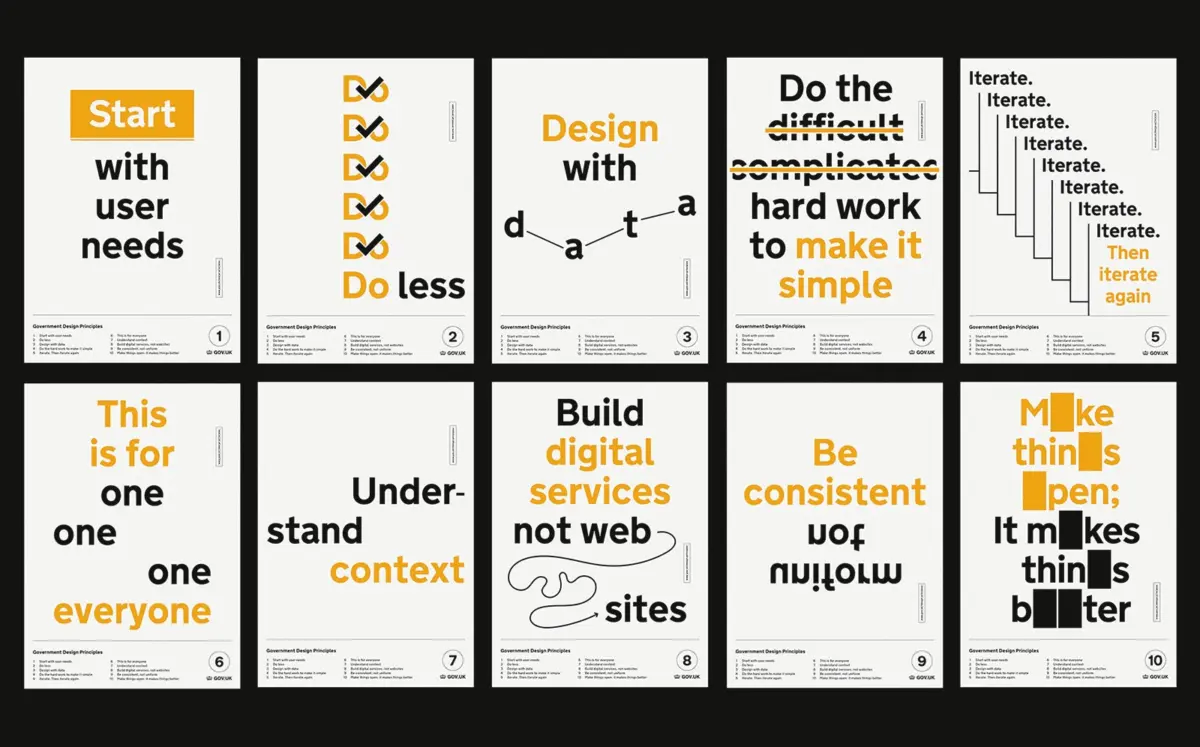
Effective governance does not require a fifty-page prohibition manual. Organizations should follow the model pioneered by digital leaders like GOV.UK, distilling governance into a concise set of core principles that can fit on a poster. Beyond establishing these clear boundary markers, organizations must cultivate institutional trust, allowing employees to apply common sense as they explore the boundaries of what AI can achieve.
Future Outlook: The Adaptive Technological Rollout
As organizations look toward the remainder of the decade, the trajectory of AI integration will depend entirely on whether leadership can transition from rigid, top-down control to adaptive, human-centric change management.
Moving From Resistance to Social Proof
Trying to force AI adoption by targeting the most resistant employees is a fool’s errand. Instead, organizations should look to their internal enthusiasts—the "shadow innovators" who are already experimenting with AI unprompted.
By gathering these early adopters, giving them dedicated time and space to share their successes, and letting their organic enthusiasm spread through peer networks, organizations can harness the power of social proof. People are exponentially more likely to adopt a new workflow when they see a respected colleague in a similar role using it successfully than when they are commanded to do so by a remote executive committee.
The Path Forward
The risk of moving too slowly in the age of artificial intelligence is vastly more dangerous than the risk of moving too fast. However, speed without empathy is catastrophic.
AI adoption is not a software deployment project; it is an intensive exercise in organizational psychology, cultural adaptation, and change management. Enterprises that recognize this fundamental truth will unlock unprecedented levels of creativity and efficiency. Those that continue to treat AI as an IT upgrade will find themselves presiding over expensive, silent monuments to corporate myopia.