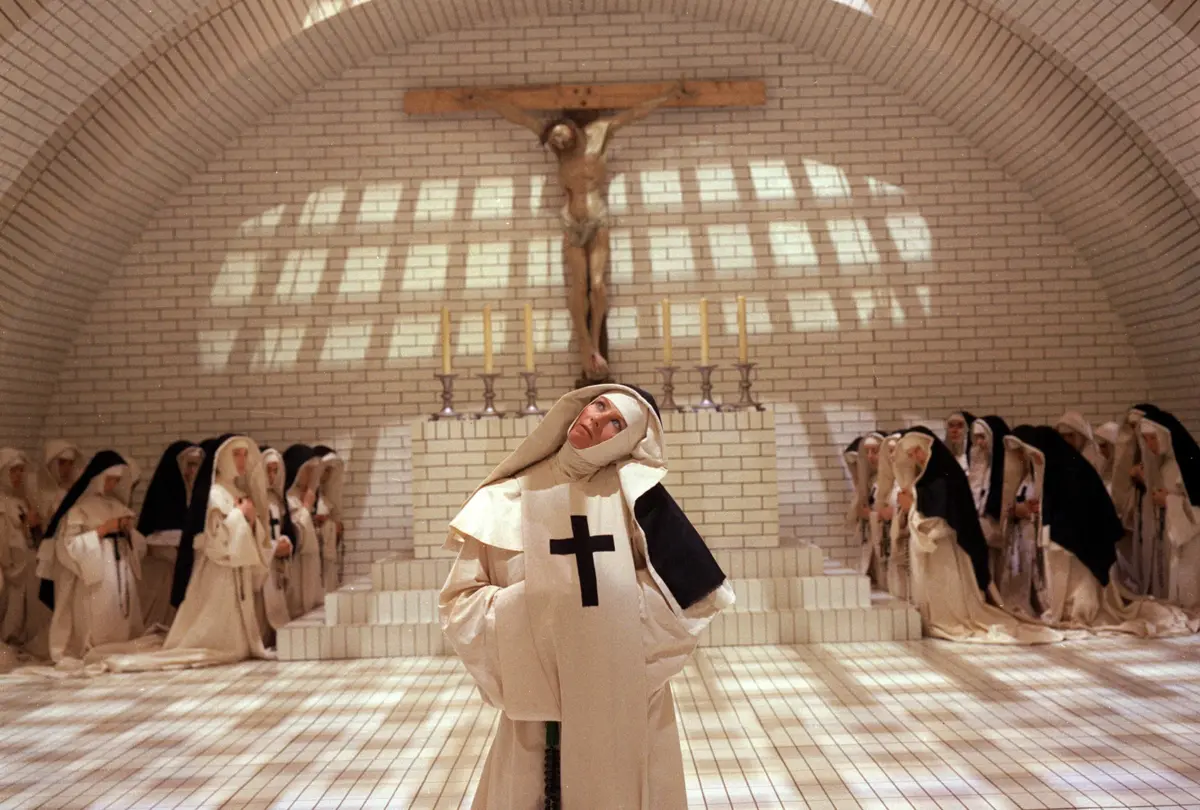
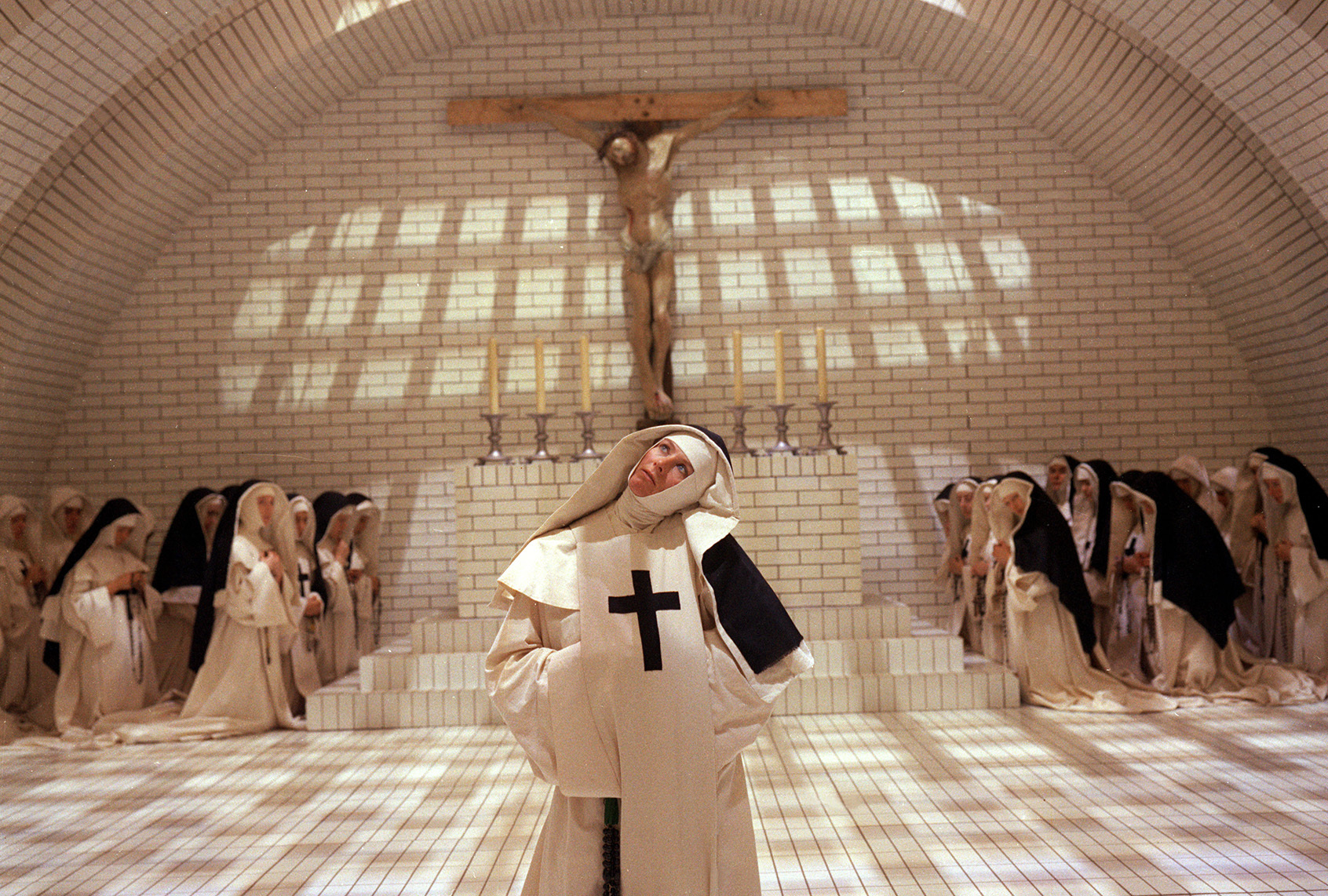
To be truly revolutionary in the arts, historical consensus suggests one must first earn the formal condemnation of the Vatican. For British auteur Ken Russell, that ecclesiastical denunciation arrived swiftly, cementing his status as a cinematic provocateur who wielded romanticism and grotesque theatricality with equal abandon. Yet, even within a career defined by high-art shock value, one title stood apart as a ghost in the cultural machine: his 1971 religious horror-epics-meets-historical-tragedy, The Devils.
Banned outright in multiple territories, heavily censored upon release, and relegated to low-grade bootleg digital torrents for decades due to studio resistance from Warner Bros., the film was long considered a lost artifact of unbridled cinematic heresy. That narrative changed abruptly with a limited theatrical revival spearheaded by Warner Bros.’ new boutique imprint, Clockwork.
As The Devils concludes its blockbuster, highly unanticipated first week in theaters—with a second-week extension already secured—audiences have flooded repertory houses and multiplexes nationwide. Far from a mere exercise in morbid curiosity, the overwhelming response to Russell’s meticulously restored director’s cut signals a profound shift in modern moviegoing. At a moment when the theatrical industry feels increasingly commodified and ephemeral, the resurrection of this notorious cinematic forbidden fruit offers a rallying cry for collective, intentional art consumption, proving that audiences are desperate to experience the transcendent power of the silver screen.
Detailed Chronology: From 17th-Century Loudun to 21st-Century Restoration
The tumultuous journey of The Devils spans nearly four centuries of socio-political panic, creative suppression, and archival salvation.
1634 (The Historical Baseline): The harrowing true events unfold in the provincial French city of Loudun. Urbain Grandier, a charismatic and sexually active Catholic priest, falls victim to a calculated political and religious conspiracy. Accused of sorcery after a convent of Ursuline nuns—led by the severely repressed Sister Agnes, portrayed by Vanessa Redgrave—succumbs to mass hysteria, Grandier is subjected to a brutal show trial and execution.
1971 (The Cinematic Shockwave): Ken Russell adapts John Whiting’s play and Aldous Huxley’s non-fiction book The Devils of Loudun into a feature film starring Oliver Reed as Grandier. Characterized by explosive sets designed by Derek Jarman, unapologetic sexuality, visceral violence, and biting anti-establishment satire, the film immediately draws the wrath of the Catholic Church and conservative lawmakers.
1971–2002 (The Censorship Era): Fearing financial ruin and public backlash, Warner Bros. forces Russell to cut several of the film’s most intense, sacrilegious sequences. Despite these concessions, the film receives an X rating in both the United States and the United Kingdom, while being outright banned in several international markets. An uncensored director’s cut surfaces quietly at film festivals in 2002, but corporate hesitation prevents it from receiving any official home video distribution or streaming presence, forcing cinephiles to rely on grainy, illicit digital transfers.
Late 2026 (The Clockwork Resurrection): Under its newly established boutique distribution arm, Clockwork, Warner Bros. quietly commissions a pristine digital restoration of Russell’s original director’s cut. Eschewing the streaming-first paradigm dominating the 2020s, the studio grants the film a one-week, highly limited theatrical release—a window that is immediately expanded due to unprecedented public demand.
Supporting Context & Metrics: Box Office Defiance and Audience Demographics
The economic and cultural metrics surrounding the re-release of The Devils defy contemporary box office logic. Pitted against standard autumn theatrical heavy-hitters and prestige streaming drops, a 55-year-old banned X-rated historical epic was projected by industry analysts to be a niche curio at best. Instead, it triggered a nationwide wave of sold-out screenings.
At Chicago’s legendary Music Box Theater—a premier destination for arthouse and repertory programming—screenings sold out almost instantaneously, generating the second-largest share of the restoration’s opening-weekend box office. Similar phenomena were recorded across major metropolitan centers, from New York City’s Kips Bay AMC to independent cinemas in the Bay Area and Washington, D.C.
According to post-release tracking data and extensive qualitative polling of opening-week attendees:
Audience Composition: Contrary to expectations that the screenings would be populated exclusively by older cinephiles nostalgic for 1970s counterculture, ticket buyers spanned generations. Gen Z and millennial audiences—many of whom first encountered the film via Internet message boards, Tumblr screenshots, or peer-to-peer file sharing—turned out in droves alongside older viewers who remembered the film’s initial, scandalous theatrical window.
Shared Experiences: Over 70% of surveyed attendees reported attending the screenings with family members, romantic partners, or friends explicitly recruited to share in the communal spectacle.
Theatrical Intentionality: In an era where home viewing dominates, the box office success of The Devils underscores a broader sociological trend: modern audiences view the physical trip to the cinema not as a passive default weekend activity, but as an intentional, high-stakes choice.
Official Statements and Industry Perspectives
The cultural resonance of the re-release has sparked widespread commentary from theater operators, cultural critics, and everyday filmgoers who view the event as a watershed moment for repertory distribution.
Kyle Cubr, senior operations manager and assistant general manager at Chicago’s Music Box Theater, marveled at the electric atmosphere enveloping the venue during the opening run.
"Patrons were abuzz around me waiting for it to start," Cubr observed. "It’s almost like when you’re a kid, and you know you’re getting away with doing something bad—you shouldn’t be watching this, but it feels so good."
Max Newfield, a local Chicago resident who attended a packed screening, noted the visceral energy of the crowd as they spilled out onto the sidewalk, where lines for the subsequent 9:30 PM show snaked down the block.
"At one point," Newfield recalled, "a woman from my screening walked down the line and yelled: ‘It’s worth the wait!’"
For industry observers, the unexpected triumph of Clockwork’s distribution strategy signals a vital message to major Hollywood conglomerates. Josh Svetz, a Washington, D.C.-based writer and cultural consultant, contextualized the theatrical landscape during a post-screening interview:
"People want to time travel and experience works of art as they were intended. I don’t think the theater experience will ever completely die because there’s this singularity, this feeling in your chest, this speechlessness that comes over you when you see something great. It’s rare, but chasing that dragon? It’s worth it. The theatrical experience is a choice now rather than a necessity."
Taylor Owen, a Chicago-based artist who secured a ticket at a suburban AMC after missing out at the Music Box, emphasized the stark thematic relevance of Russell’s work in the modern socio-political climate:
"It’s brutal, but necessary. Our world is unfortunately not so different from the world the nuns of Loudun were living in. I have never seen a film like this before. I don’t think I ever will again. The Devils, in the way it was meant to be seen, is one of the most important pieces of art ever created."
Future Outlook: A New Paradigm for Repertory Cinema
As The Devils enters its extended theatrical run, its cultural footprint extends far beyond the nostalgic novelty of a midnight movie. The unprecedented success of Clockwork’s boutique restoration highlights a viable, highly profitable commercial blueprint for Hollywood studios sitting on suppressed, controversial, or culturally sidelined intellectual property.
For decades, media consolidation and risk-averse corporate strategies have prioritized algorithmic predictability and sanitized, four-quadrant content. Yet, the fervent, multi-generational embrace of Ken Russell’s uncompromising masterpiece proves that contemporary audiences crave intellectual challenge, formal audacity, and, above all, communal ritual.
The willingness of studios to dust off banned masterworks—and the eagerness of the public to treat those screenings as sacred community events—suggests that cinema is not dying; rather, it is shedding its corporate skin. By transforming trips to the multiplex into deliberate acts of cultural preservation and shared rebellion, moviegoers are actively forging a robust, unpredictable, and fiercely passionate future for the silver screen. In an age marked by division and digital isolation, The Devils has paradoxically emerged as a unifying sacrament, pointing the way toward a cinematic renaissance built on art that refuses to be silenced.