

Executive Overview
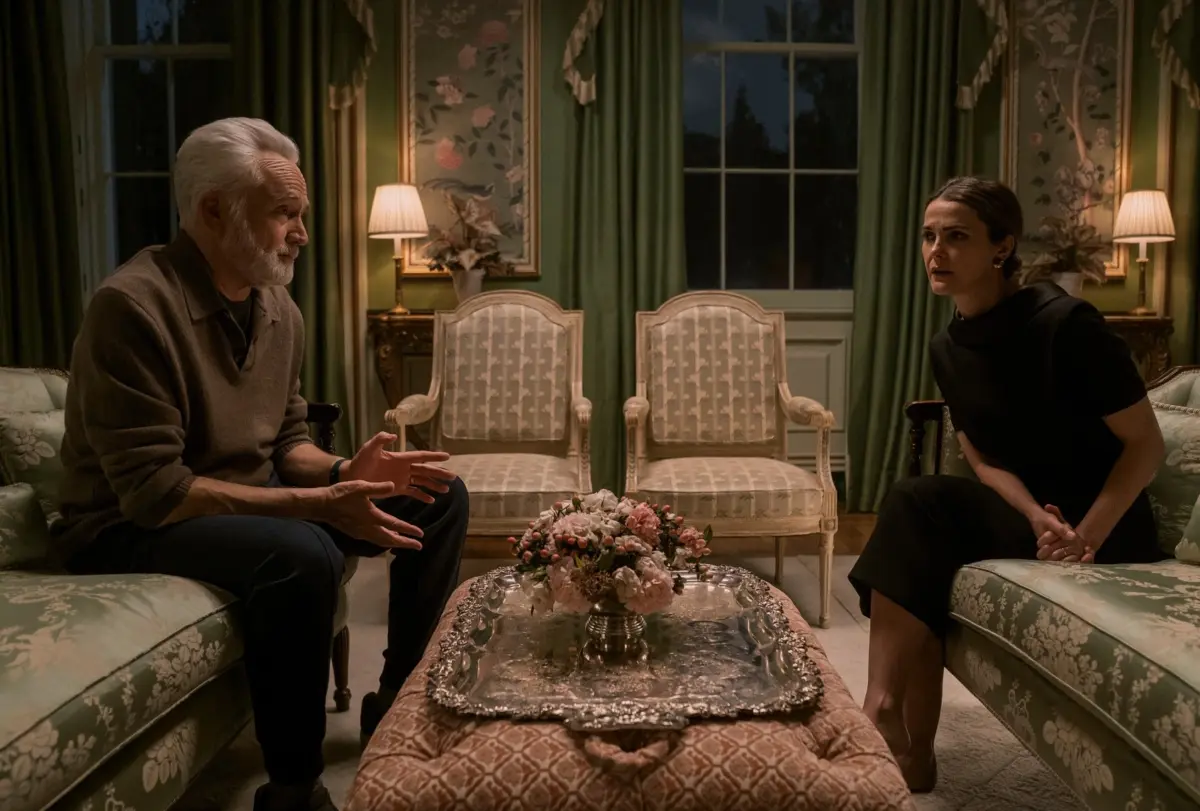
In the contemporary landscape of prestige television, few series capture the volatile intersection of geopolitics and domestic friction quite as acutely as Netflix’s hit transatlantic political drama, The Diplomat. Created by Debora Cahn, the series has evolved over its multi-season run into a razor-sharp commentary on statecraft, institutional rot, and the complex machinery of high-stakes matrimony. At its core, the show pivots on the resilient, if utterly radioactive, unions of its principal players: U.S. Ambassador Kate Wyler (Keri Russell) and her politically cunning husband, Hal (Rufus Sewell), alongside the autocratic U.S. President Grace Hagen Penn (Allison Janney) and her enigmatic first gentleman, Todd (Bradley Whitford).
As The Diplomat navigates the fracturing contours of international alliances—most notably the fragile "special relationship" between the United States and Great Britain—it simultaneously interrogates the evolution of modern political partnerships. The series arrives at a cultural juncture where the archetype of the intellectual, co-equal presidential spouse feels increasingly relegated to the history books. By juxtaposing the calculated, high-wire acts of its fictional Washington administration against real-world political optics, the show serves as both a gripping geopolitical thriller and a melancholic artifact. It forces viewers to confront a stark reality: when real-world political relationships are defined by icy detachment and performative duty, even the deeply flawed, stress-fractured marriages of television antiheroes offer a strange, compelling brand of reassurance.
Detailed Chronology: The Evolution of The Diplomat‘s Power Dynamics
The narrative trajectory of The Diplomat maps a deliberate descent from institutional crisis management into deeper waters of systemic subversion. The series opens on precarious ground, introducing Kate and Hal Wyler on the brink of divorce. Career diplomat Kate is abruptly yanked from her expected trajectory toward Kabul and thrust into the high-pressure fishbowl of the U.S. Ambassadorship to the United Kingdom. Hal, a legendary and dangerously over-seasoned diplomatic operator, immediately leverages his influence to thwart the separation, setting a precedent of manipulation, codependency, and strategic survival that defines their arc across four seasons.
As the geopolitical stakes escalate—catalyzed by terrorist attacks on British aircraft carriers, covert operations involving sunken Russian armaments, and the looming threat of international collapse—Kate finds herself functioning as the ultimate "sin eater" for an increasingly brazen Washington administration. Her primary function is to clean up the catastrophic messes engineered by her husband and her superiors, a grueling mandate that manifests physically through chronic acid reflux and high-stress subterfuge.
The power architecture shifts dramatically when President Grace Hagen Penn—played with chilling, autocratic authority by Allison Janney—orchestrates Hal’s ascent to the vice presidency. Grace is unapologetically corrupt, yet her domestic life with Todd (Bradley Whitford) remains an anchor of bizarre, unyielding loyalty. While Todd spends moments of intense claustrophobia screaming underwater or escaping to London to browse wallpaper swatches and flee his wife’s authoritarian impulses, their partnership endures. They still exchange terms of endearment and present a united, if morally bankrupt, front to the nation.
By Season 4, the boundaries between personal survival and state-sponsored skulduggery have entirely dissolved. Kate is trapped in a loop of blackmailing prime ministers, purloining doomsday devices, and purging her moral guilt, while Hal revels in the dark arts of political persuasion. Together, the Wylers and the Penns embody a gritty, unromanticized version of power—one where marital survival is entirely decoupled from ethical purity.
Supporting Context & Metrics: The Mirage of the Political Partner
To fully appreciate the cultural resonance of The Diplomat, one must examine the historical evolution of the presidential and vice-presidential spouse. For decades, the public persona of the First Lady or First Gentleman has served as a cultural Rorschach test for American societal values regarding gender, intellect, and power.

Historically, administrations were defined by intellectual co-equality. Figures such as Eleanor Roosevelt established the precedent that the presidential spouse could be a formidable policy architect in her own right. Decades later, Hillary Clinton’s appointment as chair of the ill-fated 1993 healthcare reform task force marked a watershed moment. It exposed a deep, partisan fault line in American politics: while voters on one side embraced an active, policy-driven co-pilot, the conservative apparatus weaponized the role, conditioning the electorate to distrust any spouse who aspired to legislate rather than tend to ceremonial garden duties.
Subsequent decades saw varying iterations of this dynamic. Michelle Obama and Dr. Jill Biden steadfastly refused to dim their intellectual luminosity, championing substantive social initiatives despite enduring right-wing critiques aimed at characterizing their professional achievements as threatening or "emasculating."
However, the cultural contrast sharpened dramatically against real-world political optics. Recent public appearances—such asproof-of-life executive order photo-ops featuring Donald Trump and Melania Trump—highlight a starkly transactional, emotionally detached modern reality. When a president publicly remarks on his wife’s temperament ("You think she’s easy? She’s not so easy, but she’s very smart") while openly questioning the validity of her signature, followed by an awkward, evaded kiss and a dismissive "Good job," the cultural distance from the idealized partnerships of the past becomes unbridgeable.
In this context, viewers gravitate toward The Diplomat and legacy political dramas like Aaron Sorkin’s The West Wing because they represent a comforting structural order. Even though the Penn administration lacks the idealistic conscience of Martin Sheen’s Jed Bartlet, and the Wylers’ marriage is built on a foundation of infidelity and manipulation, their mutual reliance feels earned, functional, and fundamentally human.
Official Statements & Industry Perspectives
The thematic depth of The Diplomat has generated significant discourse among critics, political scientists, and the creative team behind the series. Creator Debora Cahn has frequently noted that the genesis of the show lay in examining the exhausting, unglamorous realities of diplomatic service—specifically how personal relationships bear the crushing weight of global superpowers in decline.
In interviews discussing the series’ complex character dynamics, the cast has emphasized the deliberate subversion of traditional romantic tropes. Keri Russell has described Kate Wyler not as a polished diplomat, but as a tactical survivor who views her marriage to Hal as an inescapable, high-stakes symbiosis. "They are toxic for each other, yet entirely essential to one another’s survival," Russell noted in promotional discussions regarding the show’s fourth season.
Similarly, Allison Janney—transitioning from her iconic, morally grounded tenure as C.J. Cregg in The West Wing to playing the unapologetically autocratic President Grace Penn—has spoken candidly about the evolution of television politics. Janney highlights the shift from the aspirational, hyper-competent idealism of the early 2000s to the cynical, realpolitik cynicism of the 2020s.
"We are no longer looking at Washington through rose-colored glasses," cultural critics have observed regarding the series. "Shows like The Diplomat reflect an era where institutions are visibly cracking, and the individuals holding them together are just as fractured as the system itself."
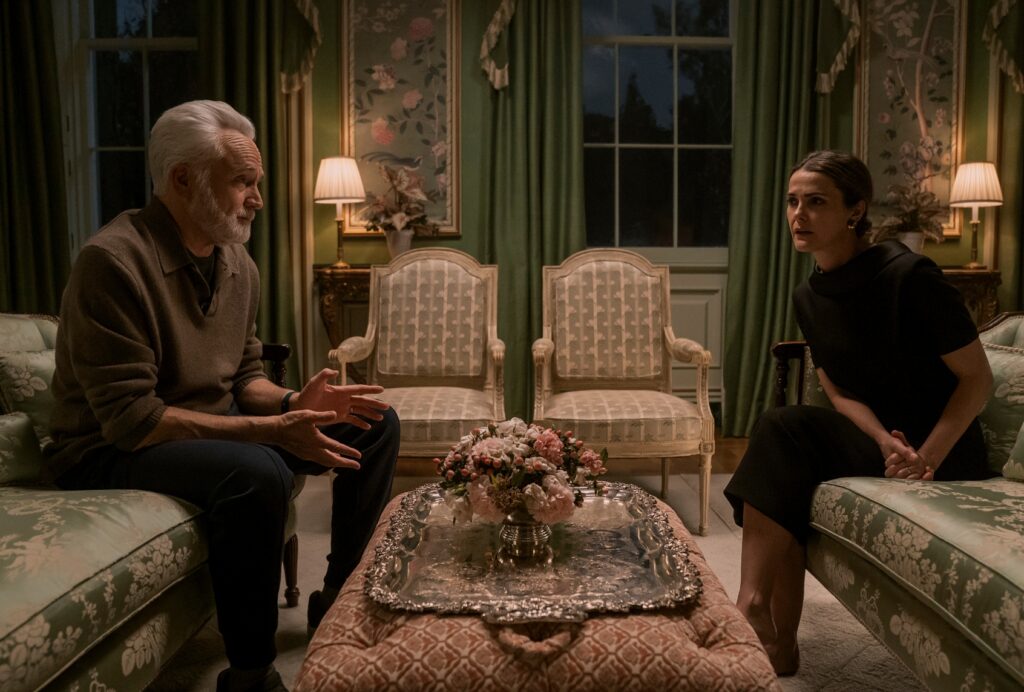
Political commentators tracking the reception of the series point out that its appeal stems from a collective yearning for competence, regardless of morality. The dynamic between Todd Penn (Bradley Whitford) and President Grace Penn provides a masterclass in how proximity to absolute power warps domestic intimacy. Todd is at once a clueless bystander and a reluctant co-conspirator, demonstrating how the modern political spouse must navigate the moral hazard of remaining complicit in systemic authoritarianism.
Future Outlook: The Enduring Appeal of the Strained Alliance
As The Diplomat continues its cultural dominance on streaming platforms, its trajectory offers a telling forecast for how political fiction will engage with institutional power in the years to come. The appetite for clean, utopian political dramas has waned, replaced by an insatiable hunger for complex antihero narratives set within the corridors of the State Department and the Oval Office.
The central thesis of the series remains a comforting, if cynical, reassurance: human resilience can persist even when political norms have been thoroughly dismantled. Whether Kate and Hal Wyler can navigate the minefield of the vice presidency, or whether the Penn administration will ultimately implode under the weight of its own corruption, the true narrative engine of the show remains the couple.
For audiences watching real-world political landscapes grapple with alienation and performative unity, the messy, screaming-into-the-water, acid-reflux-inducing partnership of the Wylers provides an oddly therapeutic mirror. If two people can orchestrate international de-escalation while plotting each other’s professional execution—and still pick up the phone when the world is ending—perhaps the rest of us can survive the turbulence of the modern political era as well.