

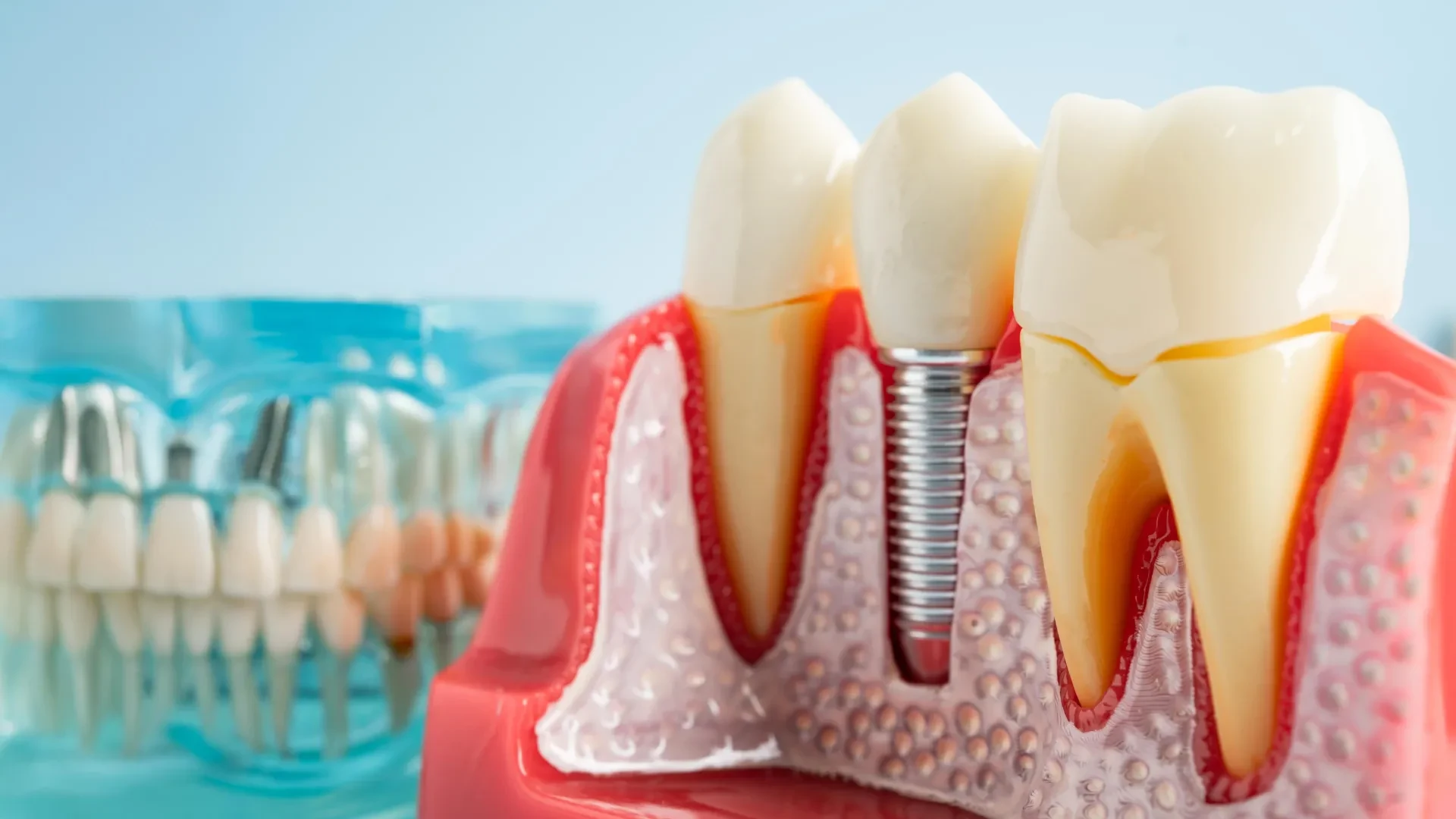
For tens of millions of people worldwide, dental implants have represented a revolutionary leap forward in restorative dentistry. Offering a permanent, fixed alternative to traditional removable dentures, implants restore both aesthetic confidence and full functional biting power. Yet, a silent and persistent crisis threatens this booming medical field: peri-implantitis.
An estimated 10% to 20% of all dental implant recipients eventually develop this aggressive, destructive infection of the surrounding jawbone. For decades, clinicians have been baffled by its stubborn resistance to standard treatments. While peri-implantitis shares its microbial origins with periodontitis—the common gum disease affecting natural teeth—it behaves with terrifyingly different rules. Traditional interventions, such as antibiotics paired with routine professional cleanings, successfully resolve infections around natural teeth the vast majority of the time. Around implants, however, those same antibiotics fail in more than half of all cases, leaving patients facing ongoing bone loss and, frequently, the eventual failure and removal of the implant itself.
Now, a groundbreaking study published in PNAS Nexus by researchers at the Rutgers School of Dental Medicine has finally cracked the case. By shifting the medical focus away from bacteria alone and onto the implant material itself, scientists have uncovered a deceptive cellular trap. Bacteria-driven corrosion releases microscopic titanium particles that actively hijack the human immune system, neutralizing white blood cells and creating an environment of runaway inflammation. This revelation not only solves a decades-old medical mystery but also pinpoints the very first credible drug target for a disease that costs global healthcare systems upwards of $1 billion annually.
Executive Overview
Peri-implantitis is more than a localized infection; it is a complex pathological interaction between oral bacteria, host immunity, and metallic biomaterials. The Rutgers research team—combining human tissue sample analyses, laboratory-grown human immune cells, and genetically engineered murine models—has mapped out the exact biochemical chain reaction driving the disease:
- Bacterial Acidification: Microbes accumulating on the surfaces of dental implants form acidic biofilms that slowly erode the titanium structure.
- Particle Shedding: This corrosion, along with mechanical agitation from harsh dental cleaning tools, releases billions of microscopic titanium fragments into the surrounding gum tissue.
- Immune Hijacking: These invisible metallic fragments become coated with bacterial toxins (lipopolysaccharides), masquerading as giant, indigestible pathogens.
- Cellular Exhaustion: Macrophages—the immune system’s primary cleanup cells—attempt to ingest the particles but fail to break them down. This traps the cells in a chronic state of severe inflammation while crippling their ability to fight off actual bacteria.
- Bone Destruction: Trapped macrophages spew out destructive inflammatory signaling proteins, such as interleukin-1 beta, which progressively eat away at the supporting jawbone.
- The Breakthrough Target: Researchers identified a specific calcium channel within these immune cells, known as TRPC1, which acts as the master switch for this destructive cascade. Disabling this channel in mice entirely prevented the disease, offering a concrete roadmap for future pharmaceutical treatments.
Detailed Chronology of the Discovery
Shifting the Scientific Paradigm
For the past twenty years, the scientific consensus regarding peri-implantitis remained narrowly focused on microbiology. Researchers assumed that because the oral flora surrounding implants matched the bacteria found in standard periodontal disease, the treatment paradigms should be identical. Yet, clinicians watched in frustration as standard courses of systemic and localized antibiotics failed to halt bone degradation.
Led by Georgios Kotsakis, assistant dean for clinical research at the Rutgers School of Dental Medicine, the research group decided to question the foundational premise of the field. Instead of asking solely which bacteria were present, they asked what role the implant material itself played in the disease process.
The Mechanism of Metallic Corrosion
Through meticulous laboratory analysis, the Rutgers team demonstrated that the biofilm microenvironment on dental implants is uniquely corrosive. As bacterial colonies thrive, they generate localized acidic byproducts that break down the oxide layer protecting the titanium implant.
Over time, this continuous degradation sheds billions of microscopic titanium particles into the peri-implant tissues. Crucially, these particles are not only liberated by bacterial acids; they can also be physically dislodged during dental maintenance. Historically, dental professionals cleaned implants using the same metal scalers designed for natural teeth. These abrasive instruments inadvertently scratch and gouge the titanium, sending bursts of metallic debris deep into the gum pockets and accelerating the inflammatory cycle.
The Trojan Horse Effect of Titanium and Toxins
Once liberated into the tissue, the titanium fragments act as physical catalysts for disaster. Lipopolysaccharides—toxic molecules shed by gram-negative bacteria—cling tightly to the surfaces of the metal particles.
This creates a biological "Trojan horse." When the body’s frontline immune defenders, the macrophages, encounter these toxin-coated metallic shards, they perceive them as oversized, dangerous foreign invaders that must be neutralized. Macrophages aggressively engulf the particles. However, because titanium is entirely indigestible by human biological processes, the cells become trapped in a state of hyper-activation.
Rather than clearing the threat, the macrophages begin pumping out massive quantities of pro-inflammatory cytokines, prominently including interleukin-1 beta—a signaling protein heavily implicated in chronic inflammatory conditions like rheumatoid arthritis and neurodegenerative disorders like Alzheimer’s disease. As these immune cells exhaust themselves on indigestible metal, their bacterial-clearing efficiency plummets. Laboratory assays revealed that macrophages exposed to titanium particles engulfed fewer than half as many bacteria as healthy, unexposed immune cells.
Pinpointing the Molecular Switch: TRPC1
Having mapped out the macro-level cellular failure, the Rutgers researchers sought to isolate the precise molecular pathway governing this destructive immune response. Their investigation pointed directly to TRPC1, a specialized calcium channel (a pore-forming protein structure within cell membranes) situated inside macrophages.
To test whether TRPC1 was the definitive linchpin of peri-implantitis, the team utilized genetically engineered mice lacking this specific calcium channel. When these mutant mice were subjected to the same pathological challenge—a combination of titanium particles and bacterial toxins—their immune systems exhibited a completely different, highly protective response.
The transgenic mice developed significantly smaller abscesses, produced a fraction of the inflammatory signaling molecules seen in normal subjects, and maintained their natural bacterial-clearing capabilities. By blocking or eliminating the TRPC1 channel, the researchers successfully short-circuited the inflammatory pathway, preventing the bone-destroying cascade before it could begin.
Supporting Context & Metrics: The Scale of the Problem
To fully appreciate the magnitude of the Rutgers discovery, one must examine the clinical and economic landscape of dental implantology:
- Adoption Rates: Millions of dental implants are placed annually across North America, Europe, and Asia, serving as the gold standard for tooth replacement.
- Prevalence: Epidemiological studies indicate that 10% to 20% of all implant recipients will develop peri-implantitis during their lifetime.
- Economic Impact: The condition costs healthcare systems worldwide more than $1 billion annually in corrective treatments, surgical interventions, and implant removals.
- Treatment Failure Rate: Traditional antibiotic therapies succeed in fewer than 50% of peri-implantitis cases, making it one of the most frustrating chronic complications in modern dentistry.
- Particle Scale: The titanium particles released by acidic corrosion and mechanical abrasion are microscopically minute—each individual fragment is smaller than a red blood cell, allowing them to deeply infiltrate surrounding gingival tissues undetected by conventional visual diagnostics.
Official Statements & Expert Perspectives
The implications of the Rutgers study have reverberated throughout the dental research community, shifting how clinicians view the intersection of biomaterials and immunology.
"For the first time, we show why all the antibiotic treatments that work around teeth do not work around implants," stated Georgios Kotsakis, senior author of the study and assistant dean for clinical research at the Rutgers School of Dental Medicine. "Now that we know the cause, we can start developing therapeutics."
Expanding on the deceptive nature of the metallic debris, Kotsakis emphasized the systemic nature of the local failure:
"These particles are little magnets that attract the bacterial toxin, and they hijack the immune system, preventing it from clearing bacteria. You have a perfect storm that defies antibiotics."
Industry analysts and clinical immunologists have echoed these sentiments, noting that the identification of the TRPC1 calcium channel transforms peri-implantitis from an intractable microbial management problem into a targeted immunological disease that can potentially be managed with precision pharmacology.
Future Outlook: Therapeutics, Prevention, and Clinical Practice
The publication of this study in PNAS Nexus marks the end of an era of diagnostic guesswork and the beginning of a targeted therapeutic pipeline. Backed by funding from the National Institutes of Health (NIH), Kotsakis and his colleagues are already actively evaluating pharmacological compounds capable of safely inhibiting the TRPC1 pathway in human cells.
If successful, these therapeutics could lead to localized gels, rinses, or systemic medications administered alongside dental procedures, selectively dampening the macrophage overreaction without compromising the patient’s wider immune system.
Evolving Clinical Standards for Implant Maintenance
While pharmaceutical solutions are developed and brought to clinical trials, the research offers immediate, actionable takeaways for dental practitioners and patients alike:
- Abandonment of Metal Scalers: The dental community has largely moved away from using traditional metal curettes on titanium implants. Modern clinical guidelines now mandate nonabrasive instruments—such as titanium-coated, plastic, or carbon-fiber scalers, alongside ultrasonic tips with specialized plastic sheaths—to protect the vulnerable oxide layer of the implant.
- Enhanced Prophylaxis: Routine professional cleanings remain the primary line of defense. However, hygienists must be trained to recognize the earliest signs of peri-implant mucosal inflammation before microscopic particle shedding triggers irreversible bone loss.
- Biomaterial Engineering: Implant manufacturers are taking note. The insights into acidic biofilm corrosion and titanium shedding are driving a new wave of research into surface modifications, nano-coatings, and alternative ceramic-zirconia materials that resist bacterial adhesion and eliminate metal-shedding entirely.
Conclusion
The discovery made at the Rutgers School of Dental Medicine bridges a critical gap between materials science and clinical immunology. By proving that corroded titanium particles act as Trojan horses that subvert macrophage function via the TRPC1 calcium channel, researchers have demystified one of dentistry’s most stubborn pathologies. As science transitions from managing symptoms with failing antibiotics to developing precision drugs that target the immune response itself, the future of dental implants looks decidedly more secure.