Artificial intelligence is no longer an emerging novelty; it is the baseline operating system of the modern digital economy. For freelance writers, the professional landscape is cleanly bifurcated. On one side are the professionals who view generative models as existential threats or rely on them to mass-produce shallow, easily identifiable filler content. On the other side are the thriving independent contractors who have integrated AI into their daily workflows as high-speed administrative and structural assistants.
The latter group uses AI not to replace the irreplaceable—human empathy, rigorous investigative thinking, original reporting, and relationship-building—but to eradicate friction. By automating the mechanical, tedious elements of content creation, successful freelancers are reclaiming dozens of hours every week, driving higher profit margins, and scaling their businesses without hitting the wall of burnout.
This deep dive explores 10 strategic, high-leverage workflows that transform AI from a generic writing crutch into a robust productivity engine, alongside crucial boundaries on what not to delegate to machines.
Detailed Chronology: The Evolution of the Writing Workflow
The integration of artificial intelligence into the freelance writing industry has evolved in distinct phases over the past several years:
Phase 1: The Novelty & Fear Epoch (2022–2023): Early large language models (LLMs) emerged, triggering widespread panic about the complete automation of creative professions. Writers experimented with asking tools to "write an article about X," resulting in generic, formulaic output that alienated clients.
Phase 2: The Correction & Proofreading Era (2023–2024): Writers realized that raw, unedited AI output fails quality checks. The industry shifted toward treating AI as a glorified spellchecker, using platforms like Grammarly and early versions of ChatGPT strictly for copy-editing and basic grammar correction.
Phase 3: The Workflow Integration Era (2024–Present): Today, elite freelancers approach AI modularly. Rather than outsourcing the entire creative act, they dissect the writing process into micro-tasks—outlining, research triage, transcript parsing, and performance tracking—deploying specialized models (like Claude for reasoning and Perplexity for live web research) at precise stages of production.
Supporting Context & Metrics: The Modern Freelancer’s Toolkit
To understand how high-performing freelance writers operate today, one must look at how they restructure their operational pipelines. The following 10 strategies separate the professionals who scale from those who tread water.
1. Beating the Blank Page Syndrome
The psychological barrier of the blinking cursor has derailed countless writing schedules. Knowing a topic inside and out is entirely different from translating that knowledge into an effective opening paragraph.
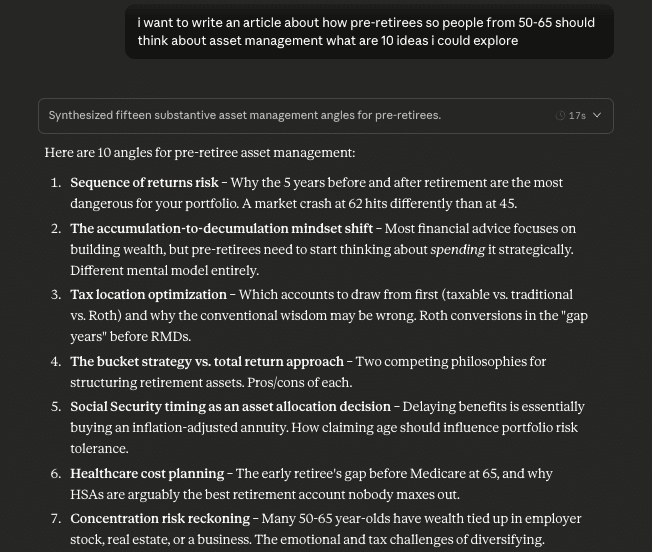
AI models like ChatGPT and Claude excel not as ghostwriters, but as intellectual sparring partners. By feeding an LLM a prompt requesting ten disparate structural angles, alternative introductions, or anticipated reader counter-arguments, writers can bypass the paralysis of the blank page. The goal is never to accept the machine’s first draft verbatim, but to generate immediate, reactive stimuli that force the human brain out of inertia.
2. Streamlining the Outlining Process
Experienced writers know that a well-constructed outline is ninety percent of the battle. Before drafting a blog post, white paper, or pitch, structuring the flow of ideas is paramount.
Writers can establish custom intake prompts within tools like Claude, feeding the system raw notes regarding target audiences, strategic objectives, key research data points, and overarching themes. The AI instantly returns a logical skeleton complete with suggested subheadings and structural frameworks. While human editorial oversight ensures the final arc serves the narrative, this practice slashes the time required to organize sprawling research notes.
3. Deploying AI as a Research and Triage Assistant
Digital research often involves wading through dense reports, academic studies, and endless opinion pieces. AI drastically accelerates this data-triage phase. Pasting an exhaustive industry report into an LLM and requesting a summary of core arguments and vital statistics prevents wasted hours spent reading irrelevant material.
Specialized search tools like Perplexity elevate this process further by scanning live web sources and providing verified citations. This prevents the common trap of uncovering a compelling statistic only to discover it is outdated. Furthermore, post-interview transcripts from platforms like Otter.ai can be fed into LLMs to quickly contextualize expert commentary before the drafting phase begins.
4. Drafting Cold Outreach and Letters of Introduction (LOIs)
Initiating contact with prospective marketing agencies or corporate clients requires high-touch personalization, but the administrative weight of writing dozens of introductory emails is exhausting.
AI can generate initial templates and varied drafts of Letters of Introduction (LOIs) in seconds. However, this is where the human touch is non-negotiable. A successful freelancer uses the AI-generated framework to clear the mental hurdle, then manually crafts a hyper-personalized opening line—such as referencing a recent company award or a newly released corporate case study. Copy-pasting raw AI outreach guarantees instant rejection; using AI for structural scaffolding guarantees speed without sacrificing authenticity.
5. Engineering High-Converting Headlines and Hooks
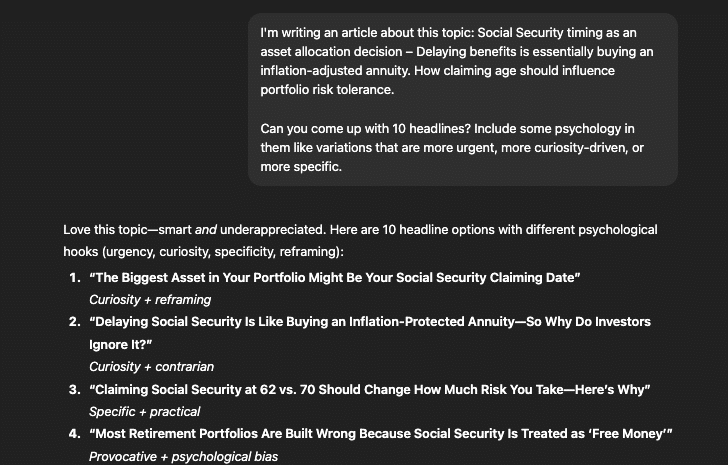
An article’s headline and opening hook dictate its economic viability. Crafting a title that balances urgency, specificity, and curiosity without crossing into deceptive clickbait is an art form.
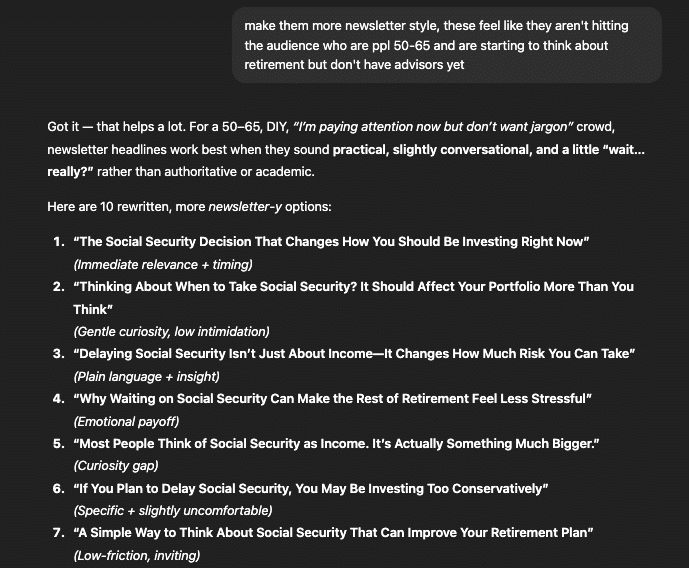
Writers can instruct AI to generate ten distinct headline variations based on specific emotional triggers or optimization parameters. Even if none of the generated options are used wholesale, they act as cognitive catalysts. Writers can mix and match components from multiple AI suggestions to construct a headline that hits the exact desired note.
6. Advanced Editing and Proofreading via Role-Play
Human eyes grow blind to their own syntax errors after multiple rounds of revision. Beyond standard grammar utilities like Grammarly, LLMs can act as sophisticated editorial partners.
Writers can paste drafts into Claude or ChatGPT and instruct the model to adopt specific personas: an aggressive developmental editor, an objective industry insider, or a skeptical target reader. By prompting the AI to flag convoluted phrasing, logical gaps, or areas requiring deeper evidence, writers gain a multi-angle diagnostic review before submitting work to a human client.
7. Multi-Platform Content Repurposing
The modern content economy demands omnichannel distribution. Writing a 1,500-word authoritative article is only half the assignment; the writer must then promote it across LinkedIn, email newsletters, and social networks.
Instead of starting from scratch for every channel, writers can feed their completed long-form articles into an LLM with precise repurposing prompts. This yields a suite of assets:
Short-form, hook-heavy social media post starters.
Data-driven teaser threads for professional networks.
Email newsletter summaries designed to drive traffic back to the core piece.
This approach allows freelancers to extract maximum value from a single intellectual property, turning one piece of deep research into five to ten distinct marketing touchpoints.
8. Intelligent Interview Preparation
Securing quotes from Subject Matter Experts (SMEs) requires asking incisive, non-obvious questions. Freelancers working within unfamiliar niches can leverage AI to rapidly upskill.
By detailing the interviewee’s background, the core topic, and the desired angle, writers can prompt AI and search assistants to generate a tailored list of ten high-impact interview questions. This ensures that expert time is respected, basic factual research is bypassed, and the resulting conversation yields unique, proprietary insights rather than recycled talking points.
9. Managing and Interrogating Transcript Data
Deep-dive interviews generate massive walls of unstructured transcript text. Using conversational transcription tools like Otter.ai allows writers to query their recorded interviews directly.
Once a call is transcribed, a writer can chat with the transcript file to instantly locate specific commentary, group insights by thematic relevance, or extract verbatim quotes without manually scanning hours of audio or reading through pages of text. Every quote, however, must be cross-referenced against the original audio to ensure absolute fidelity before publication.
10. Automating Marketing Performance Tracking
Tracking outbound marketing efforts—such as cold pitches, follow-ups, conversion rates, and client responses—traditionally requires maintaining meticulous spreadsheets that many creative professionals neglect.
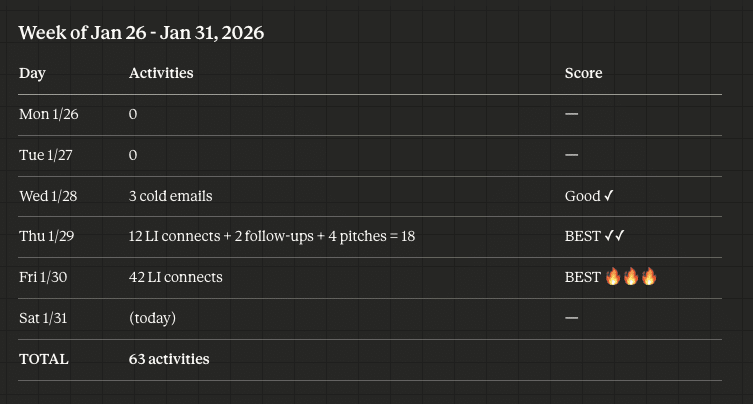
Advanced conversational platforms with memory capabilities, such as Claude Cowork, allow writers to record outreach logs conversationally. At the end of the month, the AI can synthesize this unstructured data into comprehensive performance scorecards, breaking down response rates, niche profitability, and pipeline health. This gamified approach removes administrative friction, enabling freelancers to analyze data patterns and refine their pitch strategies without tedious data entry.
Official Statements & Industry Perspectives
Industry leaders continue to emphasize that artificial intelligence functions strictly as an amplifier of human capability rather than a substitute for professional expertise.
"AI tools aren’t new anymore. If you’re a freelance writer and you’re not using them, you’re working harder than you need to. But there’s a difference between using AI well and using it badly. The freelancers who are thriving right now use AI to handle the tedious parts of the job so they can focus on the work that actually matters: the thinking, the interviews, the expertise, the relationships."
— Sean Ogle, Founder of Location Rebel
As automation matures, the consensus among veteran independent business owners is clear: the market rewards original insight, proprietary research, and human connection. Content that lacks these elements is easily commoditized.
What NOT to Do With AI
While the expansion of generative capabilities offers immense upside, misapplying these technologies can destroy a freelance writing business overnight. To protect professional reputation and client trust, avoid the following practices:
Outsourcing Core Originality: Never ask an LLM to "write an article about [Topic]" from scratch and submit the raw output to a client. This erases the unique perspective, voice, and lived experience that justifies a professional writing fee.
Neglecting Fact-Checking: Never trust AI-generated citations or data points without independent verification. Hallucinated statistics and outdated facts will quickly erode your credibility.
Skipping the Personalization Layer: Never send unedited AI-generated cold pitches or templates. Clients recognize generic machine-generated copy instantly; personalization is the sole differentiator in outbound marketing.
Ignoring Data Privacy: Exercise caution when inputting sensitive client data, proprietary corporate strategies, or confidential interview transcripts into public LLMs without verifying enterprise privacy protocols.
Future Outlook
The trajectory of the freelance writing industry points toward hyper-specialization. As baseline, commodity writing is increasingly automated by enterprise clients and basic tools, the economic value of human writers will concentrate heavily at the top: in original investigative journalism, high-level subject matter expert interviews, strategic brand messaging, and nuanced thought leadership.
Freelancers who master the dual discipline of high-level human creativity and low-level AI efficiency will dominate the next decade. By viewing artificial intelligence as an operational assistant rather than a creative replacement, writers can scale their revenue, eliminate administrative burnout, and focus entirely on the elements of their craft that machines can never replicate.