

Executive Overview
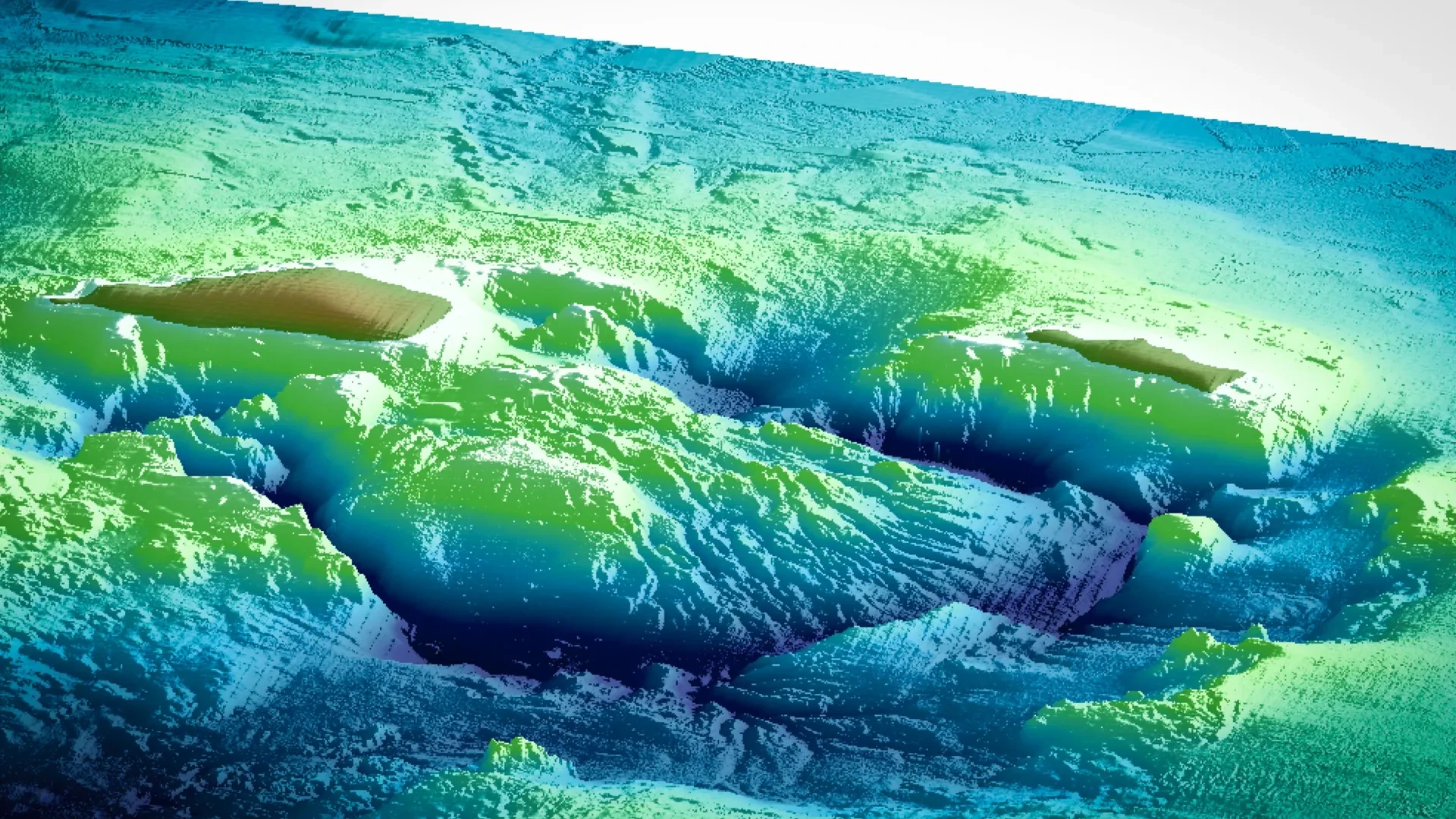
Deep beneath the sapphire-tinted waves of the southern Japanese ocean lies one of the most volatile and destructive geological features on Earth. Thousands of years after orchestrating a cataclysmic explosion that reshaped the planet’s climate and decimated regional ecosystems, Japan’s Kikai caldera is stirring once more. Recent geophysical investigations conducted by an interdisciplinary team of researchers from Kobe University and the Japan Agency for Marine-Earth Science and Technology (JAMSTEC) have revealed that this sleeping giant is quietly refilling its colossal underground magma reservoir.
The discovery provides volcanologists with an unprecedented, high-resolution view of how Earth’s most monstrous volcanic systems recover, heal, and rebuild their explosive arsenals following planet-altering events. While the reactivation of a supervolcano naturally triggers public anxiety, scientists emphasize that this slow-motion replenishment does not signal an imminent apocalypse. Instead, the findings offer a vital piece of a much larger geological puzzle. By decoding the physiological mechanics of Kikai’s subterranean plumbing system, researchers hope to unlock predictive markers for other infamous supervolcanoes around the globe, including the Yellowstone caldera in the United States and Lake Toba in Indonesia.
Published in the journal Communications Earth & Environment, this landmark study bridges a critical gap in our understanding of volcanic life cycles, transforming how geophysicists model the long-term hazards posed by earth-shattering volcanic systems.
Detailed Chronology
To comprehend the significance of Kikai’s current subterranean activity, scientists must look far back into the deep time of the Holocene epoch—the geological era that commenced approximately 11,700 years ago and persists to this day.
The Akahoya Cataclysm: 7,300 Years Ago
Roughly 7,300 years ago, Kikai was not merely a submerged depression; it was the site of the Akahoya eruption—the largest and most devastating volcanic event of the entire Holocene epoch. The scale of the blast defies easy imagination. The volcano ejected an incomprehensible volume of pyroclastic material, ash, and pumice into the atmosphere, blanketing the region and causing widespread devastation.
To visualize the sheer magnitude of the Akahoya event, consider the sheer volume of magma evacuated from the subterranean chamber: it was vast enough to bury the entirety of New York City’s Central Park beneath a crushing, suffocating layer of molten rock and ash roughly 12 kilometers (7.5 miles) thick. As this titanic volume of magma escaped toward the surface, the structural integrity of the upper crust gave way. Deprived of its underlying support, the overlying terrain collapsed inward, forming a vast, sunken depression known as a caldera—a geological scar spanning tens of kilometers.
The atmospheric and ecological consequences of the Akahoya eruption were severe, choking out prehistoric civilizations across the Japanese archipelago and temporarily altering weather patterns across East Asia. Following the cataclysm, the volcano appeared to enter a deep, permanent slumber, leaving scientists to wonder how—or if—such a devastated system could ever reconstitute itself.
The Post-Collapse Era and Lava Dome Formation: 3,900 Years Ago
For millennia, the massive magma chamber lay largely dormant, cooling and slowly stabilizing after its violent discharge. However, geological inactivity is rarely permanent in these deep-seated crustal structures. Approximately 3,900 years ago, a new chapter in Kikai’s history began to unfold near the center of the sunken caldera.
Instead of triggering another catastrophic, landscape-altering explosion, the volcano began a sustained process of gentle, localized extrusion. Thick, highly viscous lava slowly forced its way upward through central vents, cooling and piling up to form a prominent underwater and subaerial lava dome. This creeping upward movement of dense lava indicated that the deep plumbing beneath Kikai was far from dead; it was merely shifting modes, transitioning from explosive regional devastation to localized constructive activity. Yet, fundamental questions remained: Was this recent activity merely powered by lingering, cooling remnants of the Akahoya magma, or was something entirely new driving the system?
Modern Seismology and the 21st-Century Discovery
The definitive answer arrived through a massive, coordinated modern expedition. Because the vast majority of the Kikai caldera rests safely—and inconveniently—beneath the ocean waves, direct visual observation is impossible. However, geophysicists turned this geographical challenge into a scientific advantage. The surrounding marine environment provided an uninterrupted canvas for large-scale, systematic geophysical surveys.
Collaborating with JAMSTEC, Kobe University geophysicists deployed advanced marine exploration techniques. Utilizing powerful, ship-mounted airgun arrays, the research team generated controlled, low-frequency seismic pulses that traveled downward through hundreds of meters of seawater, penetrated the ocean floor, and propagated deep into the Earth’s crust.
As these seismic waves rippled through underground strata, they encountered different types of rock and molten material. Because seismic waves travel at markedly different speeds through solid, crystalline rock versus semi-liquid, magma-saturated chambers, their behavior acts as an underground fingerprint. A vast network of ocean-bottom seismometers strategically deployed across the seafloor recorded these shifting wave patterns with exquisite precision.
When the research team processed and analyzed the seismic data, the results were definitive. They mapped a massive, distinct underground region characterized by a high proportion of molten and semi-molten material located directly beneath the site of the ancient Akahoya eruption. The dimensions, depth, and spatial orientation of this newly mapped reservoir confirmed a startling reality: it occupied the exact same structural footprint as the magma chamber that fueled the catastrophe 7,300 years ago.
Supporting Context & Metrics
Understanding the mechanics of supervolcanoes requires stepping back to examine the sheer scale of the forces operating beneath our feet. Supervolcanoes are not defined merely by their height or the conical shape of traditional stratovolcanoes; rather, they are categorized by their capacity to produce "super-eruptions"—events that eject a staggering minimum of 1,000 cubic kilometers (roughly 240 cubic miles) of volcanic material.
The Anatomy of a Magma Chamber Recharge
For decades, volcanologists debated how giant caldera systems manage to accumulate the monumental volumes of silica-rich magma required for super-eruptions. Magma chambers of this size cannot simply form overnight, nor can they maintain their extreme heat without continuous replenishment.
Chemical analyses of the lava samples retrieved from Kikai’s post-collapse lava dome revealed crucial compositional differences when compared to the remnants of the ancient Akahoya eruption. The newer material exhibited distinct geochemical signatures, proving that it was not merely leftover, stagnant magma from the prehistoric blast. Instead, the chemical disparity points unequivocally to fresh injections of molten rock—new supplies of magma migrating upward from deeper zones within the Earth’s lower crust or upper mantle.
This continuous infusion of new material demonstrates that supervolcanoes operate on dynamic, open-system recharge models. Magma is constantly cycling, fractionating, and pooling in shallow crustal reservoirs over thousands of years. The Kikai study provides the first tangible, high-resolution geophysical proof of this ongoing replenishment process in an active marine caldera.
| Geological Metric / Parameter | Kikai Caldera Data / Observation |
|---|---|
| Location | Southern Kyushu, Japan (primarily submerged offshore) |
| Date of Last Super-Eruption (Akahoya) | ~7,300 years ago (Holocene epoch) |
| Eruptive Magnitude | Largest Holocene eruption globally; equivalent to >1,000 km³ of ejecta |
| Post-Collapse Activity | Formation of a central lava dome initiated ~3,900 years ago |
| Current Subsurface Feature | Massive, active shallow magma reservoir detected via seismic profiling |
| Source of Current Magma | Fresh injections from deep crustal/mantle sources |
| Primary Research Institutions | Kobe University & Japan Agency for Marine-Earth Science and Technology (JAMSTEC) |
Official Statements & Expert Analysis
The implications of the Kikai discovery extend far beyond the borders of Japan, drawing intense international interest from the global geophysical community.
Dr. Nobukazu Seama, a prominent geophysicist at Kobe University and lead researcher on the project, emphasized the critical importance of understanding the mechanics behind these massive magma reserves. "We must understand how such large quantities of magma can accumulate to understand how giant caldera eruptions occur," Seama stated, highlighting the foundational goal of modern volcanic hazard research.
Addressing the logistical hurdles of studying a submerged structure, Seama noted how marine technology unlocked new possibilities for the team. "The underwater location allows us to implement systematic, large-scale surveys," he explained. By utilizing controlled seismic airgun sources and ocean-bottom seismometers, the research team bypassed the limitations that traditionally hinder land-based volcano monitoring.
Addressing the composition of the newly discovered magma reservoir, Seama provided a clear interpretation of the chemical and seismic data: "Due to its extent and location, it is clear that this is in fact the same magma reservoir as in the previous eruption. This means that the magma that is now present in the magma reservoir under the lava dome is likely newly injected magma."
Crucially, Seama urged calm regarding the immediate implications of the discovery, contextualizing the geological timeline. The confirmation of a recharging magma chamber does not mean that Kikai is primed for an immediate, catastrophic explosion. Instead, it illuminates the multi-millennial lifecycle of a supervolcano. "This magma re-injection model is consistent with the existence of large shallow magma reservoirs beneath other giant calderas like Yellowstone and Toba," Seama noted, drawing a direct line between Kikai’s subterranean dynamics and other global supervolcanoes.
Future Outlook
The revelations emanating from the Kikai caldera represent a paradigm shift in how scientists approach the long-term monitoring and assessment of supervolcanoes worldwide. For generations, the unpredictability of super-eruptions has remained one of Earth science’s most daunting frontiers. Because these systems spend millennia quietly gathering strength between cataclysms, detecting the subtle signs of deep crustal recharge has historically proven nearly impossible.
The success of the Kobe University and JAMSTEC methodology demonstrates that marine seismic profiling can effectively image the hidden plumbing of offshore calderas. Armed with this proof-of-concept, researchers are already turning their sights toward the future.
Refining Predictive Technology
The primary objective for the research team moving forward is to refine and enhance the seismic imaging techniques utilized at Kikai. By increasing the resolution of ocean-bottom monitoring networks and integrating continuous geochemical tracking, scientists hope to map the rate of magma influx with unprecedented accuracy.
"We want to refine the methods that have proved to be so useful in this study to more deeply understand the re-injection processes," Seama elaborated, outlining the roadmap for future investigations. "Our ultimate goal is to become better able to monitor the crucial indicators of future giant eruptions."
Global Implications for Yellowstone and Toba
The validation of the magma re-injection model at Kikai provides a vital comparative framework for researchers studying other continental and tropical super-systems, such as Yellowstone in the United States and Lake Toba in Sumatra, Indonesia. Both of these systems are known to harbor massive, shallow pools of partially molten rock beneath the surface, yet the exact mechanisms driving their continuous thermal and seismic activity remain fiercely debated.
By applying the insights gained from Kikai’s underwater architecture, geophysicists can construct more accurate, predictive computer models of crustal magma dynamics. While a super-eruption remains an extremely low-probability event on a human timescale, the ability to track the slow, methodical refilling of these geological leviathans ensures that humanity will not be caught entirely unawares when the Earth’s deep interior shifts once again. Through rigorous science, advanced marine technology, and international collaboration, researchers are slowly turning the dark, unknowable depths of supervolcanoes into an open book.