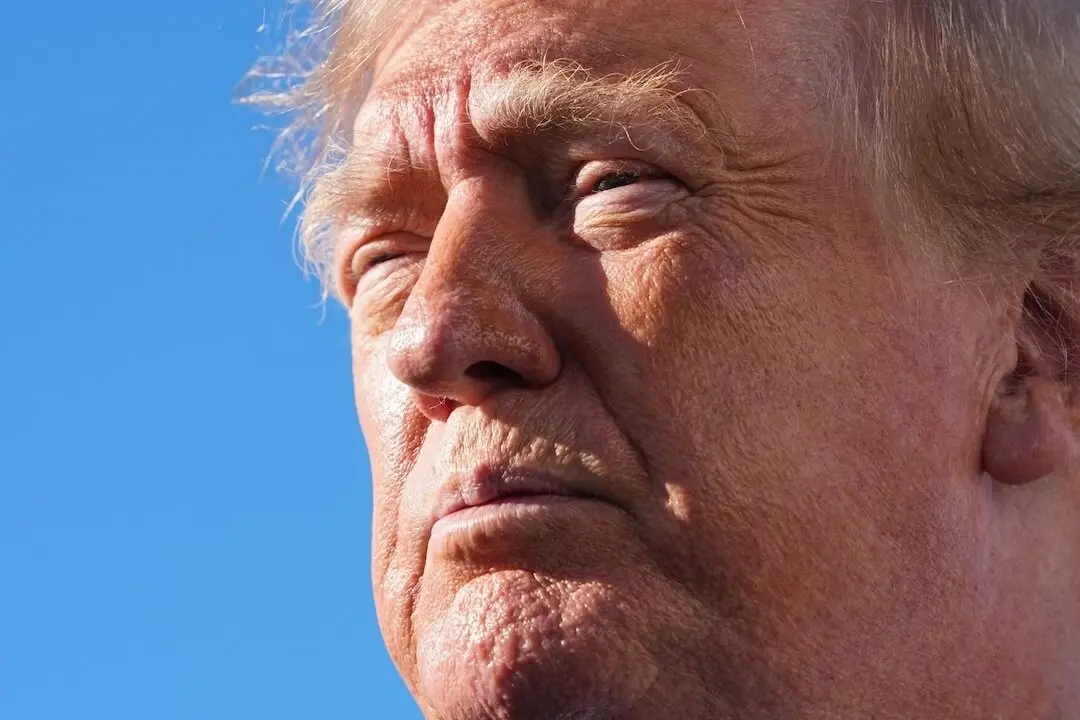
The intersection of American politics, media power, and modern digital communication continues to produce unprecedented cultural flashpoints. Over a single fast-paced weekend, President Donald Trump shattered his own platform records with a sprawling, 1,322-word online diatribe targeting comedian and HBO host Bill Maher, abruptly severing what once appeared to be a budding diplomatic rapport. Simultaneously, the broader journalism ecosystem experienced its own seismic tremors.
From veteran anchor Dan Rather issuing a scathing critique of modern corporate media consolidation and the current state of CBS News, to legendary investigative journalist Bob Woodward lifting the veil on decades of classified leaks in his forthcoming memoir Secrets, the architecture of American news and public trust is undergoing intense scrutiny. Add in high-profile pop-culture crossovers—such as rapper Nicki Minaj campaigning alongside Trump in Michigan and jokingly floated as a prospective White House press secretary—and the lines separating political governance, entertainment, and modern media have never been more blurred.
This report provides a comprehensive examination of these converging storylines, offering deep-dive analysis into the administrative shifts, journalistic integrity debates, and cultural moments shaping the current landscape.
Detailed Chronology: Trump, Maher, and the White House Dinner Fallout
The modern political era is defined by instantaneous digital reaction, where private diplomacy and public condemnation collide in real time. The latest casualty of this dynamic is the abruptly terminated friendship between President Donald Trump and comedian Bill Maher.
The White House Summit
Only weeks prior, observers were surprised by reports of a high-profile dinner at the White House on October 15. The gathering brought together figures from across the cultural and political spectrum, including Trump, Maher, ESPN host Stephen A. Smith, and musician Kid Rock. For Maher, it marked his second visit to the White House to dine with Trump. By all early accounts, the evening had been cordial. Maher later recounted on his HBO program that while they sharply disagreed on foundational issues—most notably Trump’s persistent, unsubstantiated claims regarding the 2020 presidential election—the atmosphere remained civil. Maher explicitly noted that Trump "never lost his temper" and that a genuine dialogue was possible.
However, Maher’s television post-mortem also featured commentary on Trump’s approval ratings and political standing. In the high-stakes ecosystem of modern political communication, public critique—no matter how mild—frequently serves as an unforgiving catalyst.
A Record-Breaking Digital Rebuke
Stung by Maher’s television commentary, Trump took to Truth Social over the weekend to unleash the longest single post in the platform’s history. Spanning an astonishing 1,322 words, the post began with an uncompromising declaration: "Let’s talk about this COMPLETE AND TOTAL LOSER, Bill Maher."
Trump’s grievance-laden diatribe systematically dismantled the narrative of their cordial dinner. While Maher and Smith had publicly estimated the meeting lasted roughly four hours, Trump disputed this timeline down to the minute:
"Overall, I thought it was a good meeting. It didn’t last four hours, it lasted two hours, maybe less, and everybody was happy. We have the timestamps. I learned nothing, and felt it was a waste of time."
The tirade concluded with a definitive end to their brief diplomatic detente. Writing that Maher was a "hopeless guy" who was "not transformative," Trump effectively slammed the door on future engagement: "Bill: don’t call anymore. I never watched your show much, but I will never watch it again, because it is nothing more than FAKE NEWS that America, and the World, is unfortunately subjected to."
Debunking the Briefing Room Pool Rumors
Buried within this record-breaking digital outburst, Trump took the opportunity to address lingering architectural rumors surrounding the White House. Recent speculation suggested the administration was actively considering transforming the White House Briefing Room into an indoor swimming pool.
The historical context of the rumor is well-documented: the original pool was installed in the 1930s by President Franklin D. Roosevelt for polio physical therapy, and was subsequently used by John F. Kennedy and Richard Nixon before being permanently covered during the Nixon administration to accommodate a rapidly expanding press corps.
Trump put the rumors to rest with characteristic directness:
"I am not building a swimming pool in the White House Briefing Room, and never had any intention of doing so."
However, he immediately pivoted to a different kind of architectural disruption:
"I am thinking about moving the Press, and putting them in a different location, but I will use that location for very badly needed space."
White House press corps members and media observers are left waiting to see how this potential relocation strategy unfolds.
Supporting Context & Metrics: The CBS News Controversy and Dan Rather’s Warning
While political operators and comedians trade digital blows, traditional broadcast journalism faces an existential crisis of credibility, corporate consolidation, and editorial independence.
The 60 Minutes Scrutiny
Few institutions in American journalism carry the historical weight of CBS’s 60 Minutes. This season, the venerated Sunday night newsmagazine has found itself under intense scrutiny from both political flanks. Critics and media analysts have spent months combing through broadcasts looking for evidence of perceived bias favoring President Trump and conservative ideologies, particularly following sweeping structural changes that included the departure of several longtime correspondents and the appointment of a new executive producer with limited traditional television news experience.
Despite the intense institutional anxiety, industry observers note that the program’s output remains remarkably consistent. Mediaite conservative columnist Brad Slager observed that despite widespread industry insistence that new leadership has transformed the program into a "MAGA media mouthpiece," the actual on-air product is "mostly indistinguishable from its previous iteration." Similarly, CNN media analyst Brian Stelter praised a recent Sunday broadcast as "superb" and "outstanding," highlighting substantive reporting on international and domestic issues, including Gianna Toboni’s piece on third-country deportation programs, Bill Whitaker’s deep dive into election denier Tina Peters, and Holly Williams’ reporting on Australia’s social media ban for minors.
Dan Rather’s Indictment of Corporate Media
Not everyone shares a sanguine view of the current media landscape. Dan Rather, the iconic former CBS News anchor and reporter who approaches his 95th birthday, offered a blistering critique of his former employer and the broader media ecosystem in a recent interview with Variety’s Michael Schneider.
Reflecting on the corporate restructuring that has impacted network newsrooms, Rather did not mince words:
"What’s happened at CBS News is sad. It is in many ways a disaster, not just for the people who work at CBS News… But this is a further example of big billionaire corporate power in bed with powerful people and the presidency to get control of these operations for their benefit."
Rather drew a direct line between political pressure and structural decay, arguing that Trump’s overt hostility toward investigative journalism created an opening for corporate consolidation:
"Donald Trump has expressed his extreme dislike for ‘60 Minutes.’ So now, he’s gotten his way. He cleared the way for a consolidation of corporate power, which in turn cleared the way for doing what’s been done to ‘60 Minutes.’ The wreckage of CBS News is everywhere, and continues to this moment. I don’t see how to stop it."
Rather’s reflections arrive concurrently with the release of a new biographical documentary, Rather, which chronicles his storied career and evaluates the perilous state of modern journalism.
Official Statements and Political-Cultural Intersections
The blurring lines between high-stakes politics and pop culture reached a surreal crescendo over the weekend during a high-profile political rally in Michigan.
Nicki Minaj and the MAGA Movement
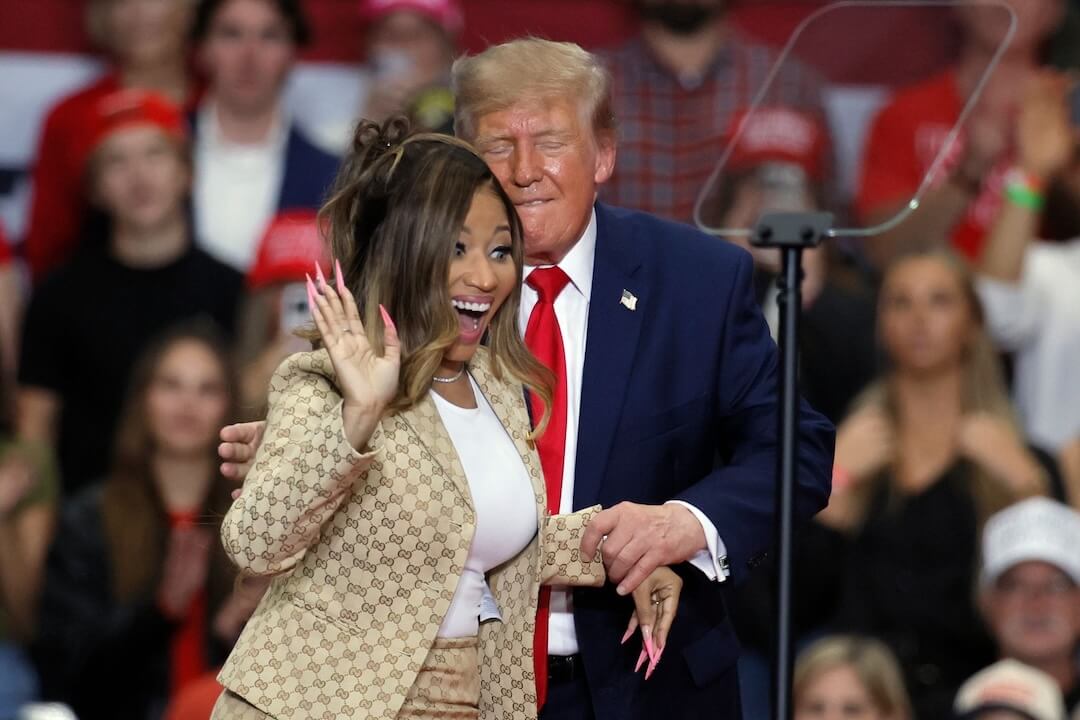
Appearing alongside President Trump at a rally supporting Republican Senate candidate Mike Rogers and gubernatorial candidate John James, superstar rapper Nicki Minaj galvanized the crowd with an emphatic display of support. Proclaiming her allegiance to the former president "forever and ever," Minaj solidified her position as a prominent cultural voice within the MAGA coalition.
The appearance generated immediate viral attention when White House communications director Steven Cheung published a video recorded aboard Air Force One. In the clip, Minaj praises Trump’s foreign policy framework. Playing into the viral nature of the moment, Cheung playfully captioned the video: "Ladies and gentlemen, I think we may have found the new White House Press Secretary!"
Other administration staffers quickly joined in on the levity, prompting tongue-in-cheek reactions across the political spectrum. California Democratic Governor Gavin Newsom—widely viewed as a prospective 2028 presidential contender known for his frequent social media sparring matches with conservatives—offered a characteristically dry response to the prospect of Minaj stepping behind the White House podium: "We can only pray."
The Revolving Door at the Press Office
Beneath the social media levity lies a serious administrative vacancy. The White House communications team finds itself once again searching for stability following the brief, tumultuous tenure of Katie Zacharia, whose time as press secretary flamed out after a mere five days.
As the administration weighs its options, political insiders have floated several names to permanently fill the high-pressure role. Prominent CNN contributor Scott Jennings has emerged as a speculative possibility, alongside Deputy Press Secretary Anna Kelly, who continues to manage day-to-day media operations.
Future Outlook: Bob Woodward’s Revelations and Investigative Horizons
As the media and political apparatus navigates these immediate storms, long-term historical reckonings are waiting in the wings.
Secrets: A Reporter’s Memoir
Next month marks the publication of legendary Washington Post investigative journalist Bob Woodward’s highly anticipated memoir, Secrets: A Reporter’s Memoir, scheduled for release on November 24 by Simon & Schuster. According to advance copies obtained by The Washington Post’s Craig Whitlock, the book promises an unprecedented look behind the curtain of American power, detailing Woodward’s decades-long reporting career spanning from his Navy service during the Vietnam War to his epochal Watergate investigations with Carl Bernstein.
Crucially, Woodward names a parade of Washington insiders who historically leaked classified information and sensitive details regarding pivotal historical moments. While many of these sources have passed away, Woodward notes that others granted explicit permission to be named, while remaining sources have become identifiable through public records.
Jeff Bezos and the Future of Editorial Integrity
Beyond historical leaks, Woodward uses the memoir to offer an unflinching critique of The Washington Post’s billionaire owner, Jeff Bezos. While Woodward initially maintained an optimistic outlook regarding Bezos’s stewardship—even through Trump’s first term—that goodwill evaporated following the decision to block the editorial board’s planned 2024 presidential endorsement of Kamala Harris.
In the memoir’s advance copy, Woodward writes:
"It was the timing that looked especially bad, like Bezos and the newspaper were capitulating to Trump. But part of me believed he would quickly realize the mistake… I gave him the benefit of the doubt."
That benefit of the doubt was short-lived as subsequent operational and editorial shifts rolled through the newsroom:
"As I saw it, Bezos was now directly compromising public trust in The Washington Post’s aggressive and independent journalism—a reputation and legacy reporters and editors had tirelessly forged with readers over a half century. There are things in life and even in business that are so much more important than financial gain."
Conclusion
From a historic digital rant that ends a high-profile dinner friendship, to systemic warnings from aging journalism titans about the perils of corporate media consolidation, to the explosive revelations promised in forthcoming historical memoirs, the American media landscape remains a volatile arena. As administrative doors spin in Washington and cultural icons take center stage at political rallies, the foundational relationship between those who govern, those who report, and the public they serve continues to undergo a profound and unpredictable transformation.