

By Bill Bradley | Deputy TV, Media and Sports Editor
Executive Overview
The explosive commercial ascent of women’s sports has created an unprecedented paradox for modern advertisers. While marketing budgets continue to pour into leagues like the WNBA and the National Women’s Soccer League (NWSL), the sheer velocity of demand has far outstripped available inventory. During the annual upfronts and across the broader media marketplace, brands are increasingly finding themselves iced out, shut down, and forced to the sidelines as premium ad spaces vanish long before seasons begin.
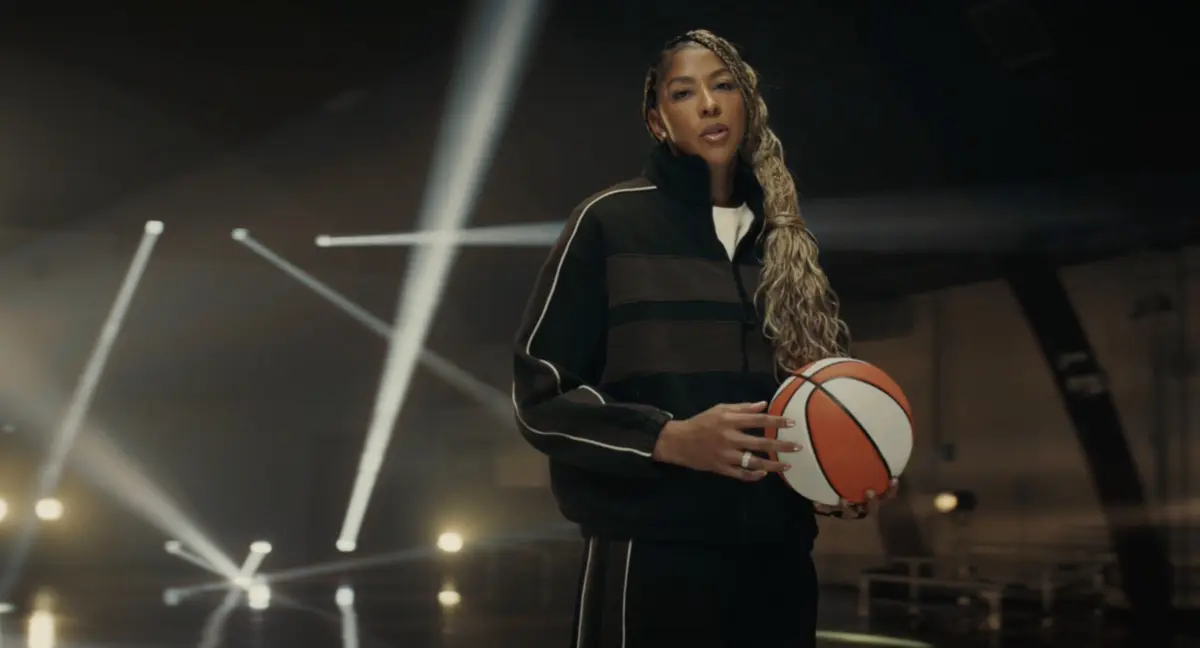
Enter Amazon. Positioned at the vanguard of digital streaming and live-sports distribution through Prime Video—bolstered by monumental multi-year broadcast pacts—the tech giant is facing a high-class problem: how to accommodate an over-subscribed market where buyers outnumber available slots. Rather than turning prospective partners away, Amazon is deploying creative ad innovations, alternative inventory solutions, and high-profile integrations, such as a recent commercial campaign starring WNBA legend Candace Parker for pharmaceutical giant Lilly.
This article explores how Amazon is navigating the capacity crunch in women’s sports, the unprecedented metrics driving the boom, the strategic shifts brands must make to secure visibility, and what the future holds for streaming platforms looking to monetize the most dynamic sector in modern media.
Detailed Chronology: The Evolution of Streaming and the Women’s Sports Capacity Crunch
Phase 1: Securing the Rights (2020–2024)
For years, women’s sports were treated as an afterthought in major media negotiations, bundled cheaply with men’s broadcast packages or relegated to obscure cable slots. However, Amazon recognized the long-term value of undervalued sports properties early on.
- The WNBA Partnership: Amazon Prime Video secured a landmark media rights agreement with the WNBA, highlighted by an expansive, 11-year media rights deal that positions the streaming service as a primary destination for regular-season games, Commissioner’s Cup action, and postseason matchups.
- The NWSL Breakthrough: Expanding its footprint in female athletics, Amazon inked a multi-year agreement to cover NWSL matches, cementing Prime Video as an essential hub for soccer fans.
Phase 2: The Demand Explosion (2024–2025)
As viewership records shattered across both collegiate and professional women’s athletics—spurred by generational stars like Caitlin Clark, Angel Reese, Trinity Rodman, and Sophie Smith—advertisers took notice. By the 2025 upfront cycle, the narrative shifted entirely. Brands that had historically underinvested in women’s sports rushed to claim marquee ad placements.
By late 2025 and heading into 2026, the market reached a tipping point. Traditional linear networks and streaming platforms alike faced a supply-and-demand imbalance. Prime Video’s live-streaming inventory for WNBA and NWSL broadcasts experienced sell-out rates that outpaced legacy sports properties, leaving major national brands locked out of standard commercial breaks.
Phase 3: Creative Solutions and Innovative Partnerships (2026)
Facing a severe inventory crunch, Amazon pivoted toward creative monetization strategies. To satisfy brands desperate for association with women’s sports, the platform began architecting custom integrations, virtual product placements, co-branded sponsor segments, and premium commercial partnerships outside traditional ad pods.
A prime example of this methodology is a high-visibility commercial campaign featuring WNBA icon Candace Parker, developed in collaboration with Lilly and distributed across Amazon’s sports ecosystem. By blending elite athletic star power with native streaming integration, Amazon demonstrated how brands can bypass traditional inventory constraints to capture high-value consumer attention.
Supporting Context & Metrics: Why the Scramble for Inventory is Intensifying
The frantic race to secure ad space on women’s sports broadcasts is not built on hype; it is grounded in hard, undeniable data. Brands are fighting for inventory because the returns on investment (ROI) significantly outperform traditional media benchmarks.
Key Industry Metrics
- 79% Year-Over-Year Growth: According to a landmark 2026 report by WPP Media, ad impressions for women’s sports experienced a staggering 79% year-over-year increase, signaling rapid mainstream adoption and expanding broadcast windows.
- 20% Higher Engagement: The same WPP Media research revealed that ad engagement during women’s sports broadcasts is 20% higher than the engagement levels recorded on non-sports broadcast and cable television programming.
- Loyal and Diverse Demographics: Data from major media agencies underscores that fans of women’s sports skew younger, exhibit higher household incomes, and demonstrate exceptional brand loyalty compared to legacy sports demographics. Furthermore, the fanbase is notably diverse, making it a critical demographic for brands prioritizing authentic, inclusive marketing.
The Power of Prime Video’s Ecosystem
Amazon holds a distinct advantage in this landscape. Unlike traditional television networks bound by rigid time slots and limited channels, Prime Video can leverage advanced data analytics, dynamic ad insertion, and interactive viewing experiences. When a brand secures a partnership with Amazon for WNBA or NWSL coverage, they aren’t just buying a 30-second spot; they are tapping into an integrated retail, streaming, and cloud ecosystem.
However, this technological prowess also highlights the core problem: when demand for these advanced, high-performing slots exceeds supply, digital real estate vanishes instantaneously.

Official Statements and Industry Perspective
As media buyers and network executives dissect the current state of sports advertising, industry leaders are weighing in on the structural shifts transforming the marketplace.
"Sports are such a hot ticket among advertisers, in the upfront and beyond, that some brands are finding themselves iced out and stuck on the sidelines. So Amazon is getting creative for its women’s sports offerings."
— Bill Bradley, Deputy TV, Media and Sports Editor, Adweek
Media analysts point out that the traditional upfront model—where upfront commitments lock in multi-million-dollar packages months in advance—is struggling to adapt to the hyper-accelerated growth of women’s leagues.
"We are witnessing a historical correction in sports media valuation," notes a senior media buyer who requested anonymity. "For decades, women’s sports were drastically underpriced and undersold. Now that the metrics have proven that these properties drive superior engagement and brand lift, everyone wants a piece of the pie at the exact same time. Platforms like Amazon are forced to innovate because standard inventory models simply cannot absorb this level of enterprise demand."
Industry insiders emphasize that campaigns like the Lilly collaboration featuring Candace Parker represent the blueprint for the future. By moving beyond standard 30-second spots into long-term ambassador partnerships and custom-tailored content ecosystems, brands can maintain relevance even when standard ad breaks are entirely sold out.
Future Outlook: Where Do Advertisers Go From Here?
As we look toward the remainder of the decade, the trajectory of women’s sports media rights and advertising points toward sustained, hyper-competitive growth. Several key trends will define how platforms and brands navigate this ongoing inventory shortage:
1. The Rise of Custom and Native Integrations
With traditional ad pods filling up rapidly during the upfronts, brands will increasingly rely on native integrations. Expect to see more virtual signage, custom broadcast segments presented by specific sponsors, and deep-dive mini-documentaries funded by brands within streaming ecosystems.
2. Expanded Rights and Schedule Growth
As leagues like the WNBA and NWSL continue to expand—adding new franchises, extending their regular seasons, and playing in larger arenas—the total volume of available broadcast inventory will naturally increase. However, demand is scaling at an even faster rate, meaning inventory scarcity will likely remain a fixture of the market for the foreseeable future.
3. Data-Driven Programmatic Ad Buying in Live Sports
Amazon and other streaming giants will continue to refine programmatic dynamic ad insertion for live sports. This technology allows brands to target specific demographic segments with tailored messaging during live games, maximizing the efficiency of every available impression and helping smaller brands find entry points without needing multi-million-dollar upfront commitments.
4. The Shift Toward Year-Round Storytelling
Smart brands are no longer treating women’s sports as a seasonal media buy confined to the months when games are actively airing. The most successful advertising strategies now involve year-round athlete partnerships, digital content series, and community-driven campaigns that maintain brand equity long after the final whistle blows.
Conclusion
The reality facing advertisers in 2026 is clear: the women’s sports revolution is no longer an emerging trend; it is the dominant engine of growth in modern media. While being iced out of traditional inventory can feel like a setback for brands slow to the draw, Amazon’s proactive, creative pivots offer a roadmap forward. By leveraging cultural icons like Candace Parker, pushing the boundaries of native streaming integrations, and maximizing the unmatched engagement metrics of female athletics, platforms and brands are proving that ingenuity can overcome even the most severe inventory crunches.
For marketers willing to think beyond the standard commercial break, the sidelines are no longer a place to sit—they are the launching pad for the next evolution of sports advertising.