

Executive Overview
For over two decades, Dancing with the Stars (DWTS) has anchored network television as a masterclass in ballroom execution, high-stakes emotional performance, and mainstream celebrity reinvention. Yet, beneath the sequins, spray tans, and standing ovations, the reality competition series remains a lightning rod for fierce fan discourse and operational scrutiny.
As Season 35 hurtles toward its highly anticipated finale, the series has once again found itself engulfed in controversy. Following a string of shocking eliminations—most notably frontrunners Harry Shum Jr. and Jenna Johnson, who were sent packing during the semifinals despite earning dual perfect scores—veteran professionals and industry insiders are openly questioning the integrity of the show’s engagement model.
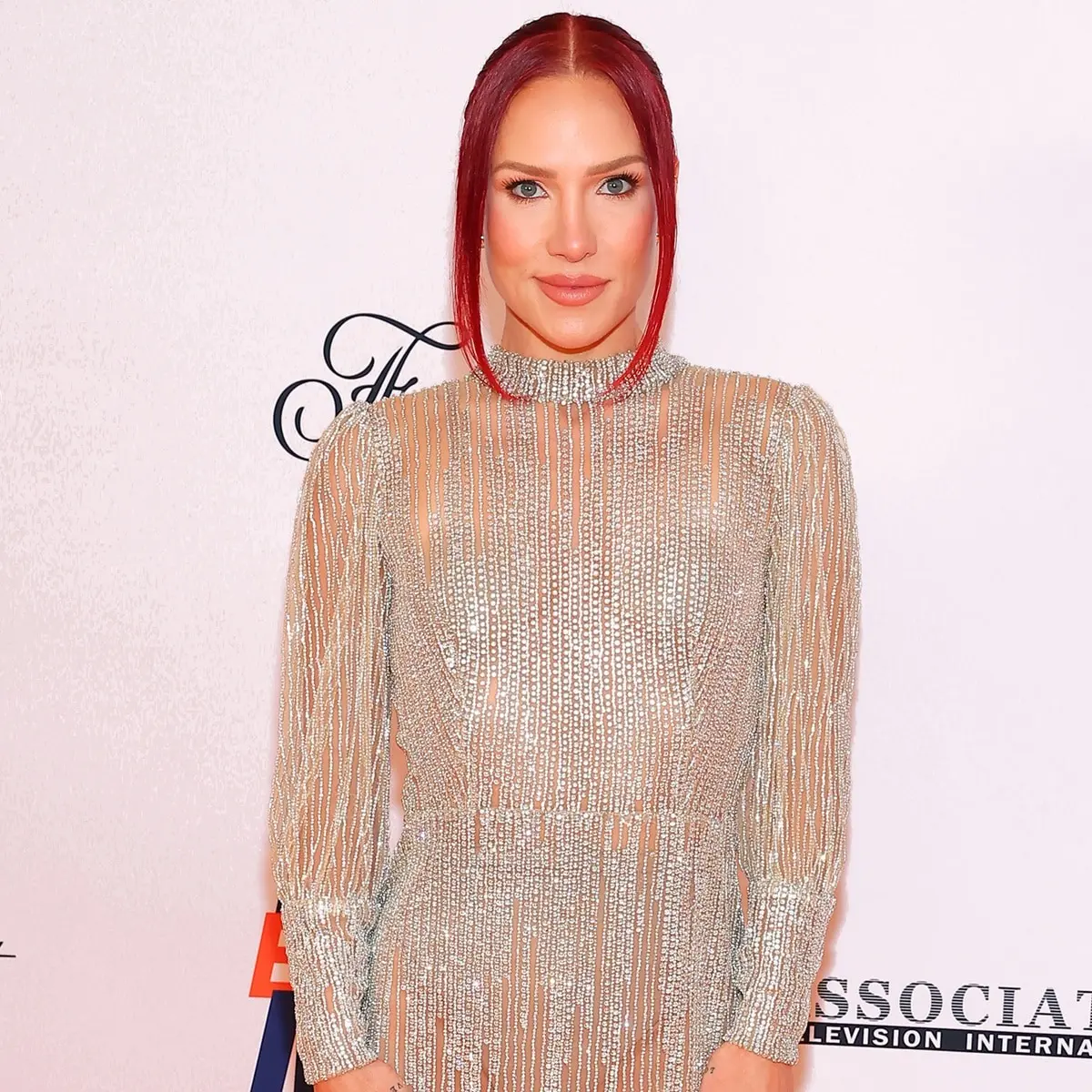
Chief among the critics is former DWTS champion and professional dancer Sharna Burgess, who has publicly taken aim at the show’s audience voting architecture. Burgess argues that the modern system has been weaponized by online factions, transforming a celebration of dance into a vindictive vehicle for tactical eliminations.
This deep dive examines the anatomy of the current voting crisis, analyzes the complex web of financial compensation for both celebrities and professional dancers, and unpacks the grueling, behind-the-scenes machinery that powers one of television’s most demanding reality formats.
Detailed Chronology: The Anatomy of a Semifinal Shockwave
The friction surrounding Season 35’s voting mechanics reached a boiling point on November 17, during a semifinal episode that sent shockwaves through the fandom.
The Semifinal Fallout
Harry Shum Jr., the 44-year-old Grey’s Anatomy star, and his professional partner, Jenna Johnson, delivered flawless routines that commanded two perfect scores from the judges’ panel. Despite their technical mastery and consistent placement at the top of the leaderboard, Shum and Johnson were eliminated from the competition.
The exit stunned casual viewers, but industry veterans recognized it as part of a troubling pattern. Just one week prior, another powerhouse pairing—Johnson’s husband, Val Chmerkovskiy, and his partner, Jenna Dewan—was similarly unseated, signaling a systemic vulnerability in how audience engagement translates to survival in the ballroom.
Rather than expressing bitterness, Shum struck a philosophical tone in post-elimination interviews with the press.
"I oddly feel at ease. I don’t feel sad—it’s really weird," Shum reflected. "I kind of felt like we accomplished everything we wanted to."
Sharna Burgess Speaks Out
Sharna Burgess, who was paired with Bachelor Nation’s Tyler Cameron earlier in Season 35 before their October 27 elimination, held little back regarding the broader implications of the vote. Taking to her Instagram Stories on November 20, Burgess addressed a fan’s inquiry about whether she was surprised by the semifinal outcome.
"Sadly no, I felt it was going to be another shock elimination," Burgess wrote. "Not because they deserved it but simply because the online discourse is so wild that [it] was pretty clear who fans were ‘voting off’ and how they have felt about dance experience contestants."
Burgess targeted the structural allowances of the current voting apparatus, which permits individual viewers to cast up to 20 votes per couple. In her assessment, this high allocation invites manipulation, allowing organized online communities to execute targeted campaigns against contestants they simply dislike, rather than uplifting their personal favorites.
"[It’s] so disappointing to see our voting system is now being used by viewers to vote people off instead of voting for your favorite," Burgess continued. "I say we got [sic] back to y’all only having 10 votes total and you have to figure out how to dish them out. This voting ppl off thing is so insanely negative and not what we are built on and it’s seemingly given fans the chance to manipulate the show. JMO."
Burgess’s critique highlights a long-standing tightrope walk for production: balancing fan engagement with competitive meritocracy. When viewers leverage their ballots to penalize contestants with prior performance backgrounds—colloquially termed "ringer fatigue"—it often overrides the technical criteria evaluated by the judging panel, threatening to alienate elite talent from stepping onto the dance floor in future seasons.
Supporting Context & Metrics: The Financial Architecture of DWTS
While the public fixates on scores and eliminations, the financial ecosystem underpinning Dancing with the Stars remains one of reality television’s most closely guarded secrets. piecing together disclosures from trade publications, judicial insights, and podcast confessions reveals a tiered compensation model that rewards longevity.
Celebrity Compensation Tiers
Contestants do not step onto the ballroom floor purely for the love of the tango; the financial incentives are substantial, albeit heavily dependent on survival.
According to reports published by Variety citing multiple industry sources, celebrity contestants historically earn a base guarantee of $125,000 covering the initial rehearsal period and the first two weeks of live shows. As contestants survive subsequent elimination rounds, their weekly payout escalates incrementally. Historically, sources indicated a maximum ceiling cap hovering around $295,000 for a full run to the end.
However, individual outlier contracts can significantly skew these figures. Radio personality Bobby Bones, who captured the Season 27 Mirrorball Trophy alongside Sharna Burgess in 2018, pulled back the curtain during a September 2025 appearance on Jason Tartick’s Trading Secrets podcast.
"That show pays OK," Bones revealed. "Like, first episode, no money. Second episode, $10,000. I think it’s like, $10,000, $10,000, $20,000, $20,000. It ends up being $50,000 an episode if you last… I ended up making close to $400,000 from that show."
While ABC has consistently declined to officially confirm or deny these contractual figures, Bones’s breakdown illustrates that high-draw personalities who capture public favor can shatter standard budgetary ceilings through longevity alone.
Professional Dancer Contracts
The professional dancers—the physical backbone of the franchise—operate under a distinct contractual framework. While their exact compensation packages are kept under wraps, insiders confirm that tenure dictates earning potential.
Even if a pro is eliminated in the absolute first round of competition, they are protected by minimum guarantees. As Jenna Johnson explained during a June 2025 interview on Kelly Stafford and Hank Winchester’s podcast The Morning After:
"You’re guaranteed until a certain amount of weeks. I think there’s different contracts though. I can’t speak for everybody."
Contrary to popular belief, hoisting the coveted Len Goodman Mirrorball Trophy does not trigger a massive cash windfall for the professional instructors.
"If you make it all the way to the end, you’re getting paid the whole season, which is amazing, and you get a bonus on top of that for making it to the finale," Johnson clarified. "If you win, it’s not like you win $1 million and split it with your partner. You’re just getting a cute trophy together."
The financial disparity is starker when dancers shift positions within the corporate hierarchy. Former pro Lindsay Arnold candidly recalled on a 2022 episode of Trading Secrets that her compensation was slashed by "more than in half" when she was temporarily demoted from a main professional slot to a troupe member.
Production Secrets & Behind-the-Scenes Realities
Beyond the financial ledgers, Dancing with the Stars operates as a high-velocity logistical machine, balancing artistic expression against punishing physical demands.
The Art and Science of Partnering
The chemistry between a celebrity and a professional dancer can make or break a season, yet the talent has virtually zero autonomy over the pairing process.
"You get no say," Lindsay Arnold shared on Maggie Sellers’s Hot Smart Rich podcast. "It’s very much just, ‘Here’s your partner. Make it work.’"
To heighten authentic television moments, producers guard pairings like state secrets. Jenna Johnson noted that even the pros are kept in the dark until the live reveal.
"They really want to keep it a secret until you meet them live. They want that genuine reaction… They really don’t even want us to know the cast."
When these matches are engineered behind closed doors, showrunners rely on a calculated matrix. Former showrunner Rob Wade explained to E! News that pairings are orchestrated based on "height, build and personality and compatibility."
"We don’t pair people who aren’t going to get on. It’s too intense… You don’t want to see two people who don’t like each other and, quite frankly, we have made that mistake pairing people up who didn’t get on so well."
The Grueling Rehearsal Grind
Viewers see ninety seconds of polished choreography on Tuesday nights, but the path to that performance is an unyielding marathon. Rylee Arnold, partnered with Olympic gymnast Stephen Nedoroscik in Season 33, detailed the relentless weekly schedule on the Lightweights Podcast:
"Every day we have four-hour rehearsals. It’s either 9:00 a.m. to 1:00 p.m., 1:00 p.m. to 5:00 p.m. or 5:00 p.m to 9:00 p.m."
The workday rarely ends when the studio lights go down. Pros routinely transition from physical instruction into administrative meetings with producers, continuous choreography adjustments, and deep dives into reference dance videos.
"Literally my whole life is devoted to it," Arnold said, describing a schedule that features zero true days off. "We have our show day on Tuesday and then it’s Wednesday to Sunday, straight rehearsals. And then Monday we have camera blocking and then Tuesday’s show day again."
Costumes, Music, and Creative Control
The logistical marvel extends directly to the wardrobe and music departments. While pros like Emma Slater and Britt Stewart have noted that they maintain a collaborative voice in selecting weekly tracks, the costume department operates at a breakneck, near-impossible pace.
Costume designer Daniela Gschwendtner revealed to TV Insider that her 20-person department, supported by an independent tailor shop, operates under a strict five-day turnaround from initial concept sketches to finished garments.
"That’s half a day per costume, not including all the rhinestones," Gschwendtner explained.
Everything seen on the live broadcast—aside from minor elements like men’s trousers occasionally pulled for group numbers—is custom-tailored fresh each week, ensuring that the visual presentation matches the elite physical standards of the competition.
Future Outlook: Protecting the Integrity of the Ballroom
As Dancing with the Stars prepares to close the book on Season 35, Sharna Burgess’s public critique has sparked an existential conversation among fans, executive producers, and alumni alike. The core dilemma facing the franchise is clear: how to preserve the democratic spirit of viewer participation without alienating elite technical talent who fall victim to negative tactical voting campaigns.
Network executives will undoubtedly monitor engagement metrics and audience sentiment closely during the off-season. Whether producers choose to heed Burgess’s advice—revisiting the ballot caps to curb coordinated block-voting and steering the discourse back toward positive endorsement—remains to be seen.
What is certain, however, is that the passion surrounding the Mirrorball Trophy has never burned hotter. As long as the stakes remain high, the cultural fascination with the ballroom’s intricate balance of art, commerce, and controversy will continue to capture the nation’s attention, week after grueling rehearsal week.
