

Executive Overview
For decades, the modern marketing playbook has operated under a seductive, albeit flawed, primary directive: acquire, acquire, acquire. From venture-backed startups to legacy enterprises, boardrooms have consistently prioritized top-of-funnel metrics, pouring billions of dollars into customer acquisition costs (CAC) while treating retention as an afterthought.
However, according to veteran Chief Marketing Officer and author Doug Zarkin, this relentless obsession with new customer acquisition is actively helping brands ignore a much more expensive, festering crisis sitting directly underneath it—the systemic failure of customer retention.
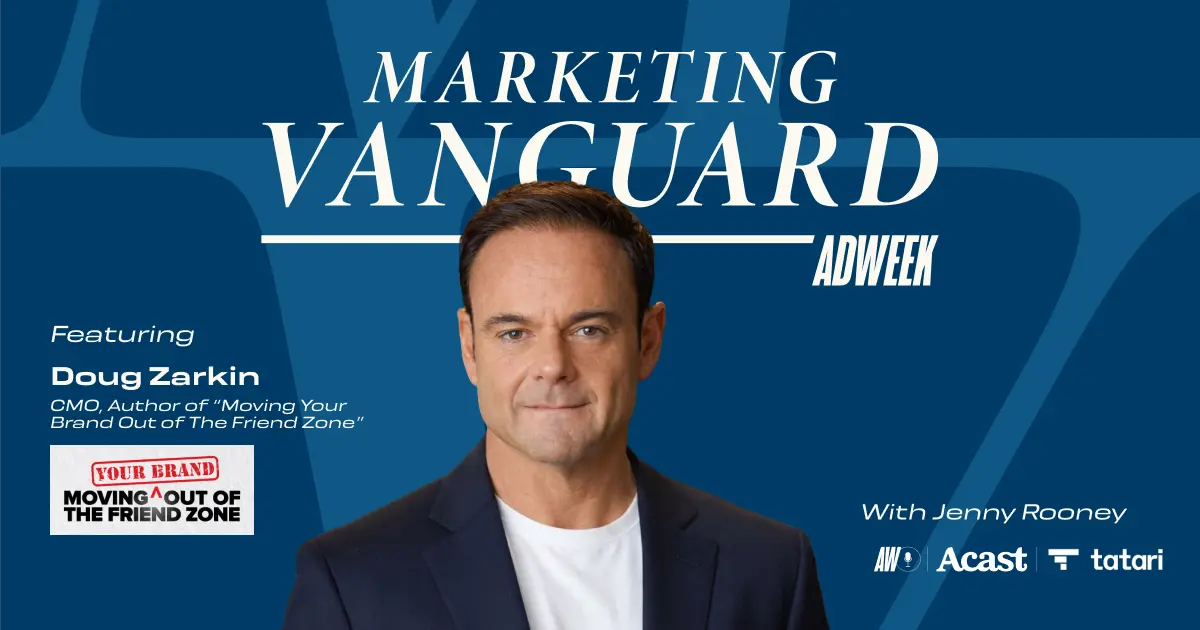
Live from the Marketing Vanguard stage at Brandweek 2026, Zarkin sat down with editor and interviewer Jenny Rooney for a wide-ranging, unvarnished discussion. Unpacking themes from his acclaimed book, Moving Your Brand Out of the Friend Zone, Zarkin dismantled conventional wisdom, arguing that being "liked" by a consumer is fundamentally distinct from being "loved."
The conversation served as a wake-up call for an industry addicted to vanity metrics. Zarkin challenged marketers to redirect the massive amounts of energy typically reserved for acquisition toward building sustainable retention models. Furthermore, he tackled the uncomfortable truth about corporate silos: many problems hastily blamed on "marketing failure" are actually deep-seated operational, reputational, or organizational failures that require a whole-business solution.
This special live-recorded vidcast, presented in partnership with Tatari at Brandweek 2026, captured a pivotal moment in contemporary brand strategy. As acquisition channels grow increasingly saturated and expensive, Zarkin’s "Think Human" philosophy—and his counter-cultural leadership lesson that being effective matters much more than being the smartest person in the room—offers a vital roadmap for navigating the next era of brand stewardship.
Detailed Chronology of the Discussion: The Brandweek 2026 Masterclass
To fully grasp the gravity of Zarkin’s thesis, it is necessary to examine the architecture of his argument as it unfolded on the Brandweek 2026 stage. Through his dialogue with Rooney, Zarkin systematically deconstructed four core pillars of modern corporate strategy, moving from economic fundamentals to operational realities and, finally, to personal leadership philosophy.
[The Brandweek 2026 Roadmap]
 ├── 1. Economic Reality: Acquisition Gets Glory, Retention Pays Bills
 ├── 2. Structural Truth: Stopping the Blame Game (Marketing vs. Operations)
 ├── 3. Philosophical Core: The "Think Human" Principle
 └── 4. Leadership Evolution: Effectiveness Over Being "Right"
1. Acquisition Gets the Glory, Retention Pays the Bills ([06:24])
Zarkin opened his critique by questioning one of modern commerce’s most bizarre and counterintuitive habits: Why do brands routinely save their best offers, deepest discounts, and most enthusiastic messaging exclusively for people who have never bought from them before?
In most corporate structures, customer acquisition is treated like a high-stakes sport. Dashboards glow green when new user sign-ups spike, and acquisition teams are showered with praise—and budgets. Meanwhile, existing customers—those who have already voted for the brand with their hard-earned cash—are frequently taken for granted, subjected to rising prices, declining service, or radio silence.
Zarkin argued that retention deserves the exact same level of energy, creativity, and financial backing that marketers aggressively pour into acquisition. While new customers look undeniably exciting on an executive dashboard, existing customers form the bedrock of sustainable, compounding unit economics.
If a brand suffers from a "leaky bucket," where customers continuously churn out the back door, the correct strategic answer is rarely to aggressively pump more money into acquiring replacements to fill the void. Doing so only accelerates financial waste, driving up Customer Acquisition Costs (CAC) while degrading Customer Lifetime Value (LTV).
2. Stop Calling Every Business Problem a Marketing Problem ([07:38])
One of the most provocative assertions Zarkin made on stage targeted corporate accountability and departmental blame-shifting. When sales dip, retention slumps, or public perception sours, the knee-jerk corporate reaction is almost always to point a finger at the marketing department and demand a new campaign.
Zarkin pushed back forcefully against this dynamic. "If you have a reputational problem," he noted, "there is not enough marketing in the world to cure it." Similarly, if a brand is hemorrhaging users due to structural churn, the root cause frequently resides deep within operations, product design, or customer service execution.
At Brandweek 2026, Zarkin emphasized that arguing over whether a specific friction point belongs strictly to "marketing" or strictly to "operations" misses the forest for the trees. It is fundamentally a brand problem.
Pouring millions of dollars in media spend to drive unsuspecting prospects into a sales funnel with a massive hole at the bottom is not growth; it is an expensive exercise in corporate self-sabotage. True brand leadership requires cross-functional alignment, ensuring that the promise made by marketing is faithfully delivered by operations.
3. Treat Every Customer Like They’re the Only One ([09:11])
To solve the empathy deficit plaguing modern digital commerce, Zarkin introduced his foundational "Think Human" principle. The philosophy challenges brands to imagine treating every single customer the exact same way you would treat your best friend in a moment of urgent need: fully present, genuinely important, and entirely worth stopping for.
When businesses filter their digital experiences, retail layouts, and customer support workflows through this human-centric lens, the nature of the questions they ask radically transforms:
- What would true customer service look like if we stopped treating tickets as data points?
- What would genuine loyalty look like if it wasn’t mediated by a points-based algorithm?
- What should the brand experience actually feel like to a living, breathing human being?
Zarkin’s core thesis is deceptively simple: brands win when they stop treating customers as transactions and start building the trust, relevance, and human experience that gives people an emotional reason to choose them again and again.
4. Being Effective Beats Being Right ([12:55])
Transitioning from macro-strategy to micro-leadership, Rooney and Zarkin discussed the personal evolution required to sustain a decades-long career at the top of the marketing ladder. Reflecting on his extensive tenure leading brand transformation, Zarkin shared a hard-earned leadership lesson: He has very little need to be the person who is "right," and a significantly larger need to be effective.
In high-pressure corporate environments, egos often drive decision-making. Leaders feel compelled to prove they possess all the answers. Zarkin inverted this paradigm, offering a self-effacing maxim for modern executives: If you are the smartest person in the room, you are in the wrong room.
The ultimate measure of executive leadership is not whether you can win an intellectual debate in a boardroom. Rather, it is whether you possess the emotional intelligence to build the right team, establish clear and compelling expectations, motivate diverse talent, and drive measurable progress that moves the business forward in a sustainable way.
Supporting Context & Metrics: The Cost of the Acquisition Addiction
To understand why Doug Zarkin’s warnings at Brandweek 2026 resonate so deeply across the modern commercial landscape, one must examine the broader economic data shaping the marketing industry.
The Escalating Costs of Customer Acquisition (CAC)
Over the past decade, digital customer acquisition costs have skyrocketed. According to multiple cross-industry marketing benchmarks, the cost to acquire a new customer has risen by upwards of 60% over the last eight years. Driven by privacy changes (such as Apple’s App Tracking Transparency), signal loss, rising ad auction prices on Meta and Google, and market saturation, relying solely on top-of-funnel acquisition is an increasingly perilous strategy.
| Metric / Dimension | Traditional Focus (Acquisition) | Modern Imperative (Retention & Experience) |
|---|---|---|
| Primary Financial Metric | Customer Acquisition Cost (CAC) | Customer Lifetime Value (LTV) & Net Revenue Retention |
| Strategic Energy | High-volume top-of-funnel campaigns | Post-purchase experience, trust, & community |
| Organizational Silo | Isolated within the Marketing Department | Cross-functional (Marketing, Operations, Product, CS) |
| Core Consumer Dynamic | Transactional interaction ("Liked") | Relational partnership ("Loved") |
The Math of Retention vs. Acquisition
Decades of research—most famously pioneered by Frederick Reichheld of Bain & Company (creator of the Net Promoter Score)—consistently demonstrates that acquiring a new customer can cost anywhere from 5 to 25 times more than retaining an existing one. Furthermore, increasing customer retention rates by just 5% can increase profits anywhere from 25% to 95%.
Despite these staggering economic realities, corporate budgeting allocations routinely inverse this logic. Brands continue to starve their retention, loyalty, and customer experience operations while throwing endless capital into the top of a leaky acquisition funnel. Zarkin’s critique at Brandweek 2026 is, at its core, a call for financial and operational rationalization.
About the Guest: Doug Zarkin’s Journey to Brand Leadership
Doug Zarkin’s perspective is forged from decades of frontline brand leadership across some of the world’s most recognizable consumer enterprises.
- Early Agency Roots: Zarkin began his career in the agency ecosystem, developing a deep, foundational understanding of creative development, consumer psychology, and market positioning.
- Corporate Scale (Avon & Victoria’s Secret): Moving brand-side, Zarkin held leadership roles at iconic global brands including Avon and Victoria’s Secret. These roles exposed him to the immense complexities of managing legacy brands at scale, navigating global distribution networks, and maintaining cultural relevance amidst shifting consumer demographics.
- Transformative Leadership at Pearle Vision: Most notably, Zarkin spent more than 11 years leading marketing as CMO of Pearle Vision. During this decade-long tenure, he spearheaded a comprehensive brand turnaround. This required shifting the brand from a commoditized retail experience into a trusted healthcare-adjacent provider. This prolonged leadership run gave him a unique, big-picture vantage point on how holistic brand transformation, operational alignment, and customer loyalty intersect.
- Author and Thought Leader: Captilling his decades of hard-won experience, Zarkin penned Moving Your Brand Out of the Friend Zone, a definitive guide for marketers seeking to transition their customer relationships from polite indifference to genuine, long-term brand love.
Future Outlook: The Post-Transaction Era of Brand Building
As the marketing industry navigates an increasingly complex future defined by artificial intelligence, data privacy regulations, and economic uncertainty, the wisdom shared by Doug Zarkin at Brandweek 2026 offers a vital north star.
The era of "growth at all costs" fueled by blind customer acquisition is coming to an inevitable close. Consumers are increasingly fatigued by generic, transactional advertising and hollow brand promises. They are seeking authenticity, operational reliability, and human-centric experiences from the companies they patronize.
For modern CMOs and business leaders, the mandate moving forward is clear:
- Rebalance the Ledger: Shift capital, talent, and creative energy away from top-of-funnel acquisition addiction and reinvest heavily into retention, post-purchase delight, and customer lifetime value.
- Break Down Silos: Acknowledge that retention is not a marketing problem—it is an enterprise-wide brand challenge that requires seamless integration between marketing, operations, product development, and customer service.
- Operationalize Empathy: Embrace the "Think Human" philosophy by designing every customer touchpoint around genuine respect, presence, and value rather than raw transactional extraction.
- Lead with Effectiveness: Cultivate leadership styles rooted in collaboration, team empowerment, and measurable business progress rather than ego-driven intellectual dominance.
Brands that heed Doug Zarkin’s counsel will successfully move out of the precarious "friend zone" of consumer indifference. They will transition into long-term, profitable relationships built on enduring trust and genuine brand love.