

Executive Overview
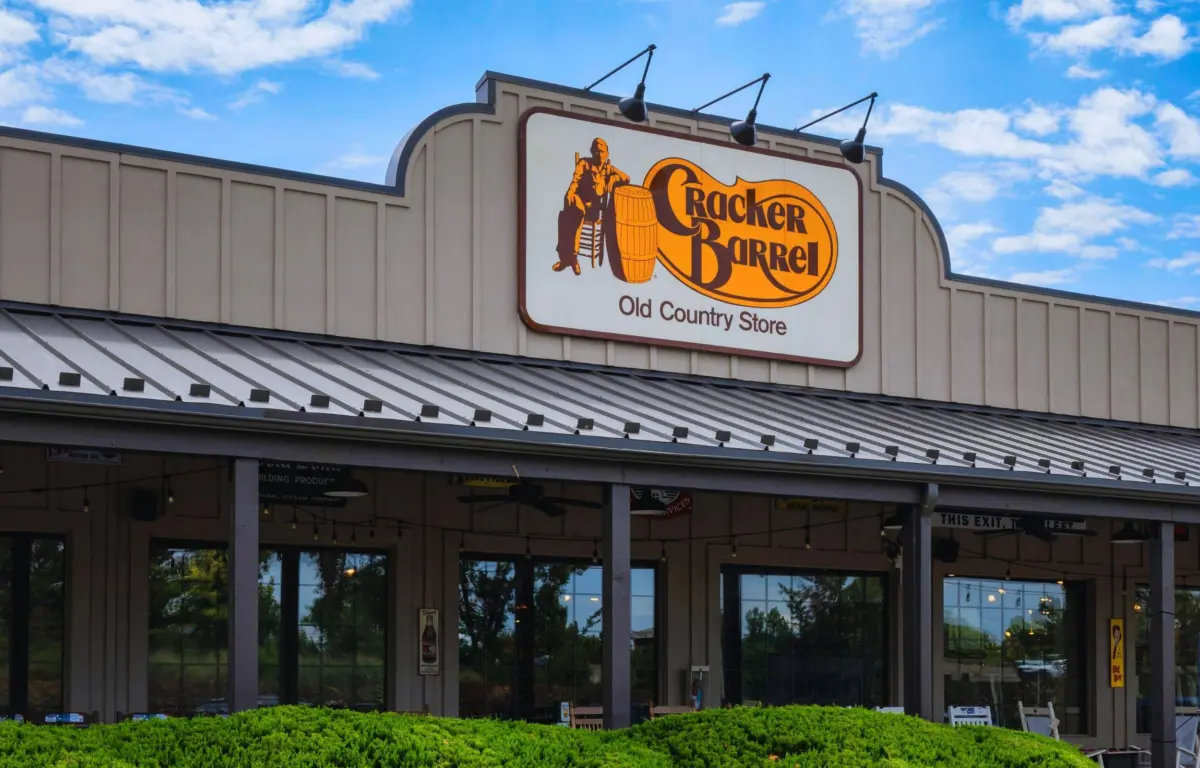
When Julie Masino stepped down from her role as Chief Executive Officer of Cracker Barrel Old Country Store, the mainstream corporate narrative was quick to reduce her departure to a cautionary tale: Don’t touch what customers love.
To casual observers and boardroom traditionalists alike, Masino’s tenure appeared to be a straightforward tragedy of modernization. She came in, initiated a sweeping overhaul of a beloved, nostalgia-soaked American institution, triggered an immediate and furious consumer revolt, absorbed public criticism from high-profile figures like Donald Trump, and ultimately performed a humiliating strategic U-turn. Even though she steered a genuine operational turnaround, the damage was supposedly done, and her resignation was treated as the inevitable scalp.
The prevailing moral drawn by corporate pundits across the business landscape was simple, reassuring, and profoundly dangerous: Change is risky. Keep the status quo.
That moral is fundamentally wrong, and it is about to cost companies billions of dollars in strategic miscalculations.
Masino did not step down merely because she dared to change a legacy brand. She stepped down—and her rebrand failed—because of how she and her executive team discovered what needed to be changed. They fell into a pervasive trap that snnares corporate leadership teams every single day: they mistook quantitative data points and neat survey results for a genuine, empathetic understanding of human psychology.
This article investigates the anatomy of the Cracker Barrel rebrand collapse, dissecting the psychological chasm between what customers say and what they actually feel. By examining the structural flaws of modern market research, the hidden drivers of brand loyalty, and the catastrophic danger of treating "customer research" as an executive alibi rather than a tool for empathy, we explore the vital lessons boards must learn before they freeze in fear of their own shadows.
The Anatomy of a Collapse: A Detailed Chronology of the Cracker Barrel Crisis
To understand how a multi-billion-dollar hospitality and retail institution found itself at the epicenter of a national culture-war firestorm, we must trace the timeline of Julie Masino’s ill-fated leadership trajectory.
The Arrival and the Mandate
When Julie Masino took the helm of Cracker Barrel in late 2023, the iconic southern-themed chain—famous for its rocking chairs, country stores, and homestyle cooking—was facing a quiet existential threat. Like many legacy brands rooted in mid-20th-century Americana, Cracker Barrel was struggling to capture younger demographics while watching its core, aging customer base slowly shrink. Stagnant foot traffic and an increasingly dated brand perception demanded strategic intervention.
Boards of directors rarely hire CEOs to maintain the status quo; they hire them to drive growth, modernize operations, and expand market share. Masino was handed a classic transformation mandate. Her objective was clear: breathe new life into a stale brand without losing the soul that made it a roadside staple for millions.
The Strategic Overhaul and Modernization Rollout
Armed with expansive market research reports, focus group summaries, and demographic projections, Masino’s leadership team greenlit a strategic modernization initiative. The plan involved subtle yet impactful adjustments to the brand’s visual identity, digital presence, store layouts, and menu architecture. The overarching goal was to appeal to a broader, more contemporary consumer base while signaling that Cracker Barrel was evolving for the 21st century.
From an internal corporate perspective, the rollout was backed by data. Leadership had ticked every box on the modern executive checklist: they hired consultants, ran surveys, analyzed focus group transcripts, and crafted a polished presentation for the board of directors. Every metric suggested the green light was safe.
The Consumer Revolt and Cultural Flashpoint
The moment the modernized brand elements hit the public eye, the reaction was swift, visceral, and merciless. Loyal patrons did not view the updates as a refreshing evolution; they perceived them as an aggressive assault on their cultural identity. Social media platforms erupted with condemnation, accusing the brand of abandoning its heritage, sanitizing its rustic charm, and "woke" corporate pandering.
The backlash quickly transcended ordinary consumer complaints, spilling over into the national political discourse. High-profile figures, including former President Donald Trump, weighed in on the cultural significance of the brand’s misstep, turning a corporate rebrand into a front-page political football. For a hospitality brand built entirely on feelings of comfort, trust, and unpretentious nostalgia, the public relations crisis was devastating.
The U-Turn and the Inevitable Departure
Faced with falling traffic, plummeting public sentiment, and an enraged core demographic, Masino’s administration executed a rapid and public strategic retreat. They walked back the controversial visual and experiential changes, reaffirming their commitment to the traditional Cracker Barrel look, feel, and menu.
Yet, the reversal could not save the leadership architecture that built the strategy. Even though Masino successfully managed operational aspects of the turnaround, the bridge with the consumer base had been temporarily burned. The board of directors, facing unprecedented turbulence, accepted her departure. The corporate machine had rejected the organ, leaving observers to point fingers at the concept of change itself rather than the execution of it.
The Illusion of Data: Why Customers Answer Questions, But Never Tell the Truth
To dissect why the Cracker Barrel rebrand imploded despite management having "done their research," one must understand the fundamental disconnect between survey data and human behavior.
For two decades, corporate executives have used the phrase "We did the research" as an impenetrable shield against accountability. If a product fails, a logo is rejected, or a rebrand sparks a riot, leadership points to the spreadsheet, the slide deck, or the focus group transcript. "The data told us to do it," they argue.
The reality, verified by decades of behavioral economics and neuroscience, is that quantitative market research often captures what people think they should say, rather than what they will actually do at the moment of truth.
The Classic Lesson: The Yellow Sport Walkman
In 1999, Sony conducted a series of focus groups for a new line of portable audio devices, featuring a bold, vibrant yellow Sport Walkman. Participants in the focus rooms adored it. They praised its modern aesthetic, calling it "so sporty," "fun," and "refreshingly energetic."
At the conclusion of the sessions, Sony thanked the participants and offered each of them a complimentary unit to take home as a token of appreciation. They had two choices stacked on a table: identical Walkmans in classic black or the new, highly praised yellow.
Every single participant walked away with the black one.
This psychological phenomenon underpins consumer behavior across every industry. What an individual expresses in a survey environment and how they behave when faced with real-world choices are generated by two completely distinct systems within the human brain.
The Neuroscience of Brand Loyalty
Contemporary neuroscience research on decision-making reveals that roughly 80% to 90% of human choices are driven by emotion and subconscious identity, rather than rational logic.
When a market researcher asks a customer, "What do you think of this proposed logo update?" or "Would you visit us more often if we offered a modernized menu?", the customer’s rational brain engages. They evaluate the question logically, often trying to be helpful, polite, or forward-thinking. They give a clean, articulate, and rational-sounding answer.
However, the reaction that actually governs consumer behavior—brand loyalty, sudden defection, viral outrage, or an angry social media post shared tens of thousands of times—is not driven by rational logic. It is fueled by emotion, nostalgia, tribal identity, and a deep-seated psychological ownership of the brand.
Cracker Barrel’s loyal patrons were not reacting to a specific font weight, a color palette adjustment, or a modernized layout. They were reacting to a gut-level sensation that something deeply personal and nostalgic had been altered without their consent. They felt that a piece of their cultural identity had been hijacked and commodified.
This was a profound translation failure, not a strategic failure. It is the exact same failure that has quietly sunk hundreds of corporate rebrands throughout business history—rebrands that never made national headlines simply because the companies were smaller and the public fallout remained localized. Cracker Barrel had the misfortune of executing this miscalculation in public, at massive scale, under the harsh spotlight of modern political polarization.
"We Did Customer Research" Is Not a Finding—It’s an Alibi
Why do sophisticated executive teams continually fall into this trap? The answer lies in the institutional incentives of modern corporate governance.
Most corporate customer research is deliberately structured to produce certainty, reassurance, and speed, rather than deep psychological insight.
- The Clean Question: A team drafts a tidy, quantitative survey with multiple-choice responses.
- The Clean Answer: Respondents provide predictable, palatable data points.
- The Report: Analysts compile the data into a sleek slide deck for the board of directors.
- The Alibi: Leadership feels protected. If the initiative succeeds, they take the credit. If it fails, they point back to the "data" as proof of due diligence.
Clean answers to shallow questions do not predict complex human behavior. They merely give leadership the false comfort required to pull the trigger on high-stakes investments.
The Danger of the First Answer
True customer understanding is qualitative, messy, uncomfortable, and resistant to clean summarization. It requires digging beneath the surface to uncover:
- What customers are secretly afraid of losing.
- What emotional identity they have tethered to a brand’s physical and cultural artifacts.
- What unstated expectations a brand is about to violate.
This level of depth cannot be captured by a multiple-choice survey question rated on a scale of one to five. It requires asking the second, third, and fourth follow-up questions that institutional corporate research rarely has the stomach to explore.
Most organizations stop at the first answer because the first answer is fast, quantifiable, and easily defensible in a high-stakes board meeting. The deeper questions are slower, difficult to summarize on a single PowerPoint slide, and frequently tell leadership something they desperately do not want to hear: that their ambitious vision contradicts the emotional needs of their core audience.
The Macroeconomic Environment
As noted by management scholars like Santa Clara University professor Jo-Ellen Pozner, the broader macroeconomic climate plays a critical amplifying role in these scenarios. In periods of economic uncertainty and societal instability, a brand’s core audience becomes intensely protective, defensive, and risk-averse.
However, protective customers are not demanding that companies freeze in time and refuse to innovate. They are demanding to be brought along as partners in the evolution. Those are two entirely opposite directives. Only one of them requires an organization to genuinely understand customer psychology rather than merely surveying their surface preferences.
Future Outlook: What Boards Must Learn (And What They Will Unfortunately Do Instead)
As corporate boards across retail, hospitality, consumer goods, and technology digest the fallout of the Cracker Barrel saga, they stand at a critical crossroads.
The Trap of Strategic Calcification
The most likely institutional reaction to the Cracker Barrel crisis will be one of profound, paralyzing fear.
Boards across America are currently flagging every future rebrand, logo tweak, store redesign, and product evolution as an existential risk. Terrified of becoming the next headline-grabbing corporate casualty, risk-averse leadership teams are poised to let strategic drift calcify for years. They will hunker down, protect the status quo, and abandon innovation under the comforting guise of "caution."
This response represents a fundamental misunderstanding of the crisis. Change was never the threat. A shallow, lazy understanding of customer psychology dressed up as rigorous due diligence was the real culprit.
Furthermore, freezing in place is itself a strategic decision, and it carries its own hidden research failure. A board that refuses to touch a brand because it is terrified of navigating complex emotional terrain has not mapped that terrain; it is simply gambling that the external world will stand still while they bury their heads in the sand. That is not prudent caution; it is simply an alibi worn a different way.
A New Playbook for Leadership
If executive teams wish to avoid the fate of Julie Masino’s administration while still successfully evolving their brands for a changing marketplace, they must fundamentally overhaul how they evaluate consumer sentiment.
- Interrogate the Definition of "Research": Leadership must audit their internal research processes. Does "customer research" in your organization mean a genuine translation of deep-seated human psychology, or is it merely a compliance checkbox executed to justify a decision that has already been made in the boardroom?
- Look Beyond the Survey Score: When evaluating consumer feedback, executive teams must stop asking, "Did customers like it on a scale of one to ten?" Instead, they must ask: What are our customers afraid of losing? What emotional identity have they anchored to our products? Who did we fail to consult before launch?
- Bring the Customer Along: Evolution does not have to be an aggressive surprise imposed from the top down. Brands that successfully modernize do so by making their most loyal customers feel like co-creators of the journey, honoring their emotional stake in the brand’s heritage while introducing them to its future.
If no one in the executive suite can answer these psychological questions with anything more substantive than a survey score and a PowerPoint bullet point, the organization does not possess customer research. It possesses an alibi—and the next corporate casualty is already waiting in the wings.