

Executive Overview
Financial health remains one of the most profound and pervasive influences on personal wellbeing in the modern world. Yet, despite its critical importance to daily life, a vast majority of the population enters adulthood entirely unequipped with the practical tools, mental frameworks, or educational foundations required to manage their financial realities effectively. The modern economic landscape—characterized by fluid labor markets, complex credit systems, rising living costs, and an endless array of financial products—often feels less like a system designed to support citizens and more like an obstacle course.
For decades, bridging the chasm between raw financial data and meaningful, actionable decision-making has been an elusive goal for consumers and institutions alike. However, as artificial intelligence matures and data infrastructures modernize, that gap is finally closing. The future of consumer finance is no longer a choice between cold, unfeeling algorithms and expensive, slow-moving human advisors; instead, it is heading toward a powerful, symbiotic blend of sophisticated automation and trusted human expertise.
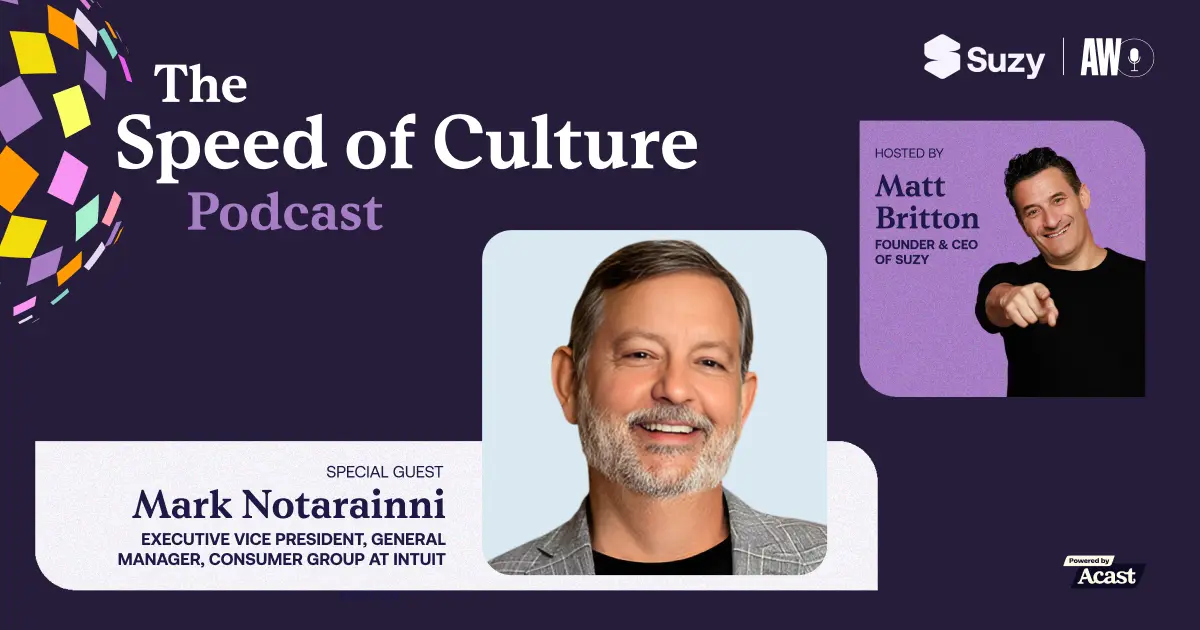
In a recent episode of The Speed of Culture podcast, Mark Notarainni, Executive Vice President and General Manager of Intuit’s Consumer Group, sat down with host Matt Britton to discuss how Intuit is fundamentally empowering millions of people to take control of their financial lives. Their comprehensive conversation explored the decades-long evolution of digital consumer finance through iconic platforms like TurboTax and Credit Karma, the transformative role of AI in debt management, the enduring necessity of human empathy in financial guidance, and the shifting attitudes toward financial literacy across younger generations.
This deep dive reveals a broader industry truth: the democratization of financial wellness is no longer a distant utopian vision. It is happening right now, driven by technological leaps and a renewed focus on empathy-driven design.
Detailed Chronology: The Evolution of Consumer Finance and Intuit’s Journey
To understand where consumer finance is headed, one must trace the trajectory of how everyday people have managed their money over the past several decades. The transformation has been nothing short of tectonic, shifting from manual, paper-based labor to instantaneous digital ecosystems.
From Ledgers to Living Rooms: The Era of "Kitchen Table Finances"
Historically, managing household finances was a grueling, manual chore. Mark Notarainni describes this traditional reality as "kitchen table finances"—a term that evokes imagery of families gathered around the kitchen table late at night, painstakingly balancing checkbooks, sorting through stacks of physical bills, writing checks, and calculating monthly budgets by hand.
These manual tasks were not only time-consuming; they were fraught with human error and cognitive fatigue. Because managing money required so much friction, consumers often engaged in reactive firefighting rather than proactive planning. They looked at their finances only when a crisis loomed—such as an overdrawn account, an unpaid bill, or the dreaded arrival of tax season.
The Digital Disruption and the Rise of DIY Ecosystems
As the internet matured, financial technology began to digitize these legacy processes. Software platforms emerged to replace the paper checkbook, allowing consumers to view their bank balances online and track spending categories. Intuit played a pioneering role in this transition, introducing millions of Americans to digital tax preparation through TurboTax. What was once an arduous process filled with paper forms, instruction booklets, and potential mathematical errors transformed into a guided, step-by-step digital experience.
However, early digital tools still suffered from a fundamental limitation: they were largely retrospective. They told users what had already happened to their money, but they offered very little proactive guidance on what should happen next.
The Integration of Data and Personal Empowerment
The next major evolutionary leap arrived with the integration of aggregated financial data, supercharged by the acquisition and growth of platforms like Credit Karma. Consumers were suddenly granted a holistic, real-time window into their credit scores, debt profiles, and financial standing.
Rather than viewing bank accounts, credit cards, loans, and taxes as isolated silos, platforms began weaving them together into a unified consumer ecosystem. This era marked the birth of proactive financial management—where software could alert users to changes in their credit reports, suggest better credit card rewards, and help them visualize their overall financial health. Yet, even with these advances, the heavy lifting of interpretation and strategy still largely fell on the shoulders of the individual consumer.
The Current Frontier: AI-Driven Proactivity and "AI + HI"
Today, consumer finance is entering its most sophisticated phase yet. We are moving away from passive dashboards and toward proactive, intelligent agents that work on behalf of the consumer in the background. By marrying advanced machine learning with deep human expertise—what Intuit calls the "AI plus HI" (Artificial Intelligence plus Human Intelligence) philosophy—the industry is finally solving the historic friction between data availability and actionable execution.
Supporting Context & Metrics: The Anatomy of Modern Financial Stress
To fully appreciate the urgency behind Intuit’s consumer strategy, one must examine the macroeconomic environment and the specific financial pressures facing everyday households.
The Debt Dilemma and Proactive Sentinels
Revolving debt—such as credit card debt—remains one of the most significant anchors dragging down consumer financial health. High interest rates and complex penalty structures mean that consumers often find themselves trapped in cycles of minimum payments that barely scratch the principal balance.
According to financial insights discussed by Notarainni, modern consumers are frequently paralyzed by the sheer volume of choices and calculations required to optimize their debt. To combat this, technology has evolved to act as a "proactive sentinel." Today’s advanced financial agents can continuously monitor a user’s revolving debt profile, compare it against a live, dynamic marketplace of lenders, and autonomously identify opportunities to refinance or consolidate debt—potentially saving consumers hundreds of dollars a month without requiring them to spend hours researching options.
The Significance of the "Largest Paycheck of the Year"
For millions of American families, personal finance is not just a steady hum of monthly budgeting; it is punctuated by massive, irregular cash events. Chief among these is the annual tax refund.
Data highlights that for the average American, the tax refund represents the single largest paycheck they will receive all year, hovering around $3,500. Historically, this lump sum has been treated as windfall money, leading to immediate, short-term consumer spending rather than long-term wealth building.
Intuit recognized this critical juncture as a vital intervention point. By embedding intelligent recommendations directly into platforms like TurboTax, the company leverages this psychological moment to help users transition from short-term financial survival to long-term health. When a user receives their $3,500 refund, the platform makes it frictionless to allocate those funds toward high-yield savings accounts, emergency funds, or aggressive debt paydown, effectively turning tax season into a catalyst for lasting financial wellness.
Generational Shifts in Financial Literacy
The financial landscape is also being reshaped by generational dynamics. Younger generations—Millennials and Gen Z—are approaching money, career, and financial literacy differently than their parents and grandparents did. Growing up in a digital-first, gig-economy world, younger consumers are accustomed to instant access, algorithmic personalization, and transparent peer reviews.
At the same time, they face unique economic headwinds, including unprecedented housing costs, student loan burdens, and shifting employment structures. Consequently, they demand financial tools that are not only intuitive and digital-first but also educational, helping them build financial literacy organically as they navigate life milestones.
Official Insights & Leadership Perspective: Mark Notarainni on the Future of Intuit
Mark Notarainni’s career trajectory offers a unique lens through which to view the evolution of consumer tech. With a tenure spanning over 15 years at Intuit—including roles as Chief Customer Success Officer and now EVP and General Manager of the Consumer Group—Notarainni has been a central architect of the company’s customer-centric transformation.
The Genesis of the Virtual Expert Platform
During his time as Chief Customer Success Officer, Notarainni was instrumental in launching the Virtual Expert Platform. This initiative was designed to solve a fundamental paradox in consumer software: while automation can handle data processing at scale, humans crave validation, empathy, and personalized advice when making major life decisions.
The Virtual Expert Platform bridges this gap by seamlessly connecting everyday consumers using DIY software with verified human professionals—such as CPAs, enrolled agents, and financial planners—right at the exact moment they need expert validation. This innovation transformed TurboTax from a purely software-driven product into an end-to-end hybrid ecosystem.
Empathy-Driven Technology
Reflecting on his leadership philosophy, Notarainni emphasizes that technology is only as good as the human problems it solves. "Success in the modern workforce comes from taking agency over your career and looking for ways to use new tools to your advantage," Notarainni notes, sharing a core value of perseverance that he actively passes down to his children.
He believes that because constant change is the only certainty in the modern economy, the ability to embrace new technological capabilities without losing sight of human empathy is paramount. Whether designing software to help a family pay down credit card debt or helping a taxpayer maximize their refund, Notarainni maintains that empathy must remain at the core of product design.
Future Outlook: The Intersection of AI, Empathy, and Human Potential
Looking ahead, the trajectory of consumer finance points toward a hyper-personalized, frictionless, and deeply supportive future. As artificial intelligence continues to advance, the nature of financial services will undergo several fundamental shifts.
The Transformation of Professional Roles
Far from replacing human professionals, artificial intelligence is redefining their roles. As Notarainni explains through Intuit’s "AI plus HI" framework, technology is absorbing the tedious, manual labor of data entry, categorization, and calculations.
This frees up human professionals—such as accountants, tax experts, and financial advisors—to move up the value chain. Instead of spending hours compiling documents, human experts will act as high-value strategic advisors, helping clients navigate complex life transitions, emotional financial hurdles, and long-term wealth strategies. This synthesis ensures that consumers never have to choose between the raw speed of a machine and the empathetic intuition of a seasoned professional.
Democratizing Financial Wellness
The ultimate promise of this technological evolution is the true democratization of financial health. Historically, personalized financial planning, proactive debt management, and expert tax strategy were luxuries reserved for the affluent. By packaging these capabilities into intelligent, accessible digital ecosystems like TurboTax and Credit Karma, companies like Intuit are leveling the playing field.
In the near future, managing personal finances will no longer require an advanced degree in economics or hours of tedious manual labor. Instead, intelligent agents will work quietly in the background—monitoring, optimizing, and protecting consumers—while human experts stand ready to provide guidance during life’s most critical moments.
As technology and human empathy converge, the kitchen table of the future won’t be a place of financial anxiety and stress; it will be a command center for lifelong financial confidence and security.