

EXECUTIVE SUMMARY
In an era defined by rapid technological acceleration, generative artificial intelligence integration, and digital saturation, corporate messaging often leans toward novelty to cut through the noise. However, global beverage titan The Coca-Cola Company has chosen a markedly different path for its flagship seasonal creative rollout. Titled “Enjoy Joy,” the brand’s 2026 holiday campaign arrives carrying as much strategic significance for what it deliberately omits as for what it proudly displays. Notably absent from the production are both the brand’s iconic animated polar bears—a staple of winter marketing since 1993—and any utilization of generative artificial intelligence, a technology that caused significant controversy in the brand’s previous seasonal efforts.
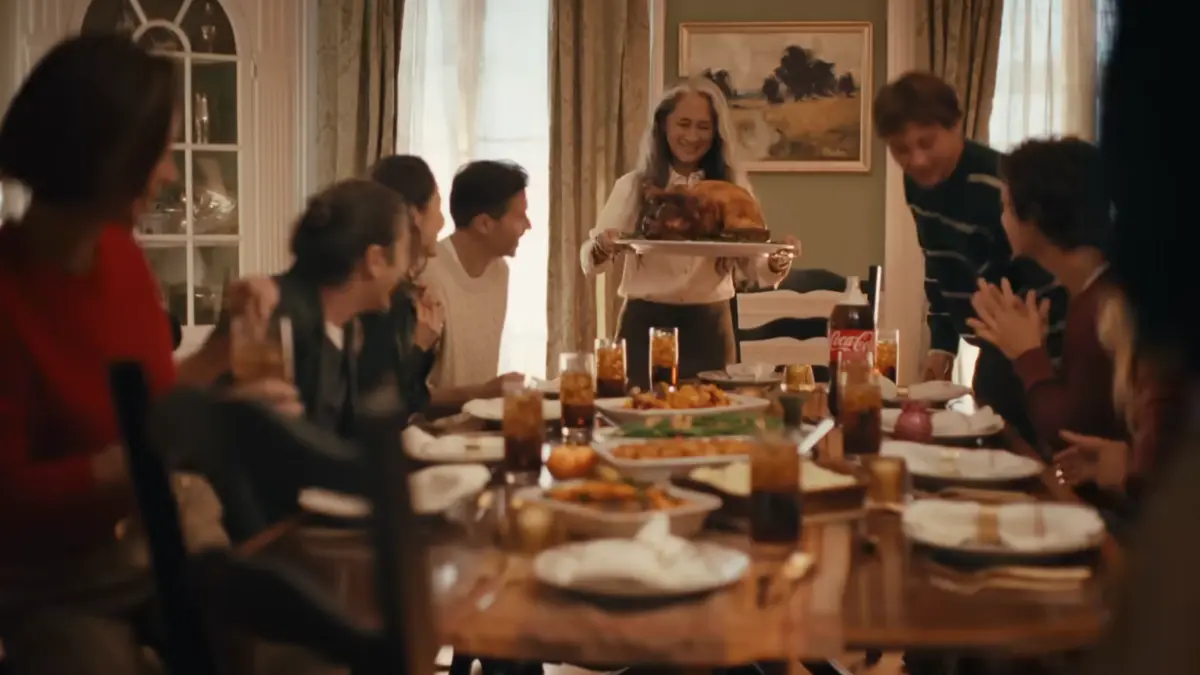
Created by WPP Open X, with lead creative direction from Ogilvy, the 30-second spot is a masterclass in nostalgic brand positioning. Eschewing algorithmic shortcuts, synthetic imagery, and computer-generated set pieces, “Enjoy Joy” leans entirely into live-action filmmaking, tactile realism, and Americana aesthetics reminiscent of Norman Rockwell. The campaign captures a sprawling, multi-generational family gathering at a white country farmhouse, foregrounding human connection, shared traditions, and communal warmth.
This comprehensive report examines the strategic imperatives driving Coca-Cola’s 2026 holiday positioning. We will explore the chronology of the campaign’s development, the broader industry context surrounding AI fatigue in advertising, the consumer psychology of nostalgia marketing, official statements from key stakeholders, and a forward-looking analysis of how this human-first creative pivot impacts brand equity in an increasingly automated media landscape.
1. EXECUTIVE OVERVIEW: THE STRATEGIC PIVOT BACK TO HUMANITY
For decades, The Coca-Cola Company has positioned itself as the custodian of holiday spirit. From the rotund, jovial Santa Claus illustrated by Haddon Sundblom in the 1930s to the beloved CGI polar bears introduced three decades ago, the brand’s seasonal output sets the cultural barometer for the retail calendar. Yet, the road leading to the 2026 “Enjoy Joy” campaign has been marked by profound industry debate regarding the boundaries of creative technology.
In recent years, the advertising sector has rushed headlong into generative AI, seeking cost efficiencies, rapid prototyping, and futuristic appeal. Coca-Cola itself experimented heavily with algorithmic rendering, leading to polarized public reception. Critics and consumers alike frequently pointed out a perceived coldness, a lack of emotional resonance, and the uncanny valley effect inherent in fully synthetic commercial art.
Recognizing a shifting tide in consumer sentiment—where authenticity, tactile experiences, and emotional safety are at a premium—Coca-Cola and its agency partners made a conscious course correction. “Enjoy Joy” represents a strategic recalibration. By stripping away digital artifice and returning to the roots of traditional cinematic storytelling, the brand has executed a calculated defense of its emotional equity. The campaign posits that in a world oversaturated by synthetic content, the most radical and magnetic thing a global brand can do is showcase genuine human imperfection, warmth, and physical presence.
2. DETAILED CHRONOLOGY: THE CREATIVE EVOLUTION OF "ENJOY JOY"
To understand the weight of the 2026 holiday campaign, it is essential to trace the developmental timeline that brought WPP Open X and Ogilvy to the concept of pure, unadulterated Americana.
Phase One: The Post-AI Assessment (Early 2025)
Following previous cycles where artificial intelligence tools were leveraged to recreate historical holiday ads or generate entirely synthetic backdrops, Coca-Cola’s global marketing leadership initiated a comprehensive audit of consumer perception. Focus groups, social listening metrics, and brand health trackers revealed a nuanced reality: while audiences appreciated technological innovation in back-end logistics and data analytics, they felt a palpable sense of alienation when core emotional touchpoints—such as holiday traditions—were outsourced to algorithms.
Internal creative briefs drafted in the second quarter of 2025 shifted the mandate entirely. The objective was no longer to test the limits of what computers could generate, but to celebrate what human beings could physically feel, touch, and share.
Phase Two: Conceptualization and the Rockwellian Vision (Mid-2025)
WPP Open X, operating through its dedicated Coca-Cola agency ecosystem led by Ogilvy, began developing a visual language rooted in timelessness. The creative team discarded futuristic concepts in favor of domestic realism. They sought to evoke the artistic tradition of Norman Rockwell—an aesthetic characterized by bustling domesticity, expressive faces, warm lighting, and chaotic, loving family dynamics.
The narrative spine was kept intentionally simple: a multi-generational family and their close friends gathering for a holiday feast. Rather than relying on high-concept fantasy or magical realism (such as polar bears delivering soda via the Northern Lights), the narrative grounded itself in the tactile rituals of modern-traditional life: throwing a football across a crisp autumn lawn, deep-frying a turkey outdoors, and navigating the joyful claustrophobia of a packed dining room.
Phase Three: Production and Localization (Late 2025)
Principal photography took place under strict practical production guidelines. Every frame was captured on location using physical sets, authentic props, and real human actors to ensure natural chemistry and visual texture.
Recognizing the global-local matrix of Coca-Cola’s consumer base, the production team engineered the campaign for maximum versatility. The hero asset was structured as a 30-second spot, specifically designed to be easily trimmable into 15-second and 6-second digital formats without losing its narrative arc or emotional impact. Furthermore, comprehensive localization strategies yielded both pristine English and Spanish versions, ensuring cultural resonance across key demographic segments in North America and international markets.
3. SUPPORTING CONTEXT & METRICS: THE ECONOMICS OF AUTHENTICITY
The decision to bypass generative AI and traditional animated mascots in favor of a live-action, human-centric vignette is supported by broader shifts in consumer research, media consumption habits, and marketing economics.
The Rise of "AI Fatigue"
As generative text-to-video, image synthesis, and synthetic voice tools have saturated the digital ecosystem, consumers have developed a sophisticated radar for artificial content. According to recent industry studies on media trust:
- Over 65% of surveyed consumers report feeling skeptical or fatigued by advertisements that explicitly showcase or rely upon AI-generated imagery.
- A significant portion of Gen Z and Millennial audiences express a preference for "imperfect authenticity"—hand-drawn art, real-world locations, and unpolished human acting—over hyper-glossy, algorithmic perfection.
By deliberately pulling back from the technological frontier, Coca-Cola positions itself as an empathetic listener. The brand is signaling that while technology has its place, human rituals remain sacred and demand human representation.
[Consumer Sentiment Shift: 2023 - 2026]
2023-2024: High appetite for novelty & AI integration in marketing.
2025: Emerging skepticism & "AI fatigue" regarding emotional storytelling.
2026: Premium placed on human-centric, tactile, and authentic live-action production.
The Anatomy of the Spot: Visualizing "Enjoy Joy"
A microscopic breakdown of the 30-second spot reveals how every second is engineered to foster emotional resonance:
- 0:00 – 0:10 | The Exterior Warm-Up: The spot opens with golden-hour lighting over a classic white country farmhouse. Friends and family are active in the yard, casually tossing a football. The inclusion of men deep-frying a turkey injects a contemporary, culturally vibrant cooking tradition into the classic rural tableau.
- 0:10 – 0:20 | The Sensory Climax: The camera sweeps indoors into a cavernous, bustling dining room. The scene is a rich potpourri of sensory details: steam rising from platters, bursts of shared laughter, tight embraces, and prominently featured two-liter bottles of Coca-Cola anchoring the center of the table.
- 0:20 – 0:30 | Resolution and Call to Action: The spot culminates in a synchronized toast, transitioning smoothly into the “Enjoy Joy” branding typography. The edit breathes naturally, avoiding the hyper-rapid, dizzying cuts typical of modern digital-first ads.
4. OFFICIAL STATEMENTS & INDUSTRY REACTION
The unveiling of “Enjoy Joy” has generated considerable discourse among advertising executives, brand strategists, and consumer psychologists. While corporate entities rarely critique their own past creative experiments publicly, the strategic pivot speaks volumes about leadership alignment.
Industry analysts note that WPP Open X and Ogilvy’s execution reflects a mature understanding of brand stewardship. In an official briefing regarding the campaign’s structural philosophy, creative leads emphasized the irreplaceable nature of human chemistry on screen.
"When you attempt to algorithmically generate the warmth of a family holiday table, you inevitably risk stripping away the micro-expressions, the accidental glances, and the genuine physical warmth that make these moments sacred," noted an independent brand strategist tracking the rollout. "Coca-Cola understands that their brand is built on shared human experiences, not technological flexes. By removing the AI and stepping away from the polar bears for this cycle, they are doubling down on the most valuable asset they own: human empathy."
Furthermore, marketing trade associations have praised the adaptability of the campaign architecture. By ensuring the 30-second narrative could seamlessly scale down to high-impact 15-second and punchy 6-second cutdowns without sacrificing its emotional core, WPP Open X demonstrated technical precision in service of human storytelling rather than vice versa.
5. FUTURE OUTLOOK: WHAT "ENJOY JOY" SIGNALS FOR THE FUTURE OF ADVERTISING
As we look beyond the immediate holiday season and toward the latter half of the decade, the implications of Coca-Cola’s “Enjoy Joy” campaign extend far beyond a single seasonal promotion. It serves as a potential watershed moment for how legacy brands navigate the tension between automation and artistry.
1. The Revaluation of Practical Production
While generative AI will undoubtedly remain a dominant tool for back-office logistics, media planning, and hyper-targeted digital variations, high-profile brand building is experiencing a counter-movement. "Enjoy Joy" proves that live-action, tactile storytelling retains an unmatched ability to command premium attention and emotional loyalty. We can expect other Fortune 500 brands to re-evaluate their reliance on synthetic media for flagship brand-building moments.
2. The Evolution of Brand Mascots
The temporary retirement of Coca-Cola’s iconic polar bears in this specific campaign does not spell the permanent end of animated characters in the brand’s ecosystem. Instead, it highlights a sophisticated portfolio approach: mascots and digital tools are deployed selectively, rather than universally. When an emotional core needs to feel grounded, immediate, and intensely human, the brand can pivot instantly to live-action realism.
3. The Quest for Narrative Truth
Ultimately, the success of “Enjoy Joy” hinges on a timeless marketing truth: consumers do not buy products; they buy feelings, memories, and identity alignment. By anchoring its holiday messaging in the messy, beautiful, unscripted reality of family gatherings, Coca-Cola has reinforced its position not merely as a beverage manufacturer, but as an indispensable companion to human celebration.
In an automated world, Coca-Cola’s 2026 holiday stance offers a reassuring reminder that the most compelling story a brand can tell is still the one written by human hands, lived in real spaces, and shared around a crowded table.
